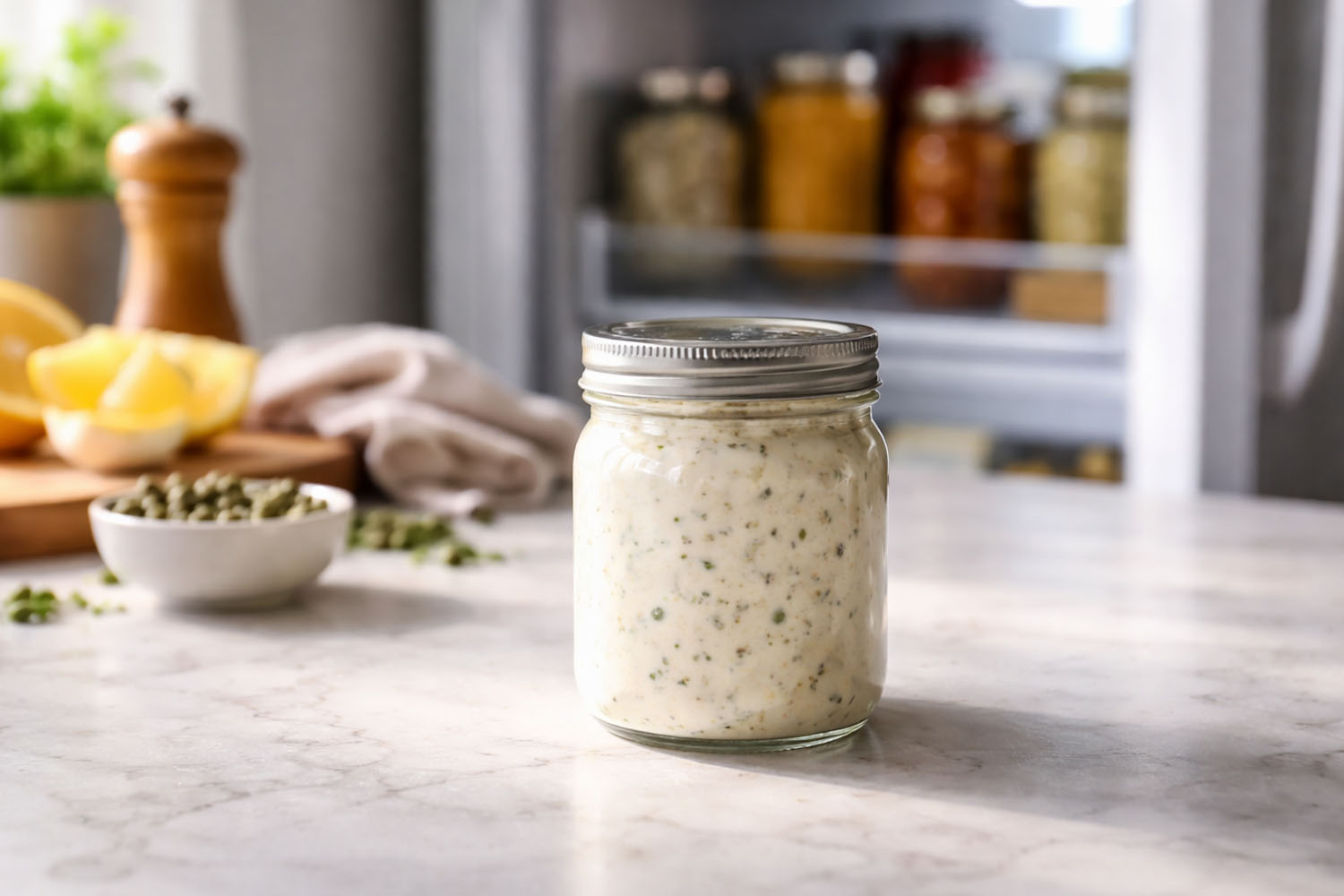
You finish dinner and the tartar sauce is still on the table. Does it go back in the fridge or can it stay out? And what about the sealed jar you bought last month that has been sitting in the pantry? Does tartar sauce need to be refrigerated?
The short answer: Unopened commercial tartar sauce can stay in the pantry. Once opened, it must be refrigerated every time, without exception. Tartar sauce is a mayo-based condiment, which puts it in a different and more serious food safety category than vinegar-based sauces.
For a full overview of how condiments and pantry staples compare on storage needs, visit our Complete Food Storage Guide.
Key Takeaways
- Unopened commercial tartar sauce: pantry-stable, no refrigeration needed.
- Opened tartar sauce: must be refrigerated immediately and every time after use.
- Room temperature limit: 2 hours maximum per FDA food safety guidelines. Discard what is left in the serving bowl after that.
- Homemade tartar sauce: refrigerate immediately and use within 3 to 5 days.
- Tartar sauce is not like hot sauce or mustard. Its mayo base makes refrigeration a safety requirement, not just a quality preference.
Why Tartar Sauce Must Be Refrigerated After Opening
The confusion around tartar sauce storage often comes from treating it the same as vinegar-based condiments like hot sauce or mustard, which can sit on a counter or restaurant table without refrigeration because their acid content prevents bacterial growth.
Tartar sauce does not have that protection. It is built on a mayonnaise base, an emulsion of oil, egg yolks, and acid. The egg component creates a medium where bacteria including Salmonella and Staphylococcus aureus can multiply rapidly once the sauce is out of the cold. This is not a theoretical risk. The FDA and USDA FoodKeeper both categorize egg-based condiments like mayo, tartar sauce, and ranch as requiring refrigeration after opening, the same guidance that applies to the mayonnaise jar itself.
The practical rule: if a condiment has mayo in it, treat it like mayo.
What Happens If You Do Not Refrigerate Opened Tartar Sauce
The Risk Is Real
Tartar sauce left at room temperature is in the FDA danger zone (40 to 140 degrees F) where bacteria multiply most rapidly. A jar left on a kitchen counter overnight, repeatedly taken in and out of the fridge, or habitually left on a table is accumulating bacterial exposure that the sauce has no acid protection against.
Unlike spoiled vinegar sauces which often smell clearly off, some bacteria that grow in mayo-based foods do not produce a noticeable odor. A jar that has been temperature-abused may look and smell normal but still carry risk. This is why following the storage guidelines matters more with tartar sauce than with most condiments.
The 2-hour rule from the USDA applies directly: tartar sauce left at room temperature for more than 2 hours should be discarded. In warm weather above 90 degrees F that window drops to 1 hour.
Unopened Tartar Sauce: Pantry Is Fine
Commercial tartar sauce sold on an unrefrigerated grocery shelf has been heat-processed and sealed during manufacturing. The jar is sterile inside and the acid content of the mayonnaise base, combined with commercial preservatives, makes it shelf-stable before opening. Store unopened jars in a cool, dark pantry away from heat and direct light. A properly stored, undamaged jar stays at best quality for 12 to 18 months.
Once you open it, the sealed, sterile environment is gone. Refrigerate immediately.
Tartar Sauce vs. Other Condiments: A Key Comparison
Not All Condiments Are Equal
Understanding why tartar sauce needs refrigeration while hot sauce does not comes down to ingredients.
Refrigeration required after opening: tartar sauce, mayonnaise, ranch dressing, Caesar dressing, aioli, remoulade. These are all egg or dairy-based with limited acid protection.
Refrigeration optional after opening (quality declines but safety risk is low): hot sauce, mustard, soy sauce, Worcestershire sauce, ketchup, relish. These rely on vinegar, salt, sugar, or fermentation as preservatives. For more on condiments that expired and could make you sick, see our post: These Expired Condiments Could Make You Sick.
Homemade Tartar Sauce Storage
Homemade tartar sauce made in your kitchen has a significantly shorter safe window than commercial. Even when made with commercial mayonnaise, the process of mixing in fresh capers, pickles, herbs, lemon juice, and onion introduces moisture and organic material that commercial processing eliminates.
Refrigerate homemade tartar sauce immediately after making it. Use it within 3 to 5 days. If you made it with fresh homemade mayonnaise using raw egg yolks rather than pasteurized commercial mayo, use it within 2 to 3 days. Make small batches so you are not holding it longer than needed. Label the container with the date it was made.
Storage Best Practices
How to Keep Tartar Sauce Safe and Fresh
Refrigerate opened tartar sauce immediately and every time. There is no room temperature grace period after the jar is open.
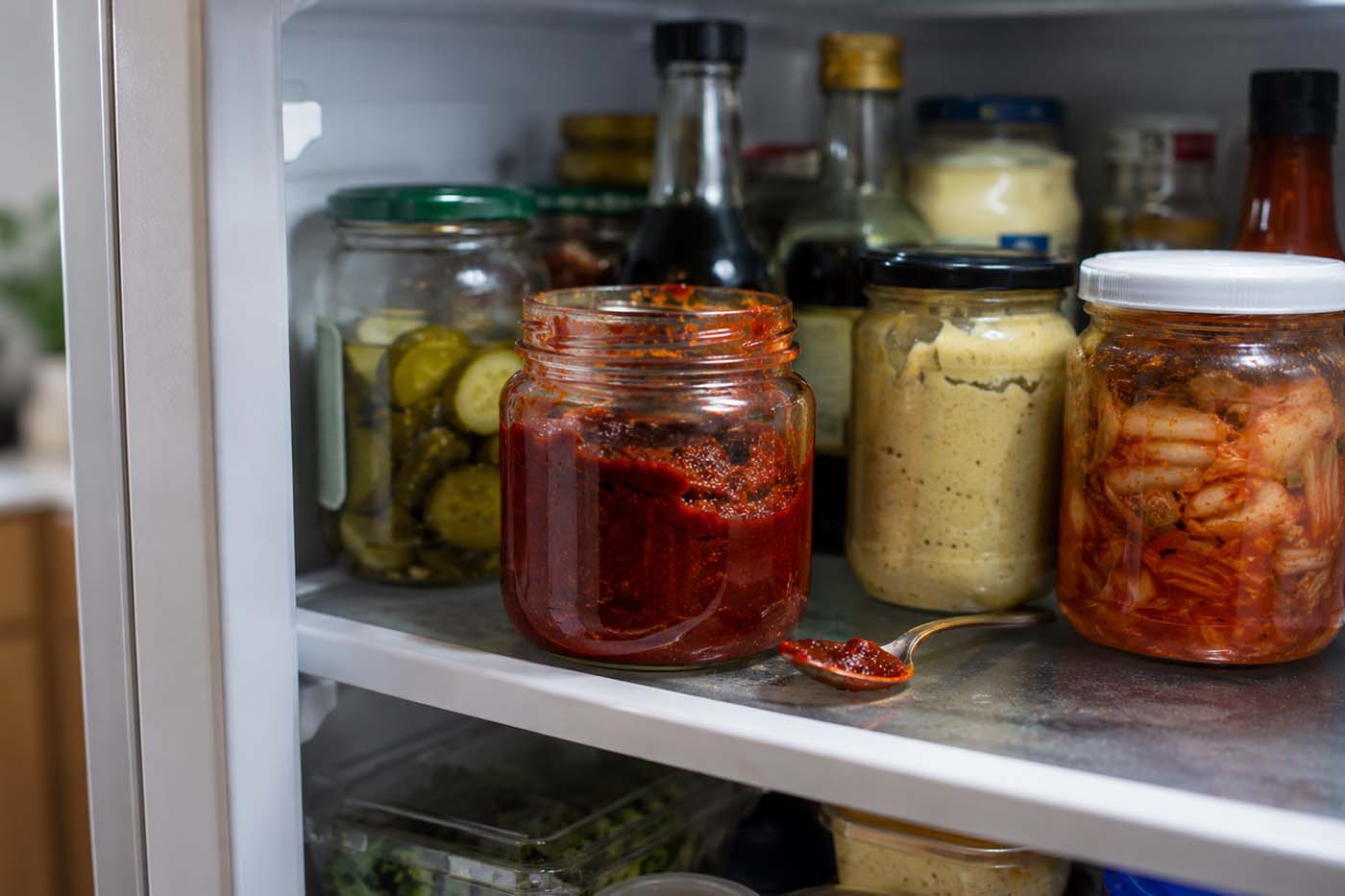
Store in the body of the fridge, not the door. The door experiences more temperature fluctuation than the main cavity. Keep it on a fridge shelf at the back where temperatures stay consistently cold.
Serve from a separate bowl. Pour what you need into a small serving bowl rather than dipping from the jar. This keeps the main supply free of cross-contamination.
See also

Keep the lid tight. Seal firmly after every use to limit air exposure.
Use a clean spoon. Never introduce food particles or a used utensil into the jar.
Label the opening date. Write the date on the lid with a marker. A fresh jar opened today and one that has been open for four months look identical.
Do not freeze. Freezing breaks the mayonnaise emulsion permanently. The sauce will separate on thawing and cannot be restored.
Ready to Cook? Try These Recipes
Tartar sauce is at its best alongside fresh seafood:
Frequently Asked Questions
I left opened tartar sauce out overnight. Is it still safe?
No. The FDA 2-hour guideline for mayo-based foods applies here. Tartar sauce left at room temperature overnight has been in the bacterial danger zone for many hours. Discard it and open a fresh jar. The risk of foodborne illness from temperature-abused mayo-based condiments is real and not worth taking.
Why does my restaurant keep tartar sauce on the table without refrigerating it?
Restaurants go through condiment bottles quickly and replace them frequently. A bottle on a busy table at a seafood restaurant might be used and replaced within a few hours. Commercial food service operations also have different protocols, portion control, and turnover rates than a home kitchen. At home, the same bottle might sit for weeks, which is a very different situation. Refrigerate your tartar sauce at home regardless of what you see at restaurants.
How long can tartar sauce sit out during dinner?
For the duration of a meal, leaving tartar sauce at the table is fine. The 2-hour rule gives you a reasonable serving window. Once the meal is done, return unused tartar sauce to the refrigerator promptly. Discard anything that was in a shared serving bowl with chips or used utensils rather than returning it to the main jar.
Further Reading
Better Living may earn commissions through affiliate links and may occasionally feature sponsored or partner content. If you make a purchase through our links, we may receive a small commission at no cost to you.