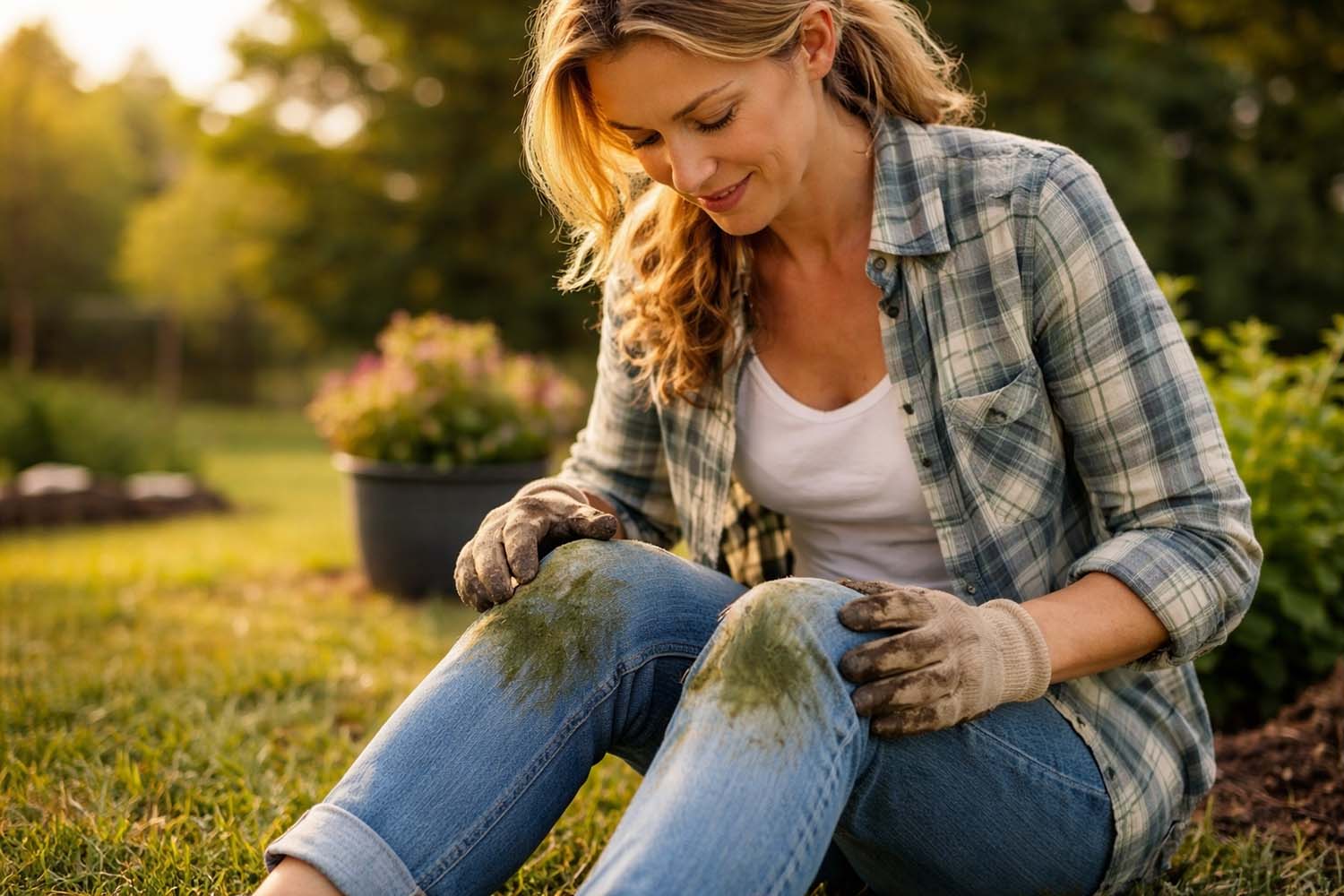
How to get grass stains out of clothes is one of those problems that sounds straightforward until you realize that grass stains aren’t actually a dirt problem. They’re a dye problem.
Grass is green because of chlorophyll. When you garden all day, slide into a base, or let your kid roll down a hill, the chlorophyll transfers to the fabric and behaves almost identically to a fabric dye. It bonds chemically to the fiber rather than just sitting on top of it. That’s why grass stains laugh at soap and water while a mud stain rinses clean, and why the treatment for grass is fundamentally different from anything else in this series.
The good news: once you understand what you’re fighting, grass stains are very treatable. I tested this across fabric types and time intervals the same way I tested the rest of the series. Here’s what works.
Quick Answer: How to Get Grass Stains Out of Clothes
- Don’t rinse with water first. Water alone spreads chlorophyll deeper into fibers.
- Apply rubbing alcohol directly to the stain. Blot with a clean white cloth, working outside in. Let sit 3 to 5 minutes.
- Rinse with cold water.
- Apply enzyme stain remover directly and let sit 15 to 20 minutes. Don’t rinse.
- White fabrics: apply hydrogen peroxide and dish soap (3:1) for 20 minutes. Colors: OxiClean soak in warm water for 1 to 2 hours.
- Launder in warm water (not cold; warm water helps enzyme cleaners work on chlorophyll).
- Check before drying. Any green or yellow tinge means chlorophyll residue. Never the dryer until completely gone.
Why Grass Stains Are Fundamentally Different From Food Stains
Every other stain in this series is a food or drink stain, something that sits on the surface of the fabric and bonds through physical or chemical adhesion. Grass stains work differently because chlorophyll is a natural pigment that bonds to fabric at the molecular level the same way synthetic dyes do.
The chlorophyll layer: The green pigment in grass. Chlorophyll is a large, complex molecule that latches onto natural fiber proteins in cotton and linen and forms direct chemical bonds, not just surface adhesion. This is why cold water and regular soap can’t remove grass stains. They’re not strong enough to break the chlorophyll-fiber bond.
The protein layer: Grass also contains proteins and other organic compounds that bond to fabric alongside the chlorophyll. Enzyme cleaners are particularly effective on grass stains because the enzymes break down both the protein bonds and assist in disrupting the chlorophyll attachment.
Why rubbing alcohol works: Chlorophyll is fat-soluble and responds to solvents. Rubbing alcohol (isopropyl alcohol) acts as a solvent that disrupts the chlorophyll bonds at the fiber level, something water, vinegar, and dish soap can’t do alone. It’s the critical first step that most guides either skip or bury.
Why warm water for the wash (not cold): Unlike most stains where cold water prevents setting, enzyme cleaners that target chlorophyll and protein bonds work more effectively at warm temperatures. The final wash on grass stains should be warm, not cold. That’s the opposite of the advice for food stains.
According to the American Cleaning Institute, enzyme-based pre-treatments are specifically recommended for grass stains because they break down the organic compounds that bond to fabric fibers. The ACI also recommends treating promptly before the chlorophyll bonds fully cure into the fabric.
⚠ Don’t Make This Mistake First: The instinct when you see a grass stain is to immediately rinse it with cold water. Resist this. Water alone without a solvent or enzyme doesn’t break the chlorophyll bond. It just spreads the pigment sideways into a larger stained area. Start with rubbing alcohol, not water. Water comes after the alcohol step.
Sport and Activity Matters: Here’s Why
Different outdoor activities create different grass stain scenarios, and understanding yours changes how urgently you need to act.
⚽ Soccer and football (slide tackles, falls): High-friction contact stains. The grass is ground into the fabric under pressure, which embeds the chlorophyll more deeply than a simple surface contact stain. These need the rubbing alcohol step and a full enzyme soak. Treat before washing. Standard machine washing without pre-treatment rarely clears these.
⚾ Baseball (sliding, diving): Often combined stains: grass plus red clay dirt. The clay creates an additional mineral stain layer. Treat the grass stain first with rubbing alcohol and enzyme spray, then address the red clay with OxiClean. Treating them simultaneously is less effective than addressing each layer separately.
🌿 Casual grass contact (sitting, playing, gardening): Lighter surface contact. Often just the chlorophyll layer without deep fiber embedding. Rubbing alcohol followed by enzyme spray handles most of these in one round without needing the OxiClean step.
🏃 Running and cycling falls: Often combined with road or trail surface contact. If the stain has both green and brown elements, treat the grass component first (rubbing alcohol, then enzyme spray) before addressing the dirt or gravel component with dish soap or OxiClean.
How to Get Grass Stains Out of Clothes: 5 Methods Tested and Ranked
Pro Tip: Why Enzyme Spray Is Non-Negotiable for Grass – Enzyme cleaners are the single most important product for grass stains because they contain protease and other enzymes that specifically break down the organic compounds in grass that bond to fabric. A standard enzyme stain remover spray left on for 15 to 20 minutes does more work on grass stains than most other products combined. If you only have one product beyond rubbing alcohol, make it enzyme spray.
How to Get Dried Grass Stains Out of Clothes
Dried grass stains are harder because the chlorophyll has had time to fully cure into the fabric, the same way fabric dyes cure during the dyeing process. But most dried grass stains are still removable, particularly on cotton.
Step 1: Don’t wet the stain first. Apply rubbing alcohol directly to the dry stain. Let it sit 5 minutes. Blot with a clean white cloth. The alcohol needs to penetrate the dried chlorophyll bonds before any water is introduced.
Step 2: Rinse with cold water to flush out the dissolved chlorophyll the alcohol just lifted.
Step 3: Apply enzyme spray generously. Let sit 30 minutes, longer than for fresh stains because the bonds are more fully cured.
Step 4: White fabrics: apply hydrogen peroxide and dish soap mixture for 30 to 45 minutes. Colored fabrics: OxiClean soak in warm water for 4 hours, overnight for sports friction stains.
Step 5: Launder in warm water. Check before drying. Repeat if any green or yellow tinge remains.
For stains more than 24 hours old, the two-session approach works best: complete the first treatment round, air dry, then repeat the full sequence the following day.
What If It Already Went Through the Dryer?
The dryer heat accelerates the chlorophyll curing process significantly. It’s the same thing that happens when dyed fabric is heat-set. This is the hardest scenario for grass stains, with a removal rate in testing of about 50 to 60% for fresh sports stains.
Apply rubbing alcohol and let it sit 10 minutes before blotting. Follow with enzyme spray for 45 minutes. Then OxiClean soak overnight in warm water. For white fabrics, follow with hydrogen peroxide and dish soap. Air dry only. Expect 3 to 5 treatment rounds and accept that some heat-set grass stains may not fully clear.
How to Get Grass Stains Out of White Clothes
White fabrics give you access to hydrogen peroxide without bleaching risk, which significantly improves results.
The full sequence for white cotton: rubbing alcohol for 3 to 5 minutes, cold water rinse, enzyme spray for 20 minutes, hydrogen peroxide and dish soap mixture for 20 to 30 minutes, launder in warm water.
For any green or yellow residue surviving on white fabric after laundering, hang the garment damp in direct sunlight for 2 to 4 hours. UV light degrades chlorophyll. It’s the same process that makes cut grass turn yellow in sunlight. This is specifically effective for grass stains and can clear residual color that chemical treatments leave behind.
How to Remove Grass Stains by Fabric Type
Cotton and cotton blends: The most forgiving. All methods including rubbing alcohol, enzyme spray, OxiClean, and hydrogen peroxide work well. Multiple treatment rounds won’t damage the fabric.
Athletic and synthetic fabrics (polyester, nylon, spandex): Chlorophyll bonds particularly aggressively to synthetic fibers. Give the rubbing alcohol step more contact time: 7 to 10 minutes rather than 3 to 5. Enzyme spray and OxiClean still work, but expect more rounds than with cotton. Don’t use hydrogen peroxide on colored athletic wear.
Jeans and denim: Rubbing alcohol and enzyme spray handle most grass stains on denim. Avoid hydrogen peroxide on colored denim. OxiClean soak works well for stubborn sports stains.
Linen: Chlorophyll penetrates the open weave quickly. Act immediately. The full sequence works but linen may need 2 to 3 treatment rounds for sports friction stains.
Silk and wool: Avoid rubbing alcohol. It can damage delicate fibers. Cold water and gentle enzyme cleaner if available, then professional dry cleaning. Point out the grass stain specifically so the cleaner treats the chlorophyll component.
White athletic wear: The hydrogen peroxide and sunlight combination is particularly effective on white synthetic sports fabrics where chlorophyll has bonded aggressively.
The Baseball Problem: Grass Plus Red Clay
Baseball players know this one well. Sliding creates a combined grass and red clay stain that requires treating both components. The order matters.
See also

Treat the grass stain first: rubbing alcohol, then enzyme spray for 20 minutes. Rinse. The clay stain layer is now exposed. Treat the red clay with OxiClean soak for 2 to 4 hours. The oxygen ions break down the iron compounds in clay that create the red-orange discoloration.
Treating both simultaneously is less effective because the OxiClean that’s correct for clay is applied before the rubbing alcohol that’s needed for grass. Get the grass out first, then get the clay out.
What Definitely Doesn’t Work
Warning – Never Do These Things: According to Consumer Reports and the American Cleaning Institute, these are the most common mistakes with grass stains:
- Starting with water alone: Spreads the chlorophyll sideways without breaking the fiber bond. Start with rubbing alcohol.
- Using vinegar as the primary treatment: Vinegar works on tannin stains, not chlorophyll. It has limited effectiveness on grass stains regardless of how long you soak.
- Machine washing without pre-treatment: Standard machine washing almost never removes grass stains. The rubbing alcohol and enzyme spray pre-treatment is what makes the wash effective.
- Dryer before the stain is fully gone: Heat cures chlorophyll into the fabric the same way it cures fabric dyes. A grass stain that’s 80% gone will be permanent after the dryer. Check carefully. Green stains can look cleared when wet but show up yellow-green when dry.
- Scrubbing aggressively: Pushes the grass deeper into the fiber weave and spreads the chlorophyll. Blot after the rubbing alcohol application, don’t scrub.
My Step-by-Step Emergency Protocol
The most common scenario: a fresh grass stain from playing outside or a sports activity.
Step 1: Don’t rinse with water yet. Apply rubbing alcohol directly to the stain. Blot with a clean cloth, outside edge inward. Let sit 3 to 5 minutes.
Step 2: Rinse with cold water to flush out the dissolved chlorophyll the alcohol just lifted.
Step 3: Apply enzyme spray generously. Work it in gently. Let sit 15 to 20 minutes. Don’t rinse.
Step 4: White fabrics: apply hydrogen peroxide and dish soap (3:1), let sit 20 to 30 minutes. Colored fabrics: OxiClean soak in warm water for 1 to 2 hours.
Step 5: Launder in warm water (not cold).
Step 6: Check in good light when dry. Any green or yellow tinge remaining? Repeat before the dryer. Green stains look cleared when wet. Always check when dry.
The Stain-Fighting Kit for Grass Stains
Grass stains require one product that’s not in the standard stain kit: rubbing alcohol. Everything else overlaps with the broader series.
If you’re a parent of kids who play sports, or you play sports yourself, rubbing alcohol and enzyme spray are worth keeping permanently stocked. If you’re building out a broader natural cleaning routine, this kit handles nearly every food and outdoor stain you’ll encounter.
Frequently Asked Questions
Are grass stains permanent?
Fresh grass stains aren’t permanent if you use the right treatment. Dried stains and heat-set stains are harder but still usually removable on cotton. The key factors are using rubbing alcohol first (not water or vinegar) and not putting the garment in the dryer before the stain is fully cleared.
Why don’t soap and water work on grass stains?
Chlorophyll bonds to fabric fibers chemically, the same way fabric dyes do. Soap and water break surface-adhesion stains but can’t disrupt chemical bonds. Rubbing alcohol acts as a solvent that can penetrate and disrupt the chlorophyll-fiber bond. That’s why it’s the necessary first step.
Why does my grass stain look gone when wet but come back when dry?
The green color temporarily disappears when the fabric is saturated because water changes how light reflects off the fibers. When the fabric dries, the chlorophyll residue becomes visible again. Always check for grass stains in good light when the fabric is completely dry before considering the treatment done.
Does the type of grass matter?
Yes, to a degree. Darker, lusher grass like Kentucky bluegrass and ryegrass has higher chlorophyll concentrations than dry or brown grass and leaves denser stains. Artificial turf stains don’t involve chlorophyll. They’re typically rubber and fiber compound stains that respond to dish soap and enzyme spray rather than rubbing alcohol.
Can I use hand sanitizer instead of rubbing alcohol?
Most hand sanitizers are 60 to 70% isopropyl alcohol and will work as a substitute, though they’re less concentrated than dedicated rubbing alcohol. Apply generously and give it a full 5 minutes of contact time rather than 3. Avoid gel formulations with heavy thickeners.
Final Thoughts
Grass stains aren’t a cleaning problem. They’re a chemistry problem. Chlorophyll bonds to fabric the same way dye does, which means the standard stain-removal toolkit doesn’t apply. Soap and water won’t fix it. Vinegar won’t fix it. The dryer will make it permanent.
What works: rubbing alcohol to break the chlorophyll bond, enzyme spray to clean up the organic compounds, OxiClean or hydrogen peroxide to clear the residual pigment. In that order, every time.
Check when dry, not when wet. Warm water for the final wash. And keep rubbing alcohol in your laundry kit if you have kids or play any sport that involves grass.
Toughest grass stain you’ve dealt with? Drop it in the comments.
Better Living may earn commissions through affiliate links and may occasionally feature sponsored or partner content. If you make a purchase through our links, we may receive a small commission at no cost to you.