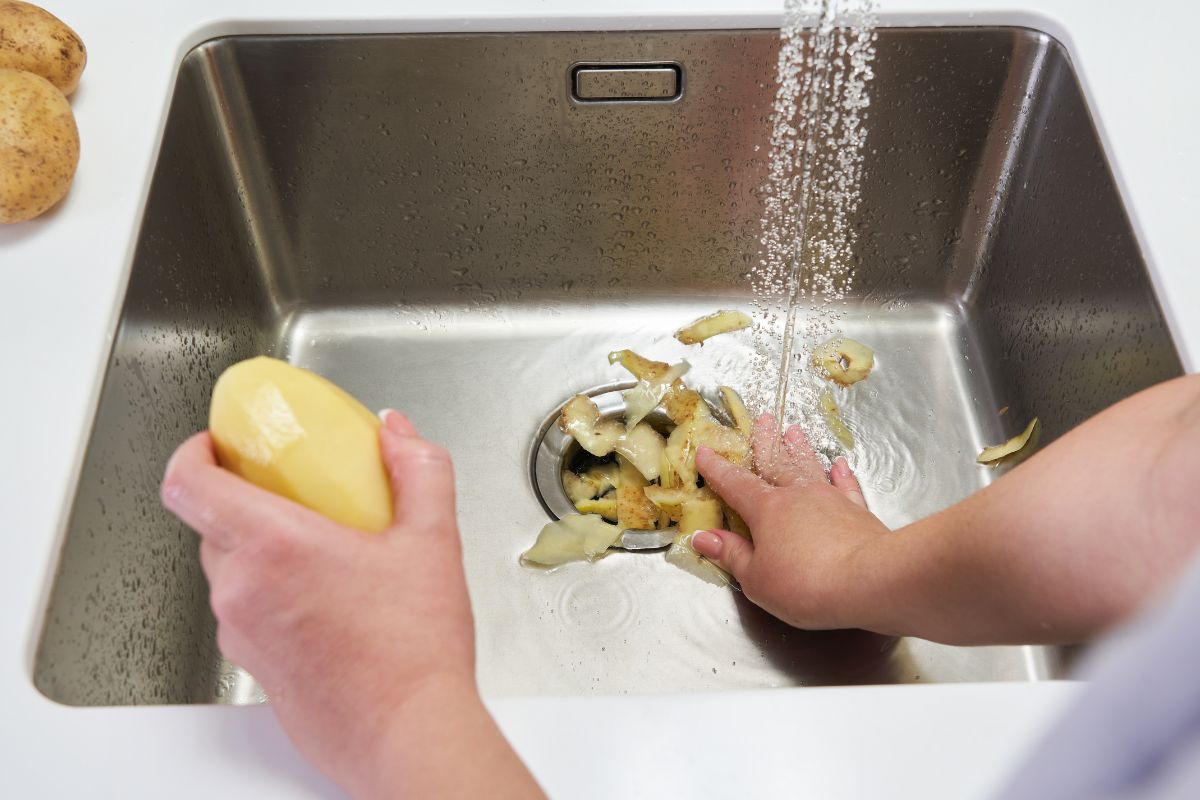
Never put grease, oil, fat, bones, fruit pits, coffee grounds, eggshells, pasta, rice, oatmeal, potato peels, fibrous vegetables, starchy vegetables, peanut butter, or hard shells and seeds down your garbage disposal. These items damage blades, clog pipes, seize motors, and cause expensive plumbing repairs.
Your garbage disposal is one of the hardest-working appliances in the kitchen. But it has real limits, and the wrong foods can jam the blades, coat your pipes, or burn out the motor entirely. Plumbers see the same repeat offenders every single week.
Here is every food to keep out of the disposal, exactly why each one causes problems, what to do instead, and how to keep your unit running well for years.
What You Should Never Put Down Your Garbage Disposal
1. Grease, Oil, and Fat (FOGs)
This is the number one rule in plumbing. Fats, oils, and grease are referred to in the industry as FOGs, and they are responsible for more clogs and sewer backups than any other single cause. When hot, FOGs are liquid and seem harmless. Once they cool inside your pipes, they solidify into a waxy coating that narrows the pipe diameter over time, trapping other debris and eventually causing a full blockage.
This includes cooking oils, bacon drippings, butter, lard, heavy cream, and even foods you might not think of as greasy: peanut butter, ice cream, and creamy sauces all fall into the FOG category. A small amount of residue on a rinsed plate will not destroy your plumbing. Pouring an entire pan of grease down the sink absolutely will.
One more note: always run cold water with your disposal, not hot. Hot water liquefies any fat that makes it in and spreads it along the pipe walls. Cold water keeps fat solid so it moves through and out rather than sticking.
What to do instead: Let grease cool completely in the pan, then pour it into an old jar or can, let it harden, and throw it in the trash. For large quantities of cooking oil, seal the container and check whether your municipality has a grease recycling program.
2. Bones and Animal Scraps
Garbage disposal blades are not designed to grind dense, hard materials. Chicken bones, pork bones, beef bones, and fish bones all create the same problem: they are too hard for the impellers to break down efficiently. Small fish bones or a single chicken wing may pass through, but anything larger will spin around the chamber creating a racket, wear down the blades, and often get lodged between the grinding plate and the housing, causing a jam that requires full disassembly to fix.
As a practical rule: if you would not comfortably bite through it, it does not go in the disposal.
What to do instead: Toss bones in the trash or use them for stock. Beef and pork bones make excellent broth and can simmer for hours before you discard them.
3. Fruit Pits and Hard Seeds
Avocado pits, peach pits, plum pits, cherry pits, mango pits, and hard seeds like walnut shells and pecan shells are dense enough to stop a disposal cold. Unlike soft food waste, these items cannot be ground at all by standard residential disposal units. They bounce around the chamber, chip the blades, and frequently become lodged in a way that trips the reset button or requires professional removal.
What to do instead: Pits and hard seeds go directly in the trash. Avocado pits can be composted in industrial composting facilities if your area has one.
4. Coffee Grounds
Coffee grounds are one of the most misunderstood items on this list. They feel fine-grained and harmless, they rinse cleanly off surfaces, and they seem to disappear down the drain without trouble. The problem is what happens next. Grounds do not fully disperse in water. They accumulate in the drain trap and in bends in the pipe as a dense, wet sediment. Over months, that sediment becomes a thick sludge that slows drainage and eventually causes a backup that can be surprisingly difficult to clear.
Plumbers who snake kitchen drains regularly report finding compacted coffee ground sludge as one of the most common causes of slow drains in households that appear to have no obvious disposal problems.
5. Eggshells
There is a persistent myth that eggshells sharpen disposal blades. They do not. Disposal units do not have blades in the traditional sense. They use blunt impellers to fling food waste against a grinding ring. Eggshells do nothing useful for this mechanism.
What eggshells do cause: the thin membrane lining the inside of each shell peels away and wraps around the disposal’s moving parts. The shell itself breaks into tiny fragments that combine with water and other food waste to form a gritty, sand-like paste that sticks to the inside of your pipes and drain trap.
What to do instead: Compost eggshells. Crushed shells added to garden soil improve drainage, deter pests like slugs and snails, and slowly release calcium that plants can use.
6. Pasta, Rice, and Bread
Starchy, water-absorbing foods are a category of their own. Pasta, rice, and bread all share the same fundamental problem: they expand when they absorb moisture, and they do not stop expanding once they go down the drain. Cooked pasta becomes a gelatinous mass. Uncooked pasta and rice pass through the grinding mechanism without being fully broken down, then swell silently in your pipes. Bread compresses into a dense, doughy plug.
Even small amounts that seem inconsequential can cause problems over time. These are the kind of clogs that build slowly and then become serious all at once.
What to do instead: Scrape pasta, rice, and bread into the trash before rinsing your plates. If you have significant leftovers, let them cool first so the disposal handles any residue more easily when you rinse.
7. Oatmeal and Expandable Starches
Oatmeal deserves its own entry because it catches people off guard. It looks soft and harmless, and it is easy to assume that something you eat for breakfast cannot possibly cause a plumbing problem. The reality: uncooked oats are small enough to pass through the disposal grinding mechanism completely intact, then absorb water downstream and swell to several times their original volume. Cooked oatmeal becomes an adhesive, paste-like sludge that coats the inside of your drain and is genuinely difficult to flush out.
The same applies to grits, polenta, and other cooked cereal grains.
What to do instead: Scrape bowls into the trash. Leftover oatmeal and grains make excellent compost material.
8. Potato Peels and Starchy Vegetables
Potato peels are thin enough that people assume they will grind and flush easily. What actually happens: the high starch content in potato peels turns to a thick, gluey paste when ground with water, similar to what happens when you overcook a potato. In large quantities, this paste coats the disposal and drain line and is stubborn to clear.
Other high-starch vegetables to keep out include yams, sweet potatoes, turnips, parsnips, and cooked beans of all kinds. Even small amounts fed in repeatedly will accumulate.
What to do instead: Peel potatoes over the trash can rather than the sink. Starchy vegetable scraps are excellent compost material and break down quickly.
9. Fibrous Vegetables
Celery is the most notorious example, but it has plenty of company. The problem with fibrous vegetables is not that they are hard to grind. It is that their long strands survive the grinding process and wrap themselves around the disposal’s impeller shaft, progressively tightening with each rotation until the motor seizes.
The list of offenders includes celery, corn husks, onion skins, artichoke leaves and stems, asparagus ends, chard and kale stems, leek tops, rhubarb, and pineapple cores. As a category: if the vegetable has long, parallel fibers you can see when you snap or peel it, keep it out of the disposal.
What to do instead: Fibrous vegetable scraps are ideal compost material. Onion skins, corn husks, and celery ends can also be saved in a freezer bag for homemade vegetable stock.
10. Peanut Butter and Nut Butters
Peanut butter belongs with the FOGs. It is dense, oily, and adhesive in a way that makes it particularly bad for pipes. When peanut butter is rinsed down the drain, it coats the inside walls of the drain line and does not fully flush through. It then catches and holds other food particles, building a sticky blockage. The same applies to almond butter, cashew butter, and any other thick, oily spread.
What to do instead: Scrape nut butter jars into the trash, then wipe out with a paper towel before rinsing. This one simple step makes a meaningful difference in pipe health over time.
11. Dairy Products
Heavy cream, sour cream, yogurt, ice cream, soft cheeses, and milk-based sauces all fall under the FOG umbrella and carry the same pipe-coating risk as cooking oils and butter. Dairy fats congeal as they cool and leave a residue on pipe walls that narrows drainage over time. The smell is also an issue: dairy residue in a drain decomposes quickly and is a common source of persistent kitchen odors.
What to do instead: Scrape dairy-based foods into the trash. For odors already coming from your drain, see the cleaning section below.
12. Medication and Chemicals
This goes beyond food, but it comes up enough to be worth including. Medications, cleaning chemicals, paint, and harsh solvents should never go down any drain, let alone into a garbage disposal. Medications contaminate the water supply in ways that water treatment facilities are not designed to fully remove. Harsh chemicals can corrode the disposal’s internal components and damage the rubber seals and drain lines.
What to do instead: Dispose of medications through your pharmacy’s take-back program or an approved medication disposal site. Check your municipality’s guidelines for household chemicals and paint.
13. Non-Food Items
Worth stating plainly: the disposal is for food waste only. Plumbers pull twist ties, rubber bands, paper towels, plastic wrap, bottle caps, and cigarette butts out of disposals with regularity. These items cause immediate mechanical jams and can damage the impellers in seconds. If it is not food, it does not go in, ever.
One important safety note: never put your hand into a garbage disposal, even when the switch is off. Always disconnect power at the wall switch or unplug the unit before attempting to remove any jammed item, and use long-nose pliers rather than fingers.
Quick Reference: Foods You Should Never Put Down Your Disposal
| Food or Item | Why It Causes Problems |
|---|---|
| Grease, oil, fat (FOGs) | Solidifies in pipes and causes blockages |
| Bones | Too hard for impellers, causes jams and blade damage |
| Fruit pits and hard seeds | Too dense to grind, chips blades and jams motor |
| Coffee grounds | Accumulates as sludge in drain trap and pipe bends |
| Eggshells | Inner membrane wraps impeller; shell forms gritty paste |
| Pasta, rice, bread | Expands with water and creates sticky pipe blockages |
| Oatmeal and cooked grains | Expands downstream or forms adhesive sludge |
| Potato peels | Starch creates thick paste that coats pipes |
| Fibrous vegetables | Fibers wrap around impeller shaft and seize the motor |
| Peanut butter and nut butters | Dense and oily, coats pipe walls and catches debris |
| Dairy products | Fats congeal in pipes and cause odor-producing residue |
| Medications and chemicals | Contaminates water supply and corrodes disposal components |
| Non-food items | Causes immediate mechanical jams and impeller damage |
What You Can Put Down the Disposal
The no list is long, but most everyday food scraps are perfectly fine. Here is what works without issue:
- Soft fruit scraps such as apple cores, berries, grapes, and citrus pulp
- Small amounts of citrus peel, which also help freshen the unit
- Cooked meat scraps in small amounts, without bones
- Most cooked or raw soft vegetables, chopped into small pieces
- Liquid foods and broths in small amounts
- Ice cubes, which help clean the grinding components
- Small amounts of dish soap when running water through
The golden rule used by plumbers: if you would not compost it easily, do not put it in the disposal. And regardless of what you are grinding, always run cold water before, during, and for 20 to 30 seconds after the disposal runs. Cold water keeps any fats or oils solid so they move through the system rather than coating it. Hot water does the opposite.
How to Clean and Maintain Your Garbage Disposal
A well-maintained disposal lasts ten to fifteen years. These four habits will get you there.
Monthly: Ice and Salt Scrub
Fill the disposal with a generous handful of ice cubes and a tablespoon of coarse kosher salt. Run the disposal without water for about 30 seconds. The ice dislodges food buildup from the impellers and grinding ring; the salt scrubs the chamber walls. Follow immediately with cold running water for 30 seconds to flush everything through. This is the single most effective routine maintenance step you can do.
For Odors: Baking Soda and Vinegar
Pour half a cup of baking soda into the disposal, followed by half a cup of white vinegar. Let the mixture fizz for five minutes without running water, then flush with cold water for 30 seconds. This combination breaks down the grease film and bacteria that cause drain odors. For a follow-up freshening step, grind a few citrus peels through the unit. Our full guide to keeping your kitchen smelling fresh covers this and more.
You can also clean many kitchen surfaces with the same pantry staples. See our guide to using apple cider vinegar to clean your kitchen for more natural cleaning approaches.
See also

Weekly: The Splash Guard
The underside of the rubber splash guard that sits at the drain opening is one of the dirtiest and most overlooked spots in the kitchen. Food residue accumulates there constantly and is a primary source of disposal odors. Fold it back and scrub the underside with a small brush or old toothbrush and dish soap once a week.
Always: Run Water Before and After
Turn on cold water 20 to 30 seconds before you start the disposal and keep it running for 20 to 30 seconds after you shut the unit off. This ensures food waste fully clears the drain line rather than settling near the disposal. Never run the disposal dry. And never pour hot water down a disposal that has been processing food, as this re-liquefies any fat that made it into the drain line.
How to Fix a Jammed Disposal
If your disposal hums but does not grind, or if it stops entirely and will not restart, it is likely jammed or has tripped the built-in thermal overload protector.
Here is the correct sequence:
- Turn off the disposal switch and unplug the unit from under the sink before doing anything else. This is non-negotiable.
- Look for the reset button on the bottom of the unit. If it has popped out, press it back in firmly. This resets the thermal overload.
- Use the hex key slot on the very bottom center of most disposals. Insert a standard hex wrench (usually 1/4 inch) and turn it back and forth manually to free whatever is jamming the impeller. Most disposals include this wrench in the original packaging.
- Use long-nose pliers to remove whatever caused the jam. Never use your fingers, even with the unit unplugged.
- Plug the unit back in, run cold water, and try the disposal again.
If the unit trips repeatedly, hums and does not grind even after clearing the jam, leaks from under the sink, or makes a grinding metal-on-metal sound, those are signs of mechanical failure that call for a plumber or replacement unit. Disposals typically last 10 to 15 years with proper use. Catching problems early can save significant expense. Our guide to simple observations that help catch problems in your house is a good read alongside this one.
Frequently Asked Questions
Can you put citrus peels down the garbage disposal?
Yes, in small amounts. Lemon, lime, and orange peels help clean the grinding chamber and leave a fresh scent. Feed them in a few at a time rather than all at once, since large quantities of pith can accumulate in the drain.
Is it safe to put ice cubes down the garbage disposal?
Yes. Ice is one of the most useful things you can put in your disposal. It cleans the impellers, dislodges buildup from the grinding ring, and causes no damage whatsoever. Use it monthly as part of regular maintenance along with coarse salt.
Can you put onion skins in the garbage disposal?
No. Onion skins are thin and papery but highly fibrous, and the outermost layer is small enough to slip through the grinding mechanism intact, then collect in the drain trap. Put them in the compost or trash.
Can you put eggshells down the garbage disposal?
No. Despite the widespread myth that eggshells sharpen disposal blades, they do not. The inner membrane wraps around the impeller, and the ground shell creates a paste that sticks to your pipes. Compost them instead.
Why does my garbage disposal smell bad?
Odors almost always come from food residue on the underside of the rubber splash guard, on the impellers, or in the drain trap below the unit. Clean the disposal with ice and salt, then baking soda and vinegar, then grind a few citrus peels. If the odor persists, the drain trap itself may need clearing. See our full guide to keeping your kitchen smelling fresh for more solutions.
What happens if you put too much food down the disposal at once?
Overloading is one of the most common causes of jams. Feed food in gradually in small batches rather than all at once, and keep cold water running throughout. If the disposal stops mid-grind, turn it off, wait ten seconds, and press the reset button on the bottom of the unit before trying again.
Can you use chemical drain cleaners in a garbage disposal?
Most plumbers advise against it. Harsh chemical drain cleaners can corrode the internal components and damage the rubber seals over time. Use the ice, baking soda, and vinegar method for regular cleaning. For serious blockages, call a plumber rather than reaching for chemicals.
Does running hot water help flush the disposal?
No. Cold water is correct for garbage disposals. Hot water re-liquefies any fats or oils that make it into the drain line, causing them to coat the pipe walls and re-solidify further downstream where they are harder to reach. Always use cold water before, during, and after running the disposal.
How long should a garbage disposal last?
With proper use and regular cleaning, most residential garbage disposals last 10 to 15 years. The most common reasons for premature failure are jamming from hard items, corrosion from harsh chemicals, and motor burnout from fibrous vegetable fibers wrapping the impeller shaft.
More Kitchen and Home Tips from Better Living
Better Living may earn commissions through affiliate links and may occasionally feature sponsored or partner content. If you make a purchase through our links, we may receive a small commission at no cost to you.