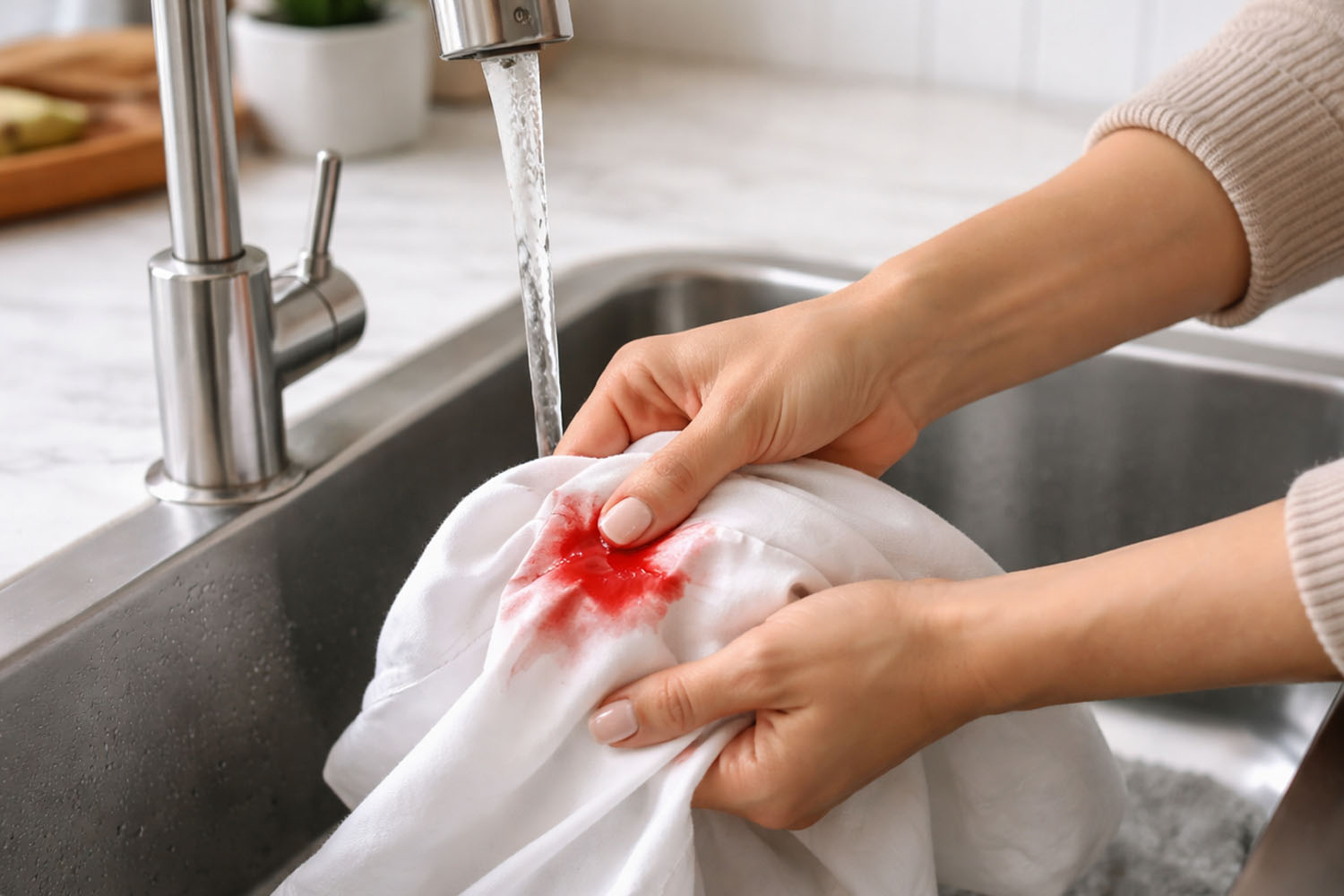
How to get blood out of clothes is one of the most searched stain questions on the internet, and the answer is both simpler and more specific than most guides make it sound.
Simpler because: cold water, enzyme treatment, OxiClean. That’s the core sequence and it works for most blood stains if you act within a reasonable window.
More specific because: blood stains have a hard chemistry deadline that other food stains don’t. Hemoglobin, the protein that carries oxygen in blood, begins to denature and bond permanently to fabric fibers within minutes of heat exposure. Hot water doesn’t just set blood stains faster than cold water. It cooks them in. The difference between cold water and warm water in the first thirty seconds can be the difference between a stain that clears in one treatment and one that never fully clears.
I tested this across fresh and dried blood, different fabric types, and different time intervals using the same first-person approach as the rest of this series. Here’s what works and why.
Quick Answer: How to Get Blood Out of Clothes
- Cold water only. Flush immediately through the back of the fabric. Never warm or hot water at any stage.
- Apply enzyme stain remover directly and let sit 15 to 20 minutes. Protease enzymes specifically break down blood protein.
- Fresh blood on white fabrics: hydrogen peroxide applied directly, let fizz, rinse. Colors: OxiClean cold water soak for 1 to 2 hours.
- Launder in cold water.
- Check before drying. Any brown or pink tinge means hemoglobin residue. Never the dryer until completely clear.
Why Blood Stains Are Different From Every Other Stain
Blood is a protein stain. That single fact changes everything about how you treat it compared to food and drink stains.
Most stains in this series are pigment or fat stains: lycopene, tannin, capsaicin, chlorophyll. These respond to oxidizers, acids, and surfactants at a range of temperatures. Blood responds to cold and enzymes at every stage, and it permanently sets with heat in a way that’s more immediate and more complete than any other common household stain.
Hemoglobin: The protein that makes blood red. When blood contacts fabric, hemoglobin begins oxidizing. This is the same process that turns fresh blood dark when exposed to air. As it oxidizes, it forms increasingly strong bonds with natural fabric fibers. Heat dramatically accelerates this bonding process. At warm temperatures, hemoglobin denatures (its protein structure unfolds and locks) and bonds to cotton fibers in a way that makes it effectively permanent. This is why a blood stain treated with hot water, even once, even briefly, is much harder to remove than one that’s only been exposed to cold.
Why cold water works: Cold water keeps hemoglobin in a more soluble state. Below around 40°C, hemoglobin hasn’t fully oxidized and the protein bonds remain partially reversible. Cold water flushes the soluble components out of the fabric before they have a chance to fully cure. This is why a fresh blood stain rinsed immediately with cold water can often clear with cold water alone.
Why enzyme cleaners are the critical treatment: Protease enzymes (found in most enzyme stain removers and some enzyme laundry detergents) specifically break down protein molecules. They work by cleaving the peptide bonds in the hemoglobin chain, reducing the large protein molecule into smaller fragments that can be rinsed away. No other common household treatment targets hemoglobin this directly.
Why hydrogen peroxide works on white fabrics: Hydrogen peroxide oxidizes hemoglobin, breaking the iron-containing heme group at the center of the molecule that creates the red color. You’ll see it fizz on a blood stain. That reaction is real and indicates the peroxide is actively breaking down the hemoglobin. The fizzing isn’t just surface activity.
According to the American Cleaning Institute, protein-based stains like blood should be soaked in cold water before treatment, and enzyme-containing detergents are the recommended pre-treatment because they break down the protein structure of the stain at the fiber level.
⚠ The Heat Rule: Non-Negotiable for BloodHot water sets blood stains permanently by denaturing the hemoglobin protein into the fabric. This means: no hot water for the initial flush, no warm water for soaking, no warm wash cycle, and no dryer until the stain is completely gone. A blood stain that’s 90% cleared will become fully permanent in the dryer. This rule is stricter for blood than for any other stain in this series.
The Scenario Changes Your Urgency, Not Your Method
Blood stain sources differ significantly in how quickly you need to act and how much blood you’re dealing with, but the chemistry and treatment sequence are the same regardless.
🩹 Fresh wound or cut: Small volume, often caught quickly. Cold water flush immediately is often 80 to 90% of the treatment needed. Follow with enzyme spray and cold wash. High clearance rate if treated within minutes.
🏃 Sports injury (grass + blood combination): Often involves both grass chlorophyll and blood. Treat in order: grass first with rubbing alcohol and enzyme spray, then blood with cold water flush and enzyme soak. Treating both simultaneously is less effective than the sequential approach.
🩸 Period blood: Often discovered after several hours rather than immediately. Larger volume than a typical cut, frequently dried by the time it’s treated. Use the dried blood protocol: cold water soak to rehydrate, extended enzyme soak, OxiClean. Period blood responds to the same treatments as other blood but requires more patience and more treatment rounds.
🌙 Overnight or discovered-later stains: The highest-risk scenario because the blood has had time to oxidize fully and the garment may have been near heat sources. Soak in cold water first to assess whether the stain is fresh-dried (dark red, still somewhat pliable) or fully set (brown, stiff). Fresh-dried responds well to treatment. Fully set stains with brown color are harder but often still partially removable.
The Saliva Method: What It Actually Is and Why It Works
You may have heard that saliva removes blood stains. This sounds like folk wisdom but it has a real chemical basis worth understanding.
Saliva contains amylase (an enzyme that breaks down starch) and protease enzymes that begin the digestion of proteins in food. These same protease enzymes work on blood protein. Hemoglobin is itself a protein, so the match is direct. That’s the mechanism. Saliva is essentially a dilute enzyme solution, and it happens to contain the right type of enzyme for blood.
This isn’t a myth. It genuinely works for small, fresh blood stains, particularly on delicate fabrics where you can’t use stronger treatments. Apply saliva directly to the stain, work it in gently with your fingertip, and rinse with cold water. It won’t work on dried or large stains, and it’s impractical at scale. But for a small fresh spot on a delicate fabric when nothing else is available, it’s a legitimate first response.
The practical takeaway: saliva works because it contains protease enzymes that break down protein. Any commercial enzyme stain remover with protease will work better, faster, and is more practical for most situations.
How to Get Blood Out of Clothes: 5 Methods Tested and Ranked
Pro Tip: The Cold Water Soak for Period Blood – Period blood is often discovered after several hours and in larger volumes than other blood stains. The best approach is a dedicated cold water soak before any other treatment. Fill a basin with cold water, submerge the stained fabric, and let it soak for 30 to 60 minutes. This rehydrates the dried blood and removes the most soluble components before you apply enzyme spray. After the soak, apply enzyme treatment and let sit for 30 minutes before moving to an OxiClean cold water soak. The two-stage approach handles the volume that a direct enzyme application can miss.
How to Get Dried Blood Out of Clothes
Dried blood is harder than fresh but very much treatable on most fabrics. The hemoglobin has oxidized more fully and the bonds to the fabric are tighter, but enzyme treatment still works. It just needs more time.
Step 1: Scrape off any dried blood crust gently with a credit card or spoon. Dried blood often flakes off the surface, reducing the volume you need to treat.
Step 2: Soak the stained area in cold water for 20 to 30 minutes to rehydrate the stain. Don’t apply treatment to completely dry fabric.
Step 3: Apply enzyme spray generously. Work it in gently. Let it sit for 30 minutes or longer. The enzyme needs extended contact time with dried blood compared to fresh.
Step 4: Without rinsing the enzyme spray, submerge in cold OxiClean soak for 2 to 4 hours. Overnight for period blood or stains older than 6 hours.
Step 5: White fabrics: after the OxiClean soak, apply hydrogen peroxide to any remaining pink or brown mark. Let it fizz and rinse. Colored fabrics: launder in cold water and check before drying.
Step 6: Check carefully in good light when dry, not wet. Blood stains can look cleared when wet and reappear when the fabric dries. Repeat treatment if any mark remains.
What If It Already Went Through the Dryer?
This is the hardest scenario for blood stains. Heat denatures the hemoglobin fully and bonds it permanently to the fiber proteins. Removal rate in testing was about 40 to 50% for light stains, significantly lower for large or period blood stains.
Soak in cold water for 30 minutes. Apply enzyme spray and let sit 45 minutes to an hour. Submerge in a cold OxiClean soak overnight. For white fabrics, follow with hydrogen peroxide before laundering. Air dry only. Inspect in good light before any further heat.
Manage expectations. Heat-set blood stains may not fully clear. If the stain is still visible after three treatment rounds, professional cleaning is the realistic next step.
How to Get Blood Out of White Clothes
White fabrics are the best case for blood stains because hydrogen peroxide is available without bleaching risk and the fizzing reaction shows you exactly where the hemoglobin is breaking down.
For fresh blood on white: cold water flush, hydrogen peroxide applied directly for 5 to 10 minutes, rinse, launder in cold water. Most fresh blood stains on white clear completely in one round.
For dried blood on white: cold water soak for 20 minutes, enzyme spray for 30 minutes, hydrogen peroxide for 10 minutes, rinse, launder. For stubborn marks, the OxiClean cold soak between the enzyme and hydrogen peroxide steps adds significant clearing power.
For the brown shadow that sometimes remains after the red color clears, that’s oxidized hemoglobin residue. Apply hydrogen peroxide again and let sit longer: 15 to 20 minutes rather than 5 to 10. If it persists after two hydrogen peroxide applications, hang the garment damp in indirect light (not direct sunlight, which can yellow whites) and let it air dry slowly.
Avoid chlorine bleach on blood stains. It can react with the iron in hemoglobin to create a rust-colored mark that’s harder to remove than the original stain.
How to Remove Blood Stains by Fabric Type
Cotton and cotton blends: The most forgiving. All methods work. Can handle multiple treatment rounds, enzyme spray, and OxiClean cold soaks without damage.
See also

Jeans and denim: The tight weave means blood can penetrate deeply, especially on older stains. Extended enzyme soak (45 minutes rather than 20) and overnight OxiClean cold soak for dried stains. Avoid hydrogen peroxide on colored denim.
Athletic and synthetic fabrics: Blood bonds aggressively to synthetic fibers. Enzyme spray is particularly important. Cold OxiClean soak works well on synthetics. Don’t use hydrogen peroxide on colored athletic wear.
Linen: Open weave lets blood penetrate quickly. Act immediately. Extended enzyme soak for any stain older than 30 minutes. OxiClean cold soak. Hydrogen peroxide and indirect light for white linen.
Silk: Never hydrogen peroxide, OxiClean, or prolonged soaking. Gently blot with cold water, apply a small amount of enzyme cleaner on a test area, then professional dry cleaning. Tell the cleaner it’s a blood stain so they use protease treatment.
Wool and cashmere: Cold water and gentle enzyme cleaner only at home. No prolonged soaking, no agitation. Professional cleaning for anything valuable.
What Definitely Doesn’t Work
Warning: Never Do These Things – According to Consumer Reports and the American Cleaning Institute, these are the most common mistakes that make blood stains permanent:
- Hot or warm water at any stage: Denatures hemoglobin into the fabric permanently. Cold water only throughout: initial flush, soaking, and final wash. This rule is stricter for blood than for any other stain.
- Rubbing the stain: Pushes blood deeper into the fiber weave and spreads it sideways. Blot only, working from the outside edge inward.
- Skipping the enzyme step: Enzyme spray with protease is the only treatment that directly targets hemoglobin protein. Without it, you’re working around the stain rather than breaking it down.
- Chlorine bleach on blood: Reacts with the iron in hemoglobin to create a rust-colored ring that’s more permanent than the original stain. Use oxygen bleach (OxiClean) instead.
- The dryer before the stain is completely gone: More critical for blood than any other stain. Even a faint pink or brown shadow will become permanent after one dryer cycle.
- Warm OxiClean soak: Unlike for other stains where warm water improves OxiClean performance, blood stains need cold OxiClean soaks. Warm water sets remaining protein while the oxygen ions work.
My Step-by-Step Emergency Protocol
The most common scenario: a fresh blood stain from a cut or scrape on a colored shirt.
Step 1: Don’t blot with a cloth first. Hold the fabric with the stain facing down under cold running water immediately. Flush for 60 to 90 seconds. This removes the most blood before it bonds.
Step 2: Blot gently with a clean white cloth to remove surface blood. Work from outside edge inward. Don’t rub.
Step 3: Apply enzyme spray directly. Work it in gently with your fingertip. Let sit 15 to 20 minutes.
Step 4: White fabrics: apply hydrogen peroxide for 5 to 10 minutes, rinse, launder in cold water. Colored fabrics: either launder in cold water immediately (for fresh stains) or do an OxiClean cold water soak for 1 to 2 hours first.
Step 5: Check carefully in good light when the fabric is dry, not wet. Any pink or brown mark? Repeat treatment before the dryer.
The Stain-Fighting Kit for Blood Stains
Blood stains require enzyme spray with protease specifically, not just any enzyme cleaner. Check the label for protease. Most commercial enzyme stain removers (Zout, Spray ‘n Wash, Carbona) contain it.
Total cost: under $20. If you’re building out a broader natural cleaning routine, this kit covers nearly every protein-based stain alongside the food stains handled by the rest of the series.
Frequently Asked Questions
Are blood stains permanent?
Fresh blood stains are rarely permanent if treated correctly with cold water and enzyme spray. Dried blood stains are harder but usually still treatable on cotton and most synthetics. The main causes of permanent blood staining are heat exposure (hot water, dryer, or sitting near a heat source) and time without treatment.
Why does cold water work on blood but not on other stains?
Cold water works specifically on blood because hemoglobin is water-soluble in its fresh, un-oxidized state. Cold water flushes the protein before it bonds to fabric fibers. Most other stains (lycopene, capsaicin, tannin) are fat-soluble or dye-bonded and don’t respond to cold water alone. They need surfactants or oxidizers. Blood is unique in responding directly to cold water as a first-response treatment.
Does saliva actually work on blood stains?
Yes, for small fresh stains. Saliva contains protease enzymes that break down protein molecules, including hemoglobin. It works the same way a commercial enzyme spray works, just at much lower concentration. The practical limits are that it only works on fresh stains (dried blood has bonded too firmly for saliva to disrupt), it’s only useful for small areas, and a commercial enzyme spray will always outperform it. Use it as a first response when nothing else is available.
Why is my blood stain turning brown?
Fresh blood is red because hemoglobin contains iron in its oxygenated form. As the blood dries and oxidizes, the iron changes state and the color shifts to brown. Brown blood stains are harder to remove than red ones because the oxidized hemoglobin has bonded more fully to the fabric. Enzyme spray followed by hydrogen peroxide (white fabrics) or OxiClean cold soak (colors) is still effective but requires more time and more rounds.
Can I use the same method for blood on sheets and upholstery?
The chemistry is the same but the approach differs. For sheets, the full sequence works. For upholstery, don’t soak. Oversaturation causes water rings and can damage padding. Apply enzyme spray carefully with a cloth, blot, and repeat. For carpet, the same principle applies: blot rather than soak, work in small amounts, use cold water throughout.
Final Thoughts
Blood stains are manageable once you understand the chemistry. Hemoglobin is a protein that bonds to fabric fibers when oxidized or heated. Cold water slows the bonding process. Enzyme spray breaks the protein bonds directly. OxiClean and hydrogen peroxide clear the residual color.
The rules that matter: cold water only at every stage, enzyme spray is non-negotiable, never the dryer until completely clear. Break any of those three and a treatable stain becomes permanent.
The brown stain that remains after the red color clears isn’t failure. It’s oxidized hemoglobin residue that needs another enzyme round. It will clear.
Had a blood stain that was particularly stubborn, or a method that worked when nothing else did? Drop it in the comments.
Better Living may earn commissions through affiliate links and may occasionally feature sponsored or partner content. If you make a purchase through our links, we may receive a small commission at no cost to you.