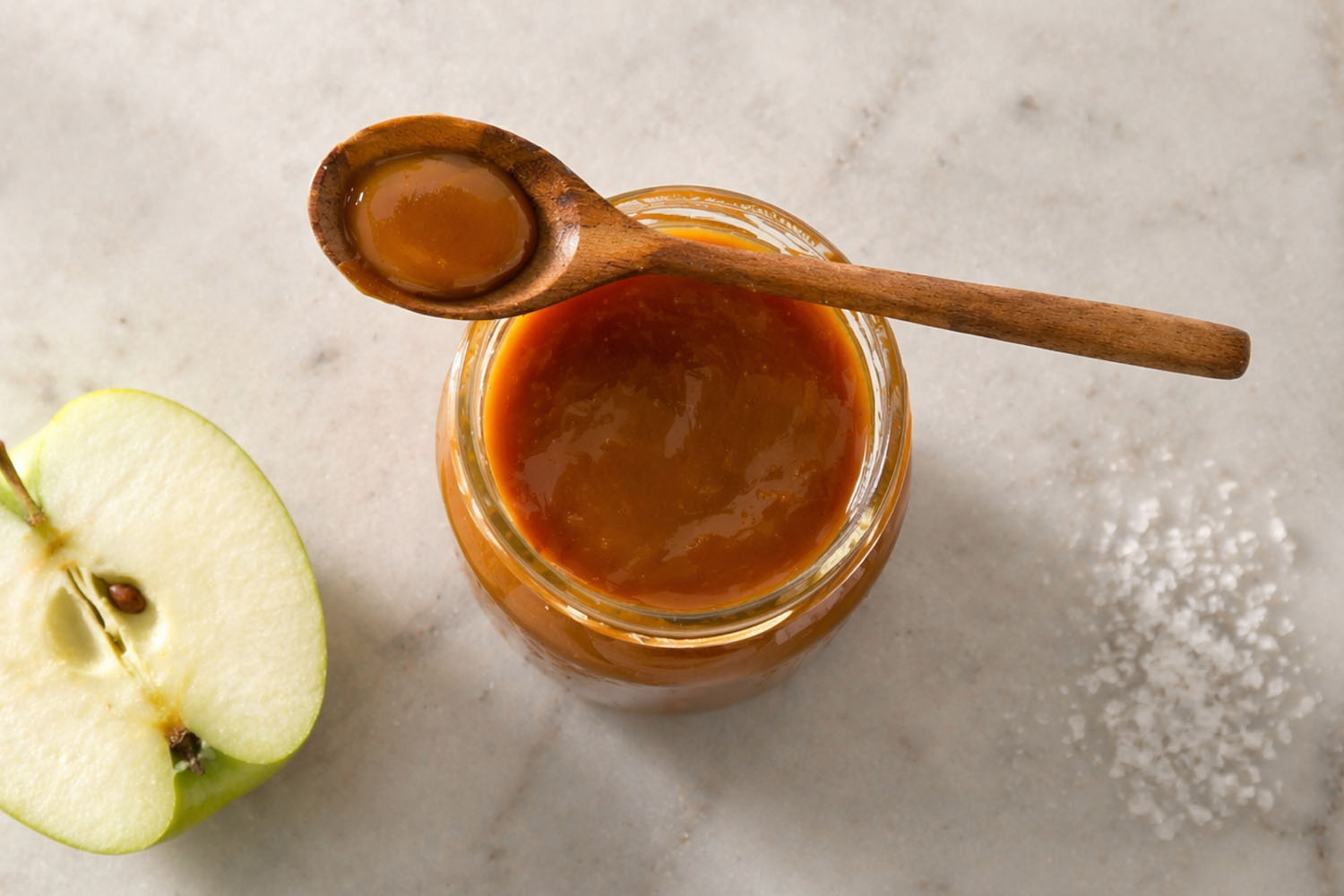
There is a jar of caramel sauce in the fridge and you are not sure how long it has been open. Or you have an unopened jar in the pantry past its best-by date and want to know if it is still good. Does caramel sauce go bad?
The short answer: Yes, caramel sauce goes bad, and it goes bad faster than most people expect once opened. Unlike pure chocolate syrup, commercial caramel sauce contains dairy (nonfat milk, cream solids, or butter depending on the product), which is why the label says to refrigerate after opening and why storage matters more than people think.
For a full overview of how pantry staples and condiments compare on shelf life, visit our Complete Food Storage Guide.
Key Takeaways
- Caramel sauce does go bad. Commercial varieties contain dairy and must be refrigerated after opening.
- Unopened commercial caramel: 2 to 3 years at room temperature in the pantry.
- Opened commercial caramel (refrigerated): best quality for up to 12 months. Smucker’s says refrigerate after opening on every product.
- Homemade caramel sauce: 1 to 2 weeks refrigerated. Up to 3 months frozen.
- The dairy content is what makes this different from chocolate syrup: it creates a genuine refrigeration requirement, not just a quality recommendation.
How Long Does Caramel Sauce Last?
Commercial caramel sauce is not a single product. Smucker’s standard caramel topping contains corn syrup, high fructose corn syrup, nonfat milk, and cream solids. Their premium Simple Delight Salted Caramel contains corn syrup, brown sugar, milk, and butter. Both lines say “Refrigerate after opening” explicitly on the label. The dairy components (nonfat milk, cream solids, butter) are what drive this requirement. Sugar and corn syrup provide significant preservation, but they cannot fully compensate for the perishable nature of the dairy content once the jar is open.
| Type | Pantry (Unopened) | Refrigerator (Opened) |
|---|---|---|
| Commercial caramel topping (e.g. Smucker’s) | 2 to 3 years | Up to 12 months best quality |
| Premium or simple-ingredient caramel (butter, cream based) | Use by printed date | 1 to 3 months |
| Homemade caramel sauce (cream and butter) | Not applicable | 1 to 2 weeks |
Estimates based on continuous refrigeration after opening and proper storage. Best-by dates indicate peak quality, not safety cutoffs. Always check for spoilage signs before using regardless of date. Guidelines consistent with USDA FoodKeeper recommendations for dairy-containing condiments.
Why Caramel Sauce Is Different from Chocolate Syrup
The Dairy Distinction
Pure chocolate syrup like Hershey’s is made from corn syrup, water, and cocoa. No dairy. The very high sugar content is the primary preservation mechanism, and the refrigeration recommendation is largely about quality rather than safety.
Commercial caramel sauce is different. The characteristic creamy, buttery taste of caramel comes from dairy: nonfat milk, cream, butter, or cream solids depending on the product. These dairy ingredients are perishable. Once the jar is opened and exposed to air and repeated use, the dairy components can degrade and eventually spoil. The sugar content slows this process significantly compared to plain dairy products, but it does not eliminate the refrigeration requirement the way it does for a pure syrup.
This is why Smucker’s says refrigerate after opening on all their caramel products but does not carry the same instruction on their chocolate syrup. The dairy content is the deciding factor.
Signs That Caramel Sauce Has Gone Bad
When to Throw It Out
Mold: Any visible mold growth means discard the entire jar immediately. Mold in caramel is uncommon given the sugar content but possible if the jar was contaminated with a dirty utensil or left unsealed.
Off smell: Fresh caramel sauce smells sweet, buttery, and slightly toasty. A sour, rancid, or otherwise unpleasant smell indicates the dairy has spoiled. Discard immediately.
Significant color change: Caramel naturally darkens slightly over time as sugars continue to develop. An extreme darkening sauce that has turned very dark brown or almost black compared to when first opened indicates deterioration beyond use.
Lumpy, hardened, or permanently separated texture: Caramel sauce can thicken when cold, which is normal and reverses with gentle warming. Permanent graininess, hard lumps that will not smooth out, or a watery liquid separated from solids that will not recombine indicates spoilage.
Off taste: Fresh caramel tastes sweet and butterscotch-rich. A sour, bitter, or flat taste means discard it. This is often a quality issue before it becomes a safety issue, but there is no reason to use caramel sauce that tastes bad.
Swollen or leaking lid: Gas buildup from fermentation. Discard without opening.
Homemade Caramel Sauce: A Much Shorter Window
Homemade caramel sauce is made from sugar, butter, and heavy cream, all fresh with no commercial preservatives. The high sugar content provides some natural preservation, but the butter and cream mean the clock starts ticking immediately.
Refrigerate homemade caramel immediately after it cools. Use within 1 to 2 weeks for best quality and safety. If you make a large batch, freeze it in small portions. Homemade caramel freezes well for up to 3 months in an airtight container. Thaw overnight in the refrigerator and warm gently in a saucepan or microwave in short bursts before serving.
How to Store Caramel Sauce Properly
Storage Best Practices
Unopened: cool, dark pantry. Commercial caramel is shelf-stable until opened. Store away from heat and direct sunlight. No refrigeration needed.
Opened: refrigerate per the label. Every Smucker’s caramel product says refrigerate after opening. Follow that instruction. Keep at the back of a main shelf, not the door, for the most consistent cold.
See also

Keep the lid clean and sealed. Introduce as little contamination as possible. Use a clean, dry spoon or pour from the jar rather than double-dipping. Wipe the rim before replacing the lid.
Warm before serving, not before storing. Caramel thickens when cold. Warm individual portions in the microwave for 15 to 30 seconds rather than leaving the whole jar at room temperature to soften before use.
Label the opening date. A jar of caramel looks the same at 2 months open as it does at 10 months. A date on the lid removes guesswork.
Homemade caramel: refrigerate immediately in a sealed glass jar. Use within 1 to 2 weeks. Freeze in small portions for up to 3 months.
Recipes That Use Caramel Sauce
Frequently Asked Questions
Can I use caramel sauce past its best-by date?
For an unopened jar in good condition, yes. Best-by dates on commercial caramel are quality indicators, not instant safety cutoffs. A sealed jar stored properly that is a few months past its date is very likely still fine. For an opened jar, check the smell, color, and texture. If it seems normal and has been refrigerated since opening, it is almost certainly still usable within the first 12 months. Past that, replace it.
My caramel sauce has hardened in the fridge. Is it still good?
Yes, almost certainly. Caramel thickens significantly when cold because of the sugar crystallization and dairy fat solidifying. This is normal, not a spoilage sign. Warm the jar gently: 15 to 30 seconds in the microwave with the lid off, or a brief warm water bath, and it will return to a pourable consistency. If it will not smooth out after warming, or if it smells or tastes off, then discard it.
How long can caramel sauce sit out at room temperature?
For serving purposes, caramel sauce can sit at room temperature for a few hours without becoming dangerous. The high sugar content provides meaningful protection. For longer storage, always return it to the fridge. Do not leave opened caramel sauce at room temperature overnight, especially premium or homemade varieties with higher dairy content and fewer or no preservatives.
Further Reading
Better Living may earn commissions through affiliate links and may occasionally feature sponsored or partner content. If you make a purchase through our links, we may receive a small commission at no cost to you.