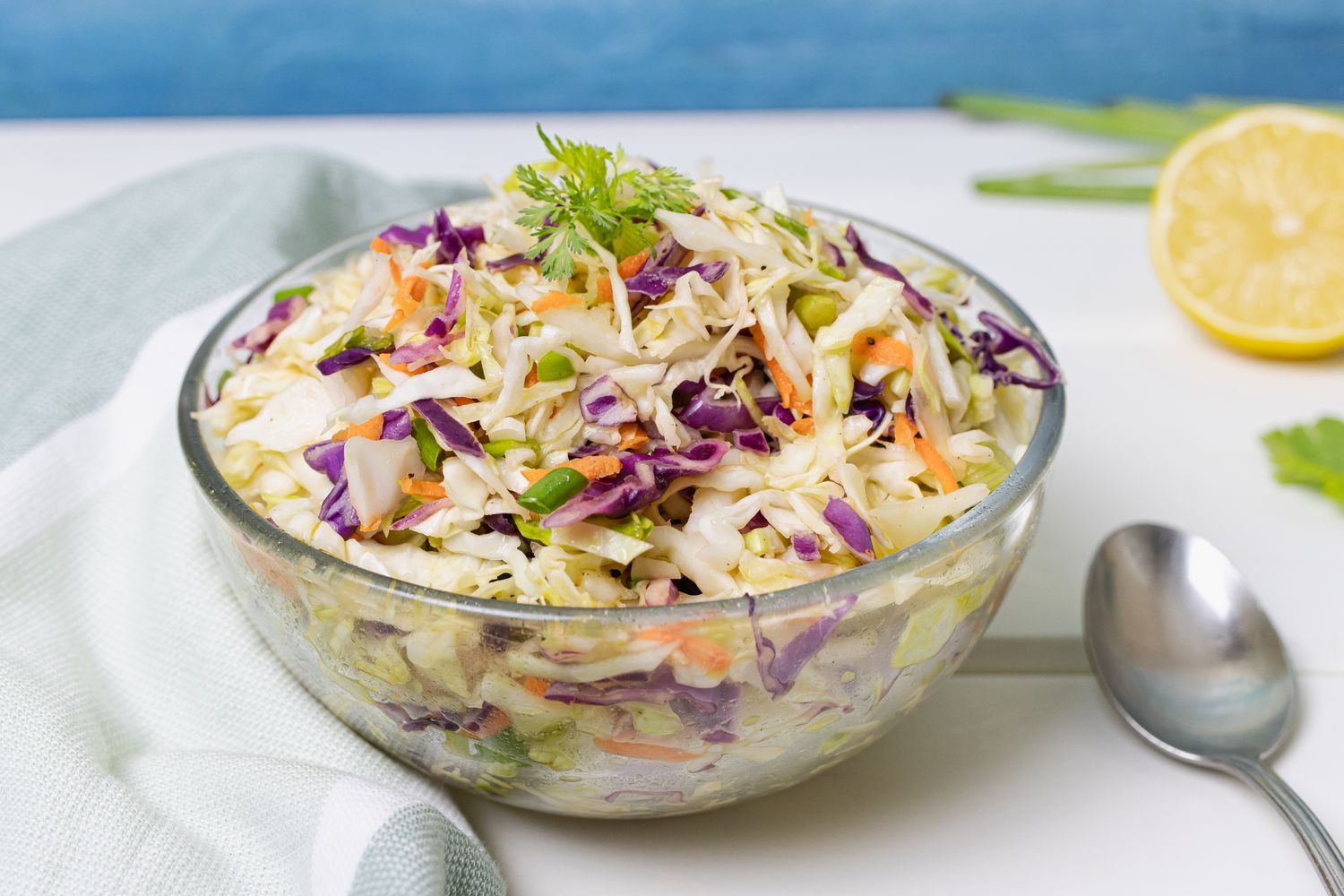
You made a big batch of coleslaw for a cookout and there is a container left in the fridge. Or you have a bag of coleslaw mix you bought a few days ago and are not sure if it is still good. Does coleslaw go bad?
The short answer: Yes, and faster than most people expect.
Dressed coleslaw is a perishable food that needs the refrigerator and lasts only 3 to 5 days. Bagged coleslaw mix (undressed shredded cabbage and carrots) lasts longer but still needs to be kept cold. The rules are very different depending on which one you have.
For a full overview of how pantry staples and fresh foods compare on shelf life, visit our Complete Food Storage Guide.
Key Takeaways
- Dressed coleslaw (homemade or deli): 3 to 5 days refrigerated. Always keep it cold.
- Bagged coleslaw mix (undressed): use by the best-by date; 1 to 2 days after opening.
- The 2-hour rule applies. Coleslaw left at room temperature for more than 2 hours should be discarded.
- Mayo-based coleslaw spoils faster than vinegar-based because mayonnaise is an emulsion with egg yolk, which degrades more quickly.
- Never freeze mayo-based coleslaw. The dressing will separate and the texture becomes watery and unpleasant.
- Slimy texture is the clearest spoilage sign for the cabbage. Off smell confirms it.
How Long Does Coleslaw Last?
The answer depends entirely on which form of coleslaw you have. Undressed bagged mix is essentially fresh produce and follows produce rules. Dressed coleslaw (homemade, deli-bought, or store-bought) is a prepared food with perishable dressing and follows stricter refrigeration rules.
| Type | Refrigerator | Notes |
|---|---|---|
| Bagged coleslaw mix (unopened) | Use by best-by date | Always check for sliminess or off smell regardless of date |
| Bagged coleslaw mix (opened) | 1 to 2 days | Transfer to airtight container; use quickly |
| Homemade dressed coleslaw | 3 to 5 days | Mayo-based closer to 3 days; vinegar-based closer to 5 |
| Store-bought deli coleslaw (unopened) | Use by printed date | Preservatives may extend shelf life slightly |
| Store-bought deli coleslaw (opened) | 3 to 4 days | Treat like homemade once opened |
Estimates based on continuous refrigeration at 40°F or below in a sealed container. Always check for spoilage signs regardless of date. Guidelines consistent with USDA FoodKeeper recommendations for prepared salads.
Mayo-Based vs. Vinegar-Based: Why It Matters
The Dressing Makes the Difference
Traditional creamy coleslaw is made with a mayonnaise-based dressing. Mayo is an emulsion containing egg yolk, which is perishable. As the coleslaw sits, the egg proteins in the mayo begin to break down and the emulsion can separate, making the dressing watery and the flavor increasingly sour. Mayo-based coleslaw is at its best within the first 2 to 3 days and should be discarded at 3 to 4 days at most.
Vinegar-based coleslaw uses an oil and vinegar dressing without egg. Vinegar is acidic and acts as a mild natural preservative, slowing bacterial growth slightly compared to mayo. Vinegar-based slaw also holds its texture better over time because the acid tenderizes the cabbage slowly rather than causing it to release water rapidly. Vinegar-based slaw can hold well for up to 5 days refrigerated.
💡 The practical tip: if you are making coleslaw to eat over several days, vinegar-based gives you more runway. If you are making it for same-day or next-day serving, mayo-based is the classic and delivers better flavor fresh.
Signs That Coleslaw Has Gone Bad
When to Throw It Out
Slimy or slick texture: The clearest sign of spoilage in coleslaw. If the cabbage shreds feel slimy or slick rather than crisp, the coleslaw has gone bad. Discard immediately. This applies to both dressed coleslaw and undressed mix.
Off or sour smell: Fresh coleslaw should smell clean, cabbage-like, and mildly tangy if dressed. A noticeably sour, fermented, or off smell that is different from the natural dressing smell means the coleslaw has spoiled. Note that vinegar-based coleslaw has a naturally tangy smell; the test is whether the smell has changed significantly since you made or opened it.
Visible mold: Any fuzzy spots in green, black, or white mean discard the entire container. Do not attempt to scoop around mold in a salad.
Significant discoloration: Cabbage that has turned brown, grey, or darkened beyond normal is decaying. A small amount of edge browning on the cut cabbage can be normal oxidation, but widespread discoloration means the coleslaw is past its prime.
Watery and wilted texture: Coleslaw naturally releases some water as it sits, especially mayo-based versions. A small amount of liquid pooling in the bottom of the container is normal. If the slaw has become completely waterlogged and limp with significant liquid separated out, quality has degraded past the point of enjoyment even if it is not technically unsafe.
Time: If dressed coleslaw has been in the refrigerator for more than 5 days, discard it regardless of how it looks or smells. Pathogenic bacteria can be present without visible or olfactory signs of spoilage.
The 2-Hour Rule at Cookouts
Coleslaw is one of the most common foods to go wrong at outdoor events. The FDA 2-hour rule applies directly: coleslaw left at room temperature for more than 2 hours should be discarded. At outdoor temperatures above 90°F, that window drops to 1 hour.
This is not a conservative guideline to ignore. Mayo-based coleslaw sitting in warm air is exactly the environment where harmful bacteria like Salmonella multiply rapidly. A practical approach for outdoor serving: nest the coleslaw bowl in a larger bowl of ice to keep it at safe temperature throughout the event.
Can You Freeze Coleslaw?
For mayo-based coleslaw: no. Mayonnaise is an emulsion that breaks when frozen and thawed. The dressing will separate into an oily, watery liquid and the result is unappetizing regardless of safety. Do not freeze mayo-based coleslaw.
For vinegar-based coleslaw: technically possible, but the result is soft and watery. The cabbage loses its crunch entirely after freezing, and you will need to drain excess liquid after thawing. If you are okay with soft, lightly dressed coleslaw rather than crunchy slaw, it can be frozen for up to 3 months in an airtight container. Thaw overnight in the refrigerator.
The better approach if you have extra coleslaw: make less next time, or store the dressing and shredded cabbage separately and dress just before serving.
See also
How to Store Coleslaw to Make It Last
Storage Best Practices
Always refrigerate immediately. Do not leave coleslaw sitting on the counter while you finish dinner. Transfer leftovers to a sealed container and refrigerate within 2 hours of serving.
Use an airtight container. A loose lid allows refrigerator odors to penetrate the coleslaw and accelerates moisture loss from the cabbage. A properly sealed container keeps the texture better for longer.
Store toward the back of a main shelf. The refrigerator door fluctuates in temperature. The back of a main shelf maintains the most consistent cold, which matters for a perishable prepared salad.
Store dressing separately when making ahead. If you are prepping coleslaw in advance, mix the cabbage and vegetables but keep the dressing in a separate container. Dress just before serving. Undressed shredded cabbage holds up for 4 to 5 days refrigerated in a sealed container.
Label the date. Coleslaw looks the same on day 1 and day 4. A date on the container removes the guesswork and prevents the common mistake of eating coleslaw that has been sitting too long.
Recipes That Use Coleslaw
Frequently Asked Questions
How can I tell if my bagged coleslaw mix has gone bad?
Check for three things: smell, texture, and appearance. Fresh coleslaw mix should smell clean and mildly cabbage-like. If it smells sour or fermented, discard it. Run your hand through the bag and feel whether the shreds are crisp or slimy. Slimy means discard immediately. Look for any brown or darkened areas beyond the normal light edge browning that can occur on cut cabbage. Widespread discoloration means the mix is past its prime. If all three check out as normal, the mix is fine to use even if it is at or just past its best-by date.
My coleslaw has a lot of liquid at the bottom. Is it still good?
Probably, depending on when it was made. Coleslaw naturally releases water as the salt and dressing draw moisture out of the cabbage over time. A moderate amount of liquid pooling is normal and not a spoilage sign. If the liquid has an off smell, or if the coleslaw is completely waterlogged and the cabbage has turned limp and translucent, quality has degraded. Give it a stir and a smell. If it smells fine and is within its shelf life window, it is still edible, though the texture will be softer than fresh. If it smells off or has been in the fridge for more than 5 days, discard it.
Can I eat coleslaw that was left out overnight?
No. Coleslaw left at room temperature overnight has exceeded the FDA 2-hour safe window by many hours. Discard it. This applies especially to mayo-based coleslaw, which contains egg-based mayonnaise that supports rapid bacterial growth at room temperature. Even if the coleslaw looks and smells fine the next morning, the bacterial load it may have accumulated overnight is not visible and is not eliminated by refrigerating it after the fact.
Further Reading
Better Living may earn commissions through affiliate links and may occasionally feature sponsored or partner content. If you make a purchase through our links, we may receive a small commission at no cost to you.