You have a carton of heavy cream that was opened a week and a half ago and you are not sure if it is still good. Or it smells slightly tangy but not quite sour and you are trying to figure out if that is normal. Does heavy cream go bad?
The short answer: Yes, heavy cream goes bad, and it has one of the shortest refrigerator shelf lives of any common dairy product once opened. According to the USDA FoodKeeper app, opened heavy cream lasts 10 days refrigerated. In practice, carefully stored heavy cream can last 2 to 3 weeks, but quality declines steadily. A slightly sour smell does not automatically mean spoilage. Heavy cream develops mild sourness before it becomes genuinely unsafe, and knowing the difference matters.
For a full overview of how perishable foods compare on shelf life, visit our Complete Food Storage Guide.
Key Takeaways
- Opened heavy cream: 10 days per USDA FoodKeeper; up to 2 to 3 weeks with careful storage.
- Unopened regular pasteurized: 1 to 2 weeks past the printed date if continuously refrigerated.
- Unopened ultra-pasteurized: 30 to 60 days past the printed date. Most supermarket heavy cream is ultra-pasteurized.
- Frozen heavy cream: 3 to 4 months per USDA. Texture changes on thawing; best for cooking not whipping.
- A slightly sour smell is not always spoilage. Heavy cream develops mild sourness as it ages. Sharp, rancid, or foul smell means discard.
- The 2-hour rule applies: heavy cream left at room temperature for more than 2 hours should be discarded.
- Ultra-pasteurized cream can affect whipping. Important to know for baking and desserts.
How Long Does Heavy Cream Last?
Shelf life depends critically on whether the cream is regular pasteurized or ultra-pasteurized, and whether it has been opened. Most heavy cream sold in American supermarkets today is ultra-pasteurized, which dramatically extends the unopened shelf life. Once opened, the difference narrows significantly.
| Type and Condition | Refrigerator | Freezer |
|---|---|---|
| Regular pasteurized (unopened) | 1 to 2 weeks past printed date | 3 to 4 months |
| Ultra-pasteurized (unopened) | 30 to 60 days past printed date | 3 to 4 months |
| Opened (either type), refrigerated | 10 days (USDA); up to 2 to 3 weeks with careful storage | 3 to 4 months |
| At room temperature (any type) | 2 hours maximum then discard | Not applicable |
Opened heavy cream shelf life per USDA FoodKeeper. Ultra-pasteurized unopened shelf life per Cornell University food science guidance and manufacturer data. Always check for spoilage signs before using.
Regular Pasteurized vs. Ultra-Pasteurized: The Key Distinction
Why Most Supermarket Cream Lasts So Long Unopened
Regular pasteurization heats cream to a minimum of 161°F for 15 seconds, killing most harmful bacteria while preserving flavor. Ultra-pasteurization (UHT) heats cream to a minimum of 280°F for just 2 seconds, killing virtually all bacteria and spores. According to Cornell University’s food science department, this extreme heat treatment significantly extends the unopened shelf life from a week or two to 30 to 60 days or more.
Most heavy cream sold in American supermarkets today is ultra-pasteurized. Look for “ultra-pasteurized” or “UHT” on the label. The carton of heavy cream with a use-by date six weeks out is almost certainly ultra-pasteurized.
The trade-off: Ultra-pasteurization slightly alters the flavor compounds in cream, giving it a mildly cooked taste compared to regular pasteurized cream. More importantly for bakers, ultra-pasteurized cream can be harder to whip to stable peaks because the heat treatment denatures some of the proteins that help cream hold its structure. For cooking, sauces, and soups the difference is irrelevant. For whipped cream and delicate desserts, local farm-fresh regular pasteurized cream will often perform better.
The Sour Smell Problem: When Is It Actually Spoiled?
This is the most common heavy cream question and the most confusing one. Heavy cream develops a mildly tangy, slightly sour aroma as it ages, well before it is actually spoiled. This happens because naturally occurring lactic acid bacteria produce lactic acid as they metabolize lactose in the cream, creating the same gentle souring that is intentional in sour cream and crème fraîche.
The practical guide:
Mild, clean tanginess: Not necessarily spoiled. If the cream smells slightly sour but clean, not foul or rancid, and is within its shelf life window, it may still be usable in cooked applications where the heat will pasteurize it further. Taste a small amount. If it tastes mildly tangy but not unpleasant, it can often be used in soups, sauces, and baked goods where the slight sourness will cook out or complement the dish.
Sharp, foul, rancid, or ammonia-like smell: Spoiled. Discard immediately. There is a clear sensory difference between mildly sour aging cream and genuinely off cream. Fresh cream smells clean and dairy-sweet. Aging cream smells mildly tangy. Spoiled cream smells unmistakably wrong.
Do not use in whipped cream if it smells sour at all. Even mildly soured cream will not whip properly and will taste unpleasant. Reserve slightly-past-peak cream for cooked uses and use fresh cream for whipping.
Signs That Heavy Cream Has Gone Bad
When to Throw It Out
Sharp, foul, or rancid smell: The clearest indicator. Fresh cream smells clean and sweet. Aged cream smells mildly tangy. Spoiled cream smells aggressively sour, rancid, or foul in a way that makes you recoil. Trust your nose.
Mold: Any fuzzy growth in any color on the surface or inside the carton means discard immediately.
Significant yellowing or discoloration: Fresh heavy cream is white to very faintly ivory. Significant yellowing, especially at the corners of the carton or on the surface of the cream, indicates deterioration.
Stringy or slimy texture: Heavy cream should pour smoothly and evenly. A stringy, ropy, or slimy texture when poured is a clear sign of bacterial spoilage. Discard immediately.
Lumps that do not dissolve: Some thickening is normal in cold cream. Small lumps that dissolve with gentle stirring or warming are not necessarily spoilage. Significant solid lumps or curdling that does not smooth out indicates the cream has broken and is past its prime.
Time: Discard opened heavy cream after 10 days as the USDA recommends, or after 2 to 3 weeks maximum even if it passes the smell test. High-moisture dairy can support bacterial growth without producing obvious signs.
Can You Freeze Heavy Cream?
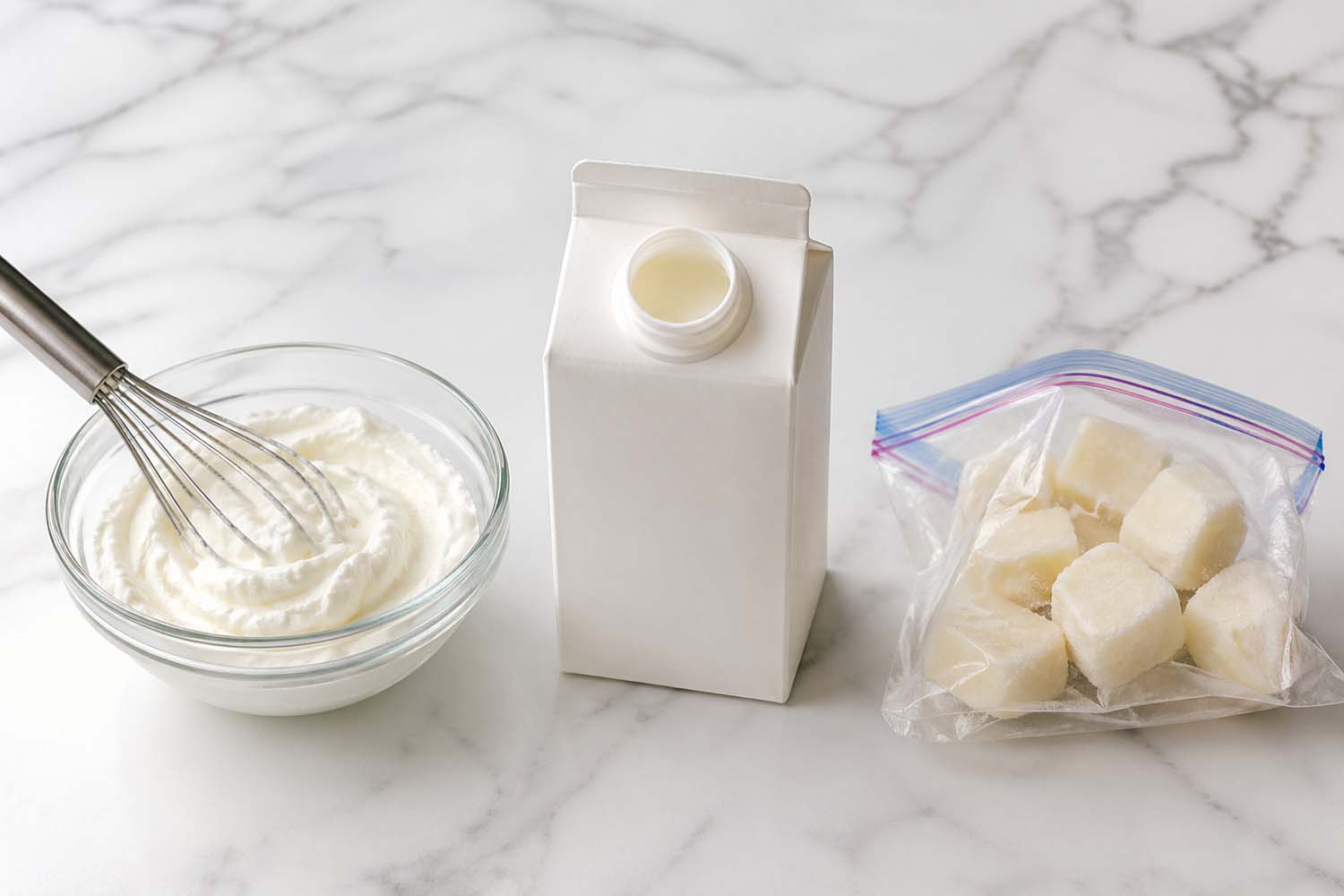
Yes, and the USDA FoodKeeper confirms heavy cream freezes for 3 to 4 months. However, freezing changes the texture. The fat and liquid in cream can separate during freezing and thawing, resulting in a cream that may appear slightly grainy or that does not whip as well as fresh cream. For cooking applications (soups, sauces, pasta dishes, casseroles) frozen and thawed cream works perfectly and the texture difference disappears once it is incorporated into a hot dish. For whipping, use fresh cream.
To freeze: pour into an airtight freezer-safe container or ice cube tray portions. Leave a small amount of headspace in containers because cream expands slightly when frozen. Label with the date and amount. Thaw overnight in the refrigerator and shake or stir well before using. Use within 24 hours of thawing.
What to Do with Heavy Cream Before It Goes Bad
If you have heavy cream approaching its window, here are the fastest ways to use it up:
Make a quick pan sauce. Any sautéed protein becomes a restaurant-quality dish with a splash of cream deglazed into the pan with garlic and herbs.
Add it to scrambled eggs. A tablespoon of cream per egg makes noticeably richer, fluffier scrambled eggs.
Make whipped cream and freeze it. Whip the cream to soft peaks, drop spoonfuls onto a parchment-lined baking sheet, and freeze until solid. Transfer to a bag and store for up to 2 months. Use frozen directly on hot drinks and desserts.
See also

Make a simple pasta sauce. Reduced cream with parmesan, black pepper, and pasta water is one of the fastest weeknight dinners possible.
Add to coffee. Heavy cream in coffee keeps for several days after opening and the small daily amount adds up quickly.
How to Store Heavy Cream Properly
Storage Best Practices
Always store at the back of the fridge on a main shelf. The coldest, most consistent temperature in the refrigerator is at the back of a main shelf. The door is the warmest spot and the worst place for cream.
Keep tightly sealed after every pour. Air contact accelerates souring. If the original carton does not reseal well, transfer to an airtight glass container.
Do not store near strong-smelling foods. Heavy cream absorbs surrounding odors easily. Keep away from onions, fish, and other strongly aromatic foods.
Use a clean pour every time. Never pour cream back into the carton from a measuring cup that has touched other ingredients. Contamination shortens shelf life significantly.
Label the opening date. Heavy cream at 5 days and 12 days looks identical. A date on the carton removes the guesswork.
Freeze what you cannot use within a week. If a recipe uses a fraction of a carton and you do not cook with cream regularly, freeze the rest immediately rather than letting it slowly age in the fridge.
Recipes That Use Heavy Cream
Frequently Asked Questions
My heavy cream smells slightly sour. Can I still use it?
It depends on how sour and what you are using it for. A very mild, clean tanginess in cream that is within its 10-day opened window is often just natural aging, not spoilage. If the smell is subtle and not unpleasant, taste a small amount. If it tastes mildly tangy but acceptable, it is likely fine for soups, sauces, and baked goods where it will be cooked. Do not use it for whipping. If the smell is sharp, foul, or makes you pull back, discard it. When in doubt, throw it out — heavy cream is inexpensive relative to the dish it might ruin.
Can I use heavy cream that is past its expiration date?
For unopened ultra-pasteurized cream, yes, often well past it. The use-by date on ultra-pasteurized heavy cream is conservative and the cream is typically safe and good quality for 30 to 60 days past the printed date if it has been continuously refrigerated. Always check for smell, taste, and visual signs before using. For opened cream, follow the USDA 10-day guideline regardless of the printed date, and use your senses as the final guide.
Why will my heavy cream not whip?
Three common reasons. First: the cream is ultra-pasteurized. UHT processing can make cream harder to whip to stable peaks. For best whipping results, look for regular pasteurized cream from a local dairy if possible. Second: the cream or bowl is too warm. Both the cream and the whipping bowl should be very cold. Chill the bowl and beaters in the freezer for 15 minutes before whipping. Third: the cream is past its prime. Even cream that smells acceptable may not whip well if it is aging. Fresh, cold cream whips most reliably.
Further Reading
Better Living may earn commissions through affiliate links and may occasionally feature sponsored or partner content. If you make a purchase through our links, we may receive a small commission at no cost to you.