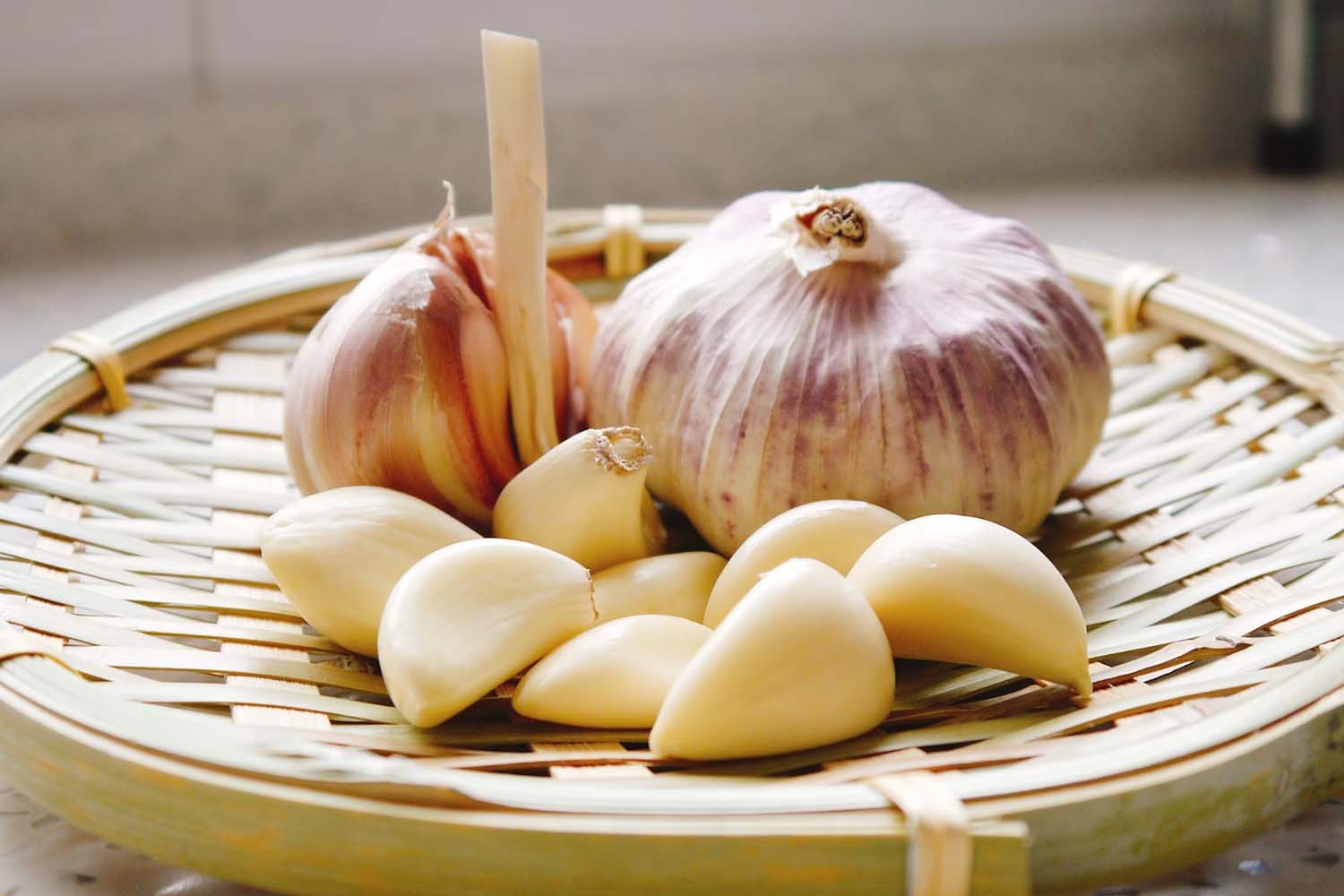
You bought a whole head of garlic two months ago and most of it is still in the pantry. One of the cloves feels a little soft. Another has a green sprout coming out of it. Is any of this still safe? And what about the jar of minced garlic in the back of the fridge that you opened a few weeks ago?
Does garlic go bad?
The short answer: Yes, and the timeline depends entirely on which form you have. A whole unpeeled bulb lasts 3 to 6 months in a cool dry pantry. Individual unpeeled cloves broken from the bulb last 2 to 3 weeks. Peeled cloves last 7 to 10 days in the fridge. Minced or chopped garlic lasts 3 to 5 days refrigerated. Garlic stored in oil at room temperature is a botulism risk and should never sit out for more than 2 hours.
For storage guidance on other produce and pantry staples, see our Food Storage Guide.
Key Takeaways
- Whole unpeeled bulb: 3 to 6 months in a cool, dry, well-ventilated pantry
- Unpeeled cloves broken from the bulb: 2 to 3 weeks at room temperature
- Peeled cloves: 7 to 10 days in an airtight container in the fridge
- Minced or chopped garlic: 3 to 5 days refrigerated, airtight
- Freezer: up to 12 months for whole cloves or minced
- Green sprout inside a clove: safe to eat, slightly bitter. Not a spoilage sign.
- Garlic in oil at room temperature: botulism risk. Refrigerate immediately and use within 4 days.
- Soft texture, brown spots, mold, or sour smell: spoilage. Discard.
Garlic Is Not One Thing When It Comes to Storage
Most garlic spoilage happens not because garlic is inherently fragile, but because people apply the same storage rules across very different forms. A whole unpeeled bulb is one of the most shelf-stable items in your kitchen. A bowl of minced garlic is a perishable that needs to be treated like any other fresh cut vegetable. The gap between these two is significant enough that they require completely different thinking.
There are four practical forms to know: the whole unpeeled bulb, individual unpeeled cloves broken from the bulb, peeled cloves, and minced or chopped garlic. A fifth category, garlic stored in oil, gets its own section because the food safety stakes are different.
How Long Does Garlic Last?
| Form | Pantry | Refrigerator | Freezer |
|---|---|---|---|
| Whole unpeeled bulb | 3 to 6 months | Not recommended | Up to 12 months |
| Unpeeled cloves, broken from bulb | 2 to 3 weeks | Not recommended | Up to 12 months |
| Peeled cloves | No | 7 to 10 days | Up to 12 months |
| Minced or chopped | No | 3 to 5 days | Up to 12 months |
| Garlic in oil (homemade) | Never | 4 days maximum | 1 month |
The Whole Bulb: Pantry Is Correct, Fridge Is Not
A whole unpeeled garlic bulb in good condition, stored in a cool dry place with decent air circulation, will last 3 to 6 months without any issues. This is one of the most common pantry items that people mistakenly move to the fridge, where it actually deteriorates faster. Cold temperatures and refrigerator humidity trigger sprouting and moisture buildup inside the papery skin. UC Davis Cooperative Extension confirms that whole garlic maintains its flavor compounds better at cool room temperature than under refrigeration.
The ideal storage spot is a well-ventilated container: a mesh bag, a small basket, or a clay garlic keeper in a cool dark cupboard away from the stove and direct light. Temperatures around 60 to 65 degrees Fahrenheit are ideal. Avoid plastic bags and sealed containers, which trap moisture and accelerate spoilage.
One more note: keep garlic away from onions in storage. Both release gases during storage that accelerate each other’s deterioration. They make good cooking partners but poor pantry neighbors.
The Green Sprout: Not a Spoilage Sign
You cut open a clove and find a green shoot running through the center, or a small green tip has emerged from the top of the clove. This alarms most people. It should not. The green sprout is simply a new garlic plant beginning to grow from inside the clove. It is the same process that would eventually produce a full plant if the clove were put in soil. It is not mold, not rot, and not a sign the garlic has gone bad.
The sprout can taste slightly bitter and more pungent than the clove itself, which can affect delicate dishes where raw garlic flavor is prominent. The fix is simple: cut the clove in half lengthwise and remove the green shoot with the tip of a knife. The remaining clove is fine to use. For cooked dishes like soups, stews, or roasted garlic, leaving the sprout in makes no perceptible difference.
The Blue or Green Color: Also Not a Spoilage Sign
If you have ever pickled garlic or cooked it in an acidic environment and had it turn blue or green, you may have thrown out a perfectly good batch. This color change is a chemical reaction between the sulfur compounds in garlic and trace minerals in water, salt, or acidic ingredients. Michigan State University Extension confirms the resulting pigments are non-toxic and the garlic is completely safe to eat. The color does not affect flavor in any meaningful way and does not indicate spoilage.
How to Tell If Garlic Has Actually Gone Bad
Fresh garlic is firm, white to off-white in color, and smells sharply of garlic. Here is what actual spoilage looks and smells like, as distinct from the green sprout and blue color issues above:
Signs Garlic Has Gone Bad
- Soft or mushy texture: Fresh garlic cloves are firm. A clove that gives when pressed has begun to break down. If it is soft throughout, discard it.
- Brown discoloration inside the clove: The interior of a fresh clove is creamy white to pale yellow. Brown spots or patches throughout the interior indicate deterioration.
- Visible mold: Any fuzzy growth on the clove or bulb means discard. Do not attempt to cut around mold on garlic.
- Sour, fermented, or off smell: Fresh garlic has a sharp, clean, sulfurous smell. A sour, vinegary, or otherwise unpleasant odor means the garlic has spoiled.
- Fully shriveled or hollow clove: A clove that has dried to a hollow shell has lost its usable content entirely.
Storage Best Practices
- Store whole bulbs in a mesh bag, basket, or clay keeper in a cool dark cupboard with good airflow
- Do not refrigerate whole bulbs or unpeeled cloves. Cold temperatures trigger sprouting.
- Keep garlic away from onions in storage
- Once peeled, move immediately to an airtight container in the refrigerator
- Label opened jars of minced garlic with the date opened
- For longer storage, freeze rather than refrigerate peeled cloves or minced garlic
Garlic in Oil: A Genuine Botulism Risk
See also

This is the most important food safety point in this post and the one most home cooks do not know. Raw garlic carries dormant Clostridium botulinum spores, which are naturally present in soil and cling to garlic bulbs. Under normal circumstances these spores are harmless. But when garlic is submerged in oil at room temperature, the combination of a low-acid, low-oxygen, moist environment causes the spores to germinate and produce botulinum toxin, one of the most potent toxins known. The critical point: botulinum toxin has no odor, no taste, and no visible sign. You cannot detect it by looking, smelling, or tasting the oil. The FDA is explicit on this: homemade garlic-in-oil must never be stored at room temperature. It must be refrigerated immediately and used within 4 days. Commercial garlic-in-oil products are safe because manufacturers add acidifying agents that prevent toxin formation. Home cooks cannot replicate this step. If you make garlic oil at home, use it immediately or freeze it.
Can You Freeze Garlic?
Yes, and it is the best option when you have more garlic than you can use within the fresh window. Frozen garlic retains its flavor well for up to 12 months. The texture softens after freezing, which means it works best in cooked applications. It will not crisp up the way fresh garlic does, but for soups, sauces, stir-fries, and marinades it is indistinguishable from fresh once cooked.
For whole peeled cloves: spread them on a baking sheet, freeze until solid, then transfer to a freezer bag. This prevents them from freezing into one solid mass. For minced garlic: freeze in an ice cube tray with a small amount of water or olive oil per compartment, then transfer the frozen cubes to a freezer bag. Each cube equals roughly one to two teaspoons. Use directly from frozen in cooked dishes without thawing.
Further Reading
Does Garlic Go Bad FAQ
Is garlic with a green sprout safe to eat?
Yes. The green sprout inside a garlic clove is new growth, not mold or rot. It is completely safe to eat. The sprout can taste slightly more bitter than the clove itself, which may be noticeable in raw preparations like aioli or salad dressing. For those applications, cut the clove in half and remove the sprout before using. For cooked dishes, it makes no practical difference.
How long does garlic last once you peel it?
Peeled garlic cloves last 7 to 10 days in the refrigerator when stored in an airtight container. Once peeled, the protective skin is gone and the clove is exposed to air, moisture, and bacteria. Refrigerate peeled cloves immediately. If you need longer storage, freeze them in a single layer on a baking sheet before transferring to a freezer bag.
Can you get sick from eating old garlic?
Visibly spoiled garlic soft, moldy, or foul-smelling can cause foodborne illness like any spoiled food. The more serious concern is garlic stored in oil at room temperature, which creates conditions for botulinum toxin to develop. Botulinum toxin causes botulism, a potentially fatal illness that attacks the nervous system. Unlike typical food poisoning, botulism produces no smell or visible sign in the food. This is why the FDA’s guidance on homemade garlic oil is strict: refrigerate immediately and use within 4 days. Seek emergency medical care if you experience symptoms of botulism (muscle weakness, blurred vision, difficulty swallowing) after consuming garlic-oil preparations.
Why did my garlic turn blue or green when I pickled it?
This is a chemical reaction between the sulfur compounds in garlic and trace minerals in water, salt, or acidic ingredients. The compounds that form are anthocyanins, the same pigments that give blueberries their color. Michigan State University Extension confirms this is completely safe. The color does not affect flavor and is not a sign of spoilage. It happens most often with young or freshly harvested garlic, which has higher sulfur content, and with tap water that contains dissolved copper or iron. Using distilled water and non-iodized salt reduces the likelihood of the color change.
How long does jarred minced garlic last after opening?
Commercial jarred minced garlic typically lasts 3 to 4 months in the refrigerator after opening, provided you use clean utensils each time and keep the jar sealed between uses. Check the manufacturer’s label for the specific recommendation. Most jars print a use-within guideline on the lid. Homemade minced garlic is different: it lasts only 3 to 5 days refrigerated and should never be stored in oil at room temperature.
How long does roasted garlic last?
Roasted garlic cloves stored on their own in an airtight container keep for up to 2 weeks in the refrigerator. Roasted garlic stored submerged in oil follows the same rule as raw garlic-in-oil: refrigerate immediately and use within 4 days. The roasting process drives moisture into the oil, which makes the botulism risk in garlic-roasted-in-oil just as real as with raw garlic. If you make a large batch of roasted garlic, separate what you plan to use within 4 days from the rest and freeze the remainder. Frozen roasted garlic keeps for up to 3 months and thaws quickly for use in sauces, spreads, and soups.
Better Living may earn commissions through affiliate links and may occasionally feature sponsored or partner content. If you make a purchase through our links, we may receive a small commission at no cost to you.