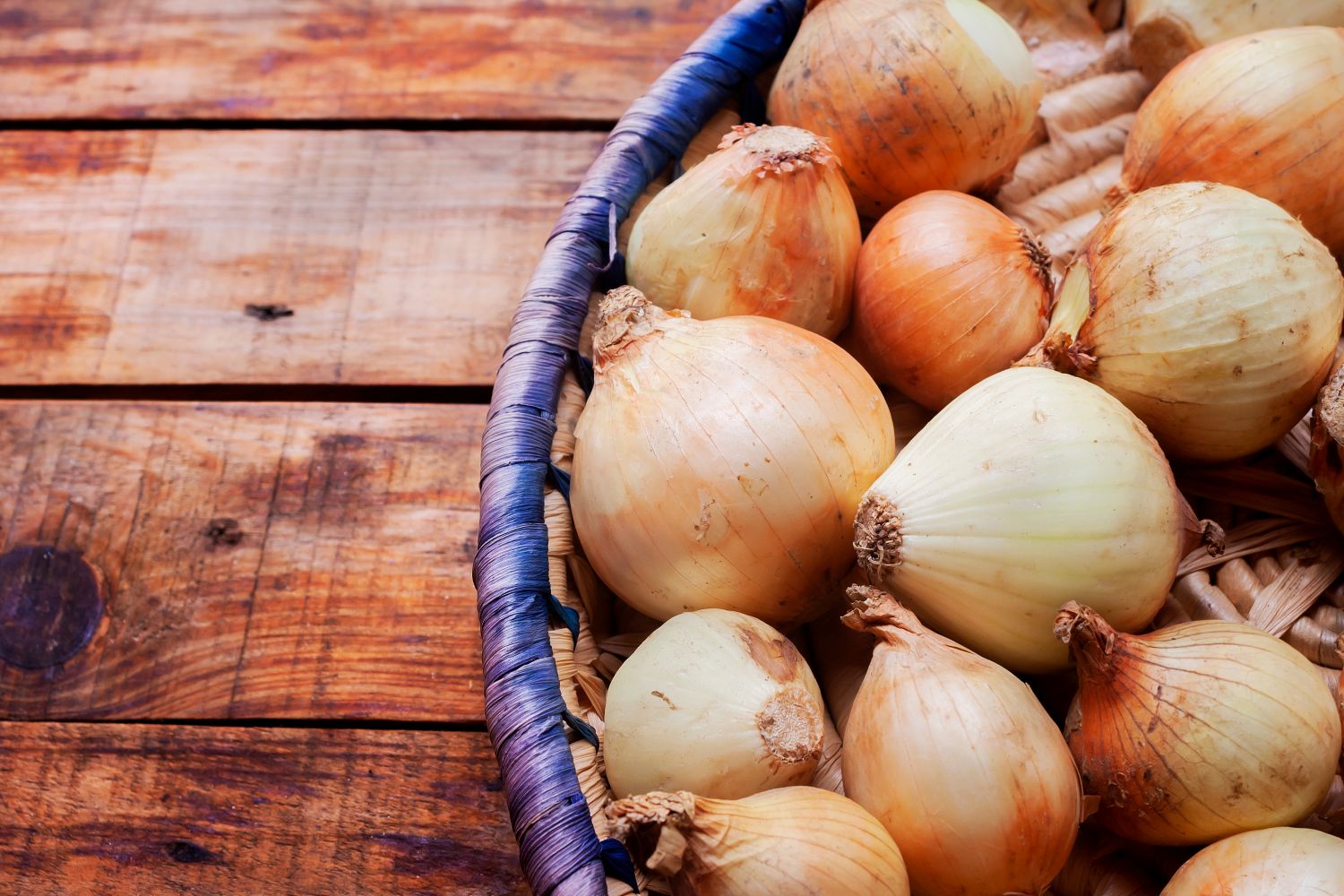
You have a mesh bag of yellow onions sitting on the counter that you bought two weeks ago. One of them feels soft in the middle. Another has a green sprout pushing through the top. And somewhere in the back of the fridge there is half a red onion wrapped in plastic wrap from last week. Are any of these still good?
Do onions go bad?
The short answer: Yes, and the timeline varies significantly depending on the type of onion and how it has been stored. Whole yellow, red, and white onions last 1 to 3 months in a cool dark pantry with good airflow. Sweet onions like Vidalias have a shorter shelf life due to higher water content. Cut or chopped onions last 7 to 10 days refrigerated in an airtight container. Green onions and scallions last up to 2 weeks in the refrigerator. Cooked onions last 3 to 5 days refrigerated.
For storage guidance on other produce and pantry staples, see our Food Storage Guide. If you also cook with garlic, see Does Garlic Go Bad?
Key Takeaways
- Whole yellow, red, or white onions: 1 to 3 months in a cool, dark, well-ventilated pantry
- Sweet onions (Vidalia, Walla Walla): shorter shelf life; wrap in paper towel and refrigerate
- Whole peeled onions: refrigerate at 40°F or below, 10 to 14 days
- Cut, chopped, or sliced onions: airtight container, refrigerator, 7 to 10 days
- Cooked onions: 3 to 5 days refrigerated in an airtight container
- Green onions and scallions: up to 2 weeks refrigerated; roots in water or wrapped in damp paper towel
- Freezer: 6 to 8 months chopped; texture changes, suitable for cooked applications only
- Sprouted onion: safe if bulb is firm; remove sprout and use immediately
- Do not store in plastic bags; lack of airflow shortens shelf life
Onions Are Not One Thing When It Comes to Storage
The biggest storage mistake with onions is applying one set of rules to all of them. A whole yellow storage onion and a Vidalia sweet onion are both onions, but they behave very differently in storage. A bunch of scallions has nothing in common with either. Getting the type right is the first step.
Yellow, red, and white storage onions are the dry-skinned bulb onions sold loose or in mesh bags at most grocery stores. They have a low moisture content, tight papery skins, and a long shelf life when stored correctly. These are the onions where the pantry is the right choice and the refrigerator is not.
Sweet onions (Vidalia, Walla Walla, Maui, and similar varieties) have a higher water content and thinner skin than storage onions. University of Minnesota Extension confirms they are more susceptible to bruising and have a significantly shorter shelf life than standard storage varieties. They are the exception to the pantry rule and do better wrapped individually in paper towels and refrigerated.
Green onions and scallions are a completely different product. They are young onions harvested before the bulb develops. They have high moisture content and need to be treated like fresh herbs, not like dry bulb onions. They belong in the refrigerator from the moment you get home.
Cut, chopped, or peeled onions of any variety need refrigeration immediately. Once the protective skin is removed or the flesh is exposed to air, the rules change entirely.
How Long Do Onions Last?
| Type | Pantry | Refrigerator | Freezer |
|---|---|---|---|
| Whole yellow, red, or white onion | 1 to 3 months | Not recommended | 6 to 8 months (chopped) |
| Sweet onion (Vidalia, Walla Walla) | 1 to 2 weeks only | 2 to 4 weeks wrapped in paper towel | 6 to 8 months (chopped) |
| Whole peeled onion | No | 10 to 14 days | 6 to 8 months |
| Cut, chopped, or sliced onion | No | 7 to 10 days airtight | 6 to 8 months |
| Cooked onions | No | 3 to 5 days airtight | 3 months (caramelized) |
| Green onions and scallions | No | Up to 2 weeks | 3 to 4 months |
Shelf life figures for whole dry onions are confirmed by the National Onion Association and University of Minnesota Extension. Cut onion figures are confirmed by the USDA and the National Onion Association (7 to 10 days in a sealed container or plastic bag, refrigerated at 40°F or below).
The Pantry Rule and Why the Fridge Hurts Whole Onions
Whole storage onions belong in the pantry, not the refrigerator. René Hardwick, Director of Public and Industry Relations for the National Onion Association, recommends keeping all dry bulb onions in a cool, dark place such as a pantry, basement, or garage. The reason the fridge is the wrong choice is the same as with garlic: most home refrigerators are too humid for whole onions. Excess moisture is absorbed through the papery skin, which triggers sprouting and mold growth. An onion that would last 1 to 3 months in a cool dry pantry can begin to sprout and soften significantly faster in the fridge.
The National Onion Association is explicit on one additional point: do not store whole onions in plastic bags. Plastic traps moisture and blocks the airflow that whole onions need to stay firm and dry. A mesh bag, a basket, or a loosely ventilated container is the right choice. Keep them out of direct sunlight and away from heat sources like the stove.
Keep onions away from potatoes in storage. The two affect each other: onion gases can taint potato flavor and accelerate greening, while moisture from potatoes speeds onion spoilage. They are a poor pantry pairing despite being a natural cooking combination.
The Sprouted Onion: Safe or Not?
A green sprout emerging from the top of a whole onion is not a sign of spoilage. The biology is the same as the green sprout in garlic: the onion is continuing to grow. If the bulb underneath is still firm, the onion is safe to use. Cut off the sprout, peel and use the onion immediately rather than storing it further. The sprout itself is edible and mild in flavor, similar to a scallion, and can be used as a garnish or in cooking.
The sprout becomes a concern only when the bulb has become soft, shriveled, or mushy underneath it. At that point the onion has deteriorated past its usable state and should be discarded.
The Cut Onion in the Fridge: Debunking the Poison Myth
You may have heard that storing a cut onion in the refrigerator is dangerous because it absorbs bacteria and becomes toxic. This is a myth. McGill University food scientists confirmed in 2017 that bacteria are not spontaneously generated. A cut onion stored in a clean airtight container in the refrigerator is safe to eat within the 7 to 10 day window. The onion does not produce toxins and does not spontaneously become dangerous simply by being cut and refrigerated.
What is true is that cut onions can absorb odors from the refrigerator and transfer their own strong aroma to nearby foods. Store cut onions in a sealed airtight container rather than loosely wrapped in foil or plastic wrap. This contains the odor and slows oxidation, which is what causes the surface of cut onions to darken and dry out.
How to Tell If an Onion Has Gone Bad
Signs an Onion Has Gone Bad
- Soft or mushy spots: Fresh onions are firm throughout. Soft patches anywhere on the bulb indicate breakdown and bacterial activity. Discard.
- Visible mold: Black, white, or green fuzzy growth on the surface or between layers means discard the entire onion. Do not peel around it.
- Slimy texture inside: If the inner layers are wet, slimy, or gelatinous when you cut the onion open, it has spoiled.
- Sour or fermented smell: Fresh onions smell sharp and sulfurous. An off, sour, or rotten smell beyond the normal onion pungency means discard.
- Fully shriveled or hollow: An onion that has dried to a papery shell with nothing firm inside has lost its usable content.
- Dark brown discoloration throughout: Some darkening at the very outer layers is normal. Brown or black discoloration throughout the interior layers indicates spoilage.
Storage Best Practices
See also

- Store whole dry onions in a mesh bag, basket, or ventilated container in a cool dark pantry or cupboard
- Do not use plastic bags for whole onions; lack of airflow causes moisture buildup and shortens shelf life significantly
- Keep onions away from potatoes and other moisture-releasing produce
- Store cut onions in a sealed airtight container in the refrigerator immediately after cutting
- Wrap sweet onions individually in paper towels before refrigerating to absorb excess moisture
- Store green onions with their roots submerged in a glass of water in the fridge, covered loosely with a plastic bag, or wrapped in a damp paper towel in an airtight bag
- Label cut onions with the date they were cut
Can You Freeze Onions?
Yes. Freezing is the best option when you have more onions than you can use within the fresh window. Chopped or diced onions freeze well for 6 to 8 months. The National Center for Home Food Preservation confirms that onions do not need to be blanched before freezing, unlike many other vegetables. Spread chopped onions in a single layer on a baking sheet, freeze until solid, then transfer to a freezer bag with as much air removed as possible. This prevents them from freezing into one solid mass.
Frozen onions lose their crisp texture when thawed and are not suitable for raw applications like salads or fresh salsas. For soups, stews, stir-fries, sauces, and any cooked dish, they are indistinguishable from fresh once cooked. Use directly from frozen in most cooked applications without thawing.
Caramelized onions freeze exceptionally well. Portion into an ice cube tray, freeze until solid, then transfer the cubes to a freezer bag. Each cube is a ready-to-use portion for burgers, pizzas, pasta, or any dish where caramelized onions are a finishing touch. Keeps for up to 3 months frozen.
Further Reading
Do Onions Go Bad FAQ
Is a sprouted onion safe to eat?
Yes, if the bulb is still firm. The green sprout is new growth, not mold or rot. Cut it off and use the onion immediately. The sprout itself is edible and similar in flavor to a mild scallion. If the bulb underneath has become soft or mushy, discard the whole onion.
How long does a cut onion last in the fridge?
Cut, chopped, or sliced onions last 7 to 10 days in the refrigerator when stored in a sealed airtight container. This figure comes from the USDA and the National Onion Association. The key is the airtight seal: loosely wrapped onions dry out faster, absorb surrounding odors, and transfer their own strong smell to other foods. Label the container with the cut date so you know exactly where you stand.
Can you get sick from eating a bad onion?
Yes. Spoiled onions can harbor bacteria including Salmonella and E. coli, particularly cut onions that have been stored improperly or too long. Whole onions have a lower risk profile due to their protective papery skin. The 2020 CDC Salmonella Newport outbreak was linked to whole red onions and served as a reminder that onions can carry pathogens from farm contamination regardless of appearance. If an onion is soft, slimy, moldy, or smells off, discard it without tasting.
Why does my onion have black powder or dust on the outer skin?
Black powder or dusty black patches on the papery outer skin of a whole onion is almost always Aspergillus niger, a common mold that grows on the dry outer layers of onions during storage. Remove the affected outer layers of papery skin. If the mold has not penetrated to the flesh underneath and the inner layers are firm, white, and smell normal, the onion is safe to use. If the mold has reached the flesh or the inner layers are soft or discolored, discard the onion.
How long do green onions and scallions last?
Green onions and scallions last up to 2 weeks refrigerated when stored correctly. The best method is to trim the roots slightly, place them upright in a glass or jar with an inch of water covering the roots, and cover the tops loosely with a plastic bag. Change the water every few days. Alternatively, wrap them in a damp paper towel, place in a zip-top bag, and refrigerate. Either method significantly outperforms simply tossing them loose in the crisper drawer.
How long do shallots last?
Whole unpeeled shallots last 1 to 2 months in a cool, dark, well-ventilated pantry under the same conditions as dry bulb onions. They have a thinner skin than yellow onions and are slightly more susceptible to moisture, so good airflow matters. Once peeled or cut, refrigerate immediately in an airtight container and use within 7 to 10 days. Do not store shallots in plastic bags or in the refrigerator while whole, for the same reasons as other dry bulb onions.
Better Living may earn commissions through affiliate links and may occasionally feature sponsored or partner content. If you make a purchase through our links, we may receive a small commission at no cost to you.