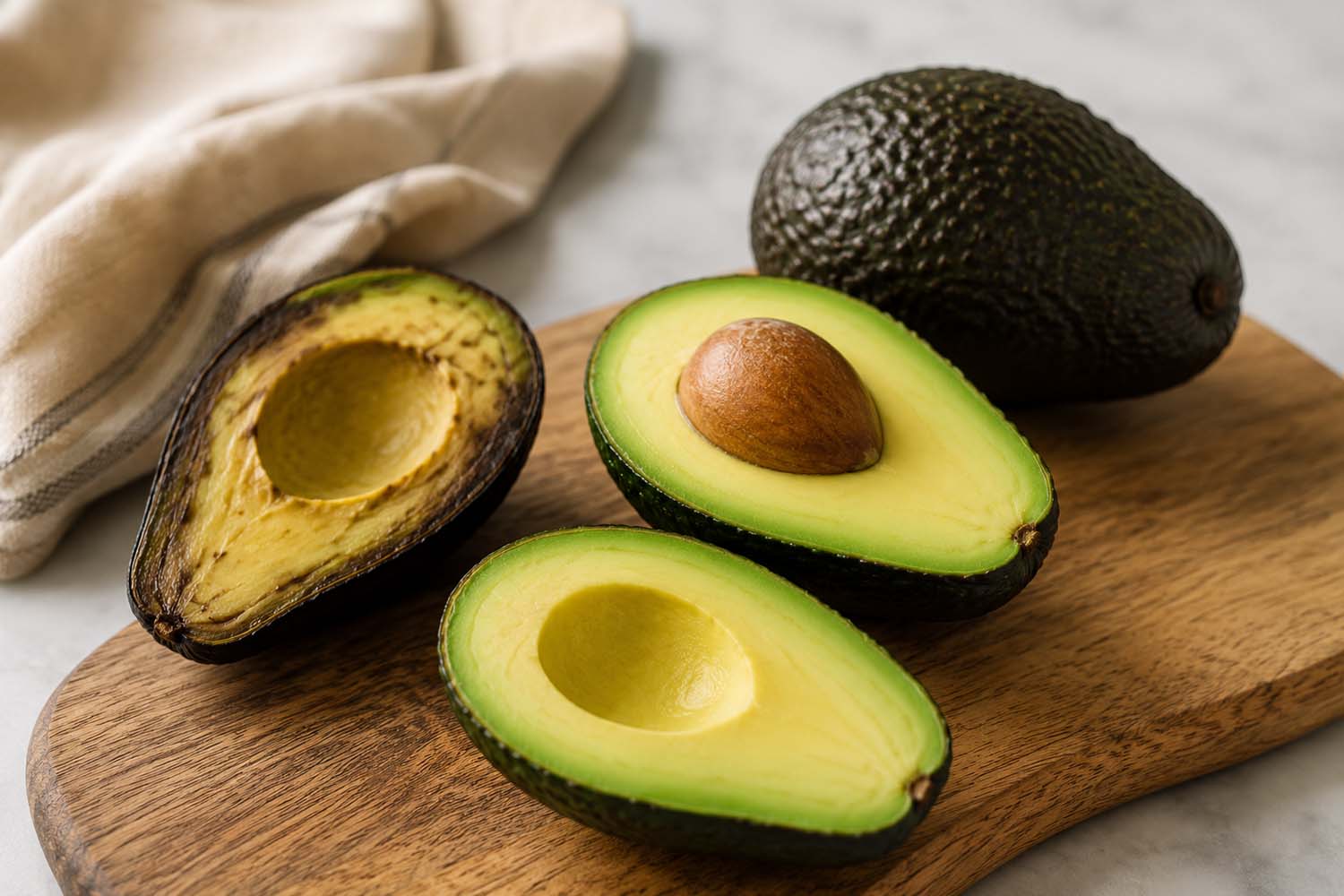
You bought avocados on Monday and by Wednesday they are perfectly ripe. You only use one. Now it is Friday and you are wondering whether the other one is still good. Or you halved an avocado last night, used half, and wrapped the rest in plastic wrap. What is still worth eating?
Do avocados go bad?
The short answer: Yes, and faster than most whole produce you buy. A whole ripe avocado lasts only 1 to 2 days on the counter before becoming overripe. A ripe whole avocado in the refrigerator lasts 2 to 5 days. A halved avocado lasts 1 to 2 days in the fridge with the pit in and lemon juice applied. Cut or diced avocado lasts 3 to 4 days refrigerated in an airtight container. Brown flesh is usually oxidation, not spoilage. Grey, stringy, or slimy flesh means discard.
For longer storage, see our guide on freezing avocados. For storage guidance on other produce, see Do Tomatoes Go Bad? and our full Food Storage Guide.
Key Takeaways
- Whole unripe avocado: counter, 3 to 5 days until ripe
- Whole ripe avocado: counter 1 to 2 days; fridge 2 to 5 days
- Halved avocado (pit in, lemon juice applied): fridge, 1 to 2 days
- Cut or diced avocado: airtight container, fridge, 3 to 4 days
- Guacamole: plastic wrap pressed directly on surface, fridge, 1 to 2 days
- Brown flesh: usually oxidation, safe to scrape off and eat if flesh underneath is green
- Grey, black, or stringy flesh: spoilage, discard
- Do not store avocados submerged in water: FDA warns this allows Listeria to infiltrate the pulp
How Long Do Avocados Last?
| Form | Counter | Refrigerator | Freezer |
|---|---|---|---|
| Whole unripe avocado | 3 to 5 days until ripe | Up to 2 weeks (slows ripening) | Not recommended (whole) |
| Whole ripe avocado | 1 to 2 days | 2 to 5 days | Not recommended (whole) |
| Halved avocado, pit in, lemon juice | 2 hours max | 1 to 2 days | Not recommended (halved) |
| Cut or diced avocado | 2 hours max | 3 to 4 days airtight | Not recommended (cut) |
| Guacamole | 2 hours max | 1 to 2 days | Not recommended |
| Pureed avocado (with lemon juice) | No | 1 to 2 days | 3 to 4 months |
Shelf life figures for whole avocados per Michigan State University Extension and the National Center for Home Food Preservation. Cut avocado figures per NCHFP. Ripe whole avocado counter life is very short because the avocado continues ripening after it reaches peak texture.
Brown Flesh: Oxidation vs. Spoilage
This is the question that sends most avocados to the compost unnecessarily. Brown flesh in an avocado is not automatically a reason to throw it away. The distinction matters.
Brown from oxidation happens when the cut flesh is exposed to air. Oxygen reacts with enzymes in the avocado pulp and turns the surface brown. This is the same process that browns a cut apple. The brown layer is aesthetically unpleasant but safe to eat. In most cases, scraping or slicing away the thin brown surface reveals perfectly good green flesh underneath. The avocado is fine to eat.
Grey, black, or stringy flesh throughout is different. When the flesh is grey or black all the way through, when it has a stringy or fibrous texture that was not there before, or when it smells sour or off, the avocado has genuinely spoiled. Scraping the surface will not help because the deterioration has progressed through the fruit. Discard it.
The practical test: scrape away the brown surface. If the flesh underneath is still green, creamy, and smells clean, use it. If the brown goes all the way through or the flesh is grey, stringy, or foul-smelling, discard it. When you are making frozen avocado puree or using avocado in dishes like Baja fish tacos, light browning throughout is fine once incorporated.
How to Keep a Cut Avocado from Browning
Several techniques slow oxidation effectively. None of them stop it entirely, but they extend the window significantly.
Lemon or lime juice: The acid in citrus juice slows the enzymatic browning reaction. Brush or rub a thin layer over all exposed flesh before storing. This is the most reliable technique per the Hass Avocado Board and multiple culinary sources.
Leave the pit in: The pit reduces the exposed surface area of the flesh around it, which slows browning in that area. Additionally, lemon juice applied around the pit provides double protection. For a halved avocado, this approach keeps the unused half fresher for 1 to 2 days in the refrigerator.
Airtight container pressed close: Remove as much air as possible from the storage container. For a halved avocado, pressing plastic wrap directly onto the cut surface before sealing is more effective than leaving air space in the container.
Red onion trick: Placing a few slices of red onion in the bottom of an airtight container and resting the avocado cut-side down on top of them is a widely cited method. The sulfur compounds from the onion are thought to slow oxidation. Results vary, but it causes no harm and may extend freshness by a few hours beyond lemon juice alone.
Do Not Store Avocados Submerged in Water
The TikTok trend of storing avocados submerged in water in the refrigerator is one the FDA explicitly warns against. The FDA found that Listeria monocytogenes, a bacterium naturally present on some avocado skins, has the potential to infiltrate the pulp of avocados when submerged in refrigerated water. Once inside the pulp, washing or disinfecting the skin before cutting does nothing to remove the contamination. In other words, the hack that is supposed to keep avocados fresh actually introduces a food safety risk that cannot be fixed before eating. The FDA spokesperson stated clearly: “The FDA does not recommend this practice.” Use lemon juice and airtight storage instead.
How to Tell If an Avocado Has Gone Bad
Signs an Avocado Has Gone Bad
- Mushy texture throughout: A ripe avocado yields slightly to gentle pressure. An overripe or spoiled avocado feels uniformly mushy and collapses when pressed. Discard.
- Grey or black flesh all the way through: Not the surface browning from oxidation, but grey or black flesh extending throughout the fruit. This indicates advanced deterioration. Discard.
- Stringy or fibrous flesh: Fresh avocado flesh is creamy and smooth. A stringy, woody, or fibrous texture that was not there before indicates spoilage or significant over-ripening. Discard.
- Sour, rancid, or chemical smell: Fresh avocado has a mild, clean, slightly grassy or nutty smell. Any sour, rancid, or off odor means discard.
- Visible mold near the stem or on the skin: Mold at the stem end can penetrate into the flesh below. If you see mold anywhere on the outside, cut the avocado open and check the flesh around the stem carefully. Any grey or dark discoloration in the flesh near the mold means discard the whole fruit.
- Liquid pooling inside: If the avocado produces liquid when cut, the flesh has broken down past the point of use. Discard.
See also
Storage Best Practices
- Keep unripe avocados on the counter at room temperature until ripe; they can also go in the fridge to slow ripening if needed
- Once ripe, use within 1 to 2 days on the counter or refrigerate for 2 to 5 days
- Apply lemon or lime juice to all cut surfaces before storing
- Leave the pit in halved avocados and press plastic wrap directly onto the cut surface
- Store cut avocado in an airtight container, not loosely wrapped
- Keep avocados away from ethylene-producing produce like tomatoes, bananas, and apples in the refrigerator, as ethylene accelerates ripening
- Do not submerge avocados in water; follow FDA guidance
- For long-term storage, freeze as a puree with lemon juice; see Can You Freeze Avocados?
Further Reading
Do Avocados Go Bad FAQ
Is brown avocado safe to eat?
Usually yes, if the browning is on the surface only. Brown flesh from oxidation is safe to eat. It is the same enzymatic reaction that turns cut apples brown. Scrape or slice away the brown layer. If the flesh underneath is green, creamy, and smells clean, it is fine to eat. However, if the flesh is grey or black throughout, has a stringy texture, or smells sour or rancid, discard the avocado. Surface brown is oxidation. Grey or black all the way through is spoilage.
How do you keep half an avocado fresh?
Leave the pit in, brush lemon or lime juice over all exposed flesh, press plastic wrap directly onto the cut surface, and refrigerate. The pit reduces exposed surface area around it, the citrus acid slows oxidation, and the tight wrap limits air exposure. Stored this way, the unused half will stay good for 1 to 2 days. Some browning at the edges is normal and can be scraped away. If you want to extend it further, see Can You Freeze Avocados? for the puree method.
How do you ripen an avocado faster?
Place the avocado in a paper bag with a banana or an apple and fold the top closed. Both fruits emit ethylene gas, which accelerates ripening in nearby produce. Place the bag in a warm spot, not in the refrigerator. Check daily. Most firm avocados ripen within 1 to 2 days using this method. If you need it even faster, placing the bag near a warm stove or in a slightly warm (not hot) oven for a short period can help, though heat-ripened avocados sometimes develop uneven texture.
How do you slow down avocado ripening?
Refrigerate it. Unlike tomatoes, unripe avocados can go in the refrigerator to slow the ripening process significantly. An unripe avocado refrigerated at 40°F can stay firm and unripe for up to 2 weeks, giving you control over when it reaches peak ripeness. When you are ready to ripen it, move it back to the counter. It will ripen normally within 1 to 3 days. This is a useful strategy when you buy a batch of avocados and want to stagger when they are ready to eat.
How long does guacamole last?
Homemade guacamole lasts 1 to 2 days in the refrigerator when stored with plastic wrap pressed directly onto the surface of the dip to block air exposure. The lime juice in the recipe slows browning but does not prevent it entirely. Some browning on the top layer is normal and can be stirred in or scraped off. If you need a quick use for avocados before they turn, fresh jalapeño salsa with diced avocado is a great same-day option. Store-bought guacamole with preservatives lasts longer; follow the use-by date and the manufacturer’s guidance once opened.
What can I do with an overripe avocado?
Quite a lot. An avocado that is too soft and brown to eat plain or slice is still usable in any preparation where it gets mashed or blended. Guacamole, smoothies, avocado-based dressings, and frozen puree are all good options. The texture that makes it unpleasant raw disappears entirely when blended. If the flesh is grey or black all the way through, smells sour, or is slimy, discard it. But if it is simply very soft with some brown areas and still smells clean, it is worth using in a mashed or blended application rather than composting it.
Why is my avocado still green but soft? Is it bad?
Not necessarily. Hass avocados, the most common variety, turn dark green or nearly black when fully ripe. However, other varieties such as Fuerte and Zutano remain bright green regardless of ripeness. If your avocado is soft and yields gently to pressure but is still green, it may simply be a non-Hass variety at peak ripeness. Use firmness as your primary ripeness indicator, not skin color, unless you know you are buying Hass. If the flesh inside is creamy, green, and smells clean, it is ripe and good to eat.
Better Living may earn commissions through affiliate links and may occasionally feature sponsored or partner content. If you make a purchase through our links, we may receive a small commission at no cost to you.