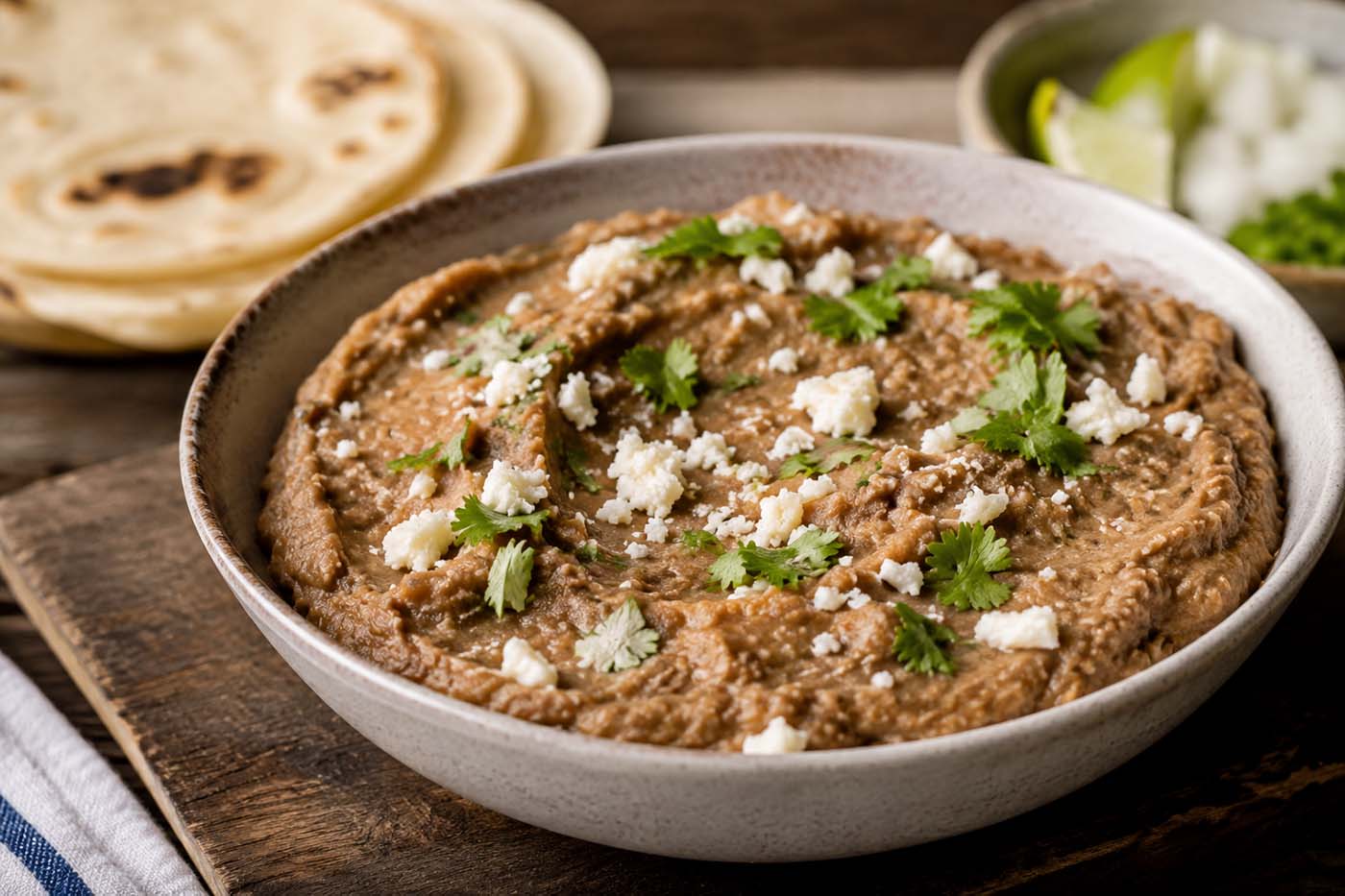
Refried beans are one of the more forgiving foods in a pantry once they’re canned and sealed, and one of the least forgiving foods to can yourself if you get the process wrong. That split personality is really the whole story here: a commercial can of refried beans is about as low-risk as food storage gets, while a home-canned batch made without the right equipment is one of the specific things food safety researchers actually worry about.
Do refried beans go bad?
The short answer: Yes, eventually, but an unopened commercial can is remarkably stable, commonly good for years past its printed date. Once opened, refried beans are more perishable than you might expect compared to something like tomato sauce, generally good for about 3 to 4 days refrigerated rather than a full week, because beans are a low-acid food and don’t get the same natural protection acidic foods do. Homemade refried beans follow the same 3 to 4 day window. The bigger safety story isn’t storage at all, it’s home canning: beans require a pressure canner, not a boiling water bath, because they don’t have enough natural acidity to control the bacteria responsible for botulism on their own.
Beans and tomatoes sit on opposite sides of an important line in food safety. If you’re curious about the tomato side of that comparison, see our guides on whether tomatoes go bad and whether tomato sauce goes bad, and our roundup of foods that last longer than you think covers canned goods more broadly.
📋 Do Refried Beans Go Bad: At a Glance
| Unopened can, pantry | Commonly good for years past the printed date |
| Opened, refrigerated | About 3 to 4 days |
| Homemade, refrigerated | About 3 to 4 days |
| Why the window is shorter than tomato sauce | Beans are low-acid, they don’t have tomatoes’ natural protection |
| Home canning requirement | Pressure canner required; a boiling water bath is not safe for beans |
| Bulging or damaged can | Discard without tasting or opening if possible |
🔑 Key Takeaways
- Beans are classified as a low-acid food, with a pH above 4.6, which puts them in a genuinely different safety category than tomatoes, according to CDC and university extension guidance on home canning.
- That classification isn’t academic. CDC states plainly that pressure canning is the only recommended method for canning low-acid foods like beans, and that boiling water canning will not protect against botulism for this category.
- Opened refried beans last about 3 to 4 days refrigerated, noticeably shorter than a high-acid product like tomato sauce, precisely because beans lack that natural acid protection.
- There’s a real, acknowledged research gap around home canning dry beans: the National Center for Home Food Preservation has stated it has not found tested processing times for beans filled dry directly into jars, and canning this way carries real risk rather than being a minor shortcut.
- A bulging can, an off smell, or an unusual color are not signs to investigate closely. With a low-acid canned food, they’re reasons to discard the can without tasting it.
- A genuinely rotten, decay-like smell in spoiled beans comes from real compounds, putrescine and cadaverine, produced when bacteria break down protein, and research has found these compounds are cytotoxic at concentrations that occur in food, not just unpleasant to smell.
- A normal smell doesn’t fully clear beans that are well past the 3 to 4 day window. Odor and bacterial risk don’t move in perfect lockstep, so the day count matters even when nothing smells wrong yet.
Why Beans Behave Differently Than Tomatoes
🔬 The Mechanism: Low-Acid Foods Need More Heat, Not Just Time
Food safety divides canned foods into two broad categories based on pH: high-acid foods, below 4.6, and low-acid foods, above 4.6. Beans, like most vegetables, meats, and poultry, fall into the low-acid category. That distinction matters because Clostridium botulinum, the bacterium behind botulism, cannot grow in a sufficiently acidic environment, but it can grow in a low-acid, low-oxygen environment like a sealed jar or can. Destroying its spores requires reaching 240°F, a temperature only achievable under pressure, since boiling water alone tops out at 212°F regardless of how long you boil it. That’s the entire reason a pressure canner exists as a distinct piece of equipment: it isn’t about cooking beans faster, it’s about reaching a temperature a pot of boiling water physically cannot reach. Commercial refried beans are processed this way under controlled, verified conditions, which is why a sealed can is so stable. The same is not automatically true of a home-canned batch unless it was processed correctly.
Signs Refried Beans Have Actually Gone Bad
Mold
Fuzzy white, green, or black spots are the clearest sign. Discard the container.
Off Smell, Sourness, or Fermented Odor
Refried beans should smell savory and beany, not sour, yeasty, or sharp. A smell that’s turned distinctly off is a clear signal to stop, and occasionally that smell is much more specific than generic “off”: a genuinely rotten, decay-like odor. That smell has real chemistry behind it.
As bacteria break down protein during spoilage, they produce compounds called putrescine and cadaverine, biogenic amines named, fittingly, for exactly what they smell like. These are the same compounds largely responsible for the odor of decaying animal tissue, and refried beans, being moist, low-acid, and protein-containing, are a reasonable environment for the same bacterial process to occur in.
Beyond just smelling bad, a 2019 peer-reviewed study found that putrescine and cadaverine are cytotoxic, meaning harmful to cells, at concentrations that can actually occur in food, so this isn’t purely a smell issue.
The reverse is also worth knowing: a normal smell doesn’t fully guarantee safety, especially well past the recommended window. University of Missouri Extension notes that improperly handled low-acid foods can carry risk without necessarily showing obvious signs of spoilage first. Odor and bacterial risk don’t move in perfect lockstep, so treat the 3 to 4 day guidance as the actual line, not just a suggestion to be overridden by a smell test.
Sliminess, Unusual Color, or Separation That Doesn’t Stir Back In
Some liquid separation on top is normal and usually stirs back in fine. A slimy texture, a grayish or otherwise off color, or separation that doesn’t recombine into a normal consistency is not.
Bulging, Leaking, or Damaged Can
This is the one that matters most for a low-acid canned food. A can that’s bulging, leaking, severely dented, or rusted through should be discarded without opening it if at all possible, and never tasted to check. Unlike some high-acid foods where gas is occasionally explainable, a bulging can of a low-acid product like beans is a genuine warning sign that should be treated seriously every time.
See also

⚠️ Canning Refried Beans at Home Requires a Pressure Canner, No Exceptions
CDC states directly that pressure canning is the only recommended method for canning low-acid foods, and that an electric multi-cooker, even one marketed as having a canning function, is not an acceptable substitute, since these appliances cannot reliably hold the required temperature for the full processing time. There’s also a specific, less well-known risk worth knowing: the National Center for Home Food Preservation has publicly stated it has not identified tested, research-based processing times for dry beans filled directly into jars before pressure canning, as opposed to beans that are first soaked and heated according to the standard method. Canning dry beans this shortcut way is treated by NCHFP as a real risk of spoilage and possible botulism, not just an unconventional method. If you’re canning beans at home, follow a tested recipe from USDA, NCHFP, or a university extension service exactly, including the soaking and pre-heating steps, rather than adapting your own approach.
Storage: Pantry, Fridge, and Freezer
An unopened commercial can is genuinely one of the more stable items in a pantry, commonly staying good for years past its printed best-by date, since that date is about peak quality rather than a safety cutoff. Once opened, move the beans into a glass or plastic container rather than leaving them in the can. Refrigerated and covered, opened refried beans are commonly cited as good for about 3 to 4 days, a shorter window than a high-acid product like tomato sauce gets, consistent with beans’ low-acid classification, though this figure reflects general convergent guidance on cooked, low-acid foods rather than a single dedicated study on refried beans specifically. Homemade refried beans follow the same 3 to 4 day window as any cooked, perishable food. Freezing is the better option either way if you won’t finish them that fast; frozen and properly sealed, refried beans commonly hold good quality for a couple of months, with texture softening somewhat after thawing.
| Form | Best Storage | Typical Shelf Life |
|---|---|---|
| Unopened, commercial can | Cool, dry pantry | Commonly good for years past the printed date |
| Opened, commercial | Airtight glass or plastic container, refrigerated | About 3 to 4 days |
| Homemade, refrigerated | Airtight container | About 3 to 4 days |
| Frozen, either type | Airtight, freezer-safe container | Best quality for a couple of months |
| Home-canned, correctly pressure processed | Cool, dry pantry | About 1 year for best quality |
If you’re working through a can before storage even becomes a question, refried beans show up in dishes like seven-layer burritos, chicken enchilada boats, and alongside green chile chicken tacos; our Cinco de Mayo recipes roundup has more ways to use a can before it needs storing at all.
Frequently Asked Questions
Is it safe to eat refried beans past the date on the can?
Usually, yes, for an unopened can showing no bulging, leaking, rust, or severe dents. The printed date is about peak quality, not a safety cutoff, and commercially canned refried beans are one of the more stable pantry foods past that date.
Why do refried beans only last 3 to 4 days once opened, when tomato sauce lasts a week?
It comes down to acidity. Beans are a low-acid food, so they don’t have the natural protection against bacterial growth that a high-acid food like tomato sauce has once it’s exposed to air. That’s also exactly why beans require a pressure canner for home canning, while some tomato products can be safely water-bath canned with added acid.
Can I can my own refried beans at home without a pressure canner?
No. CDC and university extension guidance are direct on this point: pressure canning is the only recommended method for low-acid foods like beans, and boiling water canning will not protect against botulism for this category. This isn’t a matter of preference or tradition, it’s about reaching a temperature boiling water physically cannot reach.
Can I use an Instant Pot or electric pressure cooker to can beans?
No. CDC and USDA guidance specifically state that electric multi-cooker appliances, even ones marketed with a canning function, are not recommended for canning low-acid foods, since they can’t be reliably verified to hold the required temperature for the full processing time.
Is it riskier to can dry beans straight into the jar instead of soaking them first?
Yes, and this is a genuinely under-discussed risk. The National Center for Home Food Preservation has stated that it hasn’t identified tested processing times for beans filled dry directly into jars, since dry beans heat differently than pre-soaked, pre-heated beans do. Skipping the soaking step isn’t a harmless shortcut, it’s a real, acknowledged gap in tested safety data.
What should I do if a jar of home-canned beans didn’t seal properly?
If it was processed correctly but simply failed to seal, USDA guidance allows refrigerating and using it within a few days. But if there’s any doubt about whether the correct pressure canning process was followed in the first place, don’t refrigerate and eat it, discard it, since an unsealed jar tells you nothing about whether the contents were actually heated enough to be safe.
Can you freeze refried beans?
Yes, and it’s the better option if you won’t finish an opened can within a few days. Portioned into an airtight, freezer-safe container, refried beans commonly hold good quality for a couple of months, though the texture softens somewhat after thawing.
Do refried beans need to be refrigerated before opening?
No. An unopened commercial can is shelf stable in a cool, dry pantry thanks to commercial pressure processing, and doesn’t need refrigeration until it’s opened.
What does it mean if a can of refried beans is bulging or leaking?
Treat it as a real warning sign and don’t taste it or open it if you can avoid it. For a low-acid canned food like beans, a bulging or leaking can points to gas-producing bacterial activity, potentially including the organism responsible for botulism, and should be discarded rather than investigated further.
Are vegetarian or lard-free refried beans different for storage purposes?
Not meaningfully. The base ingredient is still low-acid beans either way, so the same acidity-driven storage logic and the same 3 to 4 day refrigerated window after opening apply regardless of what fat or seasoning was used.
Why don’t refried beans get the same “just check the smell” leniency some other pantry foods do?
Because the specific risk with a low-acid canned food, botulism, is unusual in that improperly processed food can be dangerous without necessarily smelling or looking off. That’s exactly why the can itself, bulging, leaking, rust, dents, matters so much here, and why the guidance leans toward discarding questionable cans rather than a smell-and-decide approach.
Yes, reheat them until they reach 165°F throughout, the standard safe reheating temperature for leftovers generally. This matters more the closer you are to the end of that 3 to 4 day window. If you’re reheating leftovers of any kind regularly, our guide on why reheating food twice can be risky covers the broader logic behind this.
My beans have been in the fridge for over a week but smell fine. Are they safe?
Not necessarily, and this is worth taking seriously rather than trusting the smell test alone. A week is well past the 3 to 4 day guidance for a low-acid food, and odor and bacterial risk don’t always track together, extension guidance notes that improperly handled low-acid foods can carry risk without obvious spoilage signs showing up first. A normal smell means it probably hasn’t reached the extreme, obvious end of spoilage. It doesn’t mean it’s within a range anyone can vouch for. Once you’re that far past the window, discarding it is the safer call even without an off smell.
Why do old refried beans sometimes smell like decay?
That smell comes from real chemistry, not just general “off” spoilage. Bacteria breaking down protein produce compounds called putrescine and cadaverine, the same biogenic amines largely responsible for the odor of decaying tissue generally. Refried beans, being moist, low-acid, and protein-containing, provide a workable environment for the same bacterial process. If you notice this specific smell, don’t taste it to confirm, discard it.
This article summarizes general food safety information drawn from CDC, the National Center for Home Food Preservation, and university extension sources. It is meant to help you make an informed decision, not to replace your own judgment, and home canning in particular should follow a tested, research-based recipe rather than general guidance alone. Shelf life ranges here are typical, not guarantees, since actual results depend on the specific product and how it was stored. If refried beans show mold, bulging, an off smell, or unusual texture, discard them regardless of what this guide says about typical shelf life.
Further Reading
Better Living may earn commissions through affiliate links and may occasionally feature sponsored or partner content. If you make a purchase through our links, we may receive a small commission at no cost to you.