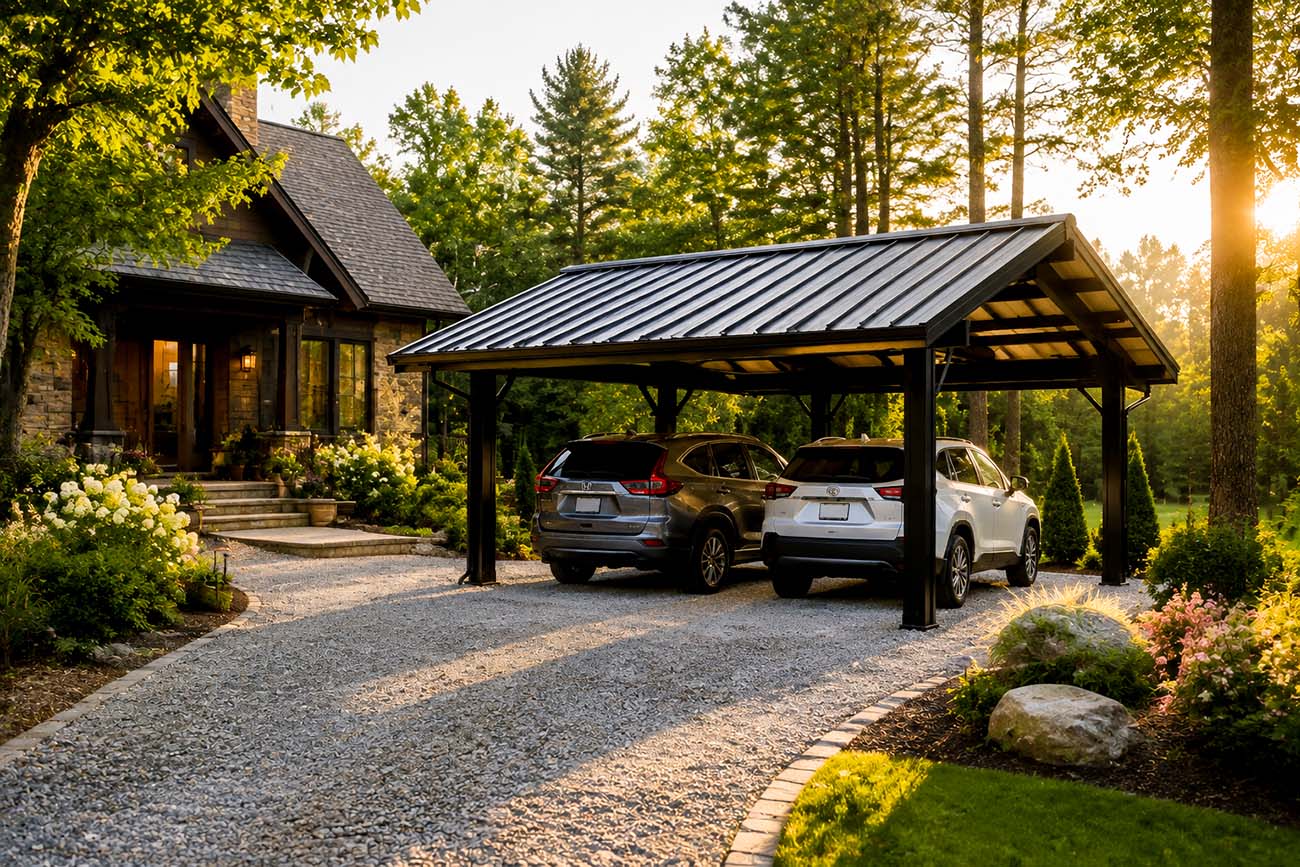
Weather exposure can damage vehicles, equipment, and outdoor spaces faster than many expect. Sun, rain, snow, and wind test any canopy year after year, and the material underneath the roof is usually what decides whether that testing ends in a repair bill. Homeowners and businesses want protection that lasts without constant upkeep, and the choice between steel and wood is where that starts.
Many buyers begin by reviewing options such as carport kits when planning a covered outdoor space. Canopy material plays a major role in performance, and the differences between steel and wood show up fastest in the conditions that actually stress a structure: heavy snow, driving rain, and years of freeze-thaw cycles.
Strength that holds up under pressure
Steel canopies provide consistent strength across their entire structure. Metal frames distribute weight evenly and resist bending under stress, so snow loads, heavy rain, and strong winds place less strain on the supports than they would on a comparable wood frame.
Wood structures can weaken over time as moisture enters joints. Small shifts lead to sagging or cracking, and once that starts, it tends to compound. Steel avoids those gradual failures almost entirely. That steady strength keeps the canopy stable through seasonal changes, which matters most in climates that swing hard between wet and dry, or hot and freezing.
Resistance to moisture and weather damage
Moisture causes most outdoor structure problems. Wood absorbs water, which leads to rot, warping, and surface breakdown over time. Steel resists moisture and dries quickly after storms instead of holding onto it.
Steel panels and frames stay intact through repeated freeze and thaw cycles, which matters in climates with frequent weather shifts. A siliconized polyester finish, the kind used on Norsteel’s own structures, adds another layer of defense against corrosion on top of the base steel. Over time, that resistance reduces repairs and extends the canopy’s useful life without requiring constant attention.
What actually goes into a steel canopy:
- 26-gauge steel panels, resistant to corrosion and extreme weather
- Siliconized polyester finish, available in a range of colors
- Pre-engineered design, which speeds up construction and cuts labor time
- Fire-rated compliance documentation available for code requirements
Lower maintenance over time
Upkeep demands affect long-term cost more than most people budget for upfront. Wood canopies require sealing, staining, and frequent inspections, and missed maintenance shortens their lifespan fast.
Steel canopies need far less care. Occasional cleaning keeps surfaces clear, and the structural components remain stable without regular treatments. For property owners who value simplicity, that reduced maintenance saves real time and effort. A canopy should protect assets, not create extra work every season.
See also

Fire and pest resistance benefits
Safety factors matter for any structure near homes or equipment. Steel does not attract insects or rodents, while wood usually becomes a target for pests over time. Outdoor wooden structures like decks, sheds, and carports are specifically called out as vulnerable to termite activity, especially without treated materials, which is one more reason steel avoids the problem at the source rather than managing around it.
Fire behavior comparison
Steel does not burn or contribute fuel during a fire. Wood structures increase fire spread risk when exposed to heat or sparks. This difference adds real peace of mind for properties near brush, equipment, or storage areas, and it’s worth asking any manufacturer for their fire-rated compliance documentation rather than taking the claim at face value.
Long-term value and consistent performance
Durability affects value over the years of use, not just at installation. Steel canopies maintain their shape and function without gradual decline, which protects vehicles and equipment reliably over the long run. This is also where a home less prone to weather damage pays for itself, since the same principles that protect a canopy apply to the rest of a property.
Performance over time
Steel holds alignment and load capacity longer than wood, so owners avoid frequent repairs or replacements. Established manufacturers with decades in the business and thousands of completed projects tend to have the track record to back that up, which is worth checking before comparing carport kits on price alone. Folding a canopy purchase into a broader home maintenance routine also makes it easier to catch small issues, on the canopy or elsewhere, before they become expensive ones. Steel supports predictable use without surprise issues, and that predictability is really the whole case for it.
Steel canopies deliver protection that stays dependable through weather, time, and daily exposure. Strength, moisture resistance, and lower upkeep all matter when choosing outdoor coverage, and the safety advantages add another layer of confidence on top. Wood canopies may look appealing at first, but steel offers lasting performance without the recurring maintenance or uncertainty that comes with it.
Better Living may earn commissions through affiliate links and may occasionally feature sponsored or partner content. If you make a purchase through our links, we may receive a small commission at no cost to you.