
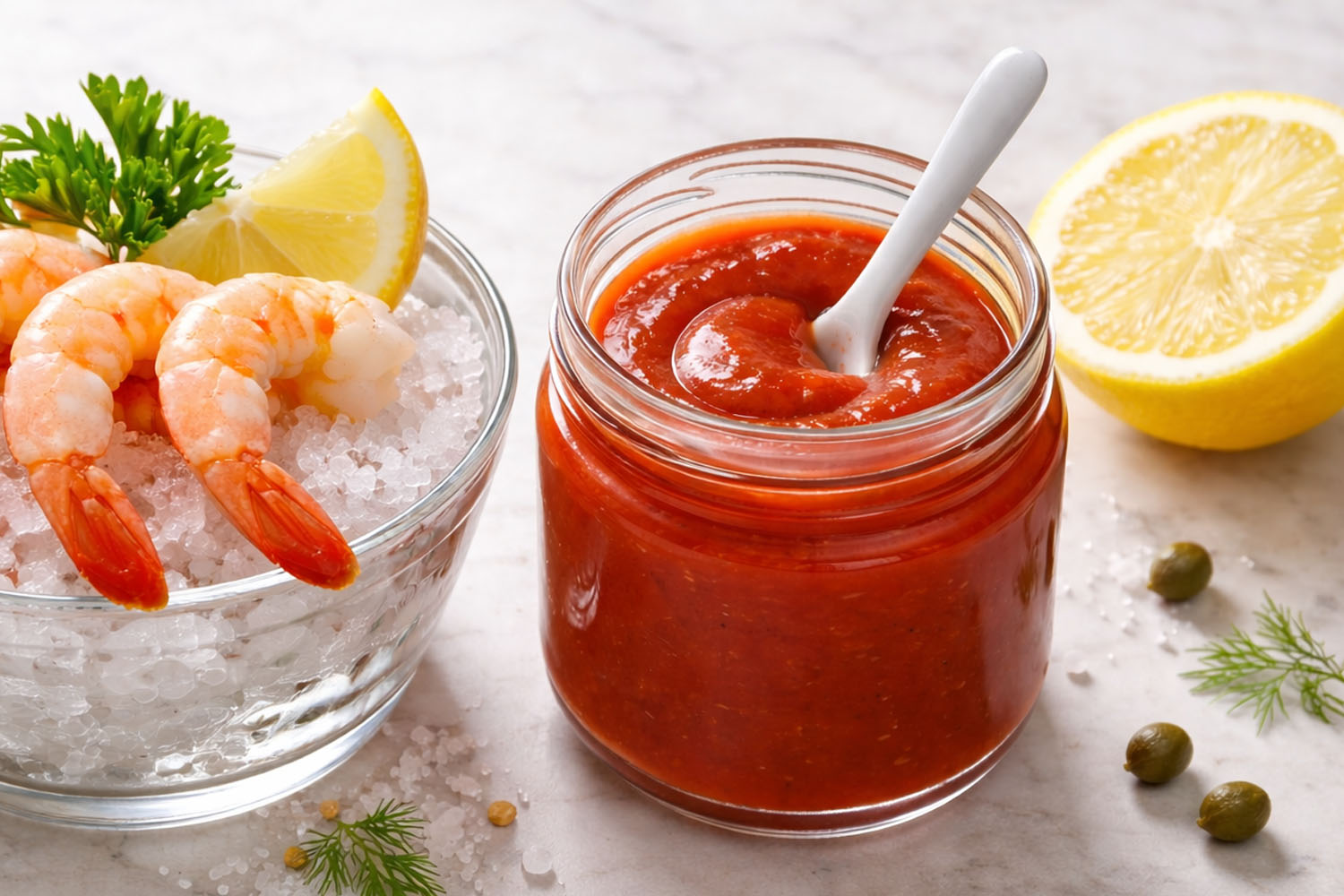
You find a half-used jar of cocktail sauce in the back of the fridge and wonder how long it has been sitting there. Or maybe you unearthed an unopened bottle that is past its best-by date and you are not sure whether to toss it. Does cocktail sauce go bad?
The short answer: Yes, cocktail sauce does go bad, though it is one of the more stable condiments thanks to its high-acid base of ketchup, vinegar, and lemon juice. The safety story and the quality story are actually two different things here, and the horseradish component is the key to understanding why.
For a full overview of how condiments and pantry staples compare on shelf life, visit our Complete Food Storage Guide.
Key Takeaways
- Cocktail sauce does go bad, but it is far more forgiving than mayo-based condiments like tartar sauce or ranch.
- Unopened commercial cocktail sauce: best quality up to 18 months in the pantry.
- Opened and refrigerated: 6 to 9 months for best quality.
- The real quality issue is the horseradish. The heat degrades significantly over time even in a perfectly safe jar.
- Homemade cocktail sauce: 1 to 2 weeks refrigerated.
- Freezing is possible for cooked homemade versions but not recommended for most commercial sauces.
How Long Does Cocktail Sauce Last?
Cocktail sauce is built on a tomato and vinegar base: essentially ketchup with horseradish, lemon juice, and Worcestershire sauce. That high-acid composition gives it natural preservation qualities that make it far more shelf-stable than egg or dairy-based condiments. The USDA treats opened cocktail sauce similarly to ketchup, which is why the refrigerated shelf life is measured in months rather than days.
| Type | Pantry (Unopened) | Refrigerator (Opened) |
|---|---|---|
| Commercial cocktail sauce | Up to 18 months | 6 to 9 months |
| Homemade cocktail sauce | Not applicable | 1 to 2 weeks |
Quality estimates based on continuous refrigeration after opening and proper storage. Best-by dates on commercial cocktail sauce indicate peak quality, not safety cutoffs. Guidelines align with USDA FoodKeeper recommendations for tomato-based condiments.
The Horseradish Problem: When Cocktail Sauce Goes Mild Before It Goes Bad
This is the distinction most cocktail sauce guides miss entirely, and it is what makes storage genuinely important even for a high-acid condiment.
Cocktail sauce gets its characteristic heat from horseradish, which produces its pungency through volatile compounds called isothiocyanates. These compounds are inherently unstable. When horseradish is ground and exposed to air, those compounds begin breaking down, and the heat fades. Vinegar slows this process significantly, which is why commercial cocktail sauce retains reasonable heat for months rather than days. But even with refrigeration, the horseradish heat in cocktail sauce diminishes meaningfully over time.
The practical result: a jar of cocktail sauce that has been open for 6 months may be perfectly safe to eat but taste noticeably milder and flatter than when you first opened it. The sauce has not spoiled in a food safety sense, but the quality has degraded in a way that matters if you want that sinus-clearing bite with your shrimp.
What this means for storage: refrigerate promptly, keep tightly sealed after every use to minimize air exposure, and if you want cocktail sauce at its spiciest, buy fresh and use it within the first few months of opening.
Is Cocktail Sauce Different from Tartar Sauce?
Two Very Different Condiments
Cocktail sauce and tartar sauce are both classic seafood companions, but they sit in completely different food safety categories. Cocktail sauce is tomato and vinegar-based, in the same general category as ketchup, with strong natural acid preservation. Leaving it at room temperature for a few hours is not a food safety emergency the way it would be with tartar sauce.
Tartar sauce is mayo-based, which means it contains egg emulsion and requires strict refrigeration after opening. The 2-hour room temperature rule applies firmly to tartar sauce. Cocktail sauce is far more forgiving on that front, though refrigerating after opening is still the right practice for quality. For everything on tartar sauce storage, see: Does Tartar Sauce Go Bad?
Signs That Cocktail Sauce Has Gone Bad
When to Throw It Out
Mold: Any visible mold growth on the surface or around the lid means discard the entire jar immediately. Do not scoop around it.
Off smell: Fresh cocktail sauce has a bright, tangy, tomato-forward aroma with a sharp horseradish note. If it smells sour, fermented, or otherwise unpleasant, discard it.
Color change: Cocktail sauce should be a vibrant red. If it has turned brown, dark, or significantly duller, the sauce has oxidized and deteriorated beyond use.
Fizzing or bubbling: Any visible gas activity when you open the jar is a sign of fermentation. Discard immediately.
Separated and watery texture that will not stir back: Some minor separation is normal and stirs back easily. Permanently watery or broken-down texture means the sauce has degraded past the point of use.
Noticeable loss of heat and flat flavor: This is the quality signal rather than a safety warning, but a cocktail sauce that has gone completely mild and flat has lost the entire point of using it. At that stage it is worth replacing even if it is technically safe.
A note on bulging lids: Check the lid before opening any unopened jar. A lid that bulges upward or does not give a satisfying pop when opened indicates pressure buildup inside the jar. Do not use it.
How to Store Cocktail Sauce Properly
Storage Best Practices
Refrigerate after opening. While cocktail sauce will not become dangerous at room temperature the way mayo-based condiments will, refrigeration is the right call for both quality and safety. The horseradish heat degrades faster at room temperature, and the tomato base will deteriorate more quickly without cold.
Keep the lid tight. Air exposure is the primary driver of horseradish heat loss. Seal the jar firmly after every use.
Store in the body of the fridge, not the door. Temperature fluctuations at the fridge door accelerate quality loss. Keep cocktail sauce on a main shelf.
See also
Use a clean spoon or pour into a serving bowl. Cross-contamination from double-dipping or used utensils introduces bacteria that can shorten the shelf life of even a high-acid condiment.
Label the opening date. A half-used jar of cocktail sauce sitting in the back of the fridge with no date is exactly how you end up with a jar that has been open for 14 months. Write the date on the lid.
Homemade cocktail sauce: keep refrigerated at all times and use within 1 to 2 weeks. Homemade versions lack commercial preservatives and the horseradish heat will fade noticeably within the first week.
Recipes That Call for Cocktail Sauce
These Better Living seafood recipes are the natural home for a fresh jar:
Frequently Asked Questions
Can I use cocktail sauce past its best-by date?
For an unopened jar in good condition, yes. Best-by dates on commercial cocktail sauce are quality indicators, not safety cutoffs. An unopened jar that is a few months past its date is generally fine to use if there are no signs of spoilage. Once opened, follow the 6 to 9 month refrigerated guideline and trust your senses. A jar that smells and looks normal is almost certainly still safe; the bigger question past that point is whether the horseradish heat is still there.
Why has my cocktail sauce lost its heat?
The horseradish compounds responsible for the heat are volatile and unstable. They break down over time when exposed to air, even in refrigeration. This is a quality issue rather than a safety issue, but it is the primary reason cocktail sauce gets worse with age even when it is technically still safe. If your cocktail sauce has gone completely mild, it is worth replacing rather than using on good seafood.
Can I freeze cocktail sauce?
Commercial cocktail sauce is not ideal for freezing. The tomato base can separate on thawing and the texture becomes watery. Homemade cocktail sauce freezes reasonably well for up to 6 months if you use a cooked tomato base rather than straight ketchup, though expect some texture change. For most people, a fresh jar of commercial cocktail sauce is the better option over frozen leftovers.
Is it okay to leave cocktail sauce out during a meal?
Yes. Unlike tartar sauce or ranch, cocktail sauce’s high acid content means leaving it on the table for the duration of a meal is fine. The general 2-hour rule for perishable foods applies as a conservative guideline, but cocktail sauce is among the more forgiving condiments in this regard. Return any remainder to the fridge after the meal rather than leaving it out indefinitely.
Further Reading
Better Living may earn commissions through affiliate links and may occasionally feature sponsored or partner content. If you make a purchase through our links, we may receive a small commission at no cost to you.