
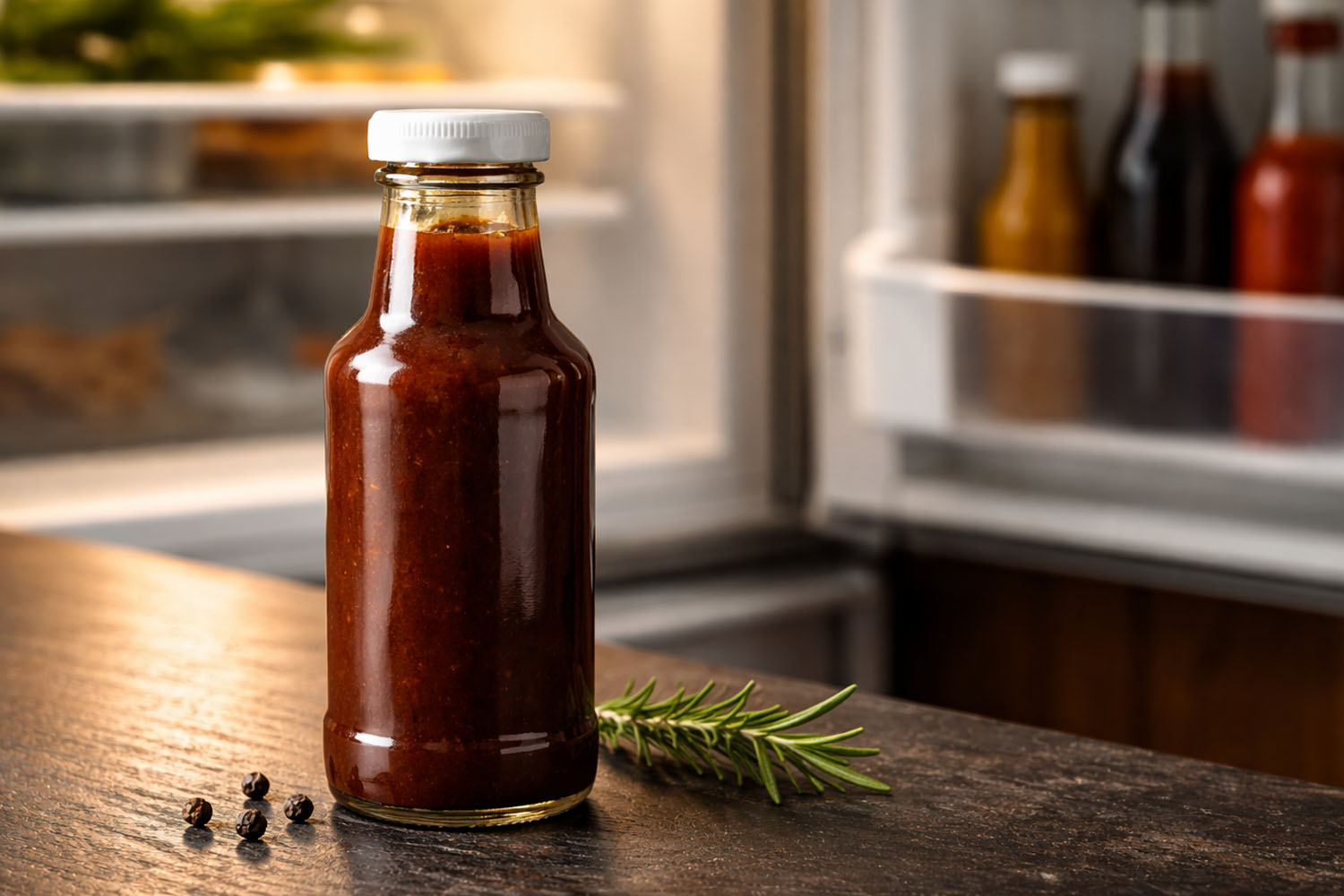
Dinner is done and the steak sauce bottle is sitting on the counter. Does it go back in the fridge, or can it stay in the pantry with your other condiments? Does steak sauce need to be refrigerated?
The short answer: Steak sauce does not require refrigeration for safety, but refrigerating it after opening is the right call if you want it to stay at peak quality. It is in the same category as Worcestershire sauce and ketchup: stable enough to live in a pantry, but better in the fridge for long-term quality.
For a full overview of how condiments and pantry staples compare on storage needs, visit our Complete Food Storage Guide.
Key Takeaways
- Refrigeration is not required for safety after opening. Steak sauce’s high-acid, high-sugar base prevents bacterial growth.
- Refrigeration is recommended for quality. An opened bottle lasts up to 2 years in the fridge versus 6 months to 1 year in the pantry.
- Unopened bottles: pantry-stable for 2 to 3 years.
- A.1. Sauce and most commercial brands recommend refrigerating after opening on their labels, consistent with maximizing quality.
- Homemade steak sauce must always be refrigerated and used within 1 week.
Why Steak Sauce Does Not Require Refrigeration
Steak sauce is built on a foundation of high-acid, high-sugar ingredients: tomato puree, distilled vinegar, raisin paste, fruit concentrates, salt, and corn syrup. A.1. Sauce, the dominant brand in the US, also contains potassium sorbate as a commercial preservative. This combination creates conditions that are genuinely hostile to bacterial growth.
The FDA and USDA FoodKeeper treat tomato and vinegar-based condiments like steak sauce in the same category as ketchup: shelf-stable after opening, though refrigeration extends quality. This is a fundamentally different situation from mayo-based condiments like tartar sauce or ranch dressing, where refrigeration is a genuine safety requirement after opening.
If you use steak sauce frequently and go through a bottle within a few months, storing it in the pantry is perfectly acceptable. If it sits for longer, refrigerate it.
What Happens If You Do Not Refrigerate Opened Steak Sauce
The sauce will not make you sick, but its quality will decline faster. Leaving opened steak sauce at room temperature accelerates three things: oxidation, which darkens the color; flavor degradation, which flattens the complex sweet-tangy-savory profile; and gradual thickening from the fruit pectin in the tomato and raisin base. None of these changes are dangerous, but they do mean the sauce stops tasting the way it should.
A bottle of steak sauce left in the pantry after opening is generally fine for 6 months to a year before the quality decline becomes noticeable. Past that point, the sauce will taste significantly duller even if it shows no visible signs of spoilage.
Steak Sauce vs. Other Condiments on Refrigeration
Where Steak Sauce Sits on the Spectrum
Understanding steak sauce storage is easier when you place it alongside condiments you already know.
Does not need refrigeration after opening (safety or quality): soy sauce, Worcestershire sauce, pure honey, distilled vinegars. High salt, fermentation, or indefinite shelf stability.
Does not need refrigeration for safety but benefits from it for quality: steak sauce, ketchup, mustard, hot sauce (vinegar-based). High-acid base keeps them safe; cold preserves flavor complexity.
Must be refrigerated after opening for safety: tartar sauce, mayonnaise, ranch dressing, Caesar dressing. Egg or dairy base creates genuine food safety risk at room temperature. For more on why these are different, see: Does Tartar Sauce Need to Be Refrigerated?
The Practical Rule
If you go through a bottle of steak sauce within 2 to 3 months, pantry storage is fine. Should it sit for 6 months or more, put it in the fridge. If it’s been open for more than a year without refrigeration, smell and taste it before using on anything you care about. Refrigerating steak sauce is a quality decision, not a safety requirement.
How to Store Steak Sauce Properly
Storage Best Practices
Unopened bottles: cool, dark pantry. Keep away from heat sources and direct light. An unopened bottle stored properly stays at peak quality for 2 to 3 years.
Opened bottles: refrigerate for best quality. Not a safety requirement, but the fridge extends the flavor life from roughly 6 months to up to 2 years.
Keep the lid tight after every use. Air exposure is the primary driver of oxidation and flavor loss. Seal firmly.
See also
Do not leave on the grill table indefinitely. A bottle left next to a hot grill all afternoon, then stored at room temperature afterward, degrades faster than one that goes straight back to the fridge. Use what you need, then put the bottle away.
Use clean utensils or pour from the bottle. Cross-contamination is the main way a highly stable condiment gets spoiled early.
Label the date when opened. A steak sauce bottle can disappear into the back of a fridge or pantry shelf and reappear two years later with no clear indication of how old it is.
Ready to Cook? Try These Recipes
Frequently Asked Questions
I left steak sauce out overnight. Is it still safe?
Yes. The high-acid, high-sugar composition of commercial steak sauce means leaving it at room temperature overnight is not a food safety concern. Smell it before using. If it smells and looks normal, it is fine. The more meaningful effect of leaving it out overnight is marginal quality decline from air and temperature exposure, not bacterial danger.
Does the A.1. bottle say to refrigerate after opening?
Yes, A.1. recommends refrigerating after opening on its label. This is a quality recommendation, not a safety warning. The label guidance aligns with maximizing the shelf life and flavor of the sauce. Refrigeration keeps it at peak quality for up to 2 years after opening versus 6 months to a year in the pantry.
Can I freeze steak sauce?
Commercial steak sauce is not ideal for freezing. The texture can become gelled or watery on thawing because of the tomato and fruit pectin base. Given that opened commercial steak sauce lasts up to 2 years refrigerated, freezing is rarely necessary. Homemade steak sauce can be frozen in small portions for up to several months if you want to preserve a larger batch.
Further Reading
Better Living may earn commissions through affiliate links and may occasionally feature sponsored or partner content. If you make a purchase through our links, we may receive a small commission at no cost to you.