
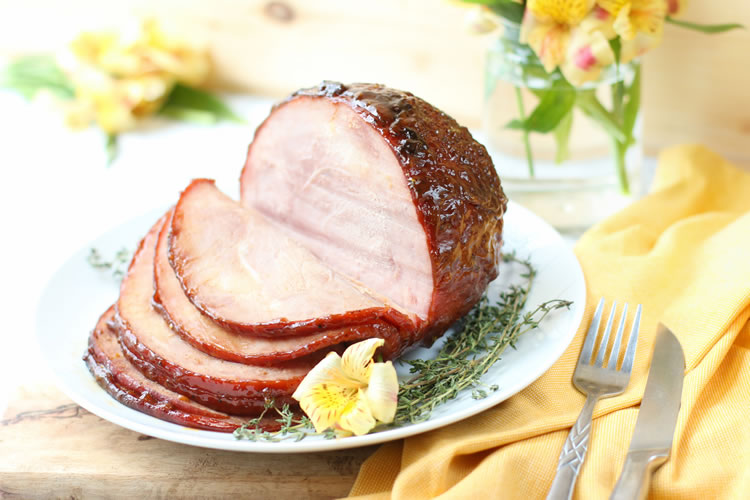
The Ultimate Easter Ham Glaze
Nothing makes an Easter dinner idea feel more complete than a beautiful, golden ham at the center of the table. Sweet peaches, fragrant honey, warm spices, and a generous splash of white cooking wine come together in a glaze that caramelizes into the most incredible lacquered crust. It is a fun twist on the classic pineapple ham pairing, and once you try it, you may never go back.
The subtle fruitiness of the peach preserves plays off the salty, savory ham in the most satisfying way. Fresh thyme adds an herbal, almost floral note that makes this glaze feel genuinely elegant with very little effort. Best of all, you can make it ahead, which makes this one of the most practical make-ahead Easter recipes in our collection.
What makes this glazed ham recipe special: The recipe works on any style of fully cooked ham, the glaze comes together in one saucepan, and the results look and taste like something from a high-end holiday spread. The white cooking wine keeps the sweetness balanced while creating incredible basting juices as the ham roasts.
Quick Stats: 10 min prep | Approx. 2 hr cook time | Serves 20 | Works on any fully cooked ham | Glaze can be made 3 days ahead
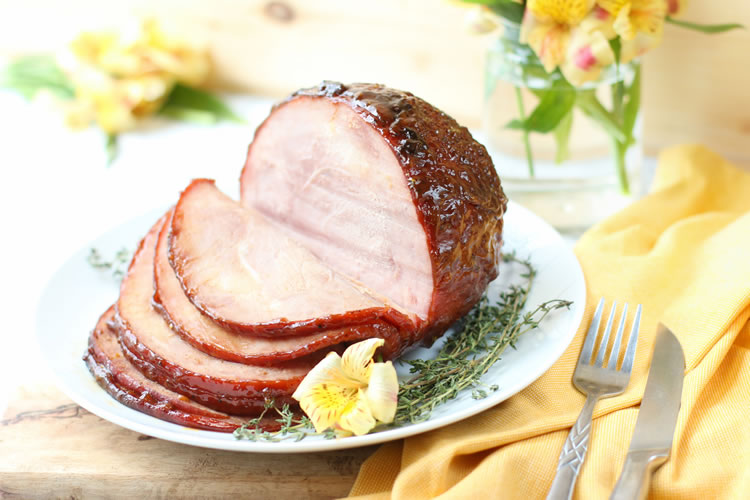
Why This Glaze Works So Well
The combination of peach preserves, honey, and Dijon mustard creates a glaze with three distinct flavor layers: fruity sweetness, floral depth, and a savory tang that keeps the whole thing from tipping into dessert territory. The Dijon is the quiet hero here. It emulsifies the glaze and adds a subtle sharpness that makes every bite more interesting.
Holland House White Cooking Wine brings it all together. Its slightly dry, crisp character cuts through the sweetness without dulling it, and the wine in the bottom of the roasting pan creates a savory steam that keeps the ham incredibly moist throughout cooking. Stir those drippings back into any remaining glaze before serving and you have an instant table sauce that guests will ask about.
Perfect Occasions for This Glazed Ham:
- Easter Sunday as the centerpiece of an easy Easter dinner
- Mother’s Day brunch served alongside eggs and fresh fruit
- Spring entertaining and backyard gatherings
- Christmas and New Year’s when you want something showstopping but manageable
- Meal prep since leftovers keep for days and work in dozens of recipes
Which Type of Ham Should You Buy?
This is the question that trips people up most at the grocery store. Here is a quick breakdown to make the decision easy.
Bone-in ham delivers the richest, most traditional flavor. The bone conducts heat through the meat and adds body to the drippings. The leftover bone is fantastic for soups and stews. Carving at the table takes a little more effort but is part of the occasion.
Boneless ham slices cleanly and looks stunning on a platter. Ideal if you want a picture-perfect presentation or need to serve a large group quickly.
Spiral-cut ham is the easiest of all. It is precooked and pre-sliced in a continuous spiral around the bone, so it fans apart beautifully. The glaze gets into every single layer and serving is as simple as pulling slices away. This is our top pick for a stress-free Easter dinner.
Important: Toss the Packet Glaze
Most store-bought hams come fully cooked and often include a glaze packet. Throw it away. Making your own takes about 10 minutes and tastes infinitely better. A homemade glaze also locks in moisture in a way those sugary packets simply cannot match.
How much ham to buy: Plan for about 1/4 lb of boneless ham per person, or 3/4 lb per person for a bone-in ham. When in doubt, buy a little extra. Leftover glazed ham makes incredible sandwiches, ham and egg chilaquiles, and adds incredible depth to a pot of tortilla soup. For storage guidance, see our full guide on how long you can keep ham in the fridge.
How to Make and Apply the Glaze
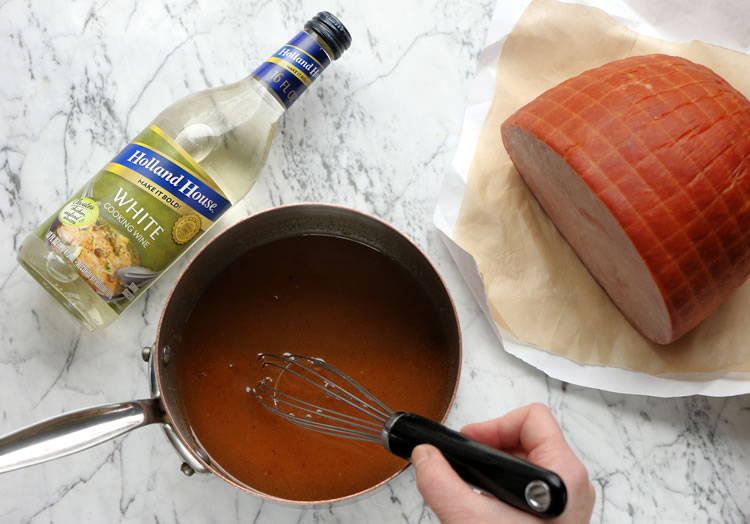
The method here is as simple as it gets. Whisk all the glaze ingredients together in a small saucepan, bring to a boil, then drop the heat and simmer for 3 to 4 minutes. You are watching for it to thicken slightly and turn glossy. That is it.
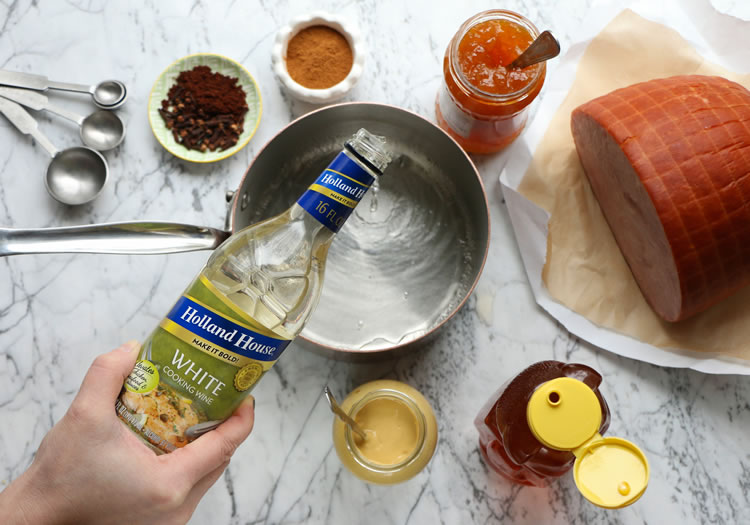
Step 1. Make the glaze. Whisk together the peach preserves, 1/4 cup of the cooking wine, honey, Dijon mustard, cloves, and cinnamon in a small saucepan. Add the thyme sprigs, bring to a boil, then reduce to a simmer for 3 to 4 minutes until slightly thickened. Remove from heat.
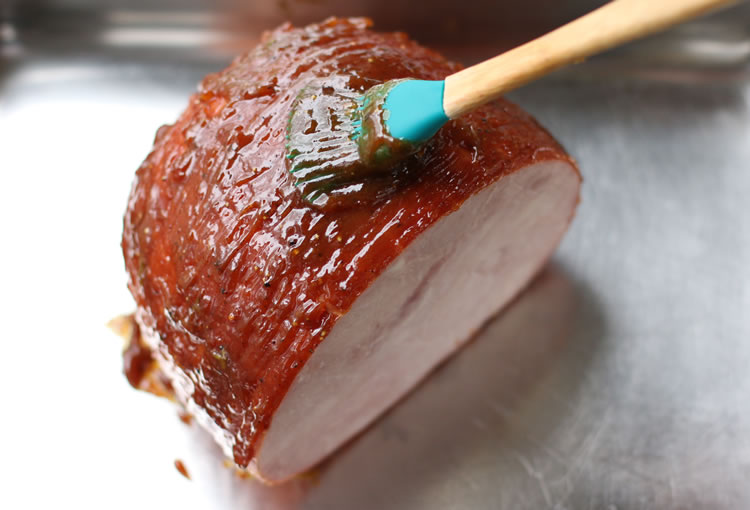
Step 2. Prep the ham. Let the ham come to room temperature while the oven preheats to 325 degrees F. Place on a rack in a roasting pan and brush generously with glaze all over the surface. Pour the remaining 1/2 cup of cooking wine into the bottom of the pan.
Step 3. Roast and baste. Tent loosely with foil and bake. Every 30 minutes, pull back the foil, baste with the pan drippings, and brush on more glaze. Re-tent after each basting. Add more cooking wine to the pan if the drippings get too low.
Step 4. Check the temperature. The ham is done when a meat thermometer inserted into the thickest part reads 140 degrees F, approximately 1.5 to 2 hours. Let rest 15 minutes before carving, then stir the pan drippings into any remaining glaze to serve alongside.
Pro Tips for the Best Results:
- Let the ham sit at room temperature for 30 to 60 minutes before roasting for more even cooking
- The layering process is what creates the gorgeous caramelized exterior. Do not skip the basting steps
- If the glaze starts to darken too quickly toward the end, tent more loosely or lay a fresh sheet of foil on top
- The glaze can be made up to 3 days ahead and refrigerated. Warm gently before using
- Apricot preserves or mango jam make excellent substitutes for peach if that is what you have on hand
Get the Recipe!
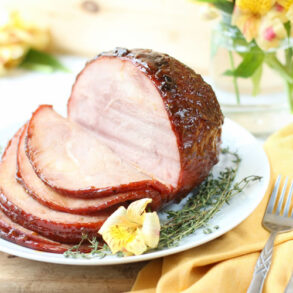
Peaches, Honey & Wine Glazed Ham
This easier than ever fruity ham glaze with a touch of white cooking wine, will give your ham that extra special kick to amaze your guests. This glaze will work for any style ham.
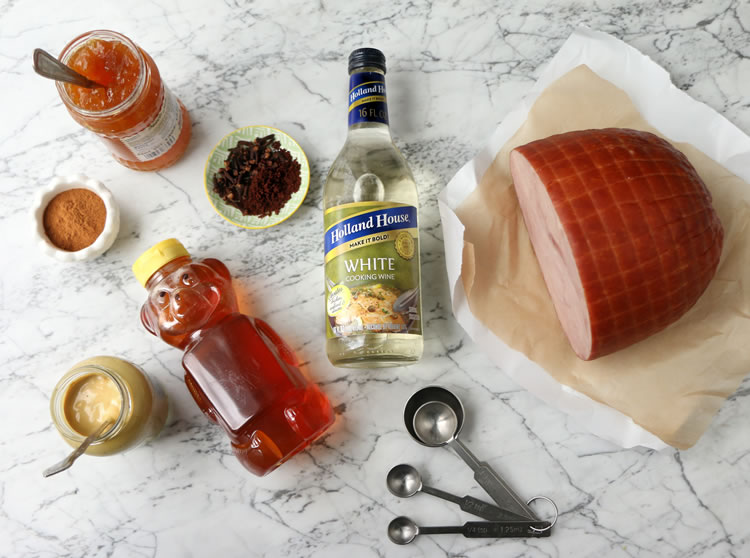
- 1 8-10 pound fully-cooked whole ham
- 1/2 cup peach preserves or jam
- 3/4 cup Holland House White Cooking Wine, divided
- 1/4 cup honey
- 1/4 cup Dijon mustard
- 1 teaspoon ground cloves
- 1/2 teaspoon cinnamon
- 3-4 sprigs fresh thyme (optional)
-
Remove ham from the refrigerator, place on a rack in a roasting pan and let stand until brought to room temperature. Preheat oven to 325 degrees.
In a small saucepan whisk together the peach jam or preserves, 1/4 cup white cooking wine, Dijon mustard, ground cloves and cinnamon in a small saucepan. Add the fresh thyme and bring to boil and over medium-high heat. Once boiling, lower heat and simmer for 3 to for minutes or until glaze has thickened slightly. Remove from heat.Brush the glaze over the exterior of the ham. Add the remaining 1/2 cup of wine to the bottom of the pan and place in the oven to bake. Tent with foil and baste about every 30 minutes, adding more glaze if needed until the ham is finished baking. You may also add more cooking wine to the bottom of the pan if you need more juices to baste with. The ham is done baking when it reaches 140° F (60 degrees C) when tested with a meat thermometer inserted into the thickest part of the meat. Approximately 1 ½ to 2 hours.To serve, stir the ham drippings into any remaining glaze, removing visible fat and serve at the table with the sliced ham.
More Ways to Use Holland House White Cooking Wine This Spring
Holland House White Cooking Wine has a slightly dry, crisp flavor that enhances rather than competes with whatever you are making. It is one of those pantry staples that earns its place year-round. A few of our favorite spring uses beyond this glaze:
- A splash into soups and chowders to brighten the base
- Deglazing a pan for quick cream sauces over chicken or fish
- Replacing one third of the water when cooking rice for extra depth
- Balancing the heat in spicy dishes without watering them down
- Simmering shrimp or scallops for a light spring appetizer
Holland House Cooking Wines come in White, White with Lemon, Marsala, Red, and Sherry. Find more recipes at hollandhouseflavors.com or follow them on Facebook and Pinterest.
What to Serve with Easter Ham
If you are building out your full Easter menu, this ham is incredibly versatile about what goes alongside it. It loves the company of starchy, creamy sides that can soak up those incredible pan drippings. Fresh, bright flavors also work beautifully to balance the richness of the glaze.
Perfect Easter Table Pairings:
- Scalloped potatoes to soak up the pan drippings
- Roasted asparagus with lemon and olive oil
- Fresh spring salad with strawberries and pecans
- Dinner rolls for building leftover sandwiches later in the week
- A bright lemon dessert to finish, like our luscious lemon tart
- Easter cookies for dessert, like these no-sugar Easter sugar cookies if you are keeping things lighter
What to Do with Leftover Ham
Leftover peach-glazed ham is one of the best Easter bonuses. The sweet, caramelized crust makes it especially good in dishes where the ham needs to pull some flavor weight on its own. Try it in ham and egg chilaquiles for a weekend brunch, layer it into a croque monsieur for something fancy with almost no effort, stir diced ham into a crustless veggie quiche, or toss it into a pot of gumbo.
See also

Frequently Asked Questions About Glazed Ham
Can I use fresh peaches instead of preserves?
Preserves work much better here because they have the concentrated sweetness and pectin needed to create a glaze with the right consistency. Fresh peaches have too much water content and the glaze will not thicken properly or adhere to the ham. If peach is not available, apricot or mango preserves are excellent substitutes.
What if I cannot find Holland House White Cooking Wine?
A dry white wine or a light chicken broth can work in a pinch, though the flavor profile will be slightly different. Cooking wines are specifically formulated for flavor stability in heat, so they are the best choice for this application.
My glaze is burning before the ham is done. What do I do?
This usually means your oven is running a little hot or the ham is on a rack too close to the top element. Tent more securely with foil and lower the oven temperature by 25 degrees. You can also hold off on the final glaze application until the last 30 minutes of cooking.
Can I make this glaze ahead of time?
Absolutely. The glaze keeps in the refrigerator in an airtight container for up to 3 days. Warm it gently in a saucepan before using as it will thicken considerably when chilled. This makes it one of the most practical make-ahead Easter recipes you can add to your holiday prep.
How long can I keep leftover ham in the fridge?
Properly stored in an airtight container, leftover cooked ham will keep for 3 to 5 days in the refrigerator. For longer storage, it freezes well for up to 2 months. See our full post on how long you can keep ham in the fridge for complete food safety guidance.
Can I make this glaze without Dijon mustard?
The Dijon does a lot of quiet work here, so we recommend keeping it in if you can. It adds a subtle savory sharpness that prevents the glaze from tasting one-dimensionally sweet. If you truly cannot use it, a small spoonful of whole grain mustard or even a teaspoon of apple cider vinegar will help maintain that balance.
A Glazed Ham Worth Every Minute
This peach, honey, and wine glazed ham proves that the most impressive Easter dinner ideas do not have to be complicated. With 10 minutes of active prep and a simple basting routine, you get a ham that looks like you spent all day on it. The glaze is fruity, warm, and perfectly balanced. The ham stays incredibly moist. And the leftovers keep the good eating going all week.
The key to success? Use real peach preserves, do not skip the Dijon, and baste faithfully every 30 minutes. Do those three things and you will have a glazed ham that earns a permanent spot in your holiday rotation.
Made this glazed ham? We would love to hear how it turned out! Leave a comment below and let us know if you tried any variations on the glaze.
Better Living uses affiliate links. If you make a purchase through them, we may receive a small commission (for which we are deeply grateful) at no cost to you.