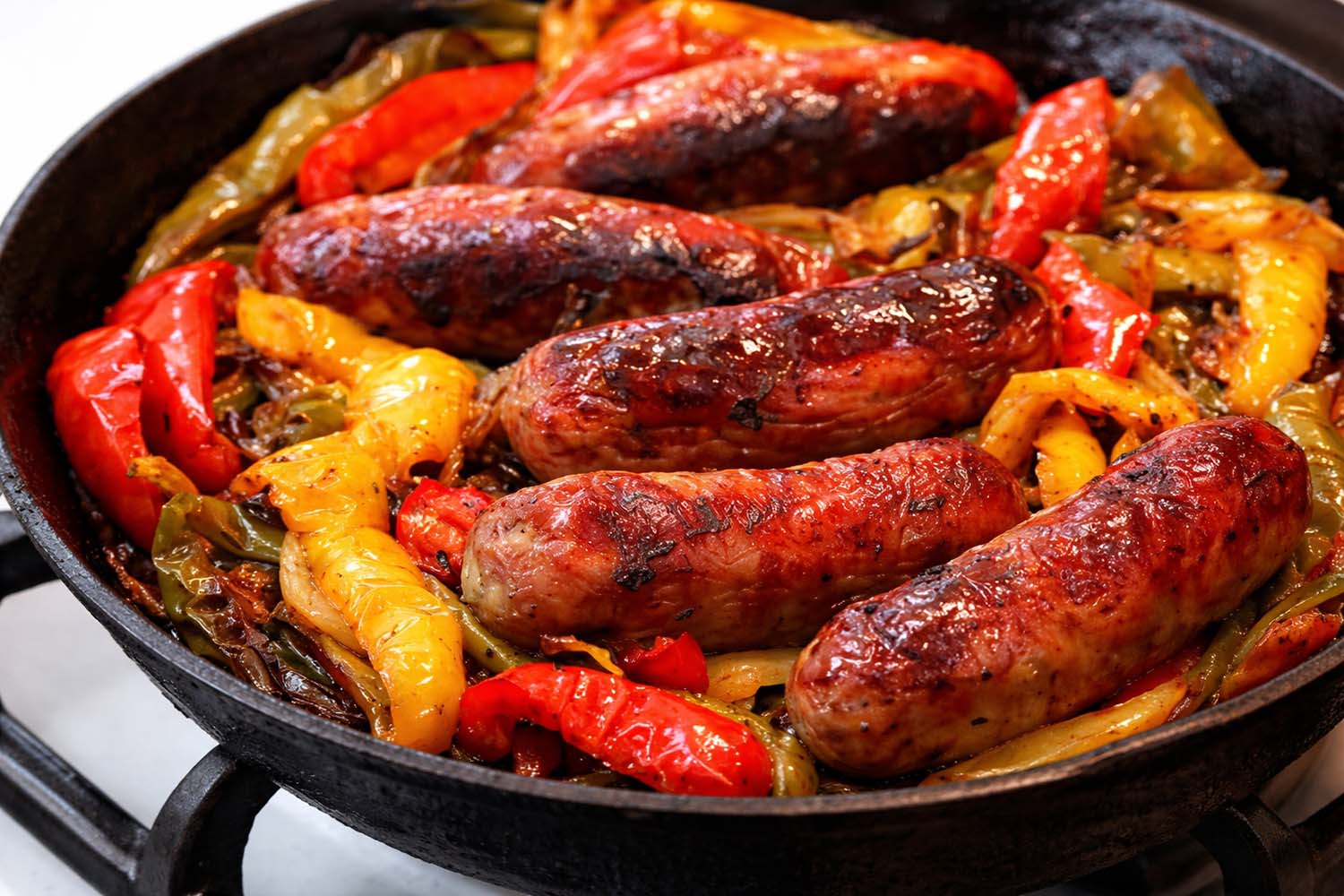
If you grew up in an Italian-American household, you know this dish. Sausage, peppers, and onions roasting in the oven, filling the whole kitchen with that unmistakable smell. It is one of the most reliably satisfying meals you can make. This is my go-to version, and the thing that sets it apart is a splash of balsamic vinegar tossed with the vegetables before roasting. It caramelizes in the oven into something deeply savory and slightly sweet, and once you try it you will not go back.
The whole thing is on the table in about 30 minutes. One pan, minimal cleanup, and it scales easily for a crowd. A large cast iron skillet or roasting pan works just as well as a sheet pan and often produces even better caramelization. Let me show you everything you need to know.
⏱ 10 min prep
🔥 25 min roast
🍽 4 to 6 servings
🫙 One pan
The secret: balsamic vinegar tossed with the peppers and onions before roasting. It caramelizes in the oven and gives the whole dish a richness that plain olive oil alone never does.
Why Roasting Beats the Stovetop
The old way of making sausage and peppers meant standing over a skillet for 40 minutes, managing the heat so things did not stick or burn, turning sausages individually, and ending up with a greasy stovetop and a kitchen full of splatter. It works, but it is a lot of effort for a weeknight.
Roasting does it better. At high oven heat, the peppers and onions caramelize and soften without going mushy. The sausages brown evenly on all sides with one flip halfway through. The balsamic reduces into a sticky, concentrated glaze on the vegetables. And you are mostly hands off, which means you can set the table, make a salad, or boil pasta while the oven does the work.
The other thing roasting does is concentrate the flavor. The juices from the sausages drip onto the peppers and onions as they cook, basting everything from above. The result tastes like it cooked for hours.
The Ingredients
The Sausage: Sweet or Hot?
This is the first decision and it is worth thinking about. Both work beautifully in this recipe — the choice is really about what kind of heat and flavor you want at the table.
Sweet Italian Sausage
Mild, fennel-forward, slightly sweet. Family friendly. Pairs beautifully with the balsamic glaze since there is nothing competing with that sweetness. This is the classic choice for a crowd.
Hot Italian Sausage
Spicy, peppery, deeply savory. Great if you like heat. The spice mellows slightly during roasting but stays present. Mix half sweet and half hot for the best of both.
Either way, use raw uncooked sausage links, not precooked. Raw sausages release more fat and flavor during roasting, which is what bastes the vegetables underneath.
The Peppers: A Quick Color Guide
Using three colors is the move here — it makes the dish visually striking and each pepper brings something slightly different to the flavor.
| Pepper | Flavor | Role in the Dish |
|---|---|---|
| Green | Bitter, earthy, slightly grassy | Balances the sweetness of the red and balsamic |
| Red | Sweet, fruity, rich | The star. Becomes jammy and sweet when roasted |
| Yellow | Mild, slightly sweet, neutral | Softens the overall flavor, holds its color beautifully |
| Orange | Sweet, fruity, similar to red | Great substitute if red or yellow is unavailable |
Slice all peppers into strips about 1 inch wide — uniform size means they roast evenly and finish at the same time.
The Balsamic Vinegar
This is the ingredient that most recipes skip and the one that makes the biggest difference. Two and a half tablespoons of balsamic vinegar tossed with the peppers and onions before roasting reduces in the oven heat into a concentrated, slightly sticky glaze that coats everything. It is deeply savory with just enough acidity to cut through the richness of the sausage fat. Do not skip it.
Use a mid-range balsamic — nothing fancy, but not the cheapest thin version either. A bottle labeled “Balsamic Vinegar of Modena” from the grocery store works perfectly.
The Recipe
How to Serve It
This dish is as versatile as it is easy. Here are the four best ways to put it on the table:
On Italian Hero Rolls
This is the classic, and there is a reason it has lasted. Split a fresh Italian hero roll, pile in a sausage link with plenty of peppers and onions, and eat it as a proper sandwich. Set out a tray of rolls and let everyone build their own — it is the easiest party food you will ever make. For a big group, our guide to summer entertaining has more ideas for feeding a crowd without breaking a sweat.
Over Pasta
Slice the cooked sausages into coins and toss everything with rigatoni, penne, or spaghetti. Add a ladle of marinara or a drizzle of olive oil and finish with grated Parmesan. Our penne alla vodka is another great pasta option alongside a platter of sausage and peppers for a spread.
As a Sheet Pan Dinner
Serve it straight from the pan family-style with crusty bread to soak up the balsamic pan juices. Add a simple green salad alongside and dinner is done. This is a genuinely complete weeknight meal in 35 minutes.
See also

Over Rice or Polenta
Spoon the sausage, peppers, and onions over a bowl of steamed white rice or creamy polenta. The balsamic pan juices act as a built-in sauce. It is a slightly more refined presentation if you are serving it as a sit-down dinner.
Variations Worth Trying
Make It a Party Dish
Double or triple the recipe and use two or three sheet pans. Rotate the pans halfway through cooking for even browning. This is one of the best dishes to scale for a backyard cookout or game day — it holds well, reheats easily, and a big tray of hero sandwiches disappears fast. If you are feeding a crowd, our pizza party tips apply just as well here — set up a build-your-own hero station and let guests serve themselves.
Add Potatoes
Cut two medium Yukon Gold potatoes into 1-inch chunks and toss them with the peppers and onions before roasting. They absorb the balsamic and sausage drippings beautifully. Add 10 to 15 extra minutes to the cook time and check for tenderness before serving.
Add Cherry Tomatoes
Toss a cup of cherry tomatoes onto the pan in the last 10 minutes of roasting. They burst and release their juices, adding brightness and a touch of acidity that cuts through the richness of the sausage. This is particularly good if you plan to serve the dish over pasta.
Add Fennel
Thinly slice one fennel bulb and add it with the peppers and onions. Roasted fennel turns sweet and almost melts into the other vegetables, adding a gentle anise note that pairs naturally with Italian sausage. This is the move for a slightly more sophisticated presentation.
Use Chicken or Turkey Sausage
Chicken or turkey Italian sausage works well here for a leaner result. Use precooked links and reduce the cook time to 20 minutes total, since they just need to heat through and brown rather than cook from raw.
Finish with Fresh Herbs and Parmesan
Right before serving, scatter torn fresh basil leaves over the top and finish with a handful of freshly grated Parmesan or pecorino. It adds color, freshness, and a salty depth that ties everything together. Our easy fresh basil pesto also makes a fantastic drizzle over the finished dish.
Storage and Reheating
| Method | How Long | Notes |
|---|---|---|
| Refrigerator | Up to 4 days | Store in an airtight container once cooled |
| Freezer | Up to 3 months | Freeze in portions; thaw overnight in the fridge |
| Reheating | 10 to 12 min | Oven at 350°F or skillet on medium-low. Avoid the microwave as it makes the sausage rubbery. |
Leftovers are genuinely excellent the next day. The balsamic deepens overnight and everything tastes even more concentrated. Slice cold leftover sausage into a pan with the peppers and onions and reheat together over medium-low — it comes back perfectly.
Make-ahead tip: Slice all the peppers and onions up to 24 hours ahead and refrigerate in an airtight container. When you are ready to cook, toss with the oil and balsamic and roast. Dinner on the table in 30 minutes flat.
Frequently Asked Questions
Can I make this on the stovetop instead?
You can, but the oven produces better results. The high dry heat of roasting caramelizes the peppers and onions and browns the sausage in a way a stovetop skillet cannot replicate without a lot more hands-on attention. If you do use the stovetop, cook the sausages first in a large skillet over medium heat until browned, remove them, then sauté the peppers and onions in the same pan in the sausage drippings.
What temperature should Italian sausage reach?
Italian pork sausage should reach an internal temperature of 160°F. Use an instant-read thermometer inserted into the thickest part of the link. Chicken or turkey sausage should reach 165°F.
Can I add potatoes to the pan?
Yes. Cut Yukon Gold or red potatoes into 1-inch chunks and toss them in with the peppers and onions. They absorb the balsamic and sausage juices as they roast and come out incredibly flavorful. Add 10 to 15 extra minutes to the total cook time.
Can I freeze sausage, peppers and onions?
Yes. Let the cooked dish cool completely, then transfer to a freezer-safe container or zip-top bag. It keeps well for up to 3 months. Thaw overnight in the refrigerator and reheat in a skillet or oven at 350°F.
Can I use precooked sausage?
You can, though the result will be slightly different. Precooked sausages will not release as much fat into the pan, so the vegetables will have less of that flavor. Reduce the total cook time to about 20 minutes and watch for the sausages browning rather than cooking through.
What is the best pasta to serve with this?
Rigatoni and penne are the classic choices because the tubes catch the pan juices and balsamic. Spaghetti and fettuccine also work well. Toss the pasta with a little olive oil or marinara before adding the sliced sausage and roasted vegetables.
Can I make this without balsamic vinegar?
You can substitute red wine vinegar for a sharper, more acidic result, or simply omit it. The dish is still delicious without it, but the balsamic is what gives the vegetables their caramelized depth. It is worth keeping a bottle on hand.
Why are my peppers and onions mushy instead of caramelized?
Two likely causes: the pan was overcrowded, or the oven temperature was too low. Overcrowding causes the vegetables to steam rather than roast. Use a large enough sheet pan so everything sits in a single layer, or use two pans. Make sure your oven is fully preheated to 400°F before the pan goes in.
More Recipes Worth Making
Made this recipe? Leave a star rating and a comment below. It helps other readers find it and I love hearing how it went for you.
Better Living may earn commissions through affiliate links and may occasionally feature sponsored or partner content. If you make a purchase through our links, we may receive a small commission at no cost to you.