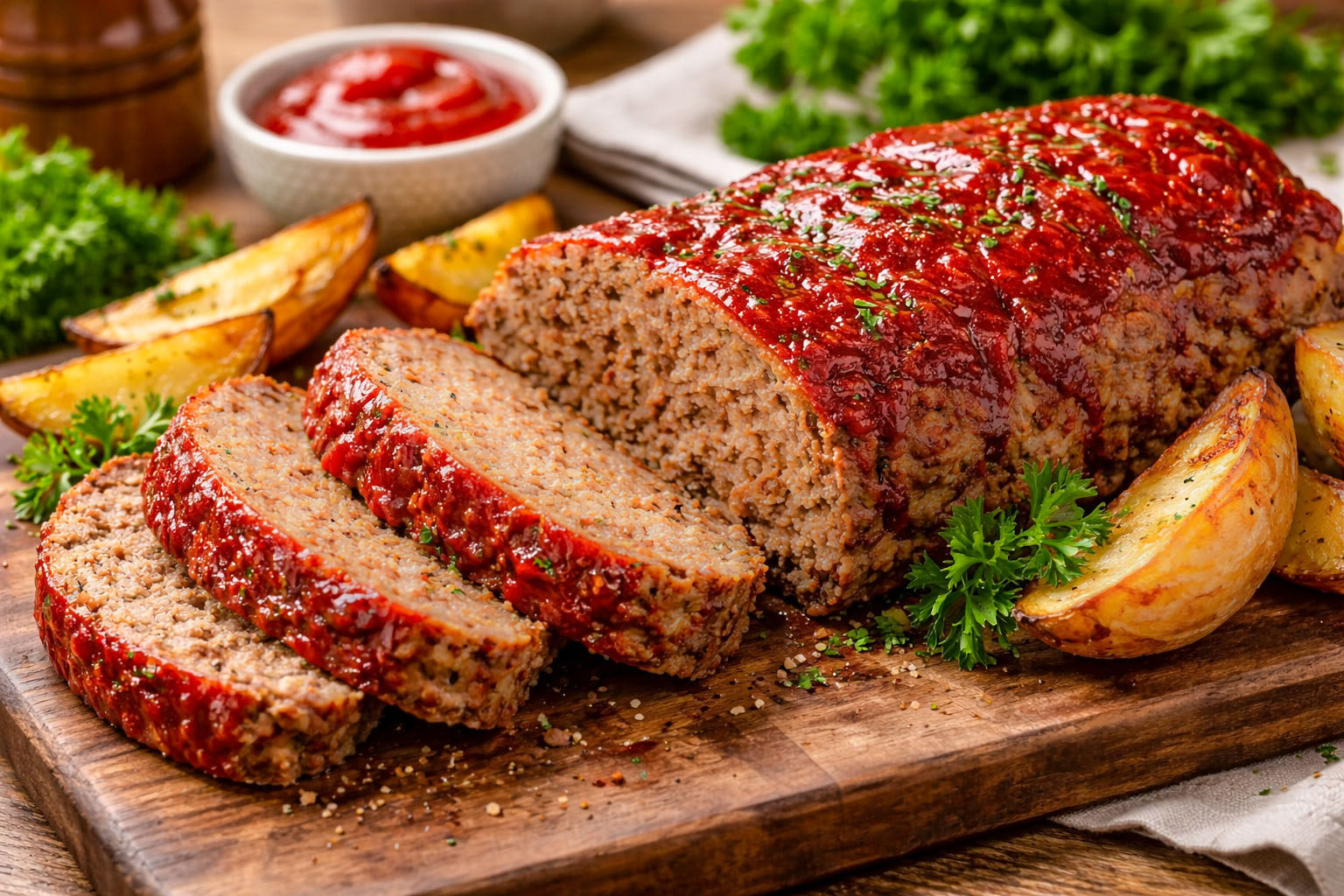
Meatloaf is one of those recipes that every home cook needs in their back pocket. It is warm, filling, genuinely comforting, and the leftovers the next day might actually be better than the night before. This version has been in our rotation for years, and it comes together in about 7 minutes before it goes in the oven.
The ingredient that makes it stand out is a tablespoon of steak sauce mixed right into the meat. It adds a deep, savory, slightly tangy flavor that you cannot quite put your finger on but definitely notice. The rest is pantry staples. Straightforward does not have to mean boring.
⏱ 7 min prep
🔥 1 hour bake
🍽 3 to 4 servings
🥣 One bowl
The secret: a tablespoon of steak sauce mixed into the meat. It adds a depth of savory flavor that ketchup and Worcestershire sauce alone do not give you.
The Ingredients
Everything here is a genuine pantry staple. Here is what each one does and why it matters:
Ground Beef
This recipe calls for 1 pound of ground beef. For meatloaf, 80/20 (80 percent lean, 20 percent fat) is the sweet spot. The fat keeps the loaf moist during the long bake time. Extra lean ground beef can produce a dry, crumbly result. If you only have 90/10 on hand, add an extra tablespoon of half and half to compensate.
The Binders: Egg, Bread Crumbs and Half and Half
These three work together to hold the loaf together and keep it tender. The egg binds. The bread crumbs absorb moisture and create a soft, even texture throughout. The half and half hydrates the bread crumbs and adds a subtle richness. Use whatever bread crumbs you have on hand: plain, seasoned, Italian style, or even finely crushed crackers all work. If you are out of half and half, whole milk is a direct substitute.
The Steak Sauce
This is the ingredient that makes this recipe different from every other basic meatloaf. One tablespoon of steak sauce (A1 is the classic choice, but any brand works) goes directly into the meat mixture. It adds a complex, deeply savory flavor with a touch of tang that layers in a way that ketchup alone cannot. It is subtle enough that nobody will identify it, but everyone will notice the meatloaf tastes especially good.
The Onion
Half an onion, minced as finely as you can manage. Large pieces of onion will not soften fully during baking and can make the loaf harder to slice cleanly. The finer the mince, the better the texture. If you have a food processor, a few pulses is the easiest approach. If you have the time, sauté the onion in a small pan with a little oil for 5 minutes before adding it to the mixture. Cooked onion adds a sweeter, deeper flavor and guarantees it will be tender in the finished loaf.
The Glaze: Ketchup and Dijon Mustard
The topping is ⅓ cup ketchup mixed with 2 tablespoons of Dijon mustard. The mustard cuts the sweetness of the ketchup and adds a tangy sharpness that caramelizes beautifully on top of the loaf during the final stretch of baking. If you prefer something sweeter, swap the Dijon for a tablespoon of brown sugar mixed into the ketchup. For a smokier result, use BBQ sauce in place of the ketchup entirely.
You can also substitute an equal amount of tomato soup or tomato sauce for the ketchup if you are out. Both work well in the meat mixture and as the base for the glaze.
The Recipe
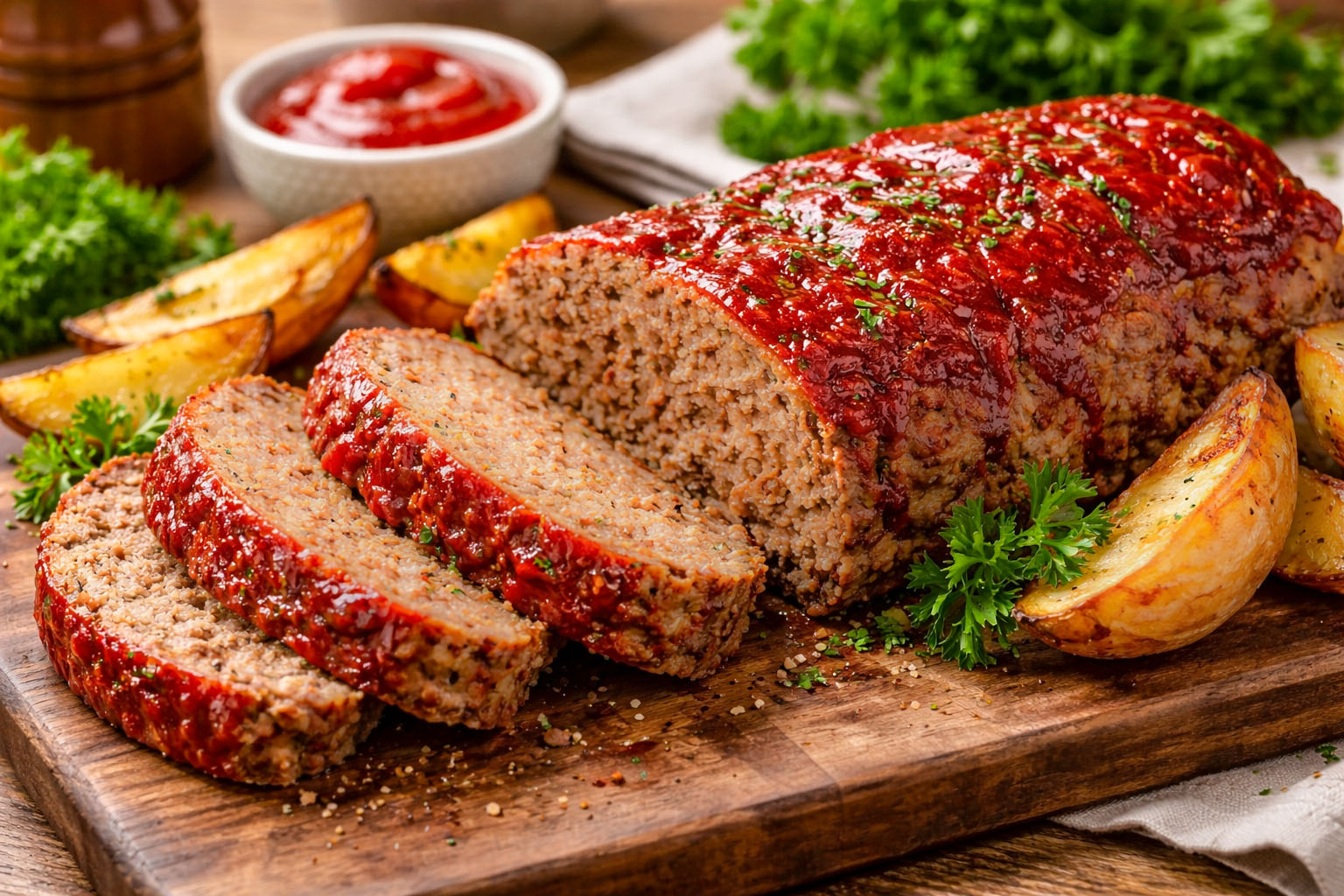
Tips for the Best Meatloaf Every Time
Do Not Overmix
This is the single most important meatloaf rule. Overworking the ground beef activates the proteins in the meat and makes the finished loaf dense and tough rather than tender. Mix just until everything is evenly combined and stop. The mixture should look a little shaggy and that is exactly right.
Apply the Glaze in Two Stages
The recipe calls for glazing after 20 minutes, which is the right approach. Adding the glaze too early means it can burn before the interior is cooked through. Adding it only at the end means it does not have time to caramelize. Two stages works best: a generous coating at the 20-minute mark, then let it bake into the loaf for the remaining time. If the top is browning faster than you would like, lay a loose sheet of foil over it for the last 10 minutes.
Free-Form or Loaf Pan?
This recipe is written for a free-form loaf on a baking pan, which is our preference. Free-forming gives you more surface area for the glaze to caramelize and produces a better browned exterior all the way around. A loaf pan works too and produces a more uniform shape that is easier to slice cleanly. The trade-off is slightly less browning on the sides. If you use a loaf pan, drain any accumulated fat at the 20-minute mark before applying the glaze.
The Resting Step Is Not Optional
Five minutes of rest time after the oven is genuinely important. The juices in the meat redistribute as it cools slightly. Cut into it immediately and those juices run across the cutting board instead of staying in the meat. The same principle applies here as it does for steak or roast chicken.
Use a Thermometer
Oven temperatures vary more than most people realize, and meatloaf thickness varies too. The only reliable way to know it is done is an instant-read thermometer in the thickest part of the center. You are looking for 160°F. At that temperature the meat is safe, cooked through, and still juicy. Beyond 165°F and it starts to dry out.
What to Serve With Classic Meatloaf
Meatloaf is comfort food and it wants comfort sides. These are the pairings that work best:
- Mashed potatoes, the classic partner. The pan juices from the meatloaf work as a natural sauce.
- Roasted or steamed vegetables, green beans, broccoli, or carrots balance the richness of the beef.
- Mac and cheese, for a fully indulgent weeknight dinner the whole table will be happy about.
- A simple green salad, something crisp and lightly dressed cuts through the richness cleanly.
- Dinner rolls or crusty bread, essential for soaking up any glaze and pan juices on the plate.
If you enjoy cooking hearty, satisfying meals at home, our guide to making perfect restaurant-quality omelettes applies the same principle of getting familiar comfort food exactly right, and our summer entertaining tips are useful if you are scaling this up for a crowd.
See also

Variations Worth Trying
Meatloaf with BBQ Glaze
Swap the ketchup in the topping for your favorite BBQ sauce. It adds a smoky, slightly sweet quality that is excellent with the steak sauce in the meat. A smoky chipotle BBQ sauce is particularly good here.
Mini Meatloaves
Divide the mixture into four equal portions and shape into individual mini loaves on the pan. Reduce the bake time to about 25 to 30 minutes and check for 160°F. Mini loaves cook faster, brown more on the outside, and make portioning at the table effortless. They also reheat faster the next day.
Meatloaf Muffins
Press the mixture into a greased muffin tin. Spoon a small amount of glaze on top of each. Bake at 350°F for 20 to 25 minutes. These are a great option for meal prep because they freeze individually and reheat in minutes. Check with your thermometer for 160°F.
Turkey or Chicken Meatloaf
Substitute ground turkey or chicken for the beef. The result is leaner and slightly lighter in flavor. Add an extra tablespoon of half and half to keep it moist since poultry has less natural fat. Cook to an internal temperature of 165°F rather than 160°F.
Stuff It
Press half the meat mixture into the pan, add a layer of shredded mozzarella and a few tablespoons of marinara sauce in the center, then cover with the remaining meat mixture and seal the edges. The result is a molten cheesy center that makes meatloaf feel genuinely exciting.
Storage, Reheating and Leftovers
| Method | How Long | Notes |
|---|---|---|
| Refrigerator | Up to 4 days | Slice and store in an airtight container |
| Freezer (cooked) | Up to 3 months | Wrap individual slices in plastic wrap, then foil. Thaw overnight in fridge. |
| Freezer (raw) | Up to 3 months | Form into loaf, freeze on pan until solid, wrap tightly. Thaw 24 hours in fridge before baking. |
| Reheating | 8 to 10 min | Oven at 325°F covered in foil, or skillet on medium-low. The microwave works but can dry it out. |
The Meatloaf Sandwich
Cold leftover meatloaf sliced thick on white bread with extra ketchup is one of the great simple pleasures of home cooking. The next day the flavors have settled and deepened and the texture slices cleanly. Some people would argue the sandwich is the point of making meatloaf in the first place. Toasted white bread, cold meatloaf, ketchup, done.
Make-ahead tip: Mix and form the raw loaf up to 24 hours ahead. Cover tightly with plastic wrap and refrigerate. Remove from the fridge while the oven preheats and bake as directed. The flavors actually develop nicely overnight.
Frequently Asked Questions
Why does my meatloaf fall apart when I slice it?
Three most likely causes: not enough binder (make sure you are using the full amounts of egg and bread crumbs), cutting it before it has rested (always let it stand 5 minutes), or overmixing the meat which breaks down the structure. All three are easy to fix.
Why is my meatloaf dry?
Almost always overbaking. Lean ground beef dries out faster than 80/20. Use a thermometer and pull it at 160°F rather than guessing by time. If your oven runs hot, check at the 45-minute mark. The half and half and the ketchup in the mixture are both important moisture contributors, so do not skip either one.
Can I make this without bread crumbs?
Yes. Crushed crackers are listed as an equal substitute and work just as well. Quick-cooking oats are another good option. Use the same amount and they virtually disappear into the meat while producing a tender texture.
Do I need to cover meatloaf while it bakes?
No. Baking it uncovered is what produces the browned, caramelized exterior and lets the glaze set into a proper coating. If the top is browning too quickly before the center is done, lay a loose sheet of foil over it for the last 10 to 15 minutes. That slows the surface without steaming the interior.
Can I make this ahead and freeze it?
Yes, either raw or cooked. Raw is slightly better. Form the loaf, freeze it on a pan until solid, then wrap tightly in plastic wrap and foil. Thaw in the fridge for 24 hours before baking. Cooked meatloaf also freezes well sliced into individual portions wrapped tightly.
What fat percentage of ground beef should I use?
80/20 is ideal for meatloaf. The 20 percent fat keeps the loaf moist throughout the long bake time. Extra lean beef (90/10 or higher) produces a drier, more crumbly result. If 80/20 is not available, add an extra tablespoon of half and half to the mixture to compensate for the lower fat content.
Can I substitute something for the steak sauce?
Yes. Worcestershire sauce is the closest substitute and is what most classic meatloaf recipes call for. Use the same amount. It adds a similar umami depth, though slightly less sweet and tangy than steak sauce. Soy sauce is another option for a more savory profile.
Should I put ketchup on meatloaf before or after baking?
Both. The ketchup goes into the meat mixture before baking for moisture and flavor. The glaze goes on top partway through baking, after about 20 minutes, so it has time to caramelize properly without burning.
More Recipes From Better Living
Made this recipe? Leave a star rating and a comment below. It helps other readers find it and we love hearing how it turned out.
Better Living may earn commissions through affiliate links and may occasionally feature sponsored or partner content. If you make a purchase through our links, we may receive a small commission at no cost to you.