Key Points
- How you use manuka honey matters as much as which jar you buy. Used correctly it delivers real benefits. Used incorrectly you are paying premium prices for expensive sweetener.
- Never bake or cook with it at high heat. Baking and sustained heat destroy the MGO that makes it worth buying. Cold preparations and warm drinks are where it performs.
- For skin, UMF 15 or above applied as a mask or spot treatment is the most practical topical application at home.
- One to two teaspoons per day is the standard daily amount for general wellness, taken straight or stirred into a cold or warm drink.
- The UMF grade on your jar should match the job you are using it for. UMF 10 for everyday use, UMF 15 and above for skin and targeted applications.
Knowing how to use manuka honey well is the thing most guides skip entirely. They cover what it is, why it is expensive, and what the UMF rating means. But they rarely tell you what to actually do with the jar once you bring it home. How much to take, when to take it, how to use it on your skin, which recipes work and which ones waste it completely.
That is what this guide covers. If you already have a jar and want to get the most from it, start here.
The One Rule That Changes Everything
Before You Do Anything Else
Do not bake with it. Do not cook with it at high heat. Sustained heat destroys the methylglyoxal (MGO) that makes manuka honey worth the price, turning a $40 jar into expensive sweetener with no functional advantage over the honey in the bear bottle. Every application below is designed around this principle. Cold preparations, warm drinks, finishing drizzles, and topical use are where manuka honey performs. Anything involving a hot pan or an oven belongs to your regular raw honey instead.
This is the most important practical thing to understand about how to use manuka honey, and it is genuinely surprising how rarely it appears in the content written about it. Once you have internalized this one rule, every other decision becomes simple.
How to Use Manuka Honey by Application
The Daily Spoonful
The simplest and most consistent use is a single teaspoon taken straight from the jar, once a day. This is how most long-term manuka honey users approach it, treating it less like a food and more like a daily practice. Morning tends to work best for most people, taken before breakfast on an empty stomach, though this is preference rather than requirement.
For the daily spoonful, UMF 10 is the practical grade. You are using it for general antioxidant support, the prebiotic content, and the stable antibacterial properties at a concentration that makes daily use financially sustainable. UMF 20 taken daily is the equivalent of using a fine wine as cooking wine. Save the higher grades for targeted applications.
One to two teaspoons per day is the amount most people settle on for general wellness. Start with one and adjust based on taste preference and how your stomach responds. Manuka honey is nutrient-dense and the flavor is strong, so more is not necessarily better.
In Warm Drinks
This is probably the most common way people use manuka honey, and it is also the application most people get slightly wrong. The mistake is adding it to boiling or near-boiling liquid, which damages the beneficial compounds you are paying for.
The correct approach is simple. Brew your tea or hot water, then let it sit for a full minute before adding the honey. At that point it is warm enough to dissolve beautifully and cool enough to preserve what matters. You will notice the honey integrates more slowly than regular honey because of its thicker consistency, so give it a proper stir and it will fully dissolve.
Manuka honey works particularly well in chamomile, ginger, and lemon teas where its earthy, slightly bitter flavor profile is complementary rather than competing. In black tea it can overwhelm the tannins, so start with a smaller amount and adjust to taste.
Our healthy hot toddy is built around exactly this principle. The honey goes in after everything else has cooled slightly, keeping every beneficial compound intact while delivering the soothing, warming effect that makes it a cold-season staple.
In Cold Drinks
Cold preparations are where manuka honey is most at home, and where the flavor really comes into its own. No heat means no compromise. Every beneficial compound stays intact, and the thick caramel-like flavor of a good manuka honey becomes a genuine ingredient rather than just a sweetener.
The practical challenge with cold drinks is dissolution. Manuka honey is significantly thicker than regular honey and does not dissolve as readily in cold liquid. The solution is to give it a head start: add your honey to a small amount of warm water first and stir until smooth, then add your cold ingredients. Alternatively, blend it in directly if the drink is going into a blender.
Our cold drink collection uses Flora manuka honey throughout and is designed specifically around this principle:
In Frozen Preparations
Freezing does not damage manuka honey. The MGO content, enzymes, and beneficial compounds all survive freezing intact, which makes frozen preparations one of the best possible delivery methods from a functional standpoint. The flavor also intensifies slightly when frozen, which is a genuine plus.
The thickness of manuka honey is actually an advantage in frozen applications. It blends well, distributes evenly, and gives frozen treats a richness that regular honey does not quite match.
As a Finishing Drizzle on Food
This is where the savory applications live, and where the heat rule determines everything. Manuka honey used as a finishing touch on a completed dish, drizzled on after cooking rather than cooked into the recipe, preserves the beneficial compounds while adding a genuinely complex flavor that regular honey cannot replicate at the same intensity.
The earthy, slightly bitter quality of good manuka honey works exceptionally well against heat and fat. A drizzle over a spicy dish balances the heat. Across something savory and fatty it provides contrast. The flavor is complex enough to make a real difference to the dish rather than just adding sweetness.
In Raw Dressings and Dipping Sauces
Raw savory applications are some of the best uses for manuka honey because no heat is ever involved. A dressing or dipping sauce mixed cold keeps everything intact and puts the flavor to work in a context where it shines.
Manuka honey in a vinaigrette adds a depth that clover or wildflower honey does not. The slight bitterness balances acidic vinegars beautifully. In a dipping sauce it provides body alongside the sweetness.
On Your Skin
Topical use is where the UMF grade matters most. For skin applications, UMF 15 or above is the recommended starting point. Lower grades have less of the stable MGO activity that makes manuka honey effective as a topical antibacterial agent. If the jar you have is UMF 10, it will have some benefit on skin but it is optimized for consumption rather than topical use.
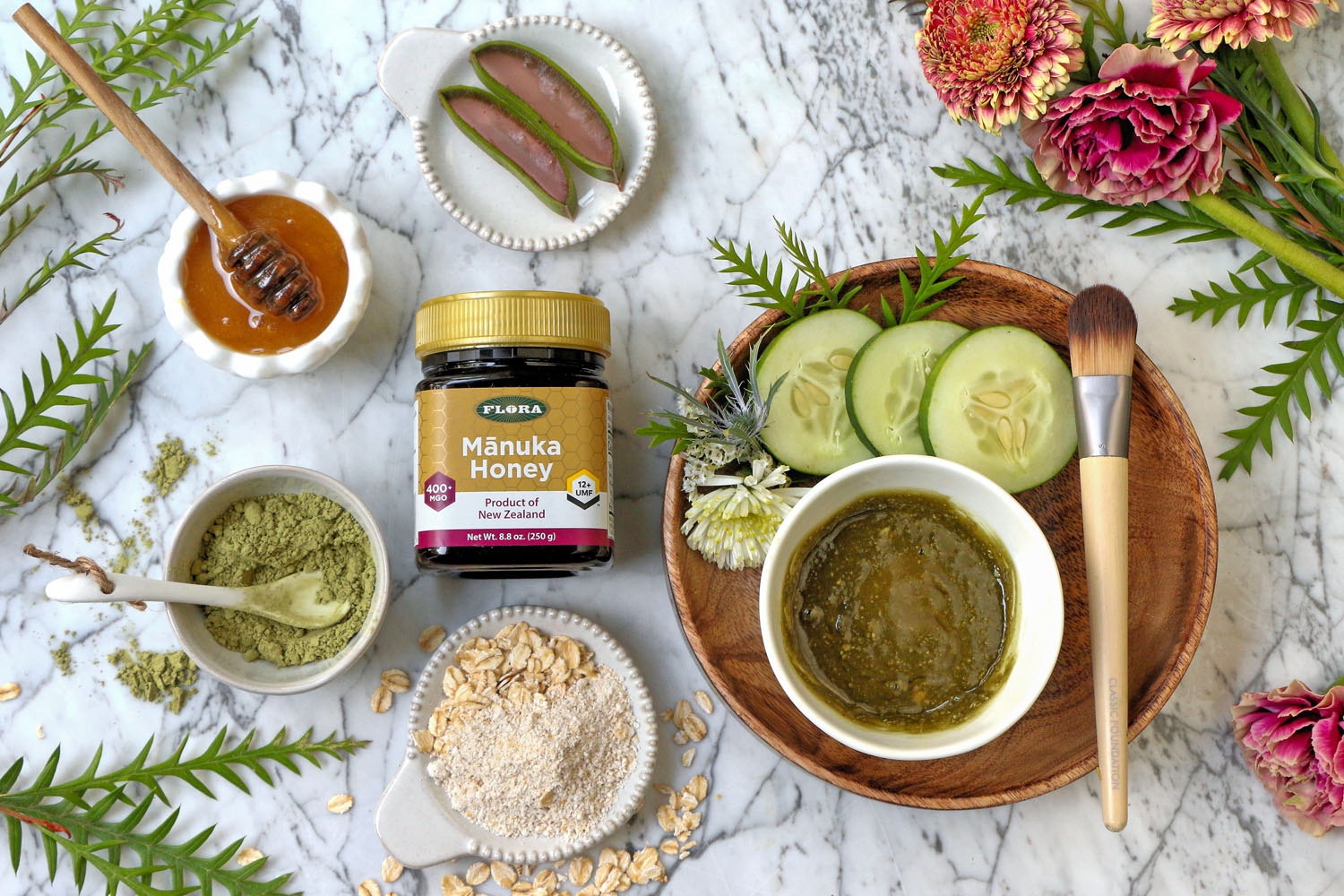
For a face mask, the application is straightforward. Clean your face, apply a thin even layer of manuka honey directly to skin, and leave it for 20 to 30 minutes. It will feel sticky and thick, which is normal. Rinse thoroughly with warm water. The antibacterial properties, the humectant quality of the honey, and the gentle exfoliating effect combine to leave skin noticeably smoother and clearer with consistent use.
For a spot treatment on a blemish, apply a small amount directly to the affected area, cover with a small piece of medical tape or a bandage to keep it in place, and leave overnight. This is the most targeted topical application and the one with the most consistent anecdotal support.
We have a full guide to DIY manuka honey face masks organized by skin type covering dry, oily, sensitive, acne-prone, and combination skin, and a two-ingredient manuka honey and vanilla face scrub that takes about five minutes to make and works as a weekly treatment.
Topical vs Culinary
The manuka honey in your kitchen cabinet is culinary grade. Medical-grade manuka honey used in clinical wound dressings is a different product, sterilized to eliminate bacterial spores and regulated as a medical device. For home skin use, culinary grade UMF 15 or above is appropriate for face masks, scrubs, and spot treatments. It is not a substitute for professional wound care, and any serious skin concern should be seen by a professional.
See also

For Oral Health
The same antibacterial properties that make manuka honey effective on skin also apply to the bacterial environment in your mouth. This is one of the more surprising practical applications and one that most people never think to try.
The simplest approach is to take your daily spoonful slowly, letting it coat the mouth and gums before swallowing rather than taking it quickly. Some people apply a small amount directly to the gumline with a clean finger for a more targeted application, particularly when gums feel sensitive. Others dilute a teaspoon in a small amount of warm water and use it as a gentle mouth rinse.
Manuka honey and propolis (a resinous substance bees produce) are increasingly found in premium toothpastes and mouthwashes for exactly this reason. If you are already taking a daily spoonful, the oral health benefit comes along for free without any additional steps.
How to Use Manuka Honey by UMF Grade
| UMF Grade | Best Applications | Not Ideal For |
|---|---|---|
| UMF 5+ | General sweetening, flavor in cold drinks and dressings. Enjoy the taste without expecting functional benefits. | Skin treatments, targeted wellness, sore throat support |
| UMF 10+ | Daily wellness spoonful, warm drinks during cold season, gut support, finishing drizzle on food, cold drinks and frozen treats. | Maximum potency skin treatments (UMF 15+ preferred for those) |
| UMF 15+ | Face masks, spot treatments, sore throat targeted use, daily spoonful when you feel something coming on. | Everyday sweetening (cost per use becomes inefficient) |
| UMF 20+ | Maximum potency topical use, targeted skin treatments, occasional high-potency daily spoonful during illness. | Daily everyday use (reserve for specific targeted moments) |
How Much Manuka Honey to Use
The right amount depends entirely on how you are using it. Here is a practical starting point for each application:
- Daily wellness spoonful: One teaspoon (about 7 grams). Start here and adjust based on taste preference. Two teaspoons is the upper end for most people on a daily basis.
- In a warm drink: One teaspoon per cup. The flavor is strong so start conservative and add more if needed.
- In cold drinks: One to two teaspoons depending on the drink volume and your sweetness preference. Blend or pre-dissolve in a small amount of warm water first.
- As a finishing drizzle: A light drizzle is all that is needed. Think a teaspoon across a serving rather than a pour. The flavor is concentrated enough that a small amount makes a real difference.
- In dressings and sauces: One to two teaspoons per serving of dressing. Manuka honey is thicker than regular honey so it also adds body to dressings alongside sweetness.
- As a face mask: A thin even layer across the face, roughly one to two teaspoons total. You need enough coverage to keep the skin consistently coated for the full treatment time.
- As a spot treatment: A small dab directly on the blemish. A little goes a long way in this application.
Practical Tips for Working with Manuka Honey
It Is Thick and That Is Normal
First-time users are often surprised by the texture. Good manuka honey is significantly thicker and more viscous than regular honey. It does not pour freely from a spoon the way clover honey does. This thickness is a quality indicator, not a defect. Scoop it with a spoon rather than trying to pour it, and give it a moment to drip rather than shaking or squeezing the jar.
Crystallization Is Not Spoilage
Manuka honey will crystallize over time, especially at cooler temperatures. This is completely normal for any raw honey and does not indicate it has gone bad. To return a crystallized jar to a spreadable consistency, place it in a bowl of warm (not hot) water for 15 to 20 minutes and stir gently. Do not microwave it. Do not put it in boiling water. Gentle warmth is all it needs and all it can handle without compromising what you paid for.
Store It Simply
Room temperature, away from direct sunlight, with the lid sealed tightly. No refrigeration needed. Keep moisture out of the jar by always using a dry spoon. Introducing water is one of the few things that can compromise honey’s shelf life. Stored correctly, a jar of manuka honey has an almost indefinite shelf life, and some research suggests the MGO content may actually increase slightly over time as DHA continues converting naturally in the jar, provided the honey is kept at room temperature and away from heat and light.
Match the Grade to the Job
This is the single most common mistake people make when they first buy manuka honey. They buy a UMF 20 jar and use it in their morning oatmeal, cooking it into warm porridge and effectively spending $1 per serving on something no different from table honey at that point. Match the grade to the application using the table above and you will get dramatically more value from every jar.
Frequently Asked Questions
Can you eat manuka honey straight from the jar?
Yes, and for many people this is the preferred method. A teaspoon straight from the jar in the morning is the simplest and most consistent daily use. The thick texture and strong flavor make it satisfying to take on its own rather than mixed into something else.
How often should you use manuka honey?
For general wellness, daily use of one to two teaspoons is what most people settle on. On skin, two to three times a week as a face mask is a practical routine. For sore throat support, as needed during cold season. There is no strict requirement and consistency matters more than frequency.
Should you take manuka honey on an empty stomach?
Many people prefer to take it before breakfast on an empty stomach, believing it supports better absorption. There is limited clinical evidence specifically supporting this approach, and taking it with or after food is also perfectly fine. The more important variable is consistency rather than timing.
Can you cook or bake with manuka honey?
You can use it as a flavor ingredient in cooked applications, but sustained high heat destroys the MGO and enzymes that make it functionally different from regular honey. For cooking and baking, raw honey is a better and more economical choice. Save manuka for cold preparations, warm drinks, and finishing drizzles after cooking.
How do you use manuka honey for a sore throat?
Take a teaspoon straight or stir into a warm (not boiling) drink. The thick texture coats the throat and provides a soothing physical effect alongside the antibacterial properties. Let boiling water cool for a full minute before adding the honey. UMF 10 or above is recommended for this application. Some people take it straight just before bed to coat the throat overnight.
How long does a jar of manuka honey last?
Stored correctly at room temperature with the lid sealed, honey has an almost indefinite shelf life. If you are using one teaspoon per day, an 8.8 ounce jar will last approximately three to four months. Using it across multiple applications (daily spoonful plus skincare plus cooking) will reduce that timeline. Some producers recommend using it within three years of the harvest date for best potency, though it will not spoil.
Is manuka honey safe to use every day?
For most healthy adults, yes. One to two teaspoons daily is the amount most people use consistently without issue. It is still sugar, so people managing blood sugar levels should factor the carbohydrate content into their daily totals. People with bee or pollen allergies should introduce it cautiously. It should never be given to children under 12 months due to the risk of infant botulism, which applies to all honey.
For a deeper look at what each application actually delivers, see our full breakdown of manuka honey benefits and the science behind each one. If you are still deciding between manuka and raw honey for your specific needs, our manuka honey vs raw honey comparison covers every use case with a side by side guide. And for the complete Better Living manuka honey collection including every recipe and beauty post, everything lives at The Better Living Manuka Honey Guide.
Better Living may earn commissions through affiliate links and may occasionally feature sponsored or partner content. If you make a purchase through our links, we may receive a small commission at no cost to you.