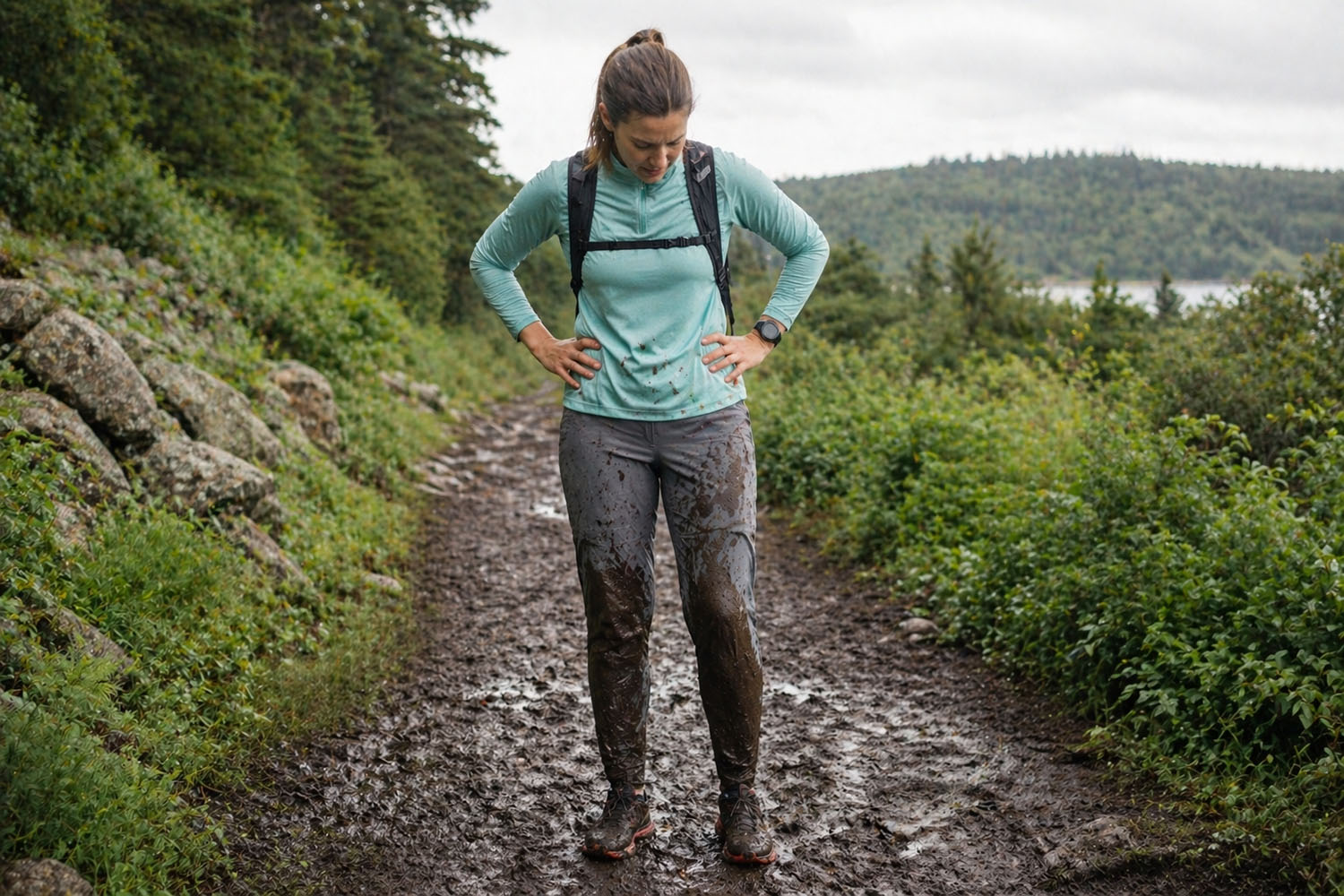
I signed up for a trail run in October thinking the paths would be dry. They were not dry.
I came home with mud up both shins, across the back of my jacket from a fall I would prefer not to discuss, and a pair of running pants that looked like I had been excavated from a bog. Standing in my entryway, I did what felt obvious: I turned on the tap and started rinsing.
That was the wrong move. Within thirty seconds I had watched the mud spread from two distinct splatter marks into one continuous brown disaster across the entire front of my pants. I had made things significantly worse in the time it takes to boil a kettle.
Here’s the thing about how to get mud out of clothes that almost no other stain guide tells you: the single most important step happens before you do anything at all. And it requires more patience than most people have when they’re standing in a muddy entryway.
Quick Answer: How to Get Mud Out of Clothes
Do not rinse, rub, or treat fresh mud. Let it dry completely first. Once dry, scrape off as much solid mud as possible with a spoon or the edge of a credit card, then brush away the residue with a stiff brush. Apply liquid laundry detergent or dish soap directly to the remaining stain, work it in gently, and let it sit for 20 to 30 minutes. Rinse with cold water from the back of the fabric and launder normally in cold water. Check before the dryer. For red or clay mud, add a white vinegar soak between the brush step and the detergent step to dissolve the iron oxide pigments that give clay its rust color.
Why Mud Is Different From Every Other Stain
Almost every stain in this guide rewards speed. Wine, coffee, grease, blood: act immediately, treat while it’s fresh, don’t let it set. Mud is the exception. Mud punishes you for acting fast.
The reason is physics. Fresh mud is a liquid suspension of clay particles, iron oxide minerals, organic matter, and water. When you rub or rinse wet mud, you’re moving that suspension around, pushing the fine clay particles deeper into the weave of the fabric where they embed between individual fibers. You’re also spreading the pigmented water across a larger surface area, turning a concentrated stain into a diffuse one.
When mud dries, the water evaporates and the clay particles cluster together. They lose their ability to flow into new areas of the fabric. They sit on top of and between the fibers rather than being driven through them. You can now brush most of the solid matter away before it ever needs chemical treatment. What remains is a residue stain, not a deeply embedded one, and it responds well to standard detergent treatment.
The patience required to walk away from a muddy garment and do nothing for an hour or two is the hardest part of this entire process. It also does more of the work than any product you’ll apply afterward.
Not All Mud Is the Same Problem
The type of mud you’re dealing with changes the treatment, particularly for stubborn pigment stains.
Regular brown mud from garden soil or general outdoor use is the most common and most forgiving. Clay particles plus organic matter. Dries to a removable crust. Responds well to detergent and cold water after brushing.
Red or clay mud is the hardest. The rusty red color comes from iron oxide minerals in clay-rich soil, the exact same compounds that cause rust stains on metal. These iron oxides bond to fabric fibers as a mineral pigment and don’t respond to detergent alone. They need an acid treatment: white vinegar or lemon juice applied after brushing will dissolve the iron oxides the same way acid dissolves rust. This step is specific to red mud and most guides skip it entirely, which is why people end up with a pink-orange shadow that won’t shift.
Black mud from humus-rich soil or swampy ground contains decomposed organic matter, carbon particles, and humic acids similar in structure to the tannins in coffee. It stains fabric a dark color but is actually easier to remove than red clay mud because the organic components respond well to enzyme cleaners and oxygen bleach.
Sports field mud (football, soccer, rugby pitches) tends to be heavily clay-based with ground-in grass pigment mixed in. You’re dealing with mud plus a chlorophyll stain layered on top of each other. Treat the mud first using the protocol below, then treat any remaining green tinge with rubbing alcohol as you would a grass stain.
Pro Tip: The Hand Vacuum Step Nobody Mentions
After scraping and before brushing, run a small handheld vacuum over the dried mud stain. This lifts the fine clay particles that scraping loosens but leaves sitting on the surface. Brushing those particles into the fabric instead of removing them adds them back to the problem. The vacuum step takes thirty seconds and reduces how much material you’re asking your detergent to do. A lint roller pressed firmly onto the stain (not rolled, just pressed and lifted) does the same job if you don’t have a handheld vacuum.
The Mud Type Changes the Whole Approach
To make it completely clear how mud type changes the treatment sequence:
Standard brown mud: Wait to dry. Scrape. Brush. Vacuum. Detergent soak 20 to 30 minutes. Cold water rinse from back. Launder cold. Check before dryer.
Red or clay mud: Wait to dry. Scrape. Brush. Vacuum. White vinegar soak 15 to 30 minutes. Detergent over the vinegar. Cold water rinse from back. Launder cold. Check before dryer. OxiClean soak if any shadow remains.
Black or swamp mud: Wait to dry. Scrape. Brush. Vacuum. Detergent soak. Launder cold. OxiClean soak if any dark shadow remains after washing.
Sports kit mud (clay plus grass): Wait to dry. Scrape. Brush. Vacuum. Rubbing alcohol pre-treatment on synthetics. Detergent soak. For red clay pitches, add vinegar step. Launder cold. Check before dryer.
Fabric Matters More Than You Think
Cotton and cotton blends: The most forgiving. Handles the full sequence including vinegar, detergent, and OxiClean without complaint.
Polyester and synthetics: Respond well to rubbing alcohol pre-treatment. Clay particles can embed more stubbornly in the texture of synthetic weaves, so the vacuum and brush steps are especially important. Avoid hot water throughout.
Denim: Very forgiving. The tight weave means mud often sits on top of rather than inside the fabric. The scrape and brush steps remove more material than on lighter fabrics. The full sequence works well.
Linen: Handles detergent and vinegar well. Use lukewarm rather than very cold or hot water throughout. Multiple linen care authorities confirm that extremely cold water can shock linen fibers just as heat can. Air dry rather than machine dry.
Wool and cashmere: Cold water only, very gentle detergent, no rubbing, no OxiClean. Let dry naturally after the initial brush step. If the stain is significant, dry cleaning is safer than any home method.
Silk: Blot gently after the mud dries and is brushed away. Use a tiny amount of mild detergent in cold water, blot rather than rub, and take anything beyond a light stain to a professional dry cleaner.
Suede and leather: Not covered here. These need specialist cleaning products and should not be treated with water-based methods.
My Step-by-Step Emergency Protocol
Here is exactly what I do now when mud meets fabric:
Step 1: Do nothing immediately. Resist every instinct. Don’t rinse, don’t rub, don’t blot. Hang the garment somewhere dry and walk away.
Step 2: Let it dry completely. At least an hour for light mud, two or more hours for heavy soaking. Speed up with a fan if needed.
Step 3: Assess the mud type. Brown or black? Standard detergent sequence. Red or orange tint? You need the vinegar step.
Step 4: Scrape, brush, vacuum. Remove as much solid material as possible before any liquid touches the fabric.
Step 5: Acid treatment if needed. White vinegar directly on red clay mud, 15 to 30 minutes.
See also

Step 6: Detergent soak. 20 to 30 minutes minimum. Work it in with fingers or a toothbrush.
Step 7: Rinse from the back with cold water.
Step 8: Check before the dryer. Any shadow means repeat from Step 6. The dryer sets mineral pigments permanently.
Warning: Never Do These Things
These common instincts will make a mud stain worse or permanent:
- Don’t rinse fresh mud. Water disperses the clay particles and spreads the stain. Let it dry first, always.
- Don’t rub fresh mud. Rubbing drives fine clay particles into the fiber weave where they embed permanently.
- Don’t use hot water until the stain is gone. Heat bonds mineral pigments and any organic matter to fabric fibers.
- Never put it in the dryer until the stain is completely gone. Mineral pigments set permanently with heat.
- Don’t skip the dry brush step and go straight to liquid treatment. You’ll just turn solid particles back into a muddy suspension inside the fabric.
What Definitely Does Not Work
Rinsing while wet: The most common and most damaging mistake. Confirmed by every source and by personal experience. Let it dry. This rule has no exceptions.
Stain remover pens on fresh mud: The liquid in the pen re-suspends the clay particles and spreads the stain. Stain pens are useful for many things. Fresh mud is not one of them. Wait until the mud is dry and brushed off before using any liquid stain treatment.
Hot water: Cold water throughout. Hot water bonds the mineral and organic components in mud to fabric fibers before you’ve had a chance to lift them out.
Aggressive scrubbing: Scrubbing wet or even damp mud grinds it deeper into the weave. The brush step is gentle and outward-facing, not aggressive. Power comes from the dry brush removing solid material, not from force on the fabric.
The One Thing I Wish I Had Known Sooner
Doing nothing is the method.
Not a metaphor. The single most effective action I can take when mud lands on fabric is to put the garment somewhere dry, resist the instinct to rinse, and go do something else for an hour. That one act of patience saves more treatment effort than any product.
The second thing: mud type determines treatment. I spent years treating all mud the same way and getting inconsistent results. The red clay from a tennis court needs vinegar. The black mud from a garden needs enzyme cleaner. The standard brown trail mud needs neither. Knowing which you’re dealing with before you start saves you from applying the wrong chemistry and wondering why it didn’t work.
My trail running pants, by the way, came out completely clean. The jacket too. It took three treatment rounds on the pants because of the rinsing mistake in the entryway. The jacket came out in one. Patience is the whole game.
Final Thoughts
Mud stains are unique in this entire guide because the treatment starts with inaction. Every other stain rewards urgency. Mud rewards restraint.
Let it dry. Scrape and brush away the solid material. Add vinegar if it’s red clay. Detergent soak on what remains. Cold water rinse from the back. Check before the dryer.
That’s it. The counterintuitive first step is the whole secret.
Have you found a method that works well on a specific type of mud? Drop a comment below.
Frequently Asked Questions
Should you let mud dry before washing clothes?
Yes, always. Washing or rinsing fresh mud re-suspends the clay particles and drives them deeper into the fabric fibers. Letting the mud dry completely allows the clay to cluster together and form a crust that can be scraped and brushed away before liquid treatment begins. This single step is more important than any product you apply afterward.
Does mud come out of clothes easily?
Standard brown mud from garden or trail soil comes out easily when treated correctly: let dry, scrape, brush, detergent soak, cold wash. Red clay mud is more stubborn because the iron oxide pigments require acid treatment with white vinegar to dissolve. Mud that was rubbed or rinsed while still wet is harder to remove because the clay particles have been driven into the fiber weave. Mud that has gone through a hot dryer is the hardest because the heat has bonded the mineral pigments to the fabric.
What removes mud stains that have dried?
Dried mud that hasn’t been through the dryer is actually easier to treat than fresh mud. Scrape off as much solid material as possible, then brush with a stiff brush. Apply liquid laundry detergent directly, let it sit 20 to 30 minutes, and rinse with cold water. For stubborn dried stains, especially from clay-rich soil, add a white vinegar soak before the detergent step. An OxiClean soak handles any remaining shadow. Mud that has been heat-set by the dryer is much harder and may only partially respond to these treatments.
Does hot water remove mud stains?
No. Hot water bonds the mineral and organic components of mud to fabric fibers and should be avoided until the stain is fully removed. Use cold water for all rinsing and washing during treatment. The one exception is an OxiClean soak as a follow-up step, which needs warm water to activate the oxygen bleach. But this comes after the cold water treatment sequence, not before.
How do you get red clay mud out of clothes?
Red clay mud contains iron oxide minerals (the same compounds that cause rust) that don’t respond to detergent alone. After the standard dry, scrape, and brush steps, apply undiluted white vinegar directly to the stain and let it soak for 15 to 30 minutes. The acetic acid dissolves the iron oxides the same way it dissolves rust. Then apply detergent over the vinegar, rinse with cold water, and launder normally. Repeat if any orange shadow remains. This vinegar step is what separates a complete removal from a permanent pink tinge.
Can you get mud out of white clothes?
Yes. White clothes actually have the advantage of tolerating the strongest treatments. After the standard sequence, if any brown or clay shadow remains, apply a mixture of three parts hydrogen peroxide to one part dish soap directly to the stain, let it sit 20 to 30 minutes, and rinse with cold water. For clay mud, the vinegar step is still needed before the detergent. Hanging the damp garment in direct sunlight after treatment uses UV light as a natural oxidizer to clear any remaining shadow. White cotton responds well to all of these approaches.
More Stain Removal Guides:
More Cleaning Tips:
Better Living may earn commissions through affiliate links and may occasionally feature sponsored or partner content. If you make a purchase through our links, we may receive a small commission at no cost to you.