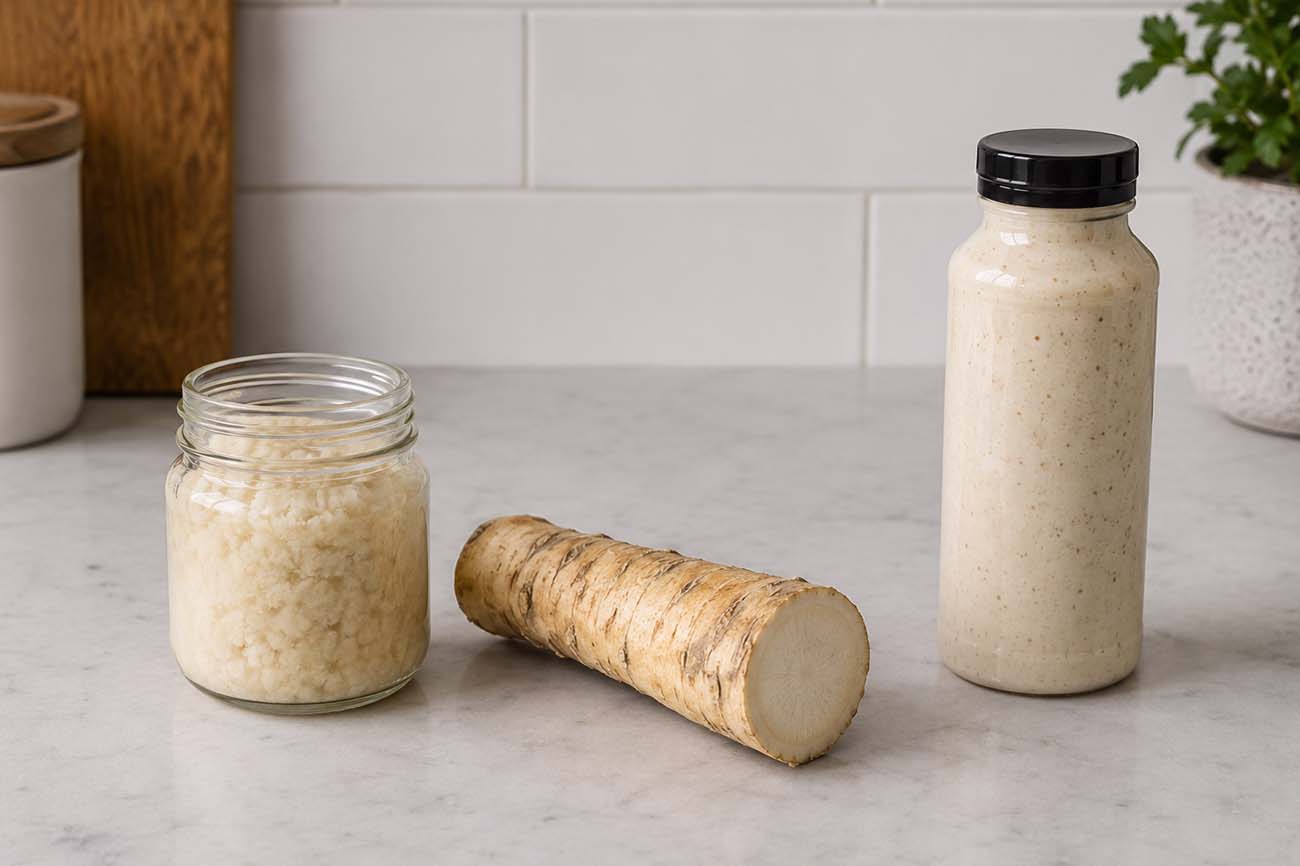
Horseradish is one of those condiments you pull out a few times a year and then wonder about the rest of the time. The bigger problem is that the word “horseradish” covers three completely different products: fresh root, prepared horseradish, and creamy horseradish sauce. Each one has different storage rules. Getting them confused is where people go wrong.
Does horseradish need to be refrigerated?
It depends entirely on which type you have. Fresh horseradish root must always be refrigerated and lasts 1 to 2 months in the fridge. Prepared horseradish, the vinegar based kind sold in jars, can often sit in the pantry unopened but must be refrigerated after opening and used within about 3 to 4 months. Creamy horseradish sauce containing mayo or cream must always be refrigerated after opening and used within 1 to 2 months. All three types lose pungency over time regardless of how they are stored.
For storage rules on over 120 foods, see our Food Storage Guide.
| Type | Refrigerate? | Opened Fridge Life | Freezer Life |
|---|---|---|---|
| Fresh horseradish root | Yes, always | 1 to 2 months | Up to 6 months |
| Prepared horseradish (vinegar based) | After opening | 3 to 4 months | 3 to 6 months |
| Horseradish sauce (mayo or cream based) | Always after opening | 1 to 2 months | Do not freeze |
- Fresh horseradish root must always be refrigerated. It deteriorates rapidly at room temperature and loses pungency within days of being cut or grated.
- Prepared horseradish (vinegar and grated root) is shelf stable unopened because of its acidity, but it must be refrigerated after opening. Use within 3 to 4 months for best heat and flavor, though some brands list longer windows, so check your jar’s label.
- Creamy horseradish sauce with a mayo or cream base must always be refrigerated after opening and treated like mayonnaise for food safety purposes. Use within 1 to 2 months.
- All horseradish products lose their signature heat over time, even when stored correctly. The pungency of freshly opened horseradish is always stronger than one that has been open for weeks.
- Kelchner’s recommends storing prepared horseradish upside down in the fridge after opening, which the brand says helps keep the product fresher for longer by limiting contact between the horseradish and the air near the cap.
The Important Distinction: Three Different Products
Most storage confusion comes from treating all horseradish products the same. They are not.
Prepared horseradish is made from grated horseradish root mixed with vinegar and salt. It is sharp, pungent, and white or off white. The vinegar acts as a preservative and gives it far better shelf stability than fresh root.
Horseradish sauce is prepared horseradish blended with sour cream, cream, or mayonnaise. It is milder, creamier, and off white to pale yellow. The dairy or mayo base makes it significantly more perishable and requires stricter refrigeration than prepared horseradish. If your jar says “horseradish sauce” or lists sour cream, cream, or mayonnaise in the ingredients, treat it like mayo, not like a condiment. Our guide on does sour cream need to be refrigerated covers the dairy side of that comparison in more detail.
Does Fresh Horseradish Root Need to Be Refrigerated?
Yes. Fresh horseradish root must always be refrigerated unless you are using it within 2 to 3 days of purchase.
Left at room temperature, fresh horseradish root begins to soften and deteriorate within a few days. The volatile compounds (primarily allyl isothiocyanate) responsible for horseradish’s heat and pungency oxidize and dissipate rapidly at room temperature. Cold slows this process significantly.
If a piece of root accidentally sits out overnight, it will not become unsafe the way a dairy product would. It will simply soften and lose pungency faster than it would have in the fridge. As long as it has not gone soft, moldy, or discolored, it is still fine to use, just less hot than it would have been.
- Do not wash before storing. Moisture accelerates deterioration.
- Wrap loosely in a damp paper towel or place in a perforated plastic bag that allows some airflow.
- Store in the vegetable crisper drawer where humidity is highest.
- Once cut or grated, use immediately or within a few days at most. Grated horseradish loses pungency very rapidly once exposed to air.
- To preserve grated horseradish, mix immediately with white vinegar before refrigerating. The acid slows oxidation and pungency loss. Stored this way it can last up to a year refrigerated, though some producers recommend using it within 4 to 6 months for the best quality.
⚠️ Why Horseradish Loses Its Heat
The heat in horseradish comes from allyl isothiocyanate, a compound that forms when the root’s cells are damaged (cut or grated). This damage releases an enzyme called myrosinase, which breaks down a separate compound called sinigrin to produce the allyl isothiocyanate. This reaction is ongoing, and the compound oxidizes and dissipates over time, faster at room temperature and slower in the cold. This is why freshly grated horseradish is always hotter than jarred, and why a newly opened jar of prepared horseradish has more kick than one that has been open for two months. Refrigeration slows the loss but does not stop it.
Does Prepared Horseradish Need to Be Refrigerated?
Prepared horseradish does not require refrigeration before opening but must be refrigerated after opening.
Prepared horseradish (grated root plus vinegar and salt) is shelf stable unopened because the high acidity from vinegar inhibits bacterial growth. Many vinegar based brands can be stored in a cool, dark pantry until the best by date when unopened, though some brands, including Gold’s, are sold in the refrigerated case and recommend keeping the product cold from the start, so it is worth checking the label on your specific jar. Once opened, the product is exposed to air and environmental bacteria, and refrigeration becomes necessary to maintain both safety and the pungency that makes it worth using.
| Storage Condition | Shelf Life |
|---|---|
| Unopened, cool pantry | Up to 1 year (per best by date) |
| Opened, refrigerated | 3 to 4 months |
| Opened, pantry | Not recommended |
Three to four months is the window most often cited by manufacturers and food safety writers, but shelf life can vary by formulation. Some brands list considerably longer windows, such as nine months refrigerated after opening, so check your specific jar’s label or the brand’s website if you want an exact figure.
💡 The Upside Down Trick
Kelchner’s Horseradish, one of the leading prepared horseradish brands, recommends storing opened jars upside down in the refrigerator. The brand says this keeps the horseradish pressed against the sealed lid rather than sitting near the cap area, which helps keep the product fresher for longer. It is a simple trick that costs nothing and is worth trying over weeks of storage.
Does Horseradish Sauce Need to Be Refrigerated?
Yes, always after opening, with no exceptions. Horseradish sauce containing sour cream, cream, or mayonnaise must be refrigerated and treated with the same urgency as any dairy or egg based condiment.
The mayo or cream base in horseradish sauce is a genuine food safety concern at room temperature. Unlike prepared horseradish where the vinegar provides real preservation, the base of horseradish sauce creates an environment where bacteria can multiply at room temperature within 2 hours per USDA food safety guidelines.
Do not apply the pantry storage rules for prepared horseradish to horseradish sauce. If your product contains sour cream, cream, or mayonnaise in the ingredient list, it must be refrigerated after opening and discarded after 1 to 2 months. Leaving cream or mayo based horseradish sauce at room temperature for more than 2 hours is a food safety risk. Treat it like ranch dressing or sour cream, not like mustard. See also our guides on does ranch dressing need to be refrigerated and does sour cream need to be refrigerated.
Can You Freeze Horseradish?
Yes, with results that vary by type.
See also

- Fresh horseradish root: Freezes well for up to 6 months. Peel and cut or grate before freezing. Store in airtight freezer bags. Grated frozen horseradish can be used directly from frozen in most recipes.
- Prepared horseradish: Can be frozen for 3 to 6 months in an airtight container. Some texture change on thawing but flavor and heat are largely preserved. Useful for preserving a large jar you cannot finish.
- Horseradish sauce (made with cream or mayo): Do not freeze. Cream and mayo bases separate and become grainy and watery on thawing, making the texture unpleasant. Use within the 1 to 2 month refrigerated window instead.
If horseradish sits in the freezer past these windows, it will not become unsafe to eat, but the heat and texture will keep fading the longer it stays frozen, so quality is what you are managing at that point, not safety.
How to Tell If Horseradish Has Gone Bad
Horseradish spoilage looks different depending on the type, but the core signals are consistent.
| Sign | What It Means | Action |
|---|---|---|
| Visible mold (any color) | Active spoilage | Discard entire jar |
| Sour, musty, or strongly off smell | Bacterial decomposition | Discard |
| Dark brown or gray discoloration | Oxidation and age | Discard: quality too far gone |
| No heat or completely flat flavor | Pungency lost: past prime | Discard for best experience |
| Slight yellowing (prepared) | Normal oxidation | Still usable if smell and taste are fine |
| Soft, mushy texture (fresh root) | Rotting | Discard |
For the complete spoilage guide including shelf life by type, see our companion post: does horseradish go bad. If you want the bigger picture on when eating something past its date is actually risky versus just past its best, our guide on whether expired condiments can make you sick covers that question across many condiments.
Storage Best Practices
- Always use clean utensils. Never double dip or use a spoon that has touched other foods. Contamination from utensils is the most common reason horseradish goes off ahead of schedule.
- Keep the lid tightly sealed. Air exposure is the primary driver of pungency loss in all three horseradish types. Replace the lid firmly after every use.
- Store prepared horseradish upside down in the fridge after opening to minimize air contact with the contents.
- Buy smaller jars if you use horseradish infrequently. A smaller jar used within a month will always deliver better heat than a large jar that sits half used for six months.
- Label the opening date. Horseradish often sits in the back of the fridge for weeks unnoticed. A date on the lid removes the guesswork.
Horseradish pairs well with beef, prime rib, roast pork, ham, and smoked salmon or other seafood. Our classic meatloaf uses it as a flavor base, it is a natural match for a bourbon baked ham or a wine glazed ham, and it works equally well stirred into a scungilli salad or served alongside gluten free crab cakes for a bold seafood pairing.
Frequently Asked Questions
Fresh horseradish root always needs refrigeration, even before use. Prepared horseradish (vinegar based, in a sealed jar) can often be stored in a cool, dark pantry until opening, similar to mustard (see our guide on should mustard be refrigerated). Creamy horseradish sauce in sealed jars is also typically shelf stable until opening, but check the label, since some brands require refrigeration even before opening.
Why does horseradish lose its heat in the fridge?
Cold slows the loss of pungency but does not stop it. The heat compound (allyl isothiocyanate) is volatile and continues to oxidize and dissipate over time even under refrigeration, just more slowly than at room temperature. Every time the jar is opened, heat and aromatic compounds escape. A jar of prepared horseradish that has been open for three months in the fridge will always be milder than one just opened, regardless of how well it was stored.
How long does prepared horseradish last after opening?
Prepared vinegar based horseradish lasts about 3 to 4 months refrigerated after opening, though some brands list longer windows, so it is worth checking your jar’s label. For peak heat and flavor, use it within the first 1 to 2 months. The product remains safe after that window, but the pungency will have noticeably diminished.
Can you leave horseradish sauce out overnight?
Prepared vinegar based horseradish: yes, one night at room temperature is not a food safety concern given its high acidity. Creamy horseradish sauce with mayo or sour cream: no. Per USDA food safety guidelines, dairy and egg based condiments should not sit at room temperature for more than 2 hours. Discard creamy horseradish sauce left out overnight.
What is the difference between prepared horseradish and horseradish sauce?
Prepared horseradish is grated horseradish root mixed with vinegar and salt. It is sharp, intensely pungent, and white or off white. Horseradish sauce blends prepared horseradish with sour cream, cream, or mayonnaise, resulting in a much milder, creamier product. They are different condiments, they taste different, and they have different storage requirements. The cream or mayo base in horseradish sauce makes it far more perishable.
Is horseradish the same as wasabi?
No, though they taste similar and share the same pungent compound, allyl isothiocyanate. Real wasabi comes from a different plant and is rarely sold fresh in the United States because it is expensive and difficult to grow. Most of what is labeled wasabi in American grocery stores and sushi restaurants is actually a mix of horseradish, mustard, and green coloring.
Is it bad to eat too much horseradish?
Horseradish is generally safe in normal condiment amounts, but eating a lot of it can irritate the mouth, sinuses, or stomach because of its pungent compounds. People with stomach ulcers, acid reflux, or other digestive sensitivities may want to use it sparingly. As with most strong condiments, moderation is the simplest rule to follow.
Can you store horseradish upside down?
Yes, and it is recommended. Kelchner’s Horseradish, one of the leading US producers, advises storing opened jars of prepared horseradish upside down in the refrigerator. The brand says this keeps the product in contact with the sealed lid rather than the cap area, which helps keep it fresher during storage.
Discard it if you see visible mold, notice a sour or musty smell that is clearly off, or find the color has darkened to brown or gray throughout. For fresh root, softness or mushiness is the clearest sign. Slight yellowing in prepared horseradish and a loss of heat are signs of age and oxidation, not necessarily spoilage, but they indicate the product is past its prime quality window. See our full guide: does horseradish go bad.
Further Reading
Better Living may earn commissions through affiliate links and may occasionally feature sponsored or partner content. If you make a purchase through our links, we may receive a small commission at no cost to you.