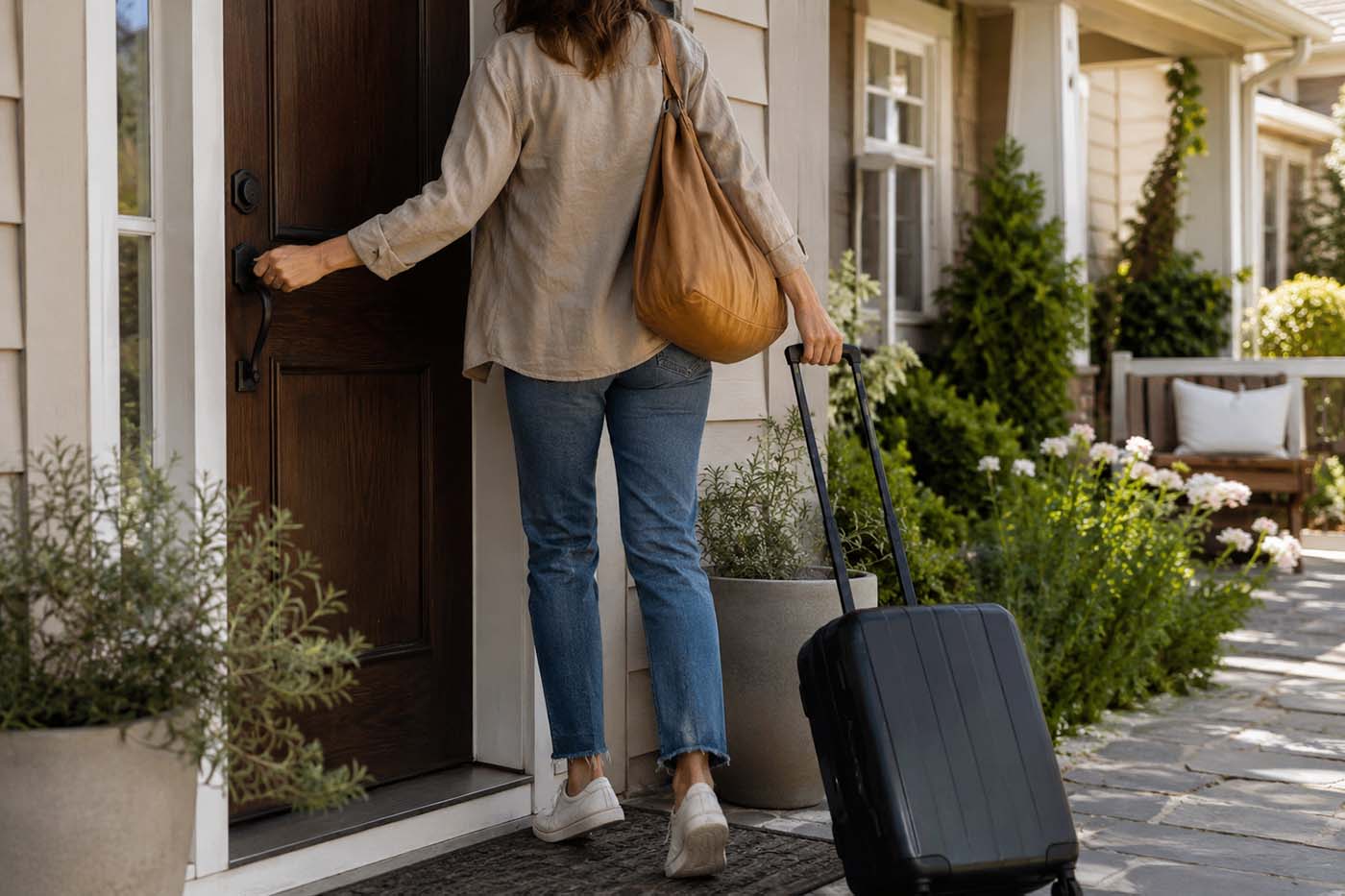
You’re locking the door behind you, bags in hand, already thinking about your flight. Did you leave a key with the dog sitter? Is there one hidden outside for your cleaner? If your answer involves a flowerpot, a fake rock, or the top of your doorframe, it’s worth two minutes to fix that before you go.
Burglars don’t have to guess where homeowners hide spare keys. Local police departments across the country publish nearly identical short lists of spots to avoid, because people keep using the same handful of hiding places. Below is where those spots actually fail, where security experts recommend hiding a key instead, and something almost nobody mentions: what a hidden key can mean for your insurance claim if it’s ever used against you.
| Don’t Hide a Key Here | Do This Instead |
|---|---|
| Under the doormat | Keypad lockbox mounted away from the door |
| Flowerpot or garden statue | Magnetic key holder on a hidden metal surface |
| Fake rock | Fake electrical outlet with a hidden compartment |
| Mailbox | Empty utility or junction box |
| Top of the doorframe | Under heavy, movable outdoor furniture |
| Taped under a windowsill | In or under a doghouse |
| In your wallet | With a trusted neighbor |
Why the “Classic” Hiding Spots Don’t Work Anymore
Every one of these spots shows up in local police department safety guides, over and over. That’s the problem: burglars have read the same advice you have, just from the other side of it.
2
Inside a flowerpot or under a garden statue. Close to the door, easy to lift, and exactly where anyone casing a house expects to look first.
3
In a fake rock. These are sold at every hardware store, so the shape, weight, and texture are familiar to anyone looking. A rock that doesn’t quite match the ones around it gives itself away.
4
In the mailbox. Not private, not weatherproof, and reachable by anyone who walks up your driveway.
5
On top of the doorframe. Takes no real effort to check, especially on a single-story entry.
6
Taped under a windowsill or patio furniture. Tape fails in heat and rain, and the spot itself is too predictable to rely on.
7
In your wallet. If your wallet is ever lost or stolen, whoever finds it now has your key and your address in the same place.
The common thread is proximity to the door and predictability. King County’s Sheriff’s Office advises against hiding keys anywhere outside the home at all, since the handful of spots homeowners tend to choose are already well known.
Does a Hidden Key Affect Your Homeowners Insurance?
This is a detail most spare-key articles leave out entirely. If someone enters your home using a hidden key instead of forcing a door or window, it’s still legally a burglary, but the lack of visible forced entry can draw more scrutiny during a claims investigation. Most homeowners policies require you to take reasonable care in securing your property, and an easily found key can become a factor an adjuster asks about.
The financial stakes make this worth taking seriously. The average homeowners theft claim ran about $4,400 between 2016 and 2020, according to Insurance Information Institute data. Insurance guides consistently advise against leaving a key under the mat or in the mailbox for exactly this reason.
None of this means a hidden key automatically voids your coverage. It means a key that’s genuinely hard to find is worth more than one that’s merely out of sight.
Where Security Experts Actually Recommend Hiding a Spare Key
A good hiding spot has two things going for it: distance from the door, and no obvious connection to “this is where a key would be.”
1
A combination lockbox. Mount it on a fence, railing, or utility structure away from the front entrance, not on the door itself. Choose a full keypad over a 3-digit dial. A 3-digit combination has only 1,000 possible codes, while a 4-digit keypad has 10,000, and many keypad models also don’t reveal how many digits the code actually uses.
2
A magnetic key holder, placed somewhere unexpected. These work when they’re not on the obvious metal surface by the door. The underside of a grill, a drainpipe around the side of the house, or deep inside a utility box all beat anything near the entryway.
3
An empty utility or junction box. A weatherproof conduit box mounted next to your real utility boxes blends in well, since few people stop to inspect utility hardware closely.
4
A fake electrical outlet. These are real products, designed to look like a normal wall or exterior outlet with a hidden storage compartment behind the faceplate. They’re far less recognizable than a fake rock, since almost nobody expects an outlet to open.
5
Under heavy, movable furniture. A patio bench or planter that takes real effort to lift is a better deterrent than a fake rock. The weight itself buys you time and discourages a casual search.
6
In or under a doghouse. If you have a dog, this hides in plain sight, and most people would rather not find out what’s guarding it.
7
Behind a loose brick or paver. A single loose brick in a wall or walkway that only you know how to find requires someone to already know your home well enough to exploit it.
Whichever spot you choose, keep it away from the front door, don’t tell more people than necessary, and check on it seasonally. Metal keys left outdoors do rust and stick over time.
Hiding a Key Inside Your Home
If you’re storing a spare for yourself rather than for someone else to find, a few options beat leaving it on a hook by the door:
- A small fireproof safe or lockbox, bolted inside a closet rather than left loose where it can simply be carried out.
- A decoy container that blends in with ordinary household items on a normal shelf, rather than something that visibly reads as a hiding spot.
- A locked drawer or cabinet in a room that isn’t an obvious first stop, away from a bedroom nightstand or entryway table.
If You’d Rather Not Hide a Key At All
| Option | Best for | Trade-off |
|---|---|---|
| Trusted neighbor | Anyone who knows their neighbors well | Depends on someone else being reliably home and careful with it |
| Keypad lockbox | House sitters, cleaners, occasional access | Code needs to be changed after every temporary use |
| Smart lock | Frequent guests, rentals, tech-comfortable households | Upfront cost and setup, relies on power or batteries |
A smart lock removes the hidden-key question completely. You can issue and revoke codes remotely, which is worth considering if you’re already planning a round of home upgrades.
Renters and Apartments: A Different Problem
Most spare key advice assumes a yard. If you’re in an apartment, skip outdoor hiding spots altogether, since building entrances and hallways are shared and far less predictable to control. A lockbox on a balcony railing, a key left with a neighbor in the building, or a small portable lockbox that travels with you are more realistic options than anything involving landscaping you don’t own.
Before You Travel
Sorting out your spare key is one item on a longer pre-trip list. It’s worth pairing with a quick walk-through using these home checks before you leave, and if you’re heading somewhere for more than a few days, a proper packing list and travel checklist will save you from remembering something important at the airport.
See also

Frequently Asked Questions
Where is the safest place to hide a spare key?
A keypad lockbox mounted away from your front door, or simply giving a key to a trusted neighbor, are the two options security experts return to most often. Both avoid the predictability problem that sinks hiding spots near the entryway.
Does hiding a spare key affect homeowners insurance?
It can add scrutiny to a claim. Entry using a spare key still counts as burglary, but the absence of forced entry can prompt an insurer to ask more questions about how the key was accessed and how securely it was hidden.
Is it safe to hide a key under a fake rock?
Not reliably. Fake rocks are widely sold, and burglars recognize them, especially when the rock doesn’t match the size, color, or texture of the real rocks around it.
What should I do if I don’t have anywhere good to hide a key outside?
Give a spare to a neighbor you trust, or switch to a smart lock with a code you can change remotely. Neither depends on finding the one hiding spot no one will check.
Where should I hide a key for a house sitter, cleaner, or short-term rental guest?
A keypad lockbox is the better choice over a physical hiding spot. You can give the code only to the person who needs it and change it as soon as they’re done, which a hidden key can’t do.
What should I do if I lose my spare key?
Retrace your steps and check likely spots first, including your car. If it doesn’t turn up and you’re worried it was taken rather than lost, re-key your locks and consider filing a police report, since a missing key paired with your address is a real risk.
You might also like: fire prevention tips for your home, how to prevent water damage while you’re away, and staying on top of home maintenance.
Better Living may earn commissions through affiliate links and may occasionally feature sponsored or partner content. If you make a purchase through our links, we may receive a small commission at no cost to you.