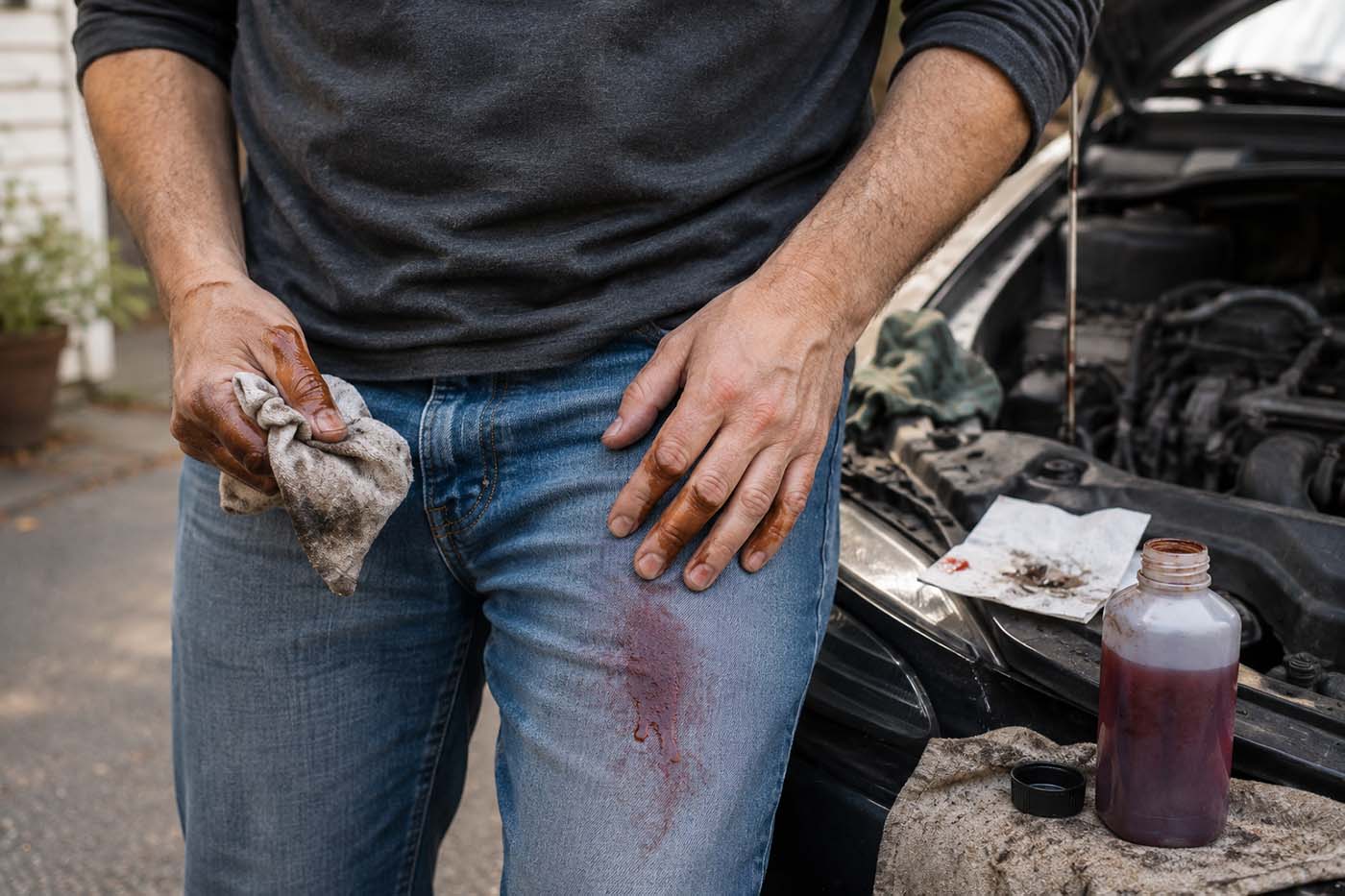
I topped off the transmission fluid in my own car in the driveway last spring, the kind of small maintenance job that feels satisfying to handle yourself, and wiped my hands on my jeans out of pure habit when I was done. I didn’t think much of it until I noticed a faint reddish smear across my thigh an hour later, well after the fluid had already soaked in and started to dry.
I treated it the way I’d treat any grease stain, dish soap worked into the fabric, a hot wash, done. Except it wasn’t done. The oily feel was gone after that first wash, but a pale pink shadow was still sitting right where the stain had been, and it survived a second wash too. That’s when I learned transmission fluid isn’t really one stain. It’s two, stacked on top of each other, and I’d only treated one of them.
The Short Answer: Transmission fluid is petroleum oil with a red or amber dye added, so it behaves like a grease stain and a dye stain at the same time. Treat the oil first with dish soap and an enzyme-based remover, then check for any leftover color and treat that separately with oxygen bleach on white or colorfast fabric. Skipping the second step is why the stain looks gone right after washing and then reappears once the fabric dries.
Why Transmission Fluid Stains Are Different
Most guides treat transmission fluid like any other automotive grease stain: oily, petroleum-based, needs dish soap. That’s true as far as it goes, but it skips the part that actually causes most of the frustration. Automatic transmission fluid is almost always dyed, usually red or amber, so manufacturers and mechanics can tell it apart from motor oil, coolant, and brake fluid at a glance. That dye doesn’t wash out the same way the oil does. You can fully break down and rinse out the petroleum base and still be left with a faint colored shadow, because you’ve solved the oil problem without ever addressing the dye problem sitting underneath it.
The Golden Rule
Treat this as two stains, not one. The oil comes out with dish soap and an enzyme-based treatment, the same approach that works on any fat or grease stain. The dye is a separate job that needs an oxidizing treatment like oxygen bleach. Wash the garment once, thinking dish soap solved everything, and you’ll usually find out a day later that it didn’t.
Fresh vs. Dried Stains
A fresh spill is much easier to fully clear than one that’s had time to sit. Transmission fluid is thin and spreads readily into fabric, so the sooner you blot it, the less it works into the weave. Once it’s dried, both the oil and the dye have had time to bond more firmly to the fibers, and you should expect to repeat both treatment steps at least once.
How to Get Transmission Fluid Out of Clothes: 4 Methods
1
2
3
4
Pro tip: An enzyme-based stain remover is worth keeping in the garage or laundry room if you do your own car maintenance, it handles the oil side of this stain, along with motor oil and grease, in one product. For the dye that’s left behind, an oxygen bleach powder soak on white or colorfast fabric is the step most people skip, and the one that actually finishes the job.
What About WD-40?
WD-40 comes up often as a way to loosen a set oil stain before washing, and it can help break up a dried, stubborn spot when dish soap alone isn’t cutting through it. Treat it as a last resort rather than a first move, though. It’s still a petroleum product being used to treat a petroleum stain, so it needs to be followed with a thorough dish soap treatment and wash, never left to sit on the fabric long-term, and always spot tested first since it can affect some dyes and synthetic fabrics.
Fabric-by-Fabric Guide
White cotton: Handles the full oil-then-dye method well, including a full oxygen bleach soak for the color.
Colored cotton: Same approach, but spot test the oxygen bleach on an inside seam first.
Denim: Durable enough for repeated dish soap and enzyme treatment, and usually forgiving of an oxygen bleach soak on lighter washes.
Polyester and blends: Dish soap and enzyme treatment work the same, but check the care label before an oxygen bleach soak since some synthetic dyes are less colorfast.
Silk and wool: Skip home treatment for the oil stage beyond a gentle blot, and take the garment to a professional cleaner. Oxygen bleach and prolonged soaking can both affect these fibers.
Dry-clean-only fabrics: Blot any excess fluid only, then take it to a cleaner and mention it’s transmission fluid so they know to expect both an oil and a dye component.
Step-by-Step Protocol
- Blot, don’t rub, any excess fluid with a clean cloth as soon as you notice the stain.
- Sprinkle baking soda or cornstarch over the area and let it sit for fifteen to twenty minutes to absorb more of the oil, then brush it off.
- Check the fabric. Silk, wool, and dry-clean-only garments should go to a professional cleaner from here.
- Work liquid dish soap into the stain and let it sit for ten to fifteen minutes.
- Rinse with the warmest water the care label allows.
- Soak in cool water with an enzyme-based stain remover for thirty minutes to an hour.
- Launder as usual, then let the garment air dry rather than using the dryer, so you can check the result before heat has a chance to set anything.
- Once dry, check for any remaining red or amber color. If it’s there, soak in oxygen bleach on white or colorfast fabric for several hours or overnight.
- Launder again, and only dry on heat once both the oil and the dye are fully gone.
Never do this:
- Never use cold water alone on the oil stage. Cold water can’t emulsify fat and oil the way dish soap can.
- Never use chlorine bleach on a colored or dyed fabric to chase the stain. It strips and alters dye through oxidation regardless of what caused the stain, so it’s only safe on white or confirmed bleach-safe fabric.
- Never dry the garment on heat before confirming both the oil and the dye are fully gone. Heat sets whatever’s left behind permanently.
- Never rub a fresh stain. Rubbing spreads the fluid, including the dye, further into the fibers.
- Never assume the stain is finished just because the fabric no longer feels greasy. That only means the oil stage worked, not the dye stage.
- Never leave WD-40 sitting on fabric for an extended period. Use it sparingly as a pretreatment, then wash thoroughly.
What Does Not Work
Vinegar shows up constantly in transmission fluid stain advice, usually paired with the claim that it “breaks down” the fluid. Vinegar is a mild acid, not a degreaser, and it has no real solvent action on petroleum oil. It can help freshen odor and slightly loosen surface residue through gentle agitation, but it isn’t doing the actual work of removing the oil, dish soap is.
See also

Baking soda alone, without a dish soap or enzyme follow-up, will absorb some surface oil but won’t touch fluid that’s already worked into the fibers, and it does nothing at all for the dye. Treat it as the first step in the process, not a stain remover by itself.
Rubbing alcohol comes up on a few sites as a stain treatment here. It can help with some dye-based stains, but on transmission fluid it’s working against a petroleum oil base it’s not well suited to break down, so it’s an inconsistent substitute for dish soap and enzyme treatment rather than an improvement on them.
The One Thing I Wish I’d Known Sooner
I wish I’d known that the stain wasn’t actually gone just because it stopped feeling greasy. I treated the oil, saw the fabric come clean out of the wash, and moved on, only to find the same faint pink shadow staring back at me once the jeans had fully dried. Checking for color separately from checking for grease would have saved me a second round of laundry entirely.
Final Thoughts
If you’re doing your own car maintenance regularly, this same oil-then-dye logic is worth remembering for other automotive fluids too, not just transmission fluid. For plain motor oil without the dye complication, our oil stain guide covers the single-layer version of this problem, and our grease stain guide is worth bookmarking alongside it. If the dye ends up being stubborn, our rust stain guide shares the same chlorine-bleach caution and oxygen bleach approach.
Frequently Asked Questions
How do you get transmission fluid out of clothes?
Treat the petroleum oil first with dish soap and an enzyme-based stain remover, then check for any leftover red or amber dye and treat that separately with oxygen bleach on white or colorfast fabric.
Why does the stain come back after washing?
Because transmission fluid is dyed, usually red or amber, and washing out the oil doesn’t remove the dye. If only the oil stage was treated, the color shadow can still be there once the fabric dries.
Does vinegar remove transmission fluid stains?
Not meaningfully. Vinegar is a mild acid with no real solvent action on petroleum oil, so it isn’t doing the actual removal work that dish soap and enzyme treatment do.
Can you use bleach on a transmission fluid stain?
Oxygen bleach is the safer choice for lifting the leftover dye on white or colorfast fabric. Chlorine bleach should only be used on fabric that’s confirmed bleach-safe, since it strips color through oxidation regardless of what caused the stain.
Is transmission fluid harder to remove than motor oil?
It can be, mainly because of the added dye. The oil component behaves similarly to motor oil, but the color needs a separate treatment step that plain motor oil doesn’t require.
Does WD-40 help remove transmission fluid stains?
It can loosen a dried, stubborn stain as a pretreatment, but it should be used sparingly, spot tested first, and always followed with a full dish soap treatment and wash, not left on the fabric.
What if the stain has already dried?
Dried stains take longer and may need both the oil and dye steps repeated more than once, since both the petroleum base and the dye have had more time to bond to the fibers.
Related Stain Removal Guides