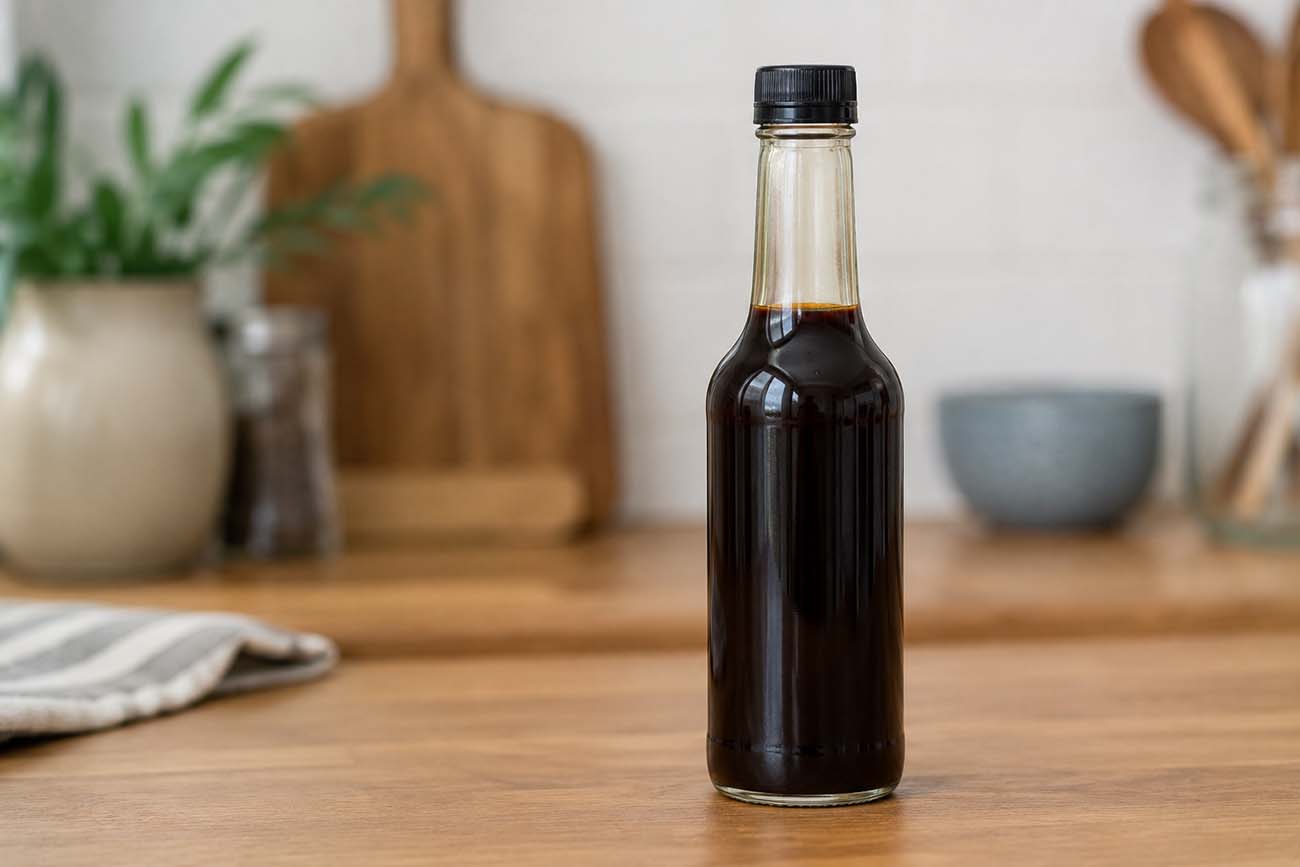
You bought it for one recipe, used a tablespoon, and now it has been sitting in the back of the pantry (or the fridge door) for longer than you can remember. Maybe the color looks a little different. Maybe there is something settling at the bottom. So: does Worcestershire sauce actually go bad, or is it one of those condiments that just lasts forever?
The short answer: Worcestershire sauce almost never goes bad in any meaningful sense. Its vinegar, salt, molasses, and fermented ingredients make it one of the most stable condiments in your kitchen. Unopened bottles stay at peak quality for 3 to 5 years and remain usable well beyond that. Once opened, expect about 1 year of best quality in the pantry or up to 3 years refrigerated. Actual spoilage is extremely rare. What declines over time is flavor complexity, not safety.
For a complete condiment storage reference, see our Food Storage Guide.
- Unopened: 3 to 5 years at peak quality. Fine well past the best-by date.
- Opened, pantry: Best within 1 year per FoodSafety.gov. Still usable longer.
- Opened, fridge: Up to 3 years of best quality.
- True spoilage: Rare. Look for mold, off smell, or gas buildup.
- Sediment at the bottom: Normal. Shake it and use it.
- Homemade Worcestershire: Refrigerate and use within 1 to 2 weeks.
- Worcestershire sauce is built on vinegar, salt, molasses, and fermentation, all natural preservatives. True spoilage is rare.
- Opened Worcestershire sauce lasts about 1 year at best quality in the pantry, or up to 3 years refrigerated, per FoodSafety.gov.
- Refrigeration is not required after opening, but it meaningfully extends peak flavor. Both Lea & Perrins and FoodSafety.gov confirm the sauce is shelf-stable after opening.
- The most common thing people mistake for spoilage is sediment at the bottom of the bottle. It is normal. Shake it.
- Real spoilage signs (mold, off smell, gas buildup) are uncommon but mean it is time to discard the bottle.
- Homemade Worcestershire sauce has none of the commercial preservation and must be refrigerated and used within 1 to 2 weeks.
What Makes Worcestershire Sauce So Shelf-Stable
Worcestershire sauce has an unusually long shelf life because almost every ingredient in it acts as a preservative.
The primary ingredients in Lea & Perrins, the original and most recognized brand, are malt vinegar, spirit vinegar, molasses, anchovies, tamarind extract, onions, and salt. Every one of those ingredients has been used as a preservation agent on its own. Together, they create an environment that is hostile to bacterial growth.
🔬 Why Worcestershire Sauce Resists Spoilage
Three mechanisms work together. First, the high acidity from two types of vinegar lowers the pH well below 4.6, the threshold at which most spoilage bacteria and pathogens are significantly inhibited. Second, the salt and molasses create osmotic pressure that draws moisture away from any microbial cells. Third, Worcestershire sauce is a fermented condiment: the fermentation process produces acids and byproducts that further stabilize the final product. The result is a condiment that is genuinely difficult to spoil under normal kitchen conditions.
Does Worcestershire Sauce Actually Expire?
The best-by date on a bottle of Worcestershire sauce is a quality indicator, not a safety cutoff. The sauce does not flip from safe to unsafe on that date.
What the best-by date reflects is the manufacturer’s estimate of when the sauce will be at its peak flavor complexity. In practice, an unopened bottle stored in a cool, dark pantry will maintain very good quality well beyond that printed date.
- The complex balance of salty, sweet, acidic, and umami notes flattens gradually. Dishes made with older Worcestershire will taste less layered.
- The color may deepen slightly in opened bottles. Some darkening is normal and not a spoilage sign. A dramatic color shift to an unusual hue (very reddish, very black) in a bottle that has also developed an off smell warrants discarding.
- The sauce may appear cloudier than usual. Mild cloudiness combined with normal smell is generally not a concern. Cloudiness combined with an off odor means discard.
- Sediment accumulates at the bottom. This is normal separation of natural ingredients, not spoilage. Shake before using.
- None of these changes on their own are safety concerns. They are quality changes.
FoodSafety.gov recommends using opened Worcestershire sauce within 1 year if stored in the pantry. That window is about best flavor, not about the sauce becoming unsafe after 12 months.
Worcestershire Sauce Shelf Life at a Glance
| Storage Condition | Best Quality Window | Notes |
|---|---|---|
| Unopened, pantry | 3 to 5 years | Often fine well past best-by date |
| Opened, pantry | About 1 year | Per FoodSafety.gov; flavor flattens gradually after this |
| Opened, refrigerated | Up to 3 years | Cold slows flavor degradation significantly |
| Homemade, refrigerated | 1 to 2 weeks | No commercial preservation. Must refrigerate. |
Sources: FoodSafety.gov, Lea & Perrins.
How to Tell If Worcestershire Sauce Has Gone Bad
True spoilage in Worcestershire sauce is uncommon, but it can happen, particularly in bottles stored near heat, with a loose cap, or in homemade versions. Here is what to look for.
- Mold: Visible mold on the surface or around the inside of the cap. Do not skim and use.
- Off smell: Worcestershire has a strong, pungent, complex aroma. If it smells rancid, sour in an unpleasant way beyond normal vinegar tang, or simply wrong, discard it.
- Gas buildup: A plastic bottle that looks swollen, or a lid (glass or plastic) that makes an unusual pressure-release pop when opened, indicates gas buildup. Discard.
- Dramatic color change accompanied by off smell: Darkening alone is normal. A dramatic shift in color combined with an unpleasant odor is a sign of spoilage.
- Cloudiness with off odor: Mild cloudiness alone is not necessarily a problem, but cloudiness plus an off smell means discard.
- Actively unpleasant taste: Flat or less complex than expected is quality decline. Actively bad-tasting is a reason to discard.
See also

What is NOT a spoilage sign: Sediment or a dark layer settling at the bottom of the bottle is completely normal. The natural ingredients separate over time. Shake well before using. Some darkening of color over time is also normal.
How to Store Worcestershire Sauce
- Before opening: Store in a cool, dark place away from heat. A pantry cabinet away from the stove or dishwasher is ideal. Consistent cool temperature matters more than exact temperature.
- After opening, pantry is fine if you use the bottle within a year. Refrigerating is the better call if your bottle sits for longer, or if you want to preserve peak flavor. Both options are safe.
- Always seal the cap tightly after every use. Air and oxidation are the primary drivers of flavor decline. A loose cap accelerates the process significantly.
- Keep away from heat sources. A bottle stored next to the stove, above the oven, or on a sunny countertop will lose quality noticeably faster.
- Pick a storage location and stay there. Repeated temperature swings from moving between pantry and fridge can accelerate quality decline faster than either storage method alone.
- Homemade Worcestershire must be refrigerated immediately in a sealed container and used within 1 to 2 weeks. It has none of the commercial fermentation or preservation.
What Is Worcestershire Sauce?
Worcestershire sauce is a fermented liquid condiment developed in Worcester, England in the early 19th century and first commercially produced by chemists John Wheeley Lea and William Henry Perrins. The Lea & Perrins formula remains the market reference today.
🔬 What Goes Into Worcestershire Sauce
The Lea & Perrins formula centers on malt vinegar, spirit vinegar, molasses, sugar, salt, anchovies, tamarind extract, onions, garlic, and a blend of spices. The anchovies and tamarind are the primary umami drivers. The vinegar provides the acidic backbone. The molasses contributes depth and slight sweetness. This combination produces a balance of salty, sweet, tangy, and savory notes that is difficult to replicate with any single ingredient. It is also precisely why the sauce is so shelf-stable: the ingredients collectively create an environment hostile to microbial growth.
Worcestershire is used as a marinade for meats, a flavor base in soups, stews, and gravies, a key ingredient in Bloody Marys, a seasoning for deviled eggs and Caesar dressing, and a finishing sauce in countless savory dishes. It is so potent that most recipes call for just a teaspoon or two, which is why a single bottle tends to last a long time in most kitchens.
It works well in marinades for grilled meats: our steak tacos use it in the marinade, and it adds depth to the sauce in our classic meatloaf. It also pairs well alongside soy sauce and fish sauce in Asian-inspired dishes like our teriyaki pork bowls.
Frequently Asked Questions
Does Worcestershire sauce go bad if not refrigerated?
Not easily. Commercial Worcestershire sauce is shelf-stable after opening due to its high vinegar, salt, and molasses content. Both Lea & Perrins and FoodSafety.gov confirm it does not require refrigeration after opening. Quality will decline somewhat faster than refrigerated sauce, but safety is not a concern within normal timeframes. FoodSafety.gov puts the best-quality pantry window at about 1 year after opening.
How long does Worcestershire sauce last after opening?
About 1 year at best quality in the pantry, or up to 3 years refrigerated, per FoodSafety.gov. The sauce remains usable beyond those windows as long as there are no signs of spoilage. What declines after those windows is flavor complexity, not safety.
Can you use Worcestershire sauce past its best-by date?
Yes, in most cases. The best-by date reflects peak quality, not a safety cutoff. An unopened bottle a year or two past its printed date, stored in a cool dark pantry, is almost certainly fine. Assess by smell and taste before using. If the flavor is noticeably flat but not unpleasant, it will still add value in cooked dishes.
What is the sediment at the bottom of my Worcestershire sauce bottle?
Normal. The natural ingredients in Worcestershire sauce separate over time, particularly the molasses and spice particles, which settle to the bottom. This is not mold and not a sign of spoilage. Shake the bottle well before using and it will incorporate. Only discard if the sediment is accompanied by an off smell or visible mold around the cap.
No, not for safety. The sauce is shelf-stable after opening. Refrigerating extends the best-quality window from about 1 year to up to 3 years, so it is worth doing if you go through bottles slowly. For a full breakdown on the refrigeration question, see our companion post: does Worcestershire sauce need to be refrigerated.
Can Worcestershire sauce make you sick?
Extremely unlikely with commercial sauce stored properly. The combination of vinegar, salt, molasses, and fermentation creates an environment that does not support the growth of foodborne pathogens. The practical risk comes from introducing contamination (a dirty utensil, food particles falling in) combined with long storage at warm temperatures.
Can you freeze Worcestershire sauce?
Technically yes, but there is almost never a reason to. Worcestershire sauce already has an extraordinarily long shelf life at room temperature and in the fridge. Freezing introduces the risk of texture and flavor changes when the sauce thaws. The high salt and molasses content also means the sauce will not freeze fully solid, making the process somewhat pointless. If you have a very large amount you won’t use within 3 years even refrigerated, portion it into an ice cube tray, freeze, and transfer to a sealed bag. Thawed portions are best used in cooked dishes rather than raw applications.
How do you pronounce Worcestershire?
The standard pronunciation is “WOOS-ter-sheer” or simply “WOOS-ter-sher,” with the middle syllables largely silent. The common American shorthand is “Wooster sauce.” Native speakers from Worcester, England tend to say it closer to “WUSS-tuh-shuh.” Despite being one of the most commonly mispronounced food words in English, no version will get your point across better than pointing to the bottle.
Why does my Worcestershire sauce smell so strong?
The anchovies, tamarind, vinegar, and molasses all have pungent aromas that combine into a sharp, complex smell. New bottles often smell strongest because all volatile aromatic compounds are at peak concentration. An older bottle may smell less intense, which is normal quality decline. If it smells actively rancid or unpleasant rather than just pungent, discard it.
How long does homemade Worcestershire sauce last?
Homemade Worcestershire sauce should be refrigerated immediately and used within 1 to 2 weeks. Without the commercial fermentation process and consistent ingredient ratios that give bottled Worcestershire its extraordinary stability, homemade versions behave much more like a fresh condiment. Treat it accordingly.
Does Worcestershire sauce contain gluten?
The US version of Lea & Perrins Worcestershire sauce is certified gluten free. The UK version traditionally uses malt vinegar and is not gluten free. Formulations vary by brand, so always check the label if you have celiac disease or serious gluten sensitivity, particularly with store-brand versions.
Is Worcestershire sauce vegan?
Most traditional Worcestershire sauces, including Lea & Perrins, contain anchovies and are not vegan. Several brands produce vegan versions using soy sauce and tamarind in place of anchovies. Shelf life and storage guidance is generally the same for both versions.
If your bottle is past its prime, reasonable substitutes include soy sauce for the salty-umami base, a mix of soy sauce with a small amount of tamarind paste and apple cider vinegar for a closer match, or fish sauce diluted with a little water. None are exact replacements for the full complexity, but they cover the primary flavor roles in most cooked applications. See how Worcestershire compares to similar condiments: does soy sauce go bad and does fish sauce go bad.
Further Reading
Better Living may earn commissions through affiliate links and may occasionally feature sponsored or partner content. If you make a purchase through our links, we may receive a small commission at no cost to you.