Can You Freeze Garlic? Yes, and It’s a Great Way to Preserve It
If you cook regularly and you’re not freezing garlic, you’re wasting time and probably throwing away flavor every month. The answer to the question “can you freeze garlic?” is an unapologetic yes — and not just as a last-resort hack, but as a primary preservation strategy that can actually make your cooking better and more consistent.
I say that as someone who used to treat garlic like a sacred, always-fresh ingredient that had to be minced à la minute to “really taste right.” That romantic idea lasted until I started working 10-hour days and discovered half a bulb liquefying in the back of my pantry every other week. When I finally gave in and started freezing garlic, my weeknight cooking changed overnight: faster, more flavorful, and a lot less wasteful. No more sprouted cloves, no more panic when a recipe calls for “8 cloves” and I have exactly two left.
Here’s the truth people don’t like to hear: most home cooks cannot taste the difference between a clove minced 30 seconds ago and one that was chopped, frozen, and used within a few months — especially once it’s sautéed, roasted, or simmered in a sauce. What you will notice is the difference between having garlic ready in five seconds and not bothering to use it at all because you’re too tired to peel and chop. Freezing garlic keeps you on the right side of that decision.
For more on how garlic behaves before it gets to the freezer, see Does Garlic Go Bad? and Does Garlic Need to Be Refrigerated? For a complete reference on storing over 100 foods, see our Food Storage Guide.
Can you freeze garlic?
The short answer: Yes. Garlic freezes well in four forms: whole unpeeled cloves (up to 12 months), peeled cloves (6 to 9 months), minced garlic (3 to 6 months), and garlic in oil (3 months, freezer only). Most home cooks cannot taste the difference in cooked dishes. The one safety rule that cannot be ignored: garlic stored in oil must stay frozen at all times. Room temperature or extended refrigerator storage of garlic in oil creates botulism risk.
- Whole unpeeled cloves: freeze up to 12 months; best within 6 months
- Peeled cloves: 6 to 9 months frozen; peel slips off easier after freezing
- Minced garlic (no oil): 3 to 6 months; portion into 1-teaspoon ice cube trays
- Garlic in oil: 3 months frozen only; never thaw and leave at room temperature
- Most home cooks cannot taste the difference in cooked dishes
- Label every container with form, date, and use-by window
- Use directly from frozen in most cooking applications — no thawing needed
- Botulism warning: garlic in oil is only safe while continuously frozen
How to Freeze Garlic
There are four reliable methods for freezing garlic: whole unpeeled cloves, peeled cloves, minced, and in oil. Each suits a different cooking style. Choose one or two that match how you actually cook.
What I learned the hard way: trying to freeze garlic every which way at once leads to a chaotic, unlabeled graveyard of mystery cubes and bags. Start by picking one or two methods that match your most frequent dishes. For example, I keep three formats on rotation:
- Whole cloves (for roasting and sheet-pan dinners)
- Peeled cloves (for quick slicing and smashing)
- Minced garlic (for instant flavor in sauces and sautés)
Freezing Whole Cloves
Freezing whole cloves is the least fussy method and the least likely to go wrong. It’s ideal if you like roasting garlic, smashing cloves for stews, or slicing them thin for dishes where garlic is more textural than invisible.
Step-by-step: Whole, Unpeeled Cloves
- Start with firm, fresh bulbs. Avoid anything sprouting or soft. The freezer will slow deterioration, not reverse it.
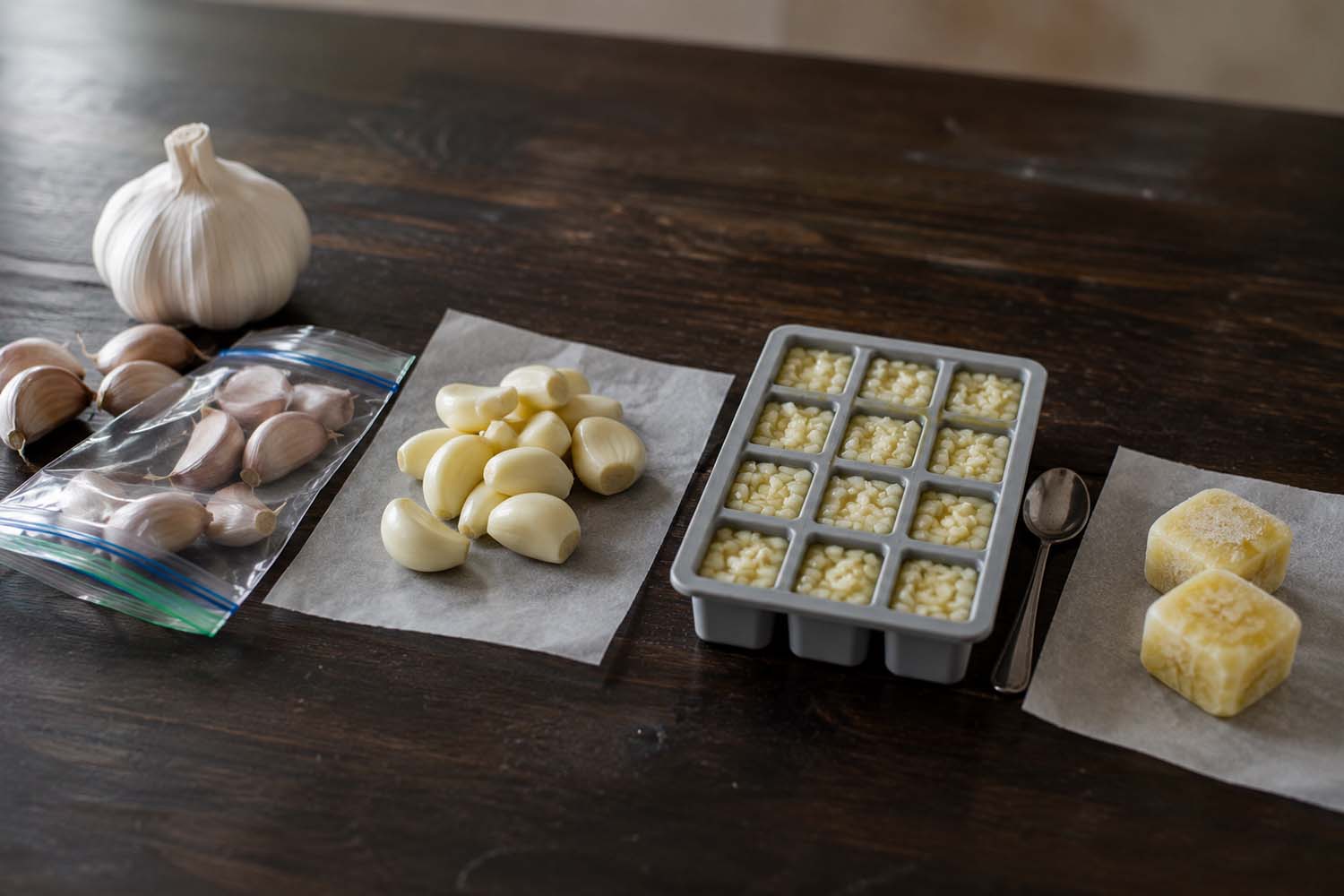
- Break bulbs into cloves, but don’t peel. Keep the papery skin on; it protects the clove from freezer burn and flavor loss.
- Transfer to a freezer-safe container. A heavy-duty zip-top bag or airtight container works. Squeeze out as much air as possible.
- Label clearly. Include the date and “whole unpeeled cloves.”
- Freeze for up to 6 to 12 months. The flavor is best in the first 3 to 6 months, but they’re usable up to a year for most cooked dishes.
When you’re ready to use them, the beauty is that the peels often slip off more easily after freezing. Grab a handful, let them sit on the counter for a few minutes, then crush them under a knife to pop them out of their skins.
From my own kitchen: I started doing this after a particularly frustrating night of trying to peel sticky, old garlic for roasted chicken. Frozen, unpeeled cloves peel cleaner and faster than many fresh supermarket bulbs.
Pros: Minimal prep. Great for roasting and long cooking. Peel often comes off easier after freezing.
Cons: Not ideal if you always want prepped, ready-to-go garlic. Takes a bit of defrost time if you want to slice neatly.
Freezing Peeled Cloves
If you’re likely to slice, crush, or microplane your garlic, freezing peeled cloves is the sweet spot between convenience and versatility. You get individual pieces that can be used almost like fresh cloves.
Step-by-step: Peeled Cloves
- Peel in bulk. Break the heads apart, trim the stem ends, and remove skins. A silicone garlic peeler tube or the shake-in-a-bowl trick saves a ton of time.
- Optional: Quick-freeze individually. Spread cloves in a single layer on a parchment-lined sheet pan and freeze until solid (1 to 2 hours). This keeps them from clumping.
- Pack into containers. Transfer frozen cloves into labeled freezer bags or airtight containers. If you skip the sheet-pan step, they may stick together, but you can usually break them apart by banging the bag gently.
- Label with date and “peeled cloves.”
- Freeze for up to 6 to 9 months. They’ll remain safe longer, but the flavor slowly dulls after that.
When I’m in a realistic cooking mode — not the fantasy mode where I imagine I’ll hand-mince garlic nightly — this is the form I reach for most. I’ll grab 3 to 4 frozen cloves, smash them straight from the freezer, then mince or grate. Half-frozen cloves cut cleaner than fully thawed ones and produce less of the mushy paste that burns in the pan.
Freezing Minced Garlic
Minced garlic is the freezer form that divides people. Some purists insist that once garlic is minced and frozen, it “loses its soul.” That argument is a little dramatic for something that ends up sizzling in hot oil and buried in tomato sauce.
If you’re honest about your habits and realize you often skip garlic because you don’t feel like chopping, this is the format that will actually get used.
Step-by-step: Minced Garlic (Dry)
- Peel your cloves. Use firm, fresh garlic. Old, rubbery cloves turn to bitter mush more easily.
- Mince or chop. You can use a knife, food processor, or garlic press. A food processor is most efficient if you’re processing a whole bag of garlic at once.
- Spread into portions. Spoon into ice cube trays (about 1 teaspoon to 1 tablespoon per cavity), or spread a thin layer on a parchment-lined sheet and score it into squares.
- Freeze until solid. Usually 2 to 3 hours.
- Pop out and store. Transfer cubes or shards to a labeled freezer bag or container.
- Use within 3 to 6 months for best flavor.
Because frozen minced garlic weakens slightly over time, use a heavy teaspoon where a recipe calls for 1 clove. Sensory studies on frozen versus fresh garlic confirm that freezing changes some of the volatile sulfur compounds responsible for the initial sharp bite, but in cooked dishes most tasters do not strongly prefer one over the other when garlic is properly stored and used within a few months.
Pros: Instant garlic — no knives, no cutting board. Perfect for busy weeknights and batch cooking.
Cons: Not great for recipes that rely on fresh garlic’s crunch or raw bite. Flavor softens over longer storage.
Freezing Garlic in Oil
Freezing garlic in oil is where things get complicated — and where a lot of online advice is dangerously casual. Yes, it’s possible. Yes, it’s convenient. And yes, if you ignore the safety rules, it can be outright unsafe.
Step-by-step: Garlic in Oil (Freezer Only)
- Use fresh, firm garlic. No sprouting, no soft spots, no mold.
- Peel and mince. Chop by hand or in a food processor.
- Mix with oil. Combine garlic with a neutral oil or olive oil. A common ratio is 1 part garlic to 1 to 2 parts oil, just enough to fully submerge the garlic.
- Portion into ice cube trays. Fill each cavity with the garlic-oil mixture.
- Freeze immediately. Move directly from prep to freezer; do not let it sit at room temperature.
- Once solid, transfer cubes to a labeled freezer bag marked: “Garlic in oil — frozen — KEEP FROZEN.”
- Use from frozen only. Take cubes directly from the freezer to the hot pan.
Personally, I only keep one small tray of garlic-in-olive-oil cubes at a time. I use them for sautéing vegetables and starting pasta sauces when I need speed. They go straight from the freezer into a hot pan — no lingering on the counter.
How to Thaw Frozen Garlic
In most cases you do not need to thaw frozen garlic at all. That is the biggest practical advantage of frozen garlic over almost any other frozen ingredient.
- Whole or peeled cloves: For roasting or braising, add them frozen directly to the pot. For slicing, let them sit at room temperature for 3 to 5 minutes, then cut while still slightly firm.
- Minced garlic cubes or shards: Add directly to a hot pan with oil or butter. For cold applications like salad dressings, thaw in the fridge.
- Garlic in oil cubes: Go straight from the freezer to the hot pan. Do not thaw and leave them sitting at room temperature.
From freezer to sizzling garlic takes about 45 seconds. Compare that to hunting down a head of garlic, peeling, chopping, and then cleaning the cutting board. When you’re cooking tired and hungry, those minutes decide whether garlic makes it into the dish or not.
How to Use Frozen Garlic
Use frozen garlic the same way you would fresh, matching the form to the application. The only adjustment is quantity: frozen minced garlic loses some potency over time, so use a slightly heavier measure than a recipe calls for.
- Whole frozen cloves: Tossed with vegetables on a sheet pan (they roast up sweet and mellow). Added to braises and stews to slowly perfume the sauce. Wrapped in foil with olive oil for quick roasted garlic without the prep.
- Peeled frozen cloves: Smashed and sautéed in oil as the base of almost any savory dish. Sliced thin for stir-fries — add them while still slightly frozen for easier slicing. Grated on a microplane straight from the freezer into marinades.
- Minced frozen garlic: Stirred into tomato sauce, curries, and soups. Added to melted butter for quick garlic butter. Used in meatballs, meatloaf, and burger mixtures.
- Garlic in oil cubes: Dropped into a pan as a one-step flavor starter. Used to fry eggs, sauté shrimp, or finish steamed vegetables.
Can You Freeze Garlic Bread?
Yes. Both unbaked and already-baked garlic bread freeze well. Unbaked freezes better and comes out crispier from the oven than bread baked fresh and reheated.
Freezing Unbaked Garlic Bread
- Prepare your bread. Slice a baguette or loaf, or use whole halves.
- Make garlic butter. Mix softened butter with minced garlic (fresh or frozen), salt, and herbs.
- Spread generously. Coat each slice or half with the garlic butter mixture.
- Quick-freeze. Lay slices on a sheet pan in a single layer and freeze until solid.
- Store. Transfer to a labeled freezer bag, squeezing out excess air.
To bake: go straight from the freezer to a hot oven (375 to 400°F) until the edges are crisp and the butter has melted and browned slightly. No thawing necessary.
Freezing Leftover Baked Garlic Bread
- Cool completely. Warm bread traps steam, making it soggy when frozen.
- Wrap tightly. Use foil, then a freezer bag, or wrap in plastic and foil.
- Freeze for up to 1 to 2 months.
See also

Reheat wrapped in foil at 350°F until warmed through, then open the foil for the last few minutes to re-crisp the surface.
Tips for Freezing Garlic
Label like you’re going to forget. Write: “Minced garlic — no oil — 1 tsp cubes — 02/2026”. This saves you from sniff-testing mystery cubes.
Flatten bags for faster freezing. When freezing peeled cloves or minced garlic shards in bags, press them into a thin, flat layer. Faster freezing means better texture and less ice crystal damage.
Use strong, freezer-grade bags or containers. Garlic smell finds a way into everything — even your ice cream — if you don’t contain it properly.
Don’t mix old and new. Resist topping off an old bag of frozen garlic with a new batch. You’ll never know what’s actually fresh, and the older stuff drags down the overall quality.
Portion intentionally. Think in recipe units: if most of your recipes use 2 to 4 cloves, then 1-teaspoon minced cubes are a smart standard. Freeze garlic on the same day you grocery shop. You’re already in prep mode. Turning a whole bag of bulbs into months of ready-to-use garlic takes maybe 20 extra minutes and saves hours down the line.
Case Study: How I Cut Waste and Saved Time by Freezing Garlic
Last October I had four large heads of garlic (about 40 cloves) that were starting to sprout. Rather than let them go to waste, I peeled 30 cloves and minced them in my food processor with 3 tablespoons of olive oil. I spooned the mixture into a 12-cube ice tray (about 1 teaspoon per cube), froze the tray overnight, then popped the cubes into a labeled freezer bag dated 10/2025. The remaining 10 cloves I froze whole on a tray and transferred to a bag the next day.
Over the next 4 months I used the oil-garlic cubes straight from the freezer for sautés and soups. One cube equaled roughly one clove, which simplified recipes. The whole frozen cloves worked best added directly to long-simmering sauces. Flavor was very close to fresh when cooked; texture was softer, so better for cooked dishes than raw dressings. Key lessons: label with date, keep the garlic continuously frozen, and never store garlic-in-oil at room temperature. I added them frozen to hot pans and finished the batch within 4 months for best quality.
Frequently Asked Questions
Can you freeze garlic?
Yes, in almost every form: whole cloves, peeled cloves, minced, or in oil (with strict safety practices). If you cook more than occasionally, freezing garlic reduces waste, smooths out your cooking process, and makes it far more likely that you’ll use garlic generously, the way most recipes intend. Most home cooks who build the habit wish they had started sooner.
Does freezing garlic change the flavor?
Slightly, but not enough to matter in most cooking. Freezing changes some of the volatile sulfur compounds responsible for garlic’s sharp raw bite. In cooked dishes — sautéed, roasted, simmered in sauces — most tasters cannot distinguish frozen garlic from fresh when it has been properly stored and used within its quality window. The difference is more noticeable in raw applications like dressings or finishing oils, where fresh garlic is worth the effort. For everything else, frozen performs the same job.
Is it safe to freeze garlic in oil?
It is safe to freeze garlic in oil as long as you freeze it promptly after mixing, keep it frozen (not just refrigerated) for long-term storage, and use it directly from the freezer into hot cooking. It is not safe to store garlic in oil at room temperature, and it is risky to keep it in the fridge for longer than 4 days because of the botulism risk. The USDA and state extension services have been explicit on this for decades. Freezer: safe. Room temperature or extended fridge storage: no. If you’re even mildly likely to forget how long something has been in your fridge, skip garlic-in-oil and use dry-frozen minced or peeled cloves instead.
How long does garlic last in the freezer?
- Whole, unpeeled cloves: Up to 12 months; best quality within 6 months.
- Peeled cloves: About 6 to 9 months for best flavor.
- Minced garlic (no oil): Roughly 3 to 6 months at peak.
- Garlic in oil: Up to 3 months in the freezer; keep it solidly frozen when not actively using.
After those windows, garlic doesn’t suddenly become unsafe — it just slowly loses potency and can develop off flavors. Label your bags with a use-by date 3 to 6 months out and drop frozen garlic into anything that simmers as it gets close to that mark.
More Ways to Preserve Garlic
Freezing is the most practical preservation method for everyday cooking, but it’s far from the only one.
Drying and dehydrating: Slice cloves and use a dehydrator or low oven to dry them, then store as chips or grind into garlic powder. Properly dried and stored garlic retains many flavor compounds and has a very long shelf life.
Roasting then freezing: Roast whole heads of garlic until soft, squeeze out the cloves, mash into a paste, and freeze in small portions. This gives you instant roasted garlic for mashed potatoes, spreads, and sauces.
Pickling: Pickled garlic cloves in vinegar brines take the edge off the raw bite and keep for months in the fridge. They are excellent in salads, antipasto platters, and as snacks.
Fermenting (black garlic): Black garlic is made by holding whole bulbs at a low, controlled temperature and humidity for weeks until they turn sweet and jammy. Worth exploring if you want complex, umami-rich flavors.
For daily cooking, freezing gives you the best balance of flavor, speed, and simplicity. The other methods are fantastic as special projects or flavor experiments. For the full picture on garlic storage from pantry to freezer, see Does Garlic Go Bad? and Does Garlic Need to Be Refrigerated?
Better Living may earn commissions through affiliate links and may occasionally feature sponsored or partner content. If you make a purchase through our links, we may receive a small commission at no cost to you.