That bag of bonito flakes bought for one batch of dashi, then pushed to the back of the cabinet, doesn’t behave like most dried pantry staples. It looks shelf-stable, papery and dry, but it fades a lot faster than flour or dried herbs once the bag is opened, and the reason has to do with what’s actually inside those paper-thin shavings.
Do bonito flakes go bad?
The short answer: Unopened bonito flakes stay at good quality until the printed best-by date if kept at room temperature, away from sunlight. Once opened, they don’t last nearly as long as most dried goods: Yamaki, a major bonito flakes brand, recommends refrigerating the bag after opening and using it within 2 weeks to 1 month. That’s because bonito flakes are a dried, smoked fish product with real oil content, not an inert spice. Mold, an off smell, or a stale, cardboard-like taste within that window are signs to stop using it.
For general pantry rules, check the food storage guide. If you’re stocking a Japanese pantry more broadly, the soy sauce and miso paste guides cover related staples.
📋 Do Bonito Flakes Go Bad: At a Glance
| Unopened, room temperature | Good until the best-by date |
| Opened, refrigerated | 2 weeks to 1 month, per Yamaki |
| Refrigerate before opening? | No; can cause condensation inside the bag |
| Frozen | About 3 months, portioned and sealed well |
| Real risk once opened | Mold or rancidity from air and moisture exposure |
| Normal, not spoiled | Flakes that “dance” and curl on hot food (heat and airflow, not movement) |
Key Takeaways
- Bonito flakes (katsuobushi) are a dried, smoked, and sometimes fermented fish product, not a shelf-stable spice, and they fade much faster once opened than most dry pantry goods.
- Per Yamaki’s own guidance, opened bonito flakes should be refrigerated and used within 2 weeks to 1 month.
- Counterintuitively, an unopened bag should not be refrigerated. Yamaki specifically warns this can cause condensation inside the bag when it’s brought back to room temperature.
- Mold, an off or sour smell, or a stale cardboard taste within the recommended window are real signs to stop using the flakes.
- The highest grade of katsuobushi, karebushi, is traditionally aged for months using a controlled, intentional mold fermentation, which is completely different from mold appearing on your open bag of flakes at home.
- Skipjack tuna, the fish bonito flakes are made from, is in the same family as sardines and other fish prone to histamine formation if not chilled quickly after catch, though this is a supply-chain concern controlled well before the product reaches a store shelf.
Why Bonito Flakes Fade Faster Than Most Dry Goods
The science: it’s a fish product wearing a spice’s disguise
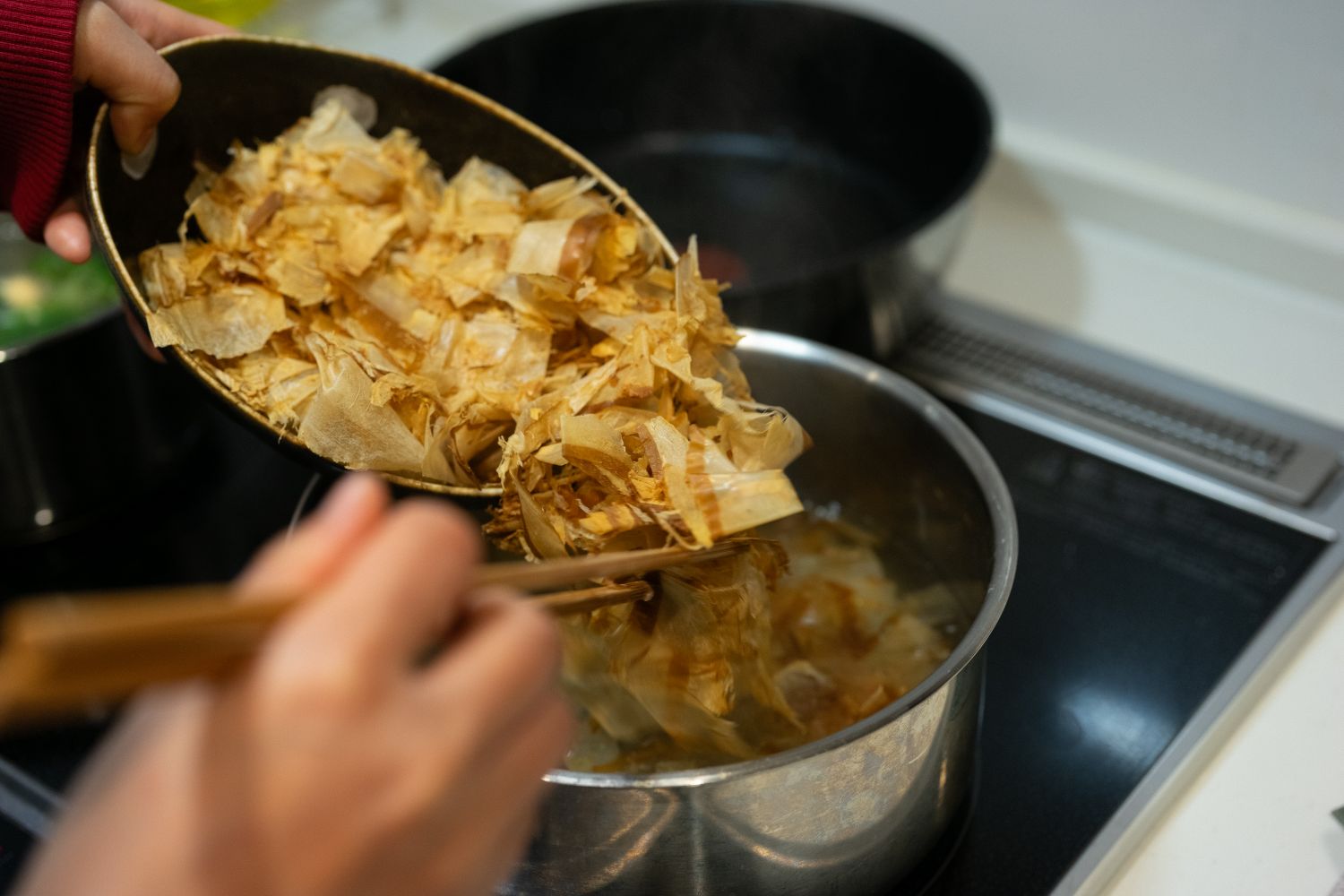
Katsuobushi starts as skipjack tuna (bonito) that’s simmered, then smoked and dried repeatedly until moisture content drops from roughly 70% down to under 20%. That intense drying is what makes the block shelf-stable for a long time, the same reason beef jerky and other dried proteins last so much longer than fresh versions. But once it’s shaved into paper-thin flakes for retail sale, the story changes. Shaving exposes enormously more surface area to air, and the flakes still carry real fat content from the fish itself. That fat is what oxidizes and turns stale or rancid once the bag is opened, the same basic mechanism that makes sesame oil or nuts go rancid, just happening inside a food that looks as inert as a dried herb.
The highest grade of katsuobushi, called karebushi, takes this further with an intentional fermentation step. According to peer-reviewed research on the process, producers repeatedly inoculate the dried block with Aspergillus mold species, let it grow on the surface for about two weeks, then brush it off and dry the block again, cycling through this three or four times over as long as six months. The mold’s enzymes break down fat and draw out remaining moisture, which is part of why the finest katsuobushi is so intensely concentrated in umami flavor. This is a controlled, food-grade fermentation process, not spoilage, and the mold is removed before the block is sold. It’s a genuinely different situation from mold appearing on an already-opened bag of flakes at home, which is a spoilage sign and a reason to discard the bag.
How Long Bonito Flakes Actually Last
Unopened
An unopened bag or block stays at good quality until the printed best-by date, as long as it’s kept at room temperature and out of direct sunlight. Yamaki’s FAQ is notably firm on this point compared to many other pantry staples: the brand states it doesn’t recommend using an unopened package past its best-by date, rather than treating the date as a loose quality guideline. Given how inexpensive and fast-turnover this product tends to be, it’s worth respecting that guidance rather than assuming the more relaxed rules that apply to something like baking soda or rice.
Warning: don’t refrigerate the bag before opening
This is a genuinely counterintuitive point worth remembering. Per Yamaki, refrigerating an unopened package can cause condensation to form inside the bag due to the temperature difference between the fridge and room air. That trapped moisture is exactly what you don’t want near a product this sensitive to humidity. Keep unopened bonito flakes in the pantry, not the fridge, and save refrigeration for after the bag is open.
Opened
Once opened, the safer default is to refrigerate and use bonito flakes within 2 weeks to 1 month, per Yamaki’s own guidance. JFC, another widely available brand, gives similar instructions on its product packaging: use the contents as soon as possible after opening and refrigerate any unused portion in an airtight container. You’ll also see looser general advice online suggesting bonito flakes are fine at room temperature for months after opening; that isn’t necessarily wrong for quality, since the flakes won’t suddenly become unsafe the day after the window closes, but it’s worth defaulting to the tighter, brand-specific number rather than the vaguer internet consensus. This is a much shorter window than most dried pantry goods get, closer to how quickly deli meat needs to be used than to how long oatmeal lasts, and exactly why treating bonito flakes like a shelf-stable spice is the most common mistake people make with them.
Tip: press the air out before resealing
See also
Bonito flakes are typically packed with a small amount of nitrogen gas to displace oxygen in the bag. Once opened, that protection is gone. Squeeze out as much air as possible before resealing, and consider transferring the flakes to a small airtight container rather than relying on a bag clip alone.
Frozen
Freezing extends usable life to roughly 3 months, a similar window to what works for frozen tofu or other delicate frozen proteins. Portion the flakes into amounts you’d use in a single batch of dashi, wrap tightly or use a freezer-safe bag with the air pressed out, and label with the date. There’s no need to thaw before using them directly in simmering dashi liquid.
Warning: mold or an abnormal smell means stop using it
Per Yamaki’s own guidance, if you notice mold, an abnormal taste, or an abnormal smell within the recommended usage window, stop using the flakes. A stale, cardboard-like flatness is a quality issue and not dangerous on its own, but visible mold or a distinctly sour or off smell means the bag should be discarded.
A Note on the Fish Behind the Flakes
Skipjack tuna, the species bonito flakes are made from, belongs to the same broad family of fish, alongside sardines, that the FDA associates with histamine (scombrotoxin) formation if the catch isn’t chilled quickly, similar to concerns covered for fish sauce and other fermented fish products. The sardines guide covers this mechanism in more detail. For katsuobushi specifically, this is a raw-material handling concern managed during the initial simmering and smoking stage of production, well before the fish becomes the finished, heavily processed product on a store shelf, rather than something that develops later from normal home storage of the finished flakes.
| Storage Stage | Shelf Life |
|---|---|
| Unopened, pantry | Until the best-by date |
| Unopened, refrigerated | Not recommended; risks condensation |
| Opened, refrigerated | 2 weeks to 1 month |
| Opened, frozen, portioned | About 3 months |
Frequently Asked Questions
Do bonito flakes need to be refrigerated?
Only after opening. An unopened bag or block should stay at room temperature, away from sunlight; Yamaki specifically warns that refrigerating it before opening can cause condensation inside the package. Once opened, refrigeration is the right move and the bag should be used within 2 weeks to 1 month.
How long do bonito flakes last after opening?
About 2 weeks to 1 month, refrigerated, per Yamaki’s own guidance. That’s much shorter than most dried pantry staples because bonito flakes retain real fat content from the fish and lose their protective packaging atmosphere once the bag is opened.
Why do bonito flakes move on hot food?
It’s heat and airflow, not anything alive. Bonito flakes are shaved so thin that rising heat and steam from hot food create small air currents underneath them, making the lightweight flakes curl and appear to shimmer or “dance.” It’s a well-known, purely physical effect and a common way to visually confirm a dish is still hot.
Can you use bonito flakes past the best-by date?
For an opened bag, no, follow the 2 week to 1 month window instead. For an unopened bag, Yamaki’s own guidance is more conservative than typical pantry advice: the brand states it doesn’t recommend using the product past its printed best-by date, even unopened.
Is mold on katsuobushi always a bad sign?
Not always, but context matters a lot. Traditional, high-grade katsuobushi called karebushi undergoes an intentional, controlled mold fermentation with specific Aspergillus species during production, which is brushed off before the product is sold. That’s very different from mold appearing on an already-opened bag of flakes in your kitchen, which is ordinary spoilage and a reason to discard the bag.
What does spoiled bonito flakes look, smell, or taste like?
A flat, cardboard-like taste with little smoky or umami character usually just means the flakes have gone stale, which isn’t dangerous. Visible mold, a sour or distinctly off smell, or any unusual taste beyond simple blandness are the real signs to stop using them, per Yamaki’s own guidance.
Can you freeze bonito flakes?
Yes. Portion them into single-use amounts, seal tightly with the air pressed out, and use within about 3 months for the best flavor. There’s no need to thaw them first if you’re adding them directly to simmering dashi.
Are bonito flakes the same thing as katsuobushi?
Yes, bonito flakes are the shaved, retail form of katsuobushi, which is smoke-dried (and sometimes fermented) skipjack tuna. Katsuobushi can also be sold as a solid block, which is shaved into flakes fresh using a special plane called a kezuriki, though most home cooks buy pre-shaved bags.
Can you eat bonito flakes without cooking them?
Yes. Per Yamaki, bonito flakes can be eaten as-is without cooking, often as a topping on rice, tofu, or vegetables. The brand does note that small bones can occasionally be present in the flakes.
The finished dashi stock follows the shorter timeline of any homemade fish or seafood stock, not the shelf life of the dry flakes themselves. Once strained and cooled, treat dashi like other homemade broths and leftovers: refrigerate promptly and use within a few days, or freeze it for longer storage.
Is it normal for bonito flakes to smell strongly of smoke or fish?
Yes, a pronounced smoky, savory aroma is normal and part of what katsuobushi is meant to smell like, since the fish is smoked repeatedly during production. The distinction to watch for isn’t intensity of smell but character: a sour, musty, or otherwise “off” note is different from the expected smoky, umami-rich aroma and is the actual warning sign.
Is there a health concern with how bonito flakes are smoked, separate from spoilage?
Yes, though it’s a production characteristic rather than a storage or freshness issue. Peer-reviewed research has found that katsuobushi’s heavy, prolonged smoking process generates polycyclic aromatic hydrocarbons, including benzo[a]pyrene, a compound classified as carcinogenic by the International Agency for Research on Cancer. This level is present from the moment the product is made and doesn’t increase with age or improper storage at home. Manufacturers have been working to lower it through smoking process improvements, and it’s regulated in several countries. It’s worth knowing about as context for the product, but it’s a separate question from whether a given bag has gone bad.
Are bonito flakes safe to give to cats or dogs?
Plain, unseasoned bonito flakes are a popular treat for cats especially, and are generally considered safe in small amounts. The same freshness rules apply: don’t offer flakes that smell off, show mold, or have been sitting opened at room temperature past the recommended window. Because bonito flakes are relatively high in sodium and, for cats, can contribute to urinary issues if fed in excess, treat them as an occasional topper rather than a diet staple, and check with a vet if your pet has any relevant health conditions.
Further Reading
Once you’ve got a fresh bag of bonito flakes, dashi is only the beginning. Use them as a topping over rainbow spring rolls or Chinese chicken lettuce wraps, stir a pinch into teriyaki pork bowls, fold umami depth into clam corn chowder, or finish tuna tostadas, gluten-free crab cakes, or bbq shrimp tacos with a light sprinkle for extra savory depth.
Better Living may earn commissions through affiliate links and may occasionally feature sponsored or partner content. If you make a purchase through our links, we may receive a small commission at no cost to you.