You separated a few eggs for a recipe and have leftover whites in a bowl in the fridge. Or you have a carton of liquid egg whites that has been open for over a week. Do egg whites go bad?
The short answer: Yes, egg whites go bad, and faster than most people expect. According to USDA guidelines, raw egg whites from separated shells should be used within 2 to 4 days refrigerated. Carton liquid egg whites (AllWhites, Egg Beaters Pure Egg Whites) last until the printed use-by date unopened, but only 3 to 7 days after opening.
The good news: egg whites freeze exceptionally well for up to 12 months with almost no quality loss, making freezing the best option when you have more than you can use.
For a full overview of how perishable foods compare on shelf life, visit our Complete Food Storage Guide.
Key Takeaways
- Fresh-separated egg whites: 2 to 4 days refrigerated per USDA guidance.
- Carton liquid egg whites (opened): 3 to 7 days per USDA; follow the label.
- Carton liquid egg whites (unopened): safe until the printed use-by date, which can be several weeks to months from purchase depending on the brand. Kirkland Signature cartons at Costco typically have a use-by date months out. Do not open until you are ready to use.
- Frozen egg whites: up to 12 months. The best way to avoid waste.
- The 2-hour rule applies: egg whites left at room temperature for more than 2 hours should be discarded.
- Carton egg whites have a stricter timeline than shell eggs because pasteurization breaks down the natural antimicrobial proteins in raw egg white that help protect it inside the shell.
How Long Do Egg Whites Last?
The shelf life of egg whites depends entirely on their form: fresh-separated from a shell, commercial liquid from a carton, cooked, or frozen. Each behaves differently.
| Egg White Type | Refrigerator | Freezer |
|---|---|---|
| Fresh-separated raw egg whites | 2 to 4 days | Up to 12 months |
| Carton liquid egg whites (unopened) | Until printed use-by date (often several weeks to months from purchase) | Up to 12 months |
| Carton liquid egg whites (opened) | 3 to 7 days | Up to 12 months |
| Cooked egg whites (plain) | 3 to 4 days | Up to 3 months |
| Room temperature (any type) | 2 hours maximum then discard | Not applicable |
Raw egg white guidelines per USDA FoodKeeper. USDA FSIS specifies 3 days after opening for liquid egg products without an expiration date. For cartons with a use-by date, follow the manufacturer’s label; most retail cartons allow up to 7 days after opening. Always check for spoilage signs before using.
Why Carton Egg Whites Have a Shorter Window Than You Think
The Pasteurization Paradox
Carton egg whites (AllWhites, Egg Beaters Pure Egg Whites, and similar products) are pasteurized, which kills harmful bacteria and makes them safer for raw consumption in recipes like protein shakes. But pasteurization also breaks down something important: the natural antimicrobial proteins in raw egg white, particularly lysozyme and ovotransferrin, that protect the white when it is inside an intact shell.
This creates a counterintuitive situation. Carton liquid egg whites are pasteurized and therefore safer to use raw, but they are also less protected against spoilage after opening than a fresh egg white still in the shell. Once you break the seal on a carton, the sterile environment created by pasteurization is immediately compromised.
The USDA is explicit about this: for liquid egg products without an expiration date, containers should not exceed 3 days after opening. For products with a use-by date (which all major retail cartons have), observe that date on the unopened carton and use within 3 to 7 days after opening. Do not treat an opened carton of egg whites like a fresh egg that can last weeks in the shell.
Signs That Egg Whites Have Gone Bad
When to Throw Them Out
Sulfur or sour smell: Fresh egg whites have almost no odor. A sulfurous, sour, or otherwise off smell is the clearest sign of bacterial spoilage. If the smell is obvious before even touching the whites, discard them immediately without tasting.
Yellow, green, or pink discoloration: Fresh egg whites are clear to very slightly cloudy. Yellow or greenish tinting indicates bacterial growth or oxidation. Pink or iridescent tones in egg whites indicate Pseudomonas bacteria contamination. Discard immediately.
Slimy or unusual texture: Fresh egg whites are slippery but not slimy. A distinctly slimy or gelatinous texture that seems wrong compared to fresh whites indicates spoilage.
Cloudiness in carton whites: A small amount of cloudiness in fresh-separated egg whites is normal and caused by dissolved carbon dioxide. However, carton liquid egg whites should appear clear and uniform. Unusual cloudiness or floating particles in a carton product indicates contamination.
Mold: Any visible fuzzy growth in any color means discard immediately. Mold in liquid egg whites is uncommon but possible, especially in opened cartons past their window.
Time: Regardless of appearance, discard fresh-separated raw egg whites after 4 days refrigerated, and opened carton egg whites after 7 days. Do not rely solely on visual inspection for liquid egg products.
Why Egg Whites Are the Best Thing to Freeze
Egg whites are genuinely one of the easiest and most reliable foods to freeze. Unlike many foods that suffer texture damage from freezing, egg whites freeze and thaw without meaningful quality loss for most applications. Here is the full guide:
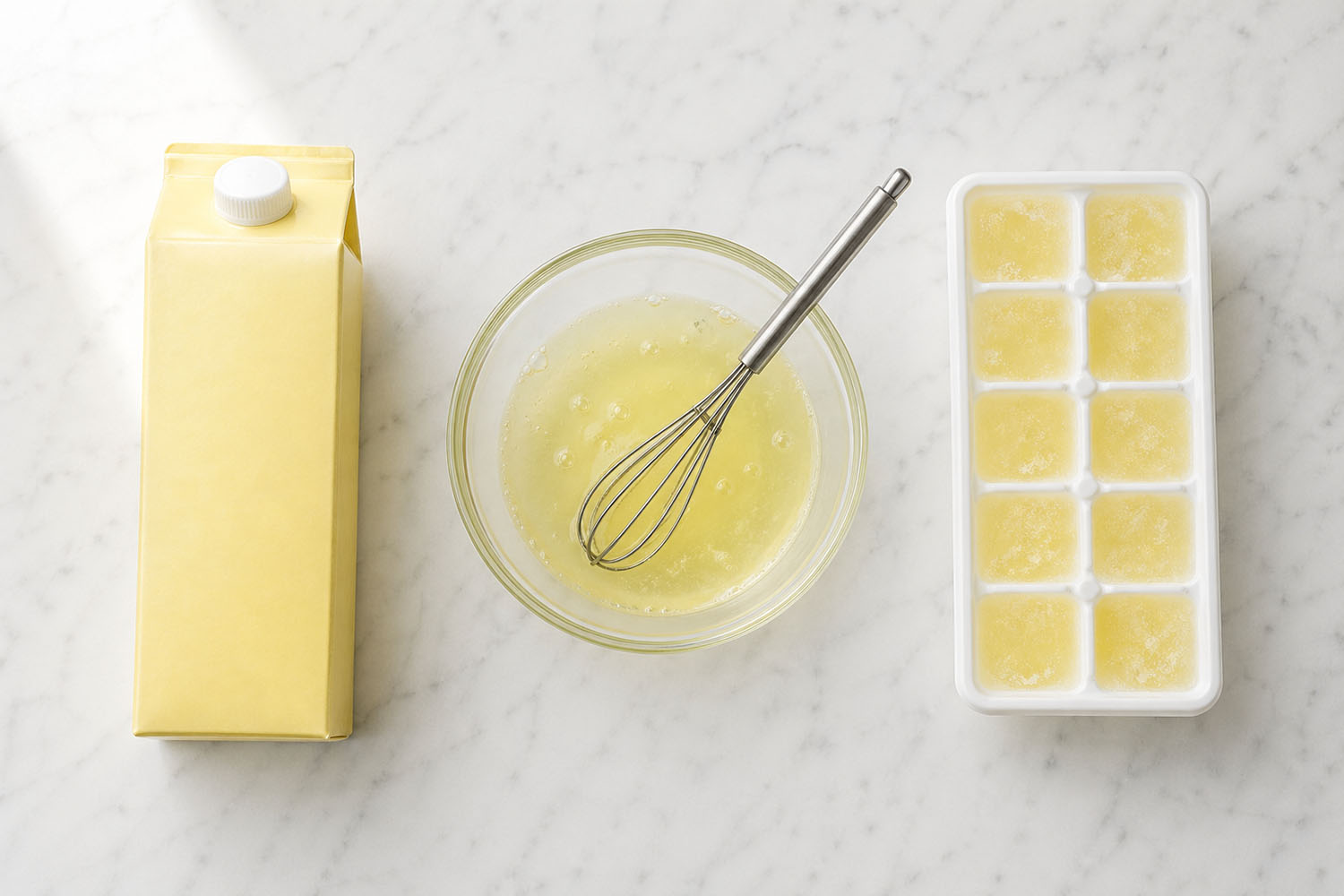
How to freeze fresh-separated egg whites: Pour whites into an ice cube tray, one white per compartment (one large egg white is approximately 2 tablespoons). Freeze until solid, then transfer the frozen cubes to a sealed freezer bag. Label with the number of whites and the date. Each cube equals one egg white when thawed.
How to freeze carton egg whites: If you have an opened carton with remaining whites and cannot use them within the week, pour the remainder into a freezer-safe container or ice cube tray before the 7-day window expires. Do not freeze them after they have already been open for a week.
Thawing: Thaw overnight in the refrigerator. Use within 24 hours of thawing. Do not refreeze.
The whipping nuance: Frozen and thawed egg whites whip slightly less voluminously than fresh whites. For most recipes this makes no noticeable difference. For recipes where maximum volume matters, like meringue, let thawed egg whites come to room temperature for 30 minutes before whipping to help restore performance. Slightly older fresh-separated whites actually whip better than very fresh ones because aging loosens the protein structure. Note that pasteurized carton egg whites (Kirkland, AllWhites) do not whip as well as fresh-separated whites for meringue-based recipes regardless of temperature. Use fresh-separated whites for macarons and angel food cake.
The Age Factor for Baking with Egg Whites
This is a practical gap most food storage posts miss entirely. For recipes like French macarons, pastry chefs often call for “aged” egg whites, meaning whites that have been separated and left uncovered in the refrigerator for 24 to 72 hours before use. This deliberate aging loosens the protein bonds in the white, reducing surface tension and allowing it to whip to greater volume and stability.
The implication: fresh-separated egg whites for baking use should be stored uncovered (or very loosely covered) for 1 to 2 days in the fridge before use for best results in meringue-based recipes, then used within the 4-day window. This is completely safe within the USDA guideline.
See also
How to Store Egg Whites Properly
Storage Best Practices
Fresh-separated whites: airtight container, back of the fridge. Transfer to a clean glass or plastic container with a tight lid immediately after separating. Label with the date. Store at the back of a main shelf where temperature is most consistent.
For baking meringues or macarons: loosely covered for 24 to 48 hours. Leave the container loosely covered in the fridge for a day or two to allow the proteins to relax before whipping. This is the professional technique for better volume.
Carton whites: reseal tightly, note the opening date. Write the opening date on the carton. Reseal the carton firmly after every pour. Use within 7 days of opening. Do not assume the printed use-by date applies after opening.
Freeze anything you cannot use within 4 days. Egg whites freeze so well that freezing should be the default when you have more than you need. One white per ice cube compartment makes portion control easy.
Keep away from strong-smelling foods. Egg whites absorb surrounding odors easily. Store in a sealed container away from onions, fish, or anything strongly aromatic.
Never leave at room temperature more than 2 hours. The FDA 2-hour rule applies. Bring egg whites to room temperature for whipping by removing from the fridge 20 to 30 minutes before use, not by leaving them out for hours.
Recipes That Use Egg Whites
- French Macarons: aged egg whites are the professional secret to macarons that have proper feet and a stable shell
- Keto Raspberry Lemon Waffles: whipped egg whites give these waffles their light, airy texture
- No-Sugar Sugar Cookies: a light egg white glaze finishes these cookies with a crisp, clean coating
- Pre-Workout Smoothie: pasteurized carton egg whites blend directly into smoothies for a protein boost without the yolk
Frequently Asked Questions
My carton of AllWhites has been open for 10 days. Are they still safe?
No. The USDA recommends using opened liquid egg white cartons within 3 to 7 days of opening. AllWhites and similar brands follow the same guideline. At 10 days, the opened carton is past the safe window regardless of how it looks or smells. Discard it. Liquid egg products that have been opened do not have the same extended timeline as whole shell eggs, which are protected by the shell and natural antimicrobial proteins. Going forward, if you are not going to finish a carton within a week, freeze the remainder before the 7-day window closes.
Can I drink raw egg whites from the carton safely?
Pasteurized carton egg whites (AllWhites, Egg Beaters Pure Egg Whites) are safer for raw consumption than fresh-separated egg whites because the pasteurization process kills Salmonella and other pathogens. The FDA still advises that people who are pregnant, elderly, very young, or immunocompromised avoid raw egg products of any kind. For the general healthy adult population, pasteurized carton egg whites consumed raw within the use-by window are considered low risk. Fresh-separated egg whites that have not been pasteurized should always be cooked before eating.
Will frozen egg whites still whip properly?
Yes, with a slight reduction in volume. Frozen and thawed egg whites whip successfully but typically produce slightly less volume than fresh whites because freezing alters some protein bonds. For most recipes, including meringue cookies and cakes, the difference is not noticeable. For precision recipes like French macarons, where maximum volume and stability matter most, use fresh or properly aged whites when possible. If using thawed whites for macarons, let them come fully to room temperature for 30 minutes before whipping and they will perform considerably better than whites whipped cold from the fridge.
Further Reading
Better Living may earn commissions through affiliate links and may occasionally feature sponsored or partner content. If you make a purchase through our links, we may receive a small commission at no cost to you.