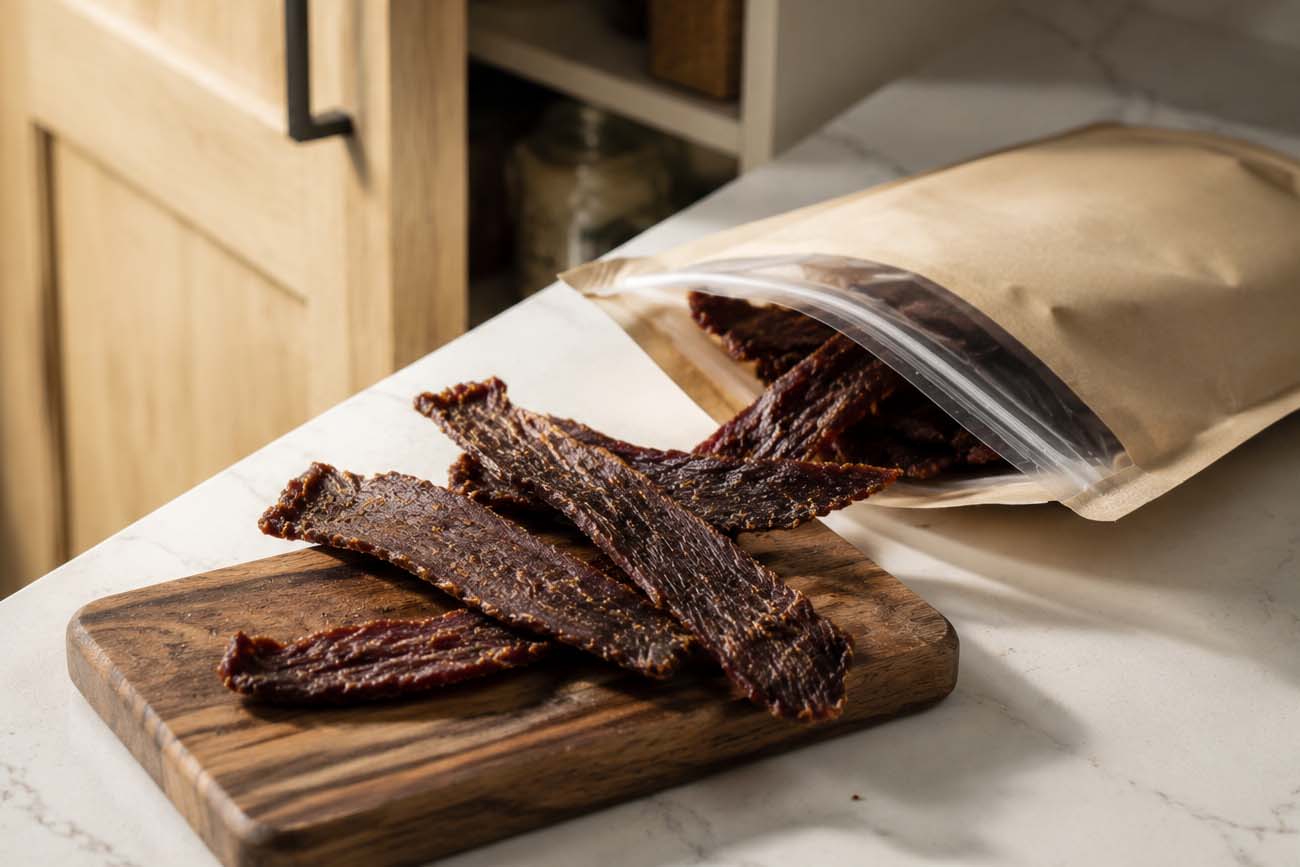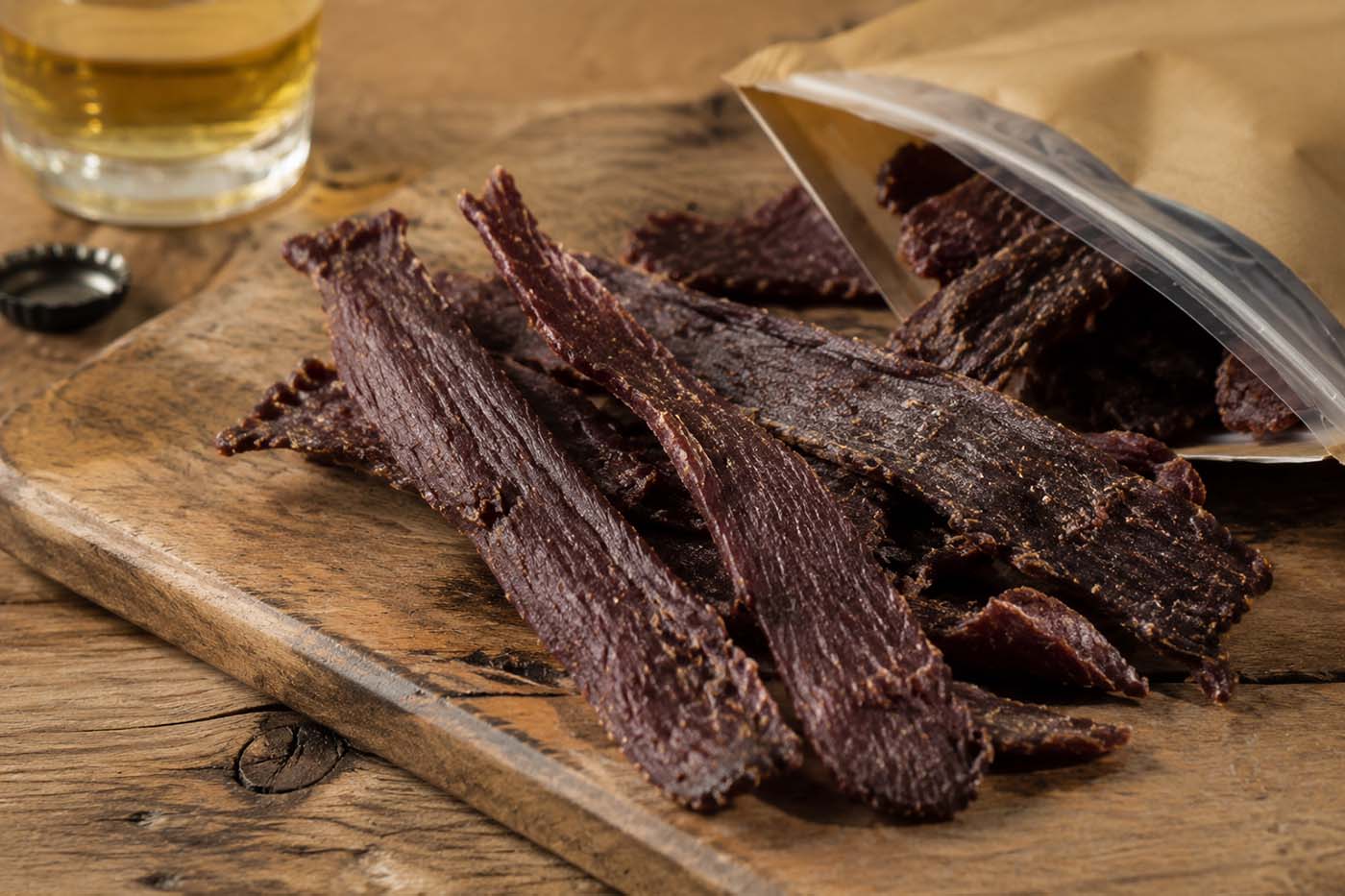
Beef jerky is built to resist the kind of spoilage that ruins most meat: bacteria need moisture to grow, and jerky has almost none left by the time it is done drying. That is a real safety advantage, backed by USDA guidance, not just a marketing claim. But low moisture does not mean jerky is immune to going bad. It can still grow mold, and its fat can turn rancid, long before any bacteria would ever get a foothold.
Does beef jerky go bad?
The short answer: Yes, though not usually the way people expect. Properly dried, sealed commercial jerky resists bacterial spoilage because its low moisture content, what food scientists call water activity, is too low to support bacterial growth, and an unopened, sealed bag is typically good for around a year, sometimes longer, though the printed best-by date on your specific brand is the more reliable guide. The bigger risks over time are fat turning rancid, which shows up as a stale or off smell, and mold, which can still grow on jerky even though bacteria mostly cannot. Homemade jerky is a different story: unless you have measured and verified the water activity, treat it more like a perishable food and refrigerate or freeze it rather than trusting it to a pantry shelf.
If you keep other cured and dried meats on hand, our guides on whether salami goes bad, whether prosciutto goes bad, and whether pepperoni goes bad cover similar shelf-stable products with their own specific risks.
📋 Does Beef Jerky Go Bad: At a Glance
| Main safety advantage | Low water activity resists bacterial growth |
| Main long-term risk | Fat turning rancid, not bacteria |
| Can it still mold | Yes, even at safe water activity levels |
| Unopened commercial jerky | Typically around a year sealed; follow the printed best-by date for your brand |
| Opened commercial jerky | Best quality within 1 to 2 weeks at room temperature |
| Homemade jerky | Treat as perishable; refrigerate or freeze rather than pantry-store |
🔑 Key Takeaways
- Jerky’s resistance to bacteria comes from water activity, not just moisture percentage. USDA guidance and food safety research both point to water activity as the real measure of whether a dried meat is shelf stable.
- Mold is still possible on properly dried jerky. USDA’s own compliance guidance for commercial jerky producers specifically calls out mold as a risk that has to be managed separately from bacterial safety.
- Fat rancidity, not bacteria, is usually what actually ends a bag of jerky’s useful life. A 2024 peer-reviewed study on commercial dried and jerked beef products, a close relative of US-style jerky, found measurable lipid oxidation, the chemical process behind rancid flavor, in products that were otherwise microbially safe.
- Counterintuitively, very dry jerky is not automatically the most stable. Research on jerky’s water activity has found that lipid oxidation actually accelerates within a specific moisture range, so oversimplifying “drier is always safer” misses part of the picture.
- Homemade jerky does not get the same benefit of the doubt as commercial jerky, because home kitchens generally cannot verify water activity the way manufacturers do. USDA’s jerky guidance for home cooks leans conservative for exactly this reason.
Why Jerky Resists Spoilage, But Not Completely
🔬 The Mechanism: Water Activity, Not Just Dryness
Bacteria need available water to grow, and food scientists measure that availability as water activity rather than simple moisture content, since some water in food is chemically bound and unavailable to microbes. USDA’s compliance guidance for commercial jerky producers treats water activity, not moisture-protein ratio, as the correct way to verify a jerky is properly dried for food safety, targeting a water activity at or below 0.85 for jerky stored with air exposure, or 0.91 for vacuum-sealed jerky. That guidance exists because of a specific, documented failure: a 2003 Salmonella outbreak traced to jerky produced in New Mexico, caused in part by a slow, low-humidity drying process that let bacteria become heat-resistant before they were destroyed. USDA rewrote its jerky guidance in direct response. Getting the water activity low enough is genuinely effective against bacteria. It is far less effective against mold, which is why USDA’s own guidance separately calls out the need for measures like short shelf windows, low pH, or protective coatings to control mold growth even after a jerky has hit a safe water activity level for bacteria.
Signs Beef Jerky Has Actually Gone Bad
Mold
Fuzzy white, green, or black spots are the clearest sign, and jerky’s texture makes this one non-negotiable: treat any moldy piece the same way you would moldy bread. Because jerky is porous, mold can establish itself more broadly than what is visible on the surface.
Rancid or “Off” Smell
This is the spoilage mode people most often miss. Jerky that smells stale, greasy, or faintly like old cooking oil, rather than smoky or meaty, is showing signs of fat oxidation. This is a chemical change, not a microbial one, and it happens gradually even in a sealed, properly dried package.
Sliminess, Excess Moisture, or Sweating
Properly dried jerky should not feel wet or leave moisture beads inside the packaging. If a bag looks like it is sweating, that suggests the product was not dried enough to begin with, or that moisture got reintroduced after packaging, both of which raise the risk of bacterial growth, not just quality loss.
Noticeable Color Change or an Unusually Soft, Mushy Texture
Jerky darkening slightly with age is normal. A piece that has gone visibly gray-green, or turned soft and tacky rather than dry and pliable, is a stronger signal to discard it.
⚠️ Homemade Jerky Deserves Extra Caution
USDA’s guidance for home jerky-making recommends heating meat to 160°F and poultry to 165°F before dehydrating, then maintaining a dehydrator temperature of 130°F to 140°F throughout drying, specifically because most home dehydrators cannot otherwise guarantee that harmful bacteria are destroyed. Home cooks also generally lack a way to verify the finished water activity the way commercial producers do. That combination means homemade jerky should not be treated as automatically shelf stable. Refrigerate or freeze it, keep meat refrigerated before drying, use ground meat within 2 days and whole cuts within 3 to 5 days of purchase, and never reuse marinade that raw meat sat in.
See also
The Spoilage Path Nobody Talks About: Rancid Fat
🔬 Fat Oxidation Happens Independently of Bacteria
A 2024 peer-reviewed study in Food Science and Technology (Campinas) tested commercial dried meat and jerked beef products for lipid oxidation and found measurable peroxide levels linked to rancidity, notably higher in products with more moisture and added nitrite, and lower in products with higher salt content, which appears to help slow the process. That study looked at charqui and jerked beef, dried meat products related to but not identical to US-style vacuum-sealed snack jerky, and typically higher in moisture; the underlying chemistry of fat reacting with oxygen applies across dried meats generally, but the exact numbers would differ for a leaner, drier American jerky. Separately, food science research on jerky’s water activity, in that case on chicken jerky specifically, has found that lipid oxidation is actually not minimized simply by drying jerky as much as possible; oxidation rates can climb within a mid-range water activity band, meaning the driest possible jerky is not automatically the most shelf-stable on this front. The same principle is well established across meat types generally, not just poultry. Practically, this means fattier cuts of jerky, and jerky stored somewhere warm or in direct light, will tend to develop off flavors before a leaner, well-sealed, cool-stored bag does, independent of whatever is happening with bacteria.
| Form | Best Storage | Shelf Life |
|---|---|---|
| Commercial, unopened | Cool, dry pantry, away from light | Typically around a year sealed; formulations vary by brand, so check the best-by date |
| Commercial, opened | Airtight container or resealed bag, pantry | Best quality within 1 to 2 weeks |
| Commercial, opened, refrigerated | Airtight container, 40°F or below | Noticeably longer than pantry storage, slows fat oxidation |
| Homemade | Refrigerator or freezer, not the pantry | Treat as perishable without verified water activity testing |
| Any jerky, frozen | Airtight, freezer | Safe indefinitely at 0°F, best quality within several months |
💡 Small Habits That Actually Extend Shelf Life
Press the air out of the bag and reseal it tightly, or move opened jerky to an airtight container, since oxygen is what drives rancidity. Keep it away from direct light and heat, both accelerate fat oxidation. If a commercial bag includes a small oxygen absorber packet, leave it in until you finish the bag. For jerky you will not finish within a couple of weeks, the freezer does more for flavor than the fridge does, since cold slows fat oxidation as well as any residual microbial risk.
Frequently Asked Questions
Can beef jerky make you sick if it has gone bad?
Rancid fat mostly affects taste and quality rather than safety, so mildly stale-tasting jerky is unlikely to make you sick. Mold and improperly dried, still-moist jerky are the bigger safety concerns, since both point to conditions that can support harmful microbial growth.
Can you cut mold off jerky and eat the rest?
No. Jerky is porous, similar to bread, and mold’s roots can spread further than what is visible. USDA compliance guidance for commercial jerky treats mold prevention as a serious, separate concern from bacterial safety precisely because water activity low enough to stop bacteria does not stop mold.
Why does my jerky smell stale instead of moldy or spoiled?
That is very likely fat oxidation, commonly called rancidity, rather than microbial spoilage. It is a chemical reaction between fat and oxygen that happens gradually regardless of how well the jerky was dried, and it shows up as taste and smell changes rather than visible mold or sliminess.
Does leaner jerky last longer than fattier jerky?
Generally, yes, for the rancidity pathway specifically. Fat oxidation is the main slow degradation process in jerky, so a leaner cut with less fat has less material available to turn rancid, even if bacterial safety is equivalent between the two.
Is homemade jerky less safe than store-bought?
It can be, mainly because home kitchens usually cannot verify water activity the way commercial producers do, and most home dehydrators cannot guarantee the internal temperatures needed to destroy bacteria before drying. Precooking meat to 160°F, or poultry to 165°F, before dehydrating closes that gap significantly.
Properly dried, sealed commercial jerky does not need refrigeration for safety, though refrigeration does slow fat oxidation and can extend how long it tastes fresh once opened. Homemade jerky is a different case; refrigerate or freeze it rather than storing it at room temperature. Our guide on whether beef jerky needs to be refrigerated goes deeper on this specific question.
How long does beef jerky last after the best-by date?
Often well past it, if the package stayed sealed and was stored in a cool, dark spot, since best-by dates reflect peak quality rather than a safety cutoff. Judge an opened or aging package by smell, texture, and appearance rather than the date alone.
Can you freeze beef jerky?
Yes, and it is the best option if you will not finish a bag within a couple of weeks. Freezing slows fat oxidation as effectively as it slows any residual microbial activity, and properly frozen jerky is safe indefinitely, with best quality within several months.
Does an oxygen absorber packet in the bag mean I should refrigerate it?
Not necessarily. Oxygen absorbers are there to slow fat oxidation and preserve texture during pantry storage, not a signal that the product is otherwise unstable. Leave the packet in the bag until the jerky is finished, and follow the package’s own storage instructions.
Why does my jerky have white spots that are not mold?
Salt or sugar can migrate to the surface during drying and crystallize into small white specks, especially in jerky with a heavier cure or sweeter marinade. This looks different from mold on close inspection, dry and crystalline rather than fuzzy, but if you are ever genuinely unsure, it is safer to discard the piece than guess.
Is beef jerky a good long-term emergency food supply?
Commercial, properly sealed jerky can hold up well for extended pantry storage thanks to its low water activity, but rancidity will still gradually degrade flavor and nutritional quality over very long periods, even if it stays microbially safe. For true long-term storage, the freezer preserves quality far better than the pantry.
Further Reading
For other pantry staples with the same “best by is not the same as spoiled” question, see whether pork rinds go bad and check our pork rinds nutrition facts, or if you keep jerky around for the same reasons people keep Jack Link’s jerky on hand, our review covers that brand specifically.
Better Living may earn commissions through affiliate links and may occasionally feature sponsored or partner content. If you make a purchase through our links, we may receive a small commission at no cost to you.