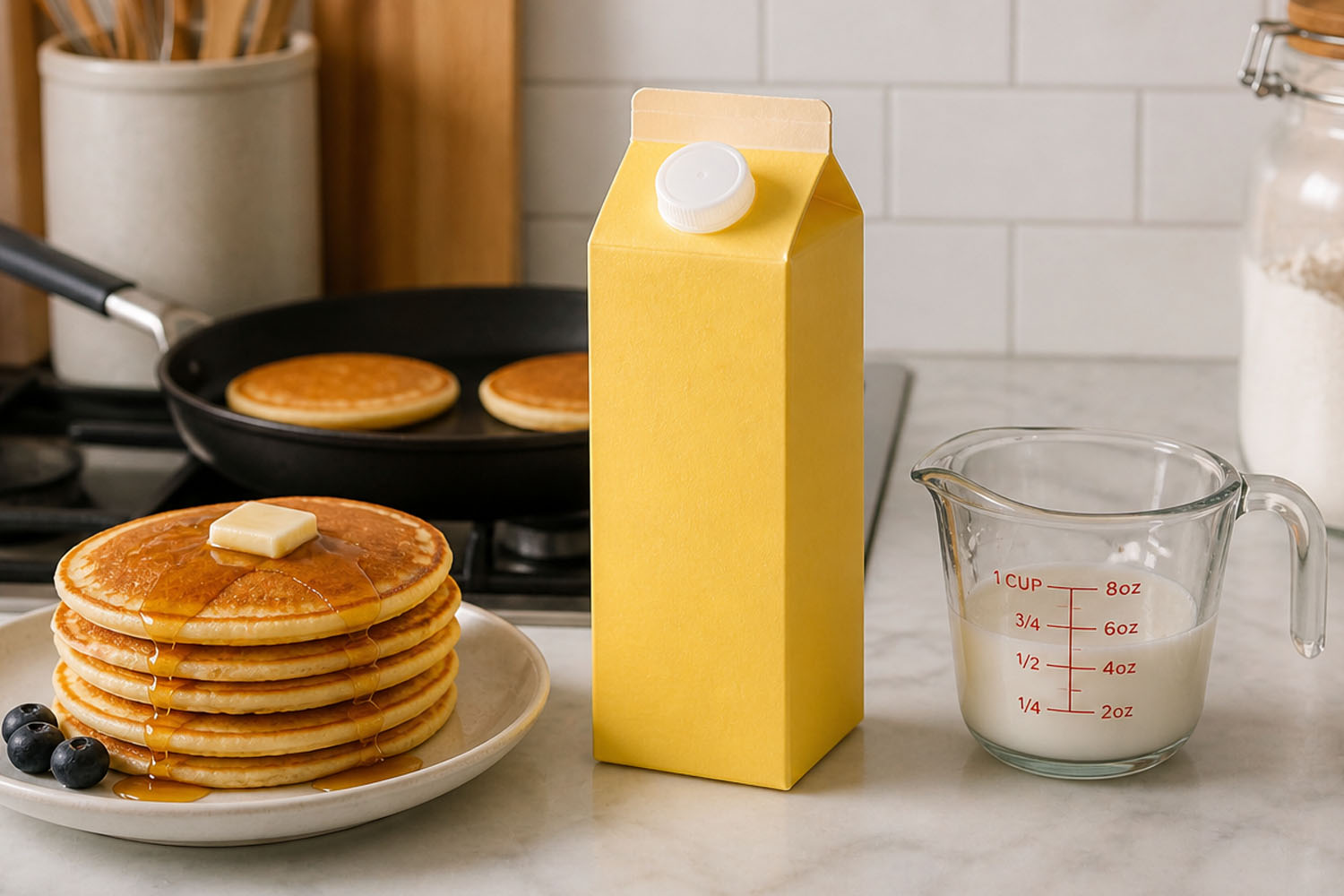
You bought a quart of buttermilk for a batch of pancakes, used one cup, and now the rest is sitting in your fridge. The recipe you bought it for is done. The date on the carton is coming up fast, and you are not sure if you should use it, toss it, or whether it was already questionable to begin with. So does buttermilk go bad?
Does buttermilk go bad?
The short answer: Yes, buttermilk goes bad, but its natural acidity gives it a longer and more forgiving shelf life than regular milk. An opened carton lasts 1 to 2 weeks in the refrigerator. Unopened buttermilk typically stays good for 1 to 2 weeks past the printed date. Spoiled buttermilk develops blue-green mold, an intensely foul smell distinct from its normal tang, or a thick, gloppy texture that does not thin when shaken.
For more on storing dairy products, see the Food Storage Guide.
- Opened carton: 1 to 2 weeks refrigerated (USDA FoodKeeper: 1 to 2 weeks total)
- Unopened: 1 to 2 weeks past the printed date if stored continuously cold
- Sour smell is normal. A foul, intensely sharp smell is not.
- Lumpy texture is normal. Thick, gloppy, cottage-cheese-like texture is not.
- Freezing works well and is the best use for a nearly-expired carton
- Buttermilk powder: shelf-stable, lasts up to 2 years unopened
How Long Does Buttermilk Last?
Buttermilk is a cultured dairy product, meaning lactic acid bacteria were added to pasteurized skim milk to create the tangy, slightly thick product you buy at the store. That acidity is what gives buttermilk its characteristic flavor, and it is also what makes buttermilk last longer than regular milk. The low pH (around 4.5) creates an environment that slows the growth of spoilage organisms.
According to the USDA FoodKeeper, buttermilk keeps for 1 to 2 weeks refrigerated. America’s Test Kitchen, which researched this topic extensively with dairy industry experts, found that buttermilk won’t turn truly bad (meaning develop visible mold) until at least three weeks after opening when kept continuously cold. University extension programs generally recommend consuming buttermilk within three weeks of the date stamped on the package.
The practical answer for most people: use it within two weeks of opening, trust your senses over the date, and freeze anything you won’t finish in time.
| Type | Refrigerator (Unopened) | Refrigerator (Opened) | Freezer |
|---|---|---|---|
| Liquid buttermilk (carton) | 1 to 2 weeks past printed date | 1 to 2 weeks | 3 months |
| Buttermilk powder (unopened) | 1 to 2 years at room temperature | 6 to 12 months refrigerated in airtight container | Not recommended |
How to Tell If Buttermilk Has Gone Bad
Buttermilk is naturally sour, slightly thick, and a little lumpy. These are not signs of spoilage. They are how fresh buttermilk is supposed to look and smell. The challenge with buttermilk is that all of its normal characteristics overlap with early spoilage signs in other dairy products. Here is how to tell the difference.
- Blue-green or pink mold: The most definitive sign. Discard the entire carton. Do not attempt to scoop out the affected area.
- Intensely foul smell: Fresh buttermilk has a tangy, mildly sour smell. Spoiled buttermilk smells sharp, rancid, or genuinely unpleasant in a way clearly different from its normal tang. If you have to ask whether it smells bad, it probably does not. If you wince, toss it.
- Gloppy or chunky texture that does not thin when shaken: Buttermilk naturally separates into a thicker body with some small lumps. A firm shake should reincorporate it into a pourable liquid. If shaking does not work and the contents come out in large, cottage-cheese-like chunks, it has spoiled.
- Yellow or discolored liquid: Fresh buttermilk is white to very slightly off-white. A yellow or grayish cast indicates spoilage.
Normal vs. Spoiled: The Key Distinction
Most people throw out perfectly good buttermilk because they mistake normal characteristics for spoilage. Here is a clear side-by-side:
- Sour, tangy smell
- Slightly thicker than milk
- Some liquid separation at the top of the carton
- Small lumps or curds that break up when shaken
- White to very slightly off-white color
Spoiled buttermilk:
- Intensely foul, rancid, or sharp smell clearly beyond normal sourness
- Thick, gloppy, or chunky texture that does not pour when shaken
- Visible blue-green, pink, or dark mold
- Yellow, gray, or noticeably discolored liquid
The easiest test: shake the carton vigorously. Fresh buttermilk, even when separated, will recombine into a pourable liquid. Spoiled buttermilk will not.
Can You Freeze Buttermilk?
Yes, and unlike half and half or heavy cream, buttermilk actually freezes quite well for baking and cooking purposes. America’s Test Kitchen recommends the ice cube tray method: pour buttermilk into an ice cube tray, freeze until solid, then transfer the cubes to a zip-top freezer bag. Each standard cube is roughly 2 tablespoons, making it easy to pull exactly what you need for a recipe without thawing the whole batch.
Frozen buttermilk keeps for up to 3 months and is best used directly from frozen in cooked applications: pancakes, biscuits, waffles, quick breads, marinades, and salad dressings. The texture changes slightly after freezing and thawing, making it less ideal for drinking straight, for baking it performs well with minimal quality difference in most applications. Thaw overnight in the refrigerator or add frozen cubes directly to a warm batter.
See also
Why Buttermilk Lasts Longer Than Regular Milk
Buttermilk’s extended shelf life comes from its acidity. The lactic acid bacteria used to culture it produce lactic acid as a byproduct, which lowers the pH to around 4.5. Most spoilage bacteria and pathogens do not thrive at that pH level. Regular milk sits at a pH of around 6.7 to 6.9, which is a much more hospitable environment for bacteria. This is also why recipes that use buttermilk as a marinade (buttermilk fried chicken, for example) are so effective: the acidity helps tenderize meat while the low pH slows bacterial growth on the surface.
This does not mean buttermilk is immune to spoilage. Once enough time passes or storage conditions are poor, even buttermilk’s natural acidity is overcome by mold and other organisms that thrive in acidic environments.
What About Buttermilk Powder?
Buttermilk powder is a completely different product from liquid buttermilk, and it is worth knowing about if you bake with buttermilk occasionally but never seem to finish the carton in time. Dried buttermilk powder has had its moisture removed, leaving behind the solids and the same acidic, tangy flavor profile. Unopened, it keeps at room temperature for 1 to 2 years. Once opened, transfer it to an airtight container and refrigerate it to extend its life to 6 to 12 months.
In baked goods, add the powder to the dry ingredients and replace the liquid with water. Most brands, including SACO, call for 4 tablespoons (1/4 cup) of powder per 1 cup of water to replicate 1 cup of buttermilk. The flavor is very close to fresh, though some bakers find it slightly less tangy in the finished product.
Recipes That Use Buttermilk
If you have a carton nearing the end of its window, use it. Buttermilk works in this cinnamon pecan crunch banana bread, and it is excellent in pancakes, biscuits, fried chicken marinades, and any quick bread that calls for baking soda, since the acid reacts with the soda for leavening. Beyond baking, stir a splash into mashed potatoes instead of regular milk for a tangier result, add it to soups in place of cream for a lighter body, or use it as the base for a simple salad dressing with olive oil and herbs.
FAQ: Is It OK to Use Buttermilk Past the Expiration Date?Often yes, for baking and cooking. Buttermilk’s natural acidity means it is more forgiving past the printed date than most dairy products. An unopened carton that has been kept continuously refrigerated can be fine 1 to 2 weeks past the date. An opened carton depends on when you opened it: use within 2 weeks of opening, regardless of the date. Always check smell and texture before using. For drinking or using in cold preparations like salad dressing, stay closer to the date for best flavor.
FAQ: Why Does Buttermilk Smell Sour? Is That Bad?No. Buttermilk is supposed to smell sour. It is a fermented dairy product made by culturing milk with lactic acid bacteria, which produce lactic acid as a byproduct. That lactic acid is responsible for both the tangy smell and the extended shelf life. A mild to moderately sour smell is completely normal. The smell that indicates spoilage is sharper, more rancid, or genuinely unpleasant in a way that clearly differs from typical buttermilk tang. If you are unsure, shake the carton and check the texture. If it pours normally and the smell is only mildly sour, it is almost certainly fine.
Further Reading
Better Living may earn commissions through affiliate links and may occasionally feature sponsored or partner content. If you make a purchase through our links, we may receive a small commission at no cost to you.