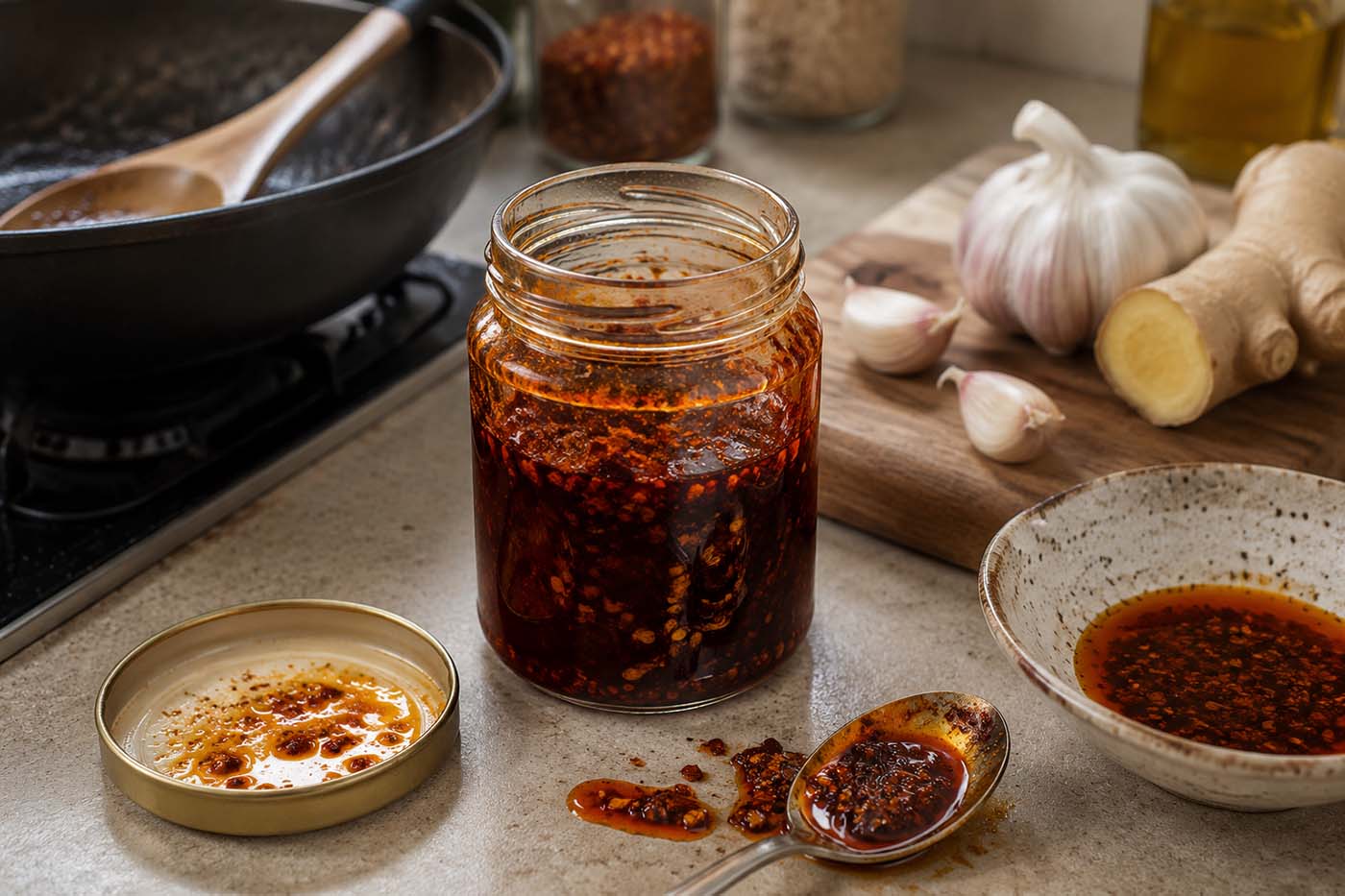
That jar of chili crisp sitting next to the stove, half empty and getting a little cloudy at the bottom, probably isn’t the emergency it looks like. Most store-bought versions are built to survive months on a counter. Homemade versions, especially ones made with fresh garlic, are a different story entirely.
Does chili crisp go bad?
The short answer: Commercial chili crisp is shelf-stable. It’s typically good for around 12 to 18 months unopened, per the best-by date on the jar, then another 2 to 4 months at room temperature after opening (longer in the fridge). It rarely spoils in the traditional sense; it just loses crunch and flavor over time. Whether the label says to refrigerate after opening varies by brand. The real risk is homemade chili crisp made with fresh, unfried garlic. That can support the growth of Clostridium botulinum if left at room temperature, so it should be refrigerated and used within about a week.
For general storage rules on condiments and pantry staples, check the food storage guide. If you’re wondering whether a similar oil-based condiment needs the fridge, the sriracha and hot sauce guides cover related ground.
📋 Does Chili Crisp Go Bad: At a Glance
| Unopened, pantry | Around 12 to 18 months (check the best-by date) |
| Opened, pantry (commercial) | 2 to 4 months at peak quality |
| Opened, refrigerated (commercial) | 6 to 12 months |
| Homemade with fresh garlic | 4 days max, refrigerated only |
| Frozen | Safe indefinitely, texture changes |
| Biggest safety risk | Botulism from homemade jars with fresh garlic left unrefrigerated |
| First thing to fade | Crunch in the fried bits, well before the oil turns |
Key Takeaways
- Commercial chili crisp from brands like Lao Gan Ma, Fly By Jing, and Momofuku is shelf-stable because the garlic, shallots, and chili are fried until most of the moisture is gone.
- Refrigeration isn’t required for most jars once opened, but it slows oxidation and keeps the fried bits crisp longer.
- Homemade chili crisp made with fresh, unfried garlic is a genuine botulism risk at room temperature. This is the one scenario worth taking seriously.
- Oil that thickens, clouds, or partially solidifies in the fridge is normal and not a sign of spoilage.
- The crunchy solids soften and lose flavor long before the oil itself turns rancid.
- Real spoilage signs (mold, fizzing, a sour or rancid smell) are rare in commercial jars but worth checking for on any homemade batch.
Why Chili Crisp Behaves Differently Than Most Condiments
The science: why oil, frying, and fresh garlic all matterChili crisp is mostly oil (usually soybean, canola, or avocado oil) with fried aromatics suspended in it. Oil doesn’t spoil the way dairy or produce does. It oxidizes slowly over months, and that process speeds up with heat, light, and repeated air exposure once the jar is opened. The fried garlic, shallots, and chili flakes are dehydrated during the frying process. That’s exactly what makes them shelf-stable, since low moisture means bacteria have nothing to grow in.
Fresh, unfried garlic in oil is a different situation. Food safety guidance from university extension programs, including Oregon State University Extension and the National Center for Home Food Preservation, explains why. Low-acid vegetables like garlic held in an oxygen-free oil environment can allow Clostridium botulinum to grow and produce toxin, even under refrigeration if held too long. Commercial garlic-in-oil products avoid this through acidification and processing. Homemade versions generally don’t have that protection unless the maker has specifically acidified the garlic.
How Long Chili Crisp Actually Lasts
Unopened, in the pantry
An unopened jar of commercial chili crisp is shelf-stable. It’s typically good for around 12 to 18 months, in line with the printed best-by date. This applies to sriracha, hoisin, and most other oil-and-chili-based condiments in the pantry section too. Store it in a cool, dark cabinet away from the stove. Heat and light are what push oxidation along faster.
Opened, at room temperature
This is the one place where brands genuinely disagree, so it’s worth checking the label rather than assuming. Fly By Jing’s own FAQ page states that its sauces and pantry items don’t need refrigeration and are formulated to be shelf stable at room temperature. The brand notes refrigeration can still help extend freshness, since the products contain no preservatives. Momofuku takes the opposite position. Its FAQ page states that Chili Crunch should be refrigerated after opening, while a separate Momofuku page describes refrigeration as helpful for flavor rather than strictly necessary. Where a brand doesn’t specify, a reasonable default is 2 to 4 months at peak quality on the counter, kept sealed tightly and away from heat.
Tip: small-batch and artisan jars are the exceptionSmall-batch chili crisp makers often skip synthetic preservatives, which means the oil oxidizes faster once the jar is opened. If the label says “refrigerate after opening,” follow it rather than defaulting to pantry rules meant for mass-market brands.
Opened, refrigerated
Refrigeration isn’t a universal safety requirement for commercial chili crisp, but it does slow oxidation meaningfully, stretching quality out to roughly 6 to 12 months after opening. It’s also the more cautious default. James E. Rogers, PhD, Consumer Reports’ director of food safety research and testing, recommends storing chili crisp in an airtight container in the fridge. He notes that more moisture in the crunchy bits makes a jar more likely to spoil. The tradeoff is texture: oil thickens and can partially solidify in the fridge, and cold oil is harder to spoon out cleanly. Letting the jar sit at room temperature for 15 to 20 minutes before use solves that.
Tip: keep the solids submergedUse a clean, dry spoon every time, and press the fried bits back below the oil line when you can. Exposed solids dry out and oxidize faster than the ones staying under a layer of oil, which acts as a rough seal against air.
The Homemade Chili Crisp Risk
Warning: fresh garlic in oil is a botulism risk, not just a spoilage riskIf you’re making chili crisp at home with raw, fresh garlic that isn’t fully fried and dehydrated, treat it like any other garlic-in-oil mixture. The National Center for Home Food Preservation recommends refrigerating at 40°F or below and using it within no more than 4 days, or freezing it for longer storage. Botulism toxin doesn’t reliably change the taste, smell, or appearance of food, so “it still smells fine” is not a safe test. This is one of the few cases in food storage where the safest move is genuinely just following the timeline rather than trusting your senses.
See also

This is also why most commercial chili crisp brands fry the garlic and shallots until they’re crisp and largely dehydrated rather than leaving them raw. That processing step removes the moisture Clostridium botulinum needs to grow. It’s the main reason store-bought jars can sit at room temperature safely while a homemade batch with fresh garlic can’t. If you’re storing fresh garlic on its own rather than in oil, the garlic shelf life guide and garlic refrigeration guide cover that separately.
Warning: don’t taste-test to check for spoilageWith any garlic-in-oil product, including homemade chili crisp, avoid using taste as your safety check. If a homemade batch has been sitting at room temperature for more than a day or two, discard it rather than sampling it to decide.
Signs Your Chili Crisp Has Actually Gone Bad
True spoilage in commercial chili crisp is uncommon, but it happens. Watch for three things: a rancid or distinctly “off” smell that’s sharper or more sour than the usual toasty aroma, any fuzzy growth or discoloration on the surface, or bubbling and fizzing in the jar. Any of those is a reason to toss the jar. What you should not worry about: oil that’s gone cloudy or partly solid in the fridge, oil that has separated from the solids (normal, just stir or shake), or crispy bits that have gone soft. That’s a flavor and texture issue, not a safety one.
If you’re checking other condiments for similar signs, the expired condiments guide and the dangerous expired pantry staples list both cover which pantry items carry real risk versus which ones just lose flavor.
How to Store Chili Crisp for Maximum Shelf Life
Keep the jar sealed tightly, store it away from the stove and direct sunlight, and always use a clean, dry utensil. Moisture and food particles introduced by a used spoon are what invite spoilage in an otherwise stable product. If you go through a jar quickly, room temperature in a cool cabinet is fine. If a jar tends to sit around for months, the fridge will keep the oil from oxidizing and the flavor sharper for longer. Freezing works too and is safe indefinitely, though the fried solids can lose some crunch and the oil may separate more noticeably once thawed. This mirrors general guidance for other oil-based condiments like sesame oil and cooking oil more broadly.
| Storage Method | Shelf Life |
|---|---|
| Unopened, pantry | Around 12 to 18 months |
| Opened, pantry (commercial) | 2 to 4 months |
| Opened, refrigerated (commercial) | 6 to 12 months |
| Opened, small-batch/artisan without preservatives | Follow the label, generally 1 to 2 months |
| Homemade with fresh garlic, refrigerated | 4 days max |
| Homemade with fresh garlic, room temperature | Not recommended, botulism risk |
| Frozen | Indefinitely, quality may decline over months |
Frequently Asked Questions
It depends on the brand, so check the label first. Fly By Jing states its products are shelf-stable at room temperature and refrigeration is optional, while Momofuku’s FAQ says Chili Crunch should be refrigerated after opening. Refrigerating any commercial jar slows oxidation and keeps the fried solids crisp for longer, similar to how peanut butter and tahini don’t strictly require refrigeration but often benefit from it.
Do all chili crisp brands have the same refrigeration rules?
No. This is one area where brands genuinely differ, rather than there being one universal rule. Mass-market jars like Lao Gan Ma are generally treated as pantry-stable after opening, Fly By Jing says refrigeration is optional, and Momofuku’s official FAQ recommends refrigerating Chili Crunch after opening. When the label gives a specific instruction, follow it over general advice.
How long does chili crisp last after opening?
Around 2 to 4 months at room temperature for most commercial jars, or 6 to 12 months if refrigerated. Small-batch versions without preservatives should follow the label, since they often have a shorter window.
Typically around 12 to 18 months in the pantry, in line with the best-by date printed on the jar. This is comparable to shelf-stable oils and sauces like soy sauce and oyster sauce.
Can chili crisp go bad in the fridge?
Yes, but it’s uncommon for commercial jars. Refrigeration slows spoilage rather than causing it. If a refrigerated jar develops mold, a sour smell, or fizzing, it should still be discarded regardless of how it was stored.
Why did the oil in my chili crisp turn cloudy or solid in the fridge?
That’s normal. Cold temperatures cause oils, especially unrefined or cold-pressed ones, to thicken or partially solidify. It’s not a spoilage sign. Let the jar sit at room temperature for 15 to 20 minutes and it will loosen back up.
Usually, yes, for commercial jars that have been stored properly and show no signs of spoilage. The best-by date reflects peak quality, not a hard safety cutoff, similar to how many foods last longer than their label suggests. Judge it by smell, appearance, and taste rather than the date alone.
Can homemade chili crisp give you botulism?
Yes, if it’s made with fresh, unfried garlic and stored at room temperature. Clostridium botulinum can grow in the low-oxygen environment that garlic-in-oil creates. Refrigerate homemade batches immediately and use them within 4 days, or freeze for longer storage.
What does spoiled chili crisp look or smell like?
A sharp, sour, or distinctly rancid smell that’s different from its usual toasty aroma, visible mold or fuzzy spots, or bubbling and fizzing in the jar. Any of these means it should be thrown out rather than tasted to confirm.
Should I keep chili crisp in the fridge or pantry?
Either works for commercial jars. Pantry storage is fine if you’ll finish the jar within a couple of months. The fridge is better if it tends to sit around longer, since it slows oxidation and preserves crunch and flavor.
Does freezing chili crisp work?
Yes, and it’s safe indefinitely from a food-safety standpoint. The tradeoff is texture: the fried solids can soften and the oil may separate more after thawing. It’s a reasonable option for homemade batches you want to keep past the 4-day refrigerated window.
Why do the crispy bits get soft over time?
The fried garlic, shallots, and chili flakes gradually reabsorb moisture from the air and from the oil around them, which softens their texture well before the oil itself shows any sign of going rancid. That’s a quality change, not a safety issue.
Is separated oil in chili crisp safe to eat?
Yes. Oil naturally separates from the solids over time, especially after refrigeration. Give the jar a stir or a shake before using it. It’s a texture issue, not a sign that the product has spoiled.
Is chili crisp the same as chili oil?
Not quite, though the terms get used loosely. Chili oil is typically just chilies infused into oil, while chili crisp is built around a higher ratio of crunchy fried solids (garlic, shallots, chili flakes, sometimes soybeans or peanuts) to oil. That higher solids content is also why chili crisp benefits more from the storage habits in this guide, since it’s the fried bits, not the oil, that degrade first.
Further Reading
Chili crisp is a natural finishing touch on plenty of dishes beyond noodles and dumplings. Try it spooned over the perfect boiled egg, stirred into red lentil soup, drizzled on bbq shrimp tacos or Mexican steak tacos, spooned over tuna tostadas, folded into healthy coleslaw, added to crustless veggie quiche, spread alongside spinach artichoke dip, worked into teriyaki pork bowls, topped over gluten-free crab cakes, added to tortilla soup, or drizzled over a classic meatloaf for a spicy finish.
Better Living may earn commissions through affiliate links and may occasionally feature sponsored or partner content. If you make a purchase through our links, we may receive a small commission at no cost to you.