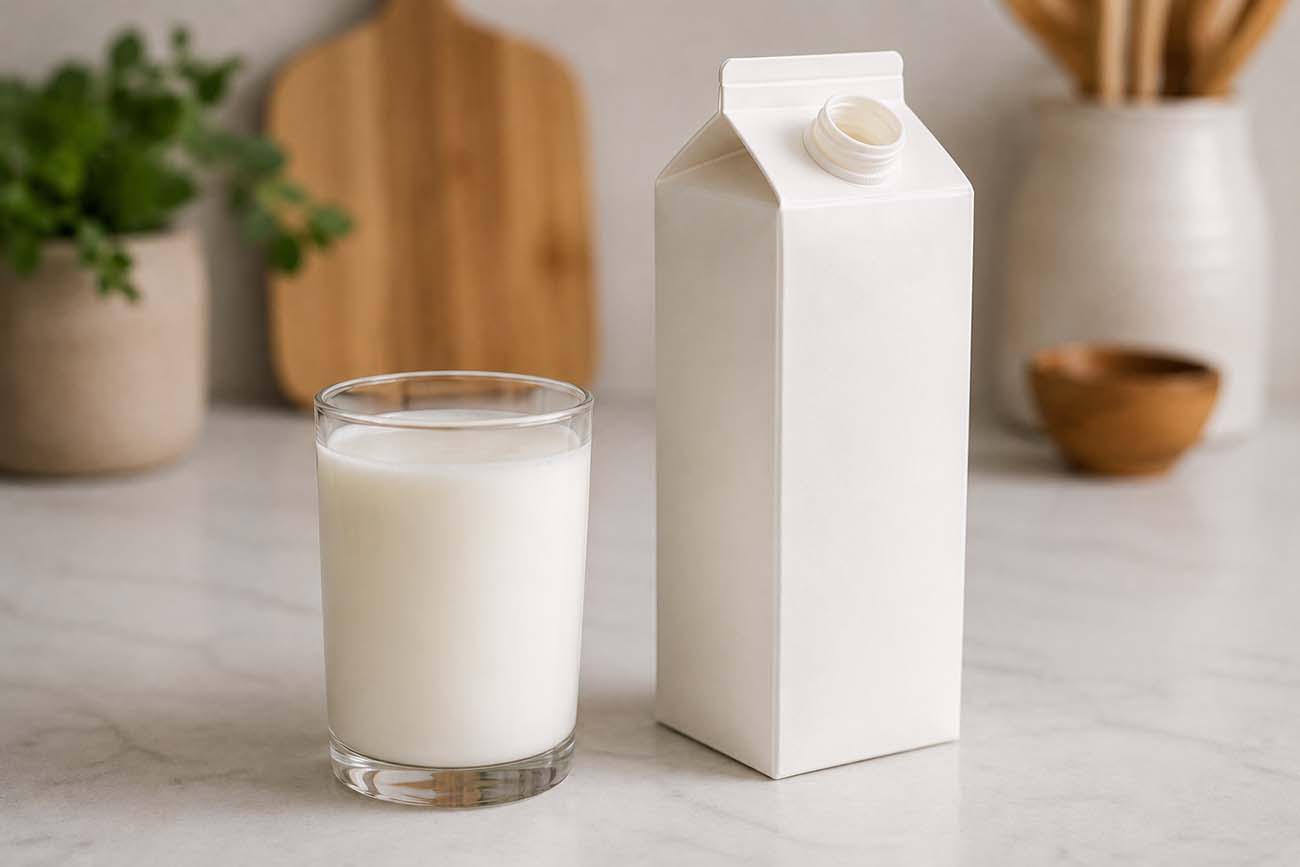
You pull the milk out of the fridge, take a sniff, and are not quite sure. Is it fine or is it off? And what does the date on the carton actually mean, because it definitely does not say “expires on”?
The short answer: Yes, milk goes bad, and it follows a more predictable pattern than most people realize. Opened regular pasteurized milk lasts 5 to 7 days in the refrigerator from the day you open it, assuming consistent cold storage at 38 to 40°F. Unopened, it is often good for a few days past the sell-by date. The date on the carton is a quality guide for retailers, not a hard spoilage date. Your nose is a more reliable indicator than any printed date. UHT or shelf-stable milk is a different story and lasts months unopened without refrigeration.
For a complete dairy and food storage reference, see our Food Storage Guide.
📋 Milk: At a Glance
- Opened, regular pasteurized: 5 to 7 days in the fridge from the day opened, not from the printed date.
- Unopened, regular pasteurized: Often a few days past the sell-by date if kept consistently cold.
- UHT / shelf-stable, unopened: Up to 6 months at room temperature (varies by brand).
- UHT / shelf-stable, opened: 7 to 10 days refrigerated.
- Room temperature limit: 2 hours maximum. 1 hour above 90°F.
- First spoilage sign: Sour smell, before any visible curdling.
- Slightly sour but not curdled: Usable in baking for most healthy adults. Not for drinking.
- Freezing: Up to 3 months. Best for cooking and baking after thawing.
🔑 Key Takeaways
- Opened regular pasteurized milk lasts 5 to 7 days in the fridge from the day of opening, per FDA guidelines, assuming consistent refrigeration at 38 to 40°F.
- The sell-by or best-by date on the carton is for retailers, not a hard expiration for consumers. Trust your senses over the date.
- The first sign of spoilage is a sour smell. Curdling, lumps, and a yellowish tinge follow.
- Milk stored at the back of the fridge lasts longer than milk stored in the door, which is the warmest and most temperature-variable spot.
- Milk left at room temperature for more than 2 hours should be discarded per USDA guidelines, even if it still smells fine.
- Milk is also sensitive to light. Leaving it on the counter exposes it to light, which can cause an oxidized off-flavor even before bacterial spoilage is detectable.
- Slightly sour milk not yet curdled can be used in baking for most healthy adults. It should not be given to children, pregnant women, elderly individuals, or immunocompromised individuals.
What the Date on Your Milk Carton Actually Means
This is the source of most milk confusion, and it is worth getting right before anything else.
The date printed on a milk carton is almost never an expiration date. It is most commonly a sell-by date, which tells the retailer how long to display the product. Some cartons use “best by” or “use by” language, which reflects peak quality rather than a safety cutoff.
🔬 What Federal Regulations Actually Say
The FDA does not require manufacturers to print expiration dates on milk. There are no federal laws mandating specific date labeling on dairy products, with the sole exception of infant formula. Date labeling requirements vary by state. The FDA estimates that confusion over date labeling accounts for roughly 20% of consumer food waste nationally. The USDA’s recommended label language is “Best if Used By,” because research shows consumers understand this as a quality indicator rather than a safety cutoff. Retailers typically give pasteurized milk a sell-by date of 4 to 6 days after delivery, per Cornell University food scientists. This means the milk you buy may already be several days old when it reaches you, which is why “a few days past the sell-by date” depends on the actual age of the product at purchase.
Once opened, the 5 to 7 day window starts from the day you open the carton, not from the printed date. The same principle applies to other dairy products: heavy cream, half and half, and buttermilk all follow similar date-labeling logic where the printed date is a quality guide, not a hard cutoff.
How Long Does Milk Last? All Types at a Glance
| Type of Milk | Unopened | Opened | Notes |
|---|---|---|---|
| Regular pasteurized (HTST) | A few days past sell-by | 5 to 7 days | Consistent 38 to 40°F required. Door storage shortens this window. |
| UHT / shelf-stable, unopened | Up to 6 months at room temp | 7 to 10 days refrigerated | Actual window varies by brand. Refrigerate immediately once opened. |
| Ultra-pasteurized (UP), refrigerated | 30 to 60 days from processing | 7 to 10 days | Common for organic brands. Sold cold but longer shelf life than HTST. |
| Whole milk | Per carton date | 5 to 7 days | Fat content does not meaningfully affect shelf life vs. skim. |
| Skim / low-fat milk | Per carton date | 5 to 7 days | Same shelf life as whole under same storage conditions. |
| Lactose-free milk | Per carton date | 5 to 7 days (or 7 to 10 if UHT) | Many lactose-free milks are UHT processed. Check the label. |
| Plant-based milk (refrigerated) | Per carton date | 7 to 10 days | Separation is normal. Shake before using. Not a spoilage sign. |
| Frozen milk | Up to 3 months | 5 to 7 days after thawing | Best for cooking and baking. Texture may change for drinking straight. |
Sources: FDA, USDA FoodKeeper, Dairy Council of California, Cornell University Department of Food Science.
How to Tell If Milk Has Gone Bad
Your senses are the most reliable tool for assessing milk. Here is what each sign means.
⚠️ Signs Milk Has Gone Bad
- Sour smell: The earliest and most reliable sign. Fresh milk has a clean, slightly sweet, neutral dairy smell. Spoiled milk smells distinctly acidic and sharp. If it smells wrong, discard it regardless of the date.
- Curdling or lumps: Spoiled milk thickens and develops lumps or curds as proteins coagulate. If it does not pour smoothly or you see chunks, discard it.
- Yellowish or grayish tinge: Fresh milk is white to slightly off-white. Discoloration is a sign of significant spoilage.
- Sour or bitter taste: A slightly sour taste before visible curdling means the bacterial load is already high. Discard it for drinking.
- Oxidized or off flavor without obvious sourness: Milk left in light or on the counter can develop a stale, cardboard-like flavor before full bacterial spoilage. Discard it.
One nuance: Milk that smells slightly sour but has not yet curdled is no longer good for drinking but can be used in baking by most healthy adults. Pancakes, muffins, quick breads, and cooked sauces reach temperatures that destroy most spoilage bacteria. Think of it as an early-stage version of buttermilk, which is intentionally soured. Do not use slightly soured milk for children, pregnant women, elderly individuals, or anyone immunocompromised.
Why Milk Spoils: The Science
🔬 Why Pasteurized Milk Still Spoils
Pasteurization kills dangerous pathogens (Salmonella, E. coli, Listeria) but does not sterilize the milk completely. Some non-pathogenic bacteria survive the process. These bacteria do not cause foodborne illness, but they consume the lactose and proteins in milk, producing lactic acid as a byproduct. That acid is what makes milk taste and smell sour, and at sufficient concentrations, it causes proteins to coagulate into curds. Temperature is the critical variable: every degree above the recommended 38 to 40°F accelerates bacterial activity. Research from Cornell University found that lowering refrigerator temperature from 43°F to 39°F extended milk’s shelf life by an additional 9 days. Milk is also sensitive to light, which causes oxidation producing an off-flavor independent of bacterial spoilage. This is why milk is sold in opaque or light-blocking containers.
The Fridge Door vs. Back of Shelf Problem
Where you store milk in the refrigerator matters more than most people realize.
The door of a refrigerator is the warmest location because it is exposed to room temperature air every time the door opens. Temperature fluctuations in the door can run 5 to 10 degrees warmer than the back of the main compartment. The Dairy Council of California recommends milk be stored at 34 to 38°F. The back of a middle or bottom shelf is the coldest, most consistent spot and is where milk should always be stored. This applies to all dairy: yogurt, cream cheese, cottage cheese, and sour cream all benefit from back-of-fridge placement for the same reason.
See also

How to Store Milk Properly
✅ Storage Best Practices
- Back of the fridge, not the door. Coldest and most consistent temperature. The door is the worst spot for milk.
- Keep the fridge between 38 and 40°F. Storing above 45°F shortens shelf life significantly and is a food safety concern per FDA guidelines.
- Keep milk in its opaque carton. Milk is sensitive to light. Light exposure causes oxidation and an off-flavor. Never store it in a clear container on a sunny counter.
- Seal tightly after every use. Air and light exposure accelerates spoilage. Return to the fridge immediately.
- Never drink directly from the carton. Bacteria introduced from your mouth shortens the shelf life for everyone else.
- Never pour unused milk back into the carton. Cross-contamination from a poured glass accelerates spoilage of the remaining fresh milk.
- Keep away from strong-smelling foods. Milk absorbs odors from onions, leftovers, and uncovered dishes nearby.
- Two-hour rule at room temperature. Discard milk left out more than 2 hours (1 hour above 90°F) even if it still smells fine.
- Buy milk last at the store. Add it to your cart last and refrigerate as quickly as possible after purchase.
Can You Freeze Milk?
Yes, but with important caveats. Milk can be frozen for up to 3 months. Pour out a small amount first to leave room for expansion, and freeze before the milk spoils. Thaw in the refrigerator, not at room temperature.
The fat globules in milk can rupture during freezing, causing fat and liquid to separate in a way that cannot be fully reversed. Cornell University dairy food scientists note this is why frozen milk is not ideal for drinking straight after thawing. For cooking and baking, the texture change is far less noticeable. Shake or stir the thawed milk before using. Use within 5 to 7 days of thawing. The same caution applies to heavy cream and half and half, which also separate when frozen.
What to Do With Milk That Is About to Go Bad
📋 Using Milk Before It Turns
Frequently Asked Questions
Opened regular pasteurized milk lasts 5 to 7 days in the refrigerator from the day you open it, per FDA guidelines, assuming consistent storage at 38 to 40°F. This window applies regardless of the printed date. UHT or shelf-stable milk lasts 7 to 10 days after opening when refrigerated. For comparison, heavy cream lasts about the same window, while yogurt and cottage cheese are typically good for 1 to 2 weeks after opening.
Can you drink milk after the sell-by date?
Often yes, if it has been kept properly refrigerated and shows no signs of spoilage. Unopened milk is frequently good for a few days past the sell-by date. The sell-by date is for retailers, not a consumer expiration. Always smell and visually inspect before drinking. If it smells sour, tastes off, or looks curdled, discard it regardless of the date.
The clearest sign is a sour smell. Fresh milk smells clean and slightly sweet. A sour, sharp, or unpleasant odor means discard it. Secondary signs are curdling or lumps, a yellowish or grayish tinge, and a sour or bitter taste. Trust your senses over the printed date. The same spoilage logic applies to buttermilk, cream cheese, and sour cream.
What happens if you drink spoiled milk?
Drinking a small amount of spoiled pasteurized milk is unlikely to cause serious illness in healthy adults because pasteurization already eliminated the dangerous pathogens. The spoilage bacteria that cause souring are generally not the same as foodborne illness-causing pathogens. That said, consuming a significant amount can cause nausea, stomach cramps, vomiting, and diarrhea. Children, elderly individuals, pregnant women, and immunocompromised people face greater risk and should not consume milk showing any signs of spoilage.
Yes. The fridge door is the warmest, most temperature-variable part of the refrigerator. Milk stored in the door spoils faster than milk stored at the back of a middle or bottom shelf. Moving milk from the door to the back of the fridge is one of the simplest ways to extend its freshness window. The same is true for coffee creamer, whipped cream, and other dairy stored in the door by default.
Not long. At typical summer car interior temperatures of 90 to 120°F on a warm day, the safe window shrinks well below 2 hours. If the car is hot and milk sat unrefrigerated for more than an hour, discard it. Use insulated bags with ice packs when grocery shopping in warm weather. This applies to all cold dairy: yogurt, cream cheese, and eggs all face the same risk in a hot car.
Does whole milk go bad faster than skim milk?
No. Fat content does not meaningfully affect how quickly milk spoils under consistent refrigeration. Both whole and skim milk last 5 to 7 days after opening under the same storage conditions. Temperature consistency and handling practices matter far more than fat content.
For drinking, cold applications, or serving to vulnerable individuals: no. For baking and cooking by healthy adults: yes. Slightly sour but uncurdled milk works well in pancakes, muffins, quick breads, and cooked sauces, behaving similarly to buttermilk in baked goods. The heat of cooking destroys most spoilage bacteria.
No more than 2 hours, per USDA guidelines. Cut that to 1 hour if the temperature is above 90°F. Bacteria in the temperature danger zone double roughly every 20 minutes. Discard milk left out longer than 2 hours even if it smells acceptable. The same 2-hour rule applies to all refrigerated dairy including sour cream, ricotta, and cottage cheese.
Can you freeze milk?
Yes, for up to 3 months. Leave room for expansion before freezing, and thaw in the refrigerator. Freezing can cause fat globules to rupture and the texture of thawed milk may not fully return to homogenous. Frozen and thawed milk is best used for cooking and baking rather than drinking straight. Use within 5 to 7 days of thawing.
Does lactose-free milk last longer than regular milk?
Sometimes. Many lactose-free milks are UHT processed, giving them a longer shelf life than regular pasteurized milk. Check the packaging. If sold refrigerated, treat it like regular pasteurized milk (5 to 7 days after opening). If sold shelf-stable, treat it like UHT (7 to 10 days after opening once refrigerated).
Does plant-based milk go bad the same way as dairy milk?
Similarly but not identically. Refrigerated plant-based milks (oat, almond, soy, coconut) last 7 to 10 days after opening. Separation is normal and not a spoilage sign. Shake before using. Spoilage signs are similar: sour or off smell, curdling, and unusual texture. Shelf-stable plant-based milks last months unopened and 7 to 10 days refrigerated after opening.
Further Reading
Better Living may earn commissions through affiliate links and may occasionally feature sponsored or partner content. If you make a purchase through our links, we may receive a small commission at no cost to you.