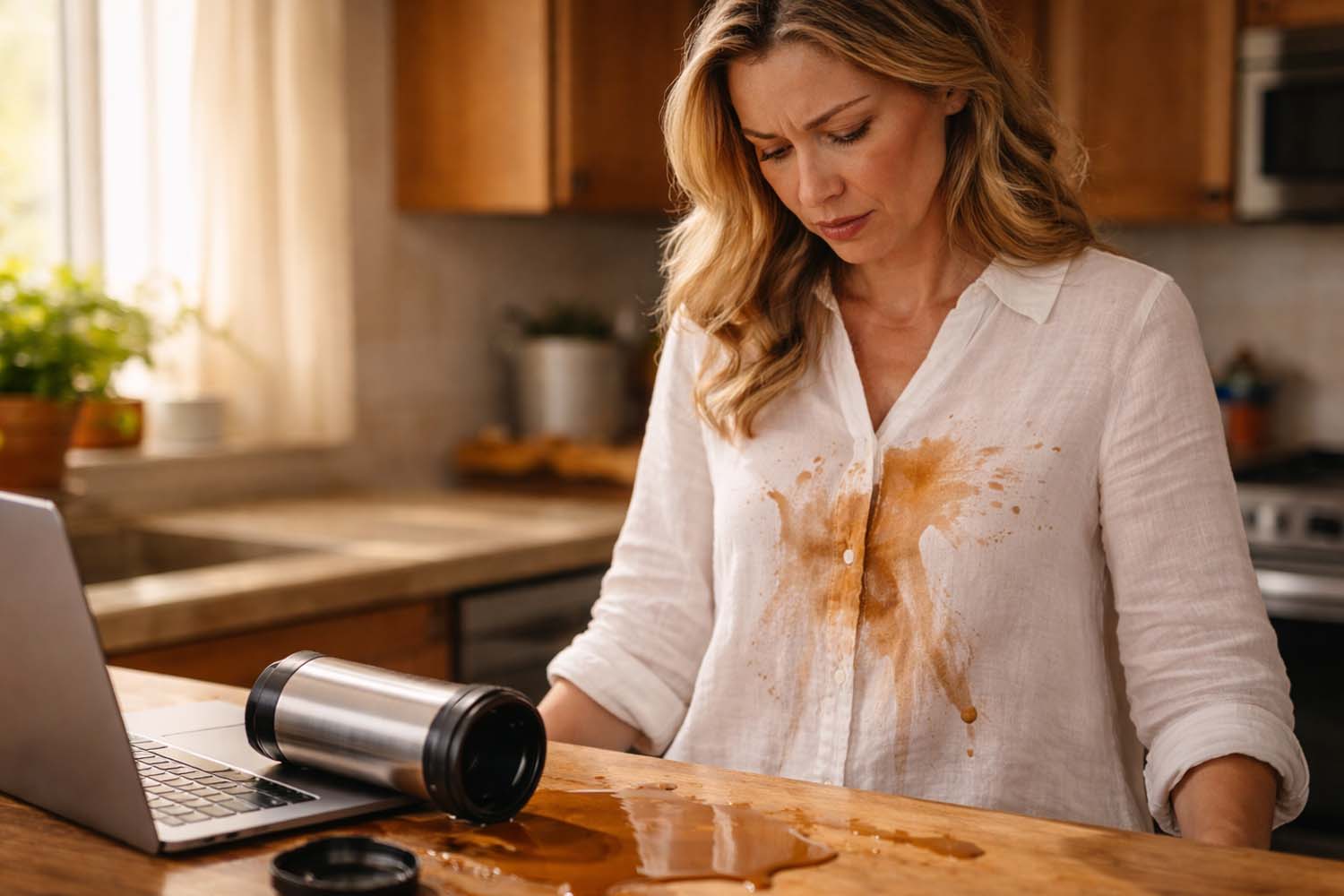
How to get coffee stains out of clothes sounds like one of the simpler stain problems. Pour cold water on it, dab with a cloth, done. And for black coffee caught immediately, that’s mostly true.
The problem is that most coffee stains aren’t black coffee caught immediately. They’re a latte spilled on the way to work. Cold brew that dripped on a white shirt overnight. Yesterday’s cup that went through the dryer before anyone noticed. Each of those is a different stain with different chemistry, and treating them the same way is why so many coffee stains don’t fully come out.
I tested this the same way I tested the rest of this series: deliberately stained shirts with different coffee types at different time intervals and treated them with every method worth trying. Here’s what actually works.
Quick Answer: How to Get Coffee Stains Out of Clothes
- Blot immediately. Don’t rub.
- Flush cold water through the back of the fabric.
- Black coffee: apply white vinegar, let sit 5 to 10 minutes, rinse, launder. Coffee with milk or cream: dish soap first for 2 minutes, rinse, then vinegar soak. Sweetened coffee: dish soap, then enzyme spray, then OxiClean soak.
- White fabrics: hydrogen peroxide and dish soap (3:1) for 20 to 30 minutes instead of vinegar.
- Launder in cold water.
- Check before drying. Brown shadow means tannin residue. Treat again before the dryer.
Why Coffee Stains Behave Differently From Other Drink Stains
Coffee is a tannin stain. Tannins are plant-based compounds that bond aggressively to natural fiber proteins in cotton and linen, creating the brown discoloration that deepens over time and with heat.
What separates coffee from tea and red wine is what you add to it. Black coffee is a pure tannin stain and one of the more straightforward ones. The moment you add milk, cream, oat milk, or sugar, the stain gains additional layers with completely different chemistry.
The tannin layer: The brown pigment. Responds to acidic treatments like white vinegar and to oxidizers like hydrogen peroxide and OxiClean. Sets permanently with heat. Hot water, sunlight, or the dryer bonds it to the fabric.
The fat layer (milk and cream): Dairy fat creates a barrier over the tannin stain. Water alone won’t touch it. Dish soap breaks the fat barrier first, which allows the vinegar or OxiClean to reach the tannin beneath. Skip this step and the tannin treatment skims the surface while the fat layer reseals underneath.
The protein layer (milk): Milk contains casein protein that bonds to fabric when heated. Enzyme cleaners specifically target casein and are the most effective treatment for milk-based coffee on older stains.
The sugar layer (sweetened drinks): Flavored syrups and added sugar create a sticky residue that traps the tannin. Enzyme treatment breaks this down before the OxiClean can clear the pigment.
According to the American Cleaning Institute, combination stains require treating each component in sequence rather than applying a single product. For coffee with dairy, that means fat first, protein second, tannin third.
⚠ Heat Is the Enemy at Every Stage: Hot water sets tannin stains permanently. This applies to the initial flush (always cold water), the treatment phase (cold or lukewarm only), and the final wash (cold cycle). The dryer is particularly damaging. A coffee stain that’s 95% cleared will become permanent after one dryer cycle. Check in good light before any heat.
The Type of Coffee Changes Your Treatment
This is the gap that most guides miss. Black coffee, lattes, cold brew, and iced coffee with syrup all leave different stains and need different first steps.
☕ Black coffee: The simplest coffee stain. Pure tannin, no fat, no protein. Cold water flush, then white vinegar applied directly for 5 to 10 minutes. For white fabrics, hydrogen peroxide and dish soap handles it faster. Most fresh black coffee stains clear in one round.
☕🥛 Coffee with milk, cream, or dairy alternative: Two-layer stain. Dish soap first to break down the fat (2 minutes, firm application), rinse, then vinegar soak for the tannin. Plant-based milks (oat, almond, soy) have slightly different fat profiles but respond to the same dish soap treatment. Don’t skip the dish soap step. It’s what allows the vinegar to reach the pigment.
☕🍬 Sweetened coffee and flavored lattes: Three-layer stain. Dish soap for the fat, enzyme spray for the sugar and protein, then OxiClean soak for the tannin. Flavored syrups (vanilla, caramel, hazelnut) contain concentrated sugar that traps the tannin and resists standard treatments without enzyme pre-treatment.
☕🧊 Cold brew: The hardest coffee stain despite feeling less urgent. Cold brew concentrate (the undiluted kind sold in bottles or made at home before diluting) uses 2 to 4 times more coffee per unit of water than drip coffee. That means significantly more tannin in every spill, even though a properly diluted serving ends up close to drip strength. The stain looks lighter when fresh but is denser at the fiber level. Treat cold brew like hot coffee but extend every soak time by 50%: 15 minutes of vinegar instead of 10, overnight OxiClean instead of 2 hours for older stains.
☕🧊🥛 Iced coffee and cold foam drinks: Cold dairy fat is slightly more viscous than warm. Apply dish soap and let it sit 3 to 4 minutes rather than 2 before rinsing. Then treat the tannin layer as usual.
Blot First: The Rule That Applies to Every Coffee Stain
Coffee is liquid and spreads fast. The first 30 seconds matter more than any product you apply later.
Don’t rub. Rubbing spreads the stain sideways and drives it deeper into the fiber weave. Instead, blot with a clean white cloth or paper towel, pressing firmly and lifting straight up. Work from the outside edge inward to prevent spreading.
Then run cold water through the back of the stain immediately. Flushing from behind pushes the coffee back out through the fibers rather than deeper in. This step alone removes a significant portion of the tannin before any treatment is applied.
My time test: I stained five white cotton shirts with drip coffee and treated them at 1 minute, 10 minutes, 30 minutes, 2 hours, and 6 hours. The 1-minute shirt came completely clean with cold water and vinegar alone. The 6-hour shirt still had a faint brown shadow after two full treatment rounds. I repeated with a latte. The 10-minute shirt already needed the full dish soap and vinegar sequence rather than just vinegar.
How to Get Coffee Stains Out of Clothes: 5 Methods Tested and Ranked
⚠ Don’t Mix OxiClean and Vinegar: If you’ve done a vinegar soak and want to move to OxiClean, rinse and launder first. OxiClean breaks down into hydrogen peroxide on contact with water. Combining hydrogen peroxide with vinegar creates peracetic acid, which can irritate skin and eyes and may damage fabric. One treatment approach per session.
Pro Tip: The Away-From-Home Fix – You spilled a latte at the coffee shop with no products available. Blot immediately. Don’t rub. Pour cold water through the back of the stain at the sink. If you have liquid hand soap, apply it to the stain and work it in gently. Hand soap has enough surfactant to slow the fat layer from bonding while you’re out. Keep the fabric damp. Treat properly with dish soap and OxiClean as soon as you’re home.
How to Get Dried Coffee Stains Out of Clothes
Dried coffee stains are harder but most are still removable with extended treatment.
Step 1: Rehydrate with cold water for 5 to 10 minutes. Don’t apply any treatment to completely dry fabric.
Step 2: For dairy-based coffee, apply dish soap firmly for 3 minutes. For black coffee, skip this step. Rinse.
Step 3: Apply enzyme spray and let it sit 20 to 30 minutes.
Step 4: White fabrics: hydrogen peroxide and dish soap mixture for 30 to 45 minutes. Colored fabrics: OxiClean soak for 4 hours, overnight for cold brew.
Step 5: Launder in cold water. Check before drying. Repeat if any brown shadow remains.
What If It Already Went Through the Dryer?
The dryer heat bonds tannin permanently to fabric proteins. Removal rate in testing was about 60% for black coffee, lower for dairy-based drinks.
Apply dish soap and work it in very firmly for 3 to 5 minutes. Let sit 15 minutes before rinsing. OxiClean soak in warm water for 8 hours minimum. White fabrics: follow with hydrogen peroxide and dish soap before laundering. Air dry only. Expect 3 to 5 treatment rounds.
How to Get Coffee Stains Out of White Clothes
The dish soap and hydrogen peroxide combination (3:1) handles both tannin and dairy fat simultaneously.
Fresh black coffee on white: cold water flush, then hydrogen peroxide and dish soap for 20 to 30 minutes (hydrogen peroxide replaces the vinegar step for white fabrics), rinse, launder.
Fresh latte on white: dish soap for 2 minutes first, rinse, then hydrogen peroxide and dish soap mixture for 20 to 30 minutes, rinse, launder.
For any brown shadow surviving laundering: hang the garment damp in direct sunlight for 2 to 3 hours. UV oxidation clears tannin residue reliably. Only works when the fabric is still damp.
Avoid chlorine bleach. It can interact with tannins to create yellow-grey discoloration. Hydrogen peroxide is safer and more effective.
How to Remove Coffee Stains by Fabric Type
Cotton and cotton blends: Most forgiving. All methods work. Multiple rounds won’t damage the fabric.
See also

Jeans and denim: Dish soap plus vinegar handles most fresh coffee stains. Avoid hydrogen peroxide on colored denim.
Linen: Open weave means coffee penetrates fast. Act immediately. OxiClean soak for colored linen. Hydrogen peroxide and sunlight for white linen.
Polyester and synthetics: Tannins bond aggressively to synthetic fibers and are harder to remove than from natural fibers. OxiClean is more reliable than vinegar for polyester.
Silk: Cold water blot, then professional dry cleaning. Never hydrogen peroxide or hot water.
Wool: Cold water and wool-specific detergent only. Professional cleaning for anything valuable.
What Definitely Doesn’t Work
Warning: Never Do These Things – According to Consumer Reports and the American Cleaning Institute, these are the most common mistakes:
- Hot water at any stage: Bonds tannin to fabric proteins permanently. Cold water only throughout.
- Rubbing the stain: Spreads it and pushes it deeper. Blot only.
- Skipping dish soap for milk-based coffee: The fat layer prevents tannin treatment from working. Dish soap before vinegar or OxiClean is non-negotiable for anything with dairy.
- Vinegar then OxiClean in the same session: Creates peracetic acid. Wash first, then switch.
- The dryer before it’s fully gone: The most common way a treatable stain becomes permanent.
- Treating cold brew like regular coffee: Cold brew is more concentrated. Every soak needs more time.
My Step-by-Step Emergency Protocol
The most common scenario: a latte spill on a colored shirt.
Step 1: Blot immediately. Don’t rub. Work outside edge inward.
Step 2: Flush cold water through the back of the stain for 30 to 60 seconds.
Step 3: Apply blue Dawn directly and work in firmly for 2 minutes. Rinse.
Step 4: Apply white vinegar. Let sit 5 to 10 minutes. Rinse.
Step 5: Launder in cold water.
Step 6: Check in good light when dry. Brown shadow? Repeat Steps 3 and 4 or move to OxiClean soak before the dryer.
For black coffee: skip Step 3, go straight to vinegar.
For sweetened coffee: add enzyme spray between Steps 3 and 4, let sit 10 minutes.
Frequently Asked Questions
Are coffee stains permanent?
Fresh coffee stains are almost never permanent if treated correctly. Dried stains and anything that went through the dryer are harder but usually still removable with enough rounds. The main causes of permanent coffee staining are heat and time without treatment.
Does the type of coffee matter?
Yes, significantly. Black coffee is a pure tannin stain and the easiest. Coffee with dairy adds a fat layer requiring dish soap before any tannin treatment. Sweetened coffee adds a sugar layer needing enzyme treatment. Cold brew is more concentrated and needs longer soak times throughout.
Why does a brown stain remain after washing?
Residual tannin that the first treatment didn’t fully clear. Apply vinegar again for colored fabrics, or hydrogen peroxide for white. Let it sit longer than the first round before laundering again.
Can I use vinegar and baking soda together?
No. They’re acidic and alkaline respectively and neutralize each other on contact, producing mostly water and carbon dioxide. Use one or the other. Vinegar is more effective on tannin stains than baking soda.
Does coffee with oat milk stain differently than dairy?
The chemistry is similar. Oat milk has less fat than whole dairy but still creates a fat barrier over the tannin layer. Treat identically to regular dairy coffee: dish soap first, then vinegar or OxiClean. Generally slightly easier to clear than full-fat dairy.
Final Thoughts
Coffee stains are manageable once you match the treatment to the drink. Black coffee needs vinegar. Coffee with milk needs dish soap first, then vinegar. Sweetened lattes need enzyme spray in the sequence. Cold brew needs everything but more time.
The brown shadow after washing isn’t the stain winning. It’s tannin residue the first round didn’t fully clear. One more pass with hydrogen peroxide on white fabrics or OxiClean on colors and it’s gone.
Act fast, match the treatment to what you were drinking, check before the dryer.
What’s your most stubborn coffee stain? Drop it in the comments.
Better Living may earn commissions through affiliate links and may occasionally feature sponsored or partner content. If you make a purchase through our links, we may receive a small commission at no cost to you.