I pulled my favorite white linen shirt over my head without thinking.
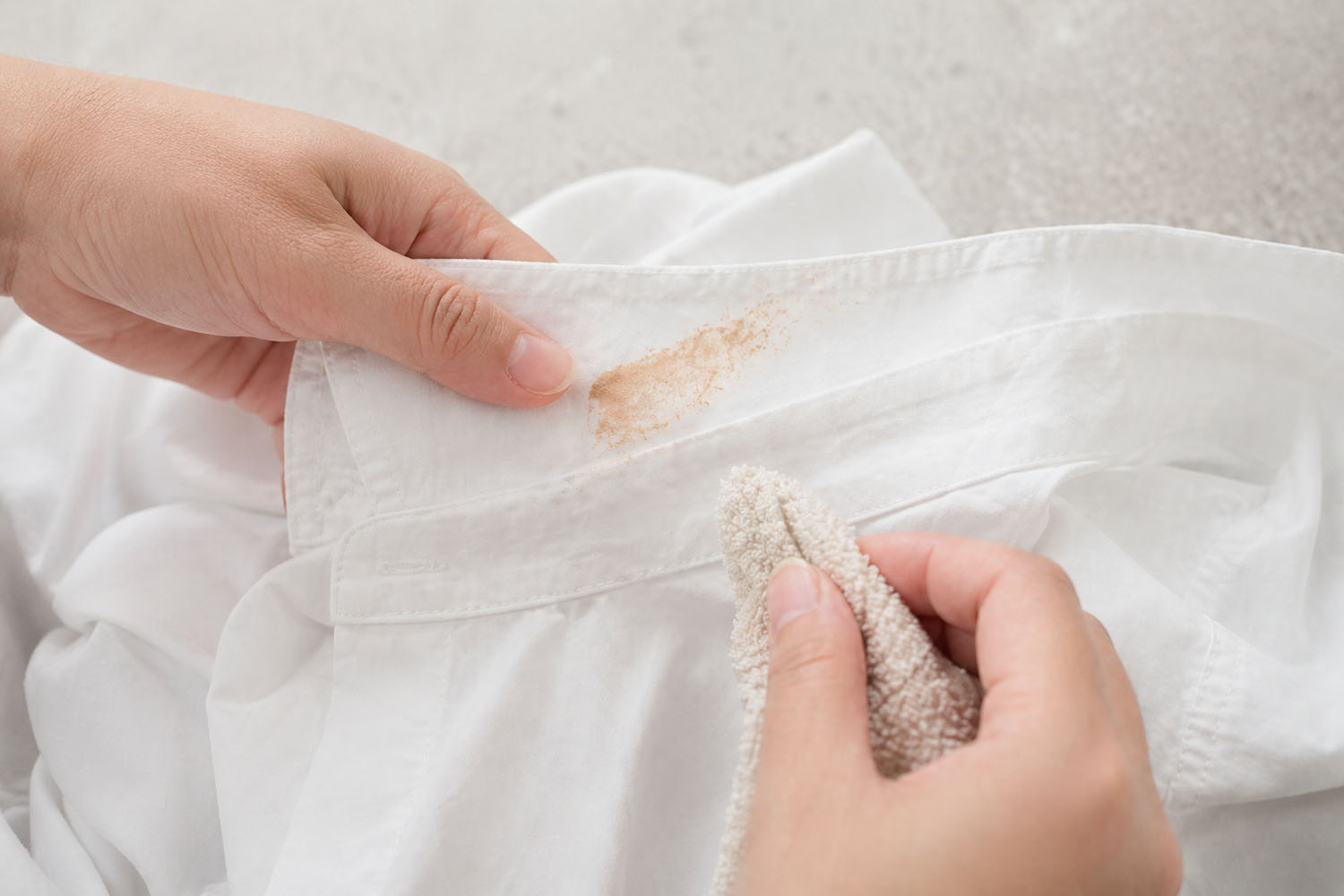
I had already done my makeup. Full coverage foundation, the kind that stays on all day and doesn’t budge. I knew the second the collar dragged across my face what had happened. A long, beige-brown smear across the inside of the collar and a smaller one on the shoulder seam where the fabric had pressed against my jaw.
Not a spill. Not a dramatic accident. Just twenty seconds of not thinking, and a shirt I’d owned for three years now had a stain that looked like it had been applied with a brush.
Here’s what I learned trying to fix it: foundation stains are unlike almost anything else in your wardrobe because they’re engineered to stay put. The same technology that keeps your makeup on through a ten-hour workday is working against you the moment it touches fabric. Understanding what’s actually in the formula is what changes your results.
Quick Answer: How to Get Foundation Out of Clothes
Scrape off any excess foundation immediately without rubbing. Apply blue Dawn dish soap directly to the stain and work it in gently with your fingers. This addresses the oil and silicone carrier that holds the pigment. Let it sit for 10 to 20 minutes. For any remaining color after rinsing, apply micellar water or a makeup remover wipe to dissolve the pigment layer. Rinse with cold water from the back of the fabric and launder in cold water. Check before the dryer. Long-wear and transfer-proof foundation needs an extra step: a hydrogen peroxide soak on white fabrics or an OxiClean soak on colors, after the dish soap step, to address the film-forming polymers that regular detergent can’t break down.
Why Foundation Stains Are Different From Every Other Makeup Stain
Foundation isn’t one thing. It’s a sophisticated two-phase system engineered by cosmetic chemists to survive sweat, sebum, and friction. Understanding the two phases explains why you need more than one treatment step.
Phase one: the carrier. This is the oily, filmic layer that makes foundation spreadable and comfortable on skin. Modern liquid foundations contain silicones (dimethicone, cyclopentasiloxane), hydrocarbons (isododecane), and fatty esters (isopropyl myristate) that are completely water-insoluble. Water alone does nothing to this layer. It needs surfactant chemistry, specifically the degreasing surfactants in dish soap, to break down and lift from fabric fibers.
Phase two: the pigment. Foundation gets its color from iron oxide pigments (red, yellow, and black varieties blended for skin tones) and titanium dioxide for opacity and SPF coverage. These are inorganic mineral particles that don’t dissolve in water or break down with oxidizing agents like hydrogen peroxide. They sit physically lodged between fabric fibers after the carrier is removed. Micellar water, the same product designed to dissolve makeup on your face, is what lifts these mineral pigments out of fabric by surrounding them with micelles that carry them away.
The long-wear problem: Transfer-proof and 24-hour foundation formulas contain additional film-forming polymers (acrylate copolymers and silicone resins like trimethylsiloxysilicate) that are specifically engineered to create a flexible, adherent film that bonds aggressively to surfaces. Those polymers grip fabric fibers almost as effectively as they grip skin. These formulas require an additional treatment step that regular liquid foundation doesn’t need.
Foundation Type Changes the Approach
Before reaching for anything, know what type of foundation you’re dealing with.
Regular liquid foundation (most drugstore and mid-range formulas): two-phase stain as described above. Dish soap for the carrier, micellar water for the pigment. One of the more manageable makeup stains when caught quickly.
Long-wear, transfer-proof, or 24-hour foundation: contains additional film-forming polymers that require a stronger treatment after dish soap. Hydrogen peroxide soak on white fabrics, OxiClean soak on colors. The extra polymer layer is what most people hit when they treat the stain and find a ghost image still remaining.
Powder foundation: no carrier oil to speak of. The pigment particles sit on the surface and behave like a dry powder stain. Don’t add liquid first. Blow away loose powder with compressed air or a hair dryer on cold, use a lint roller or tape to lift surface pigment, then treat any remaining color with micellar water. Much easier than liquid foundation if you don’t rub it in.
Cream and stick foundation: waxier and richer carrier than liquid. Treat like ChapStick combined with pigment: freeze briefly to solidify the waxy carrier if it’s soft, scrape, then dish soap, then micellar water.
Mineral foundation: pure mineral pigments with no film-forming polymers. Dry brush first, then micellar water. Generally the most forgiving type.
Pro Tip: Micellar Water Is Your Most Underused Laundry Tool
Micellar water is essentially the perfect solution for cosmetic pigment stains on clothing and almost nobody uses it this way. The micelles, tiny spherical structures formed by surfactant molecules, enclose oil and pigment particles and suspend them in water so they can be blotted away. It’s the same mechanism that makes it gentle enough for eye makeup removal on skin, and it’s safe on most fabrics including many that can’t handle rubbing alcohol or hydrogen peroxide. For any makeup stain (foundation, blush, eyeshadow, mascara) micellar water is the product worth keeping in your laundry room alongside dish soap and OxiClean.
The Collar Stain Is the Most Common and Most Preventable
Foundation transfers to collar and neckline fabric through one of three scenarios: pulling a shirt over your head after applying makeup, leaning your face against a high collar, or resting your chin on a turtleneck.
The first scenario, pulling a shirt over your head after applying makeup, is entirely preventable. Put your shirt on before your makeup or use a silk scarf or dressing shield over your head when pulling the shirt on. This is the single most effective prevention measure and costs nothing.
For the second and third scenarios, a light setting spray or setting powder over your foundation before dressing creates a barrier that reduces transfer significantly. “Baked” or set foundation transfers far less than foundation applied and immediately dressed over.
On the treatment side, collar stains are usually on durable cotton or cotton-blend fabric which tolerates the full treatment sequence well. Treat them the same way as any liquid foundation stain: dish soap, micellar water, check before the dryer.
Fabric Matters More Than You Think
Cotton and cotton blends: The most forgiving. Handles dish soap, micellar water, rubbing alcohol, and hydrogen peroxide without damage. This is where all methods above perform best.
Polyester and synthetics: Foundation pigment can embed stubbornly in synthetic fibers. Use micellar water generously in the pigment-removal step. Avoid hot water throughout. Test rubbing alcohol on a hidden seam before using on dark synthetics.
Linen: Handles dish soap and micellar water well. Use cool water rather than cold to prevent shrinkage. Air dry rather than machine dry.
Rayon and viscose: Delicate. The shaving cream method is gentler than dish soap for the carrier phase. Micellar water is safe for the pigment phase. No rubbing alcohol. No hot water. Handle very gently when wet.
Silk: Foundation on silk is a job for a professional dry cleaner. Blot surface excess gently with a dry cloth and take it to a cleaner as soon as possible. Tell them it’s liquid foundation so they can choose the appropriate solvent.
Wool and cashmere: Same advice as silk. Professional cleaning. Very gentle blotting only at home.
Dry-clean only: Blot what you can and take it to the cleaner. Tell them the foundation type if you know it so they can choose between solvent-based and water-based treatment.
My Step-by-Step Protocol
For liquid foundation caught fresh:
Step 1: Scrape or blot surface excess without rubbing.
Step 2: Dish soap applied directly, worked in gently, 10 to 20 minutes.
Step 3: Cold water rinse from the back of the stain.
Step 4: Micellar water applied with cotton pad, blotting until no color transfers.
Step 5: Launder in cold water.
Step 6: Check before the dryer. Any shadow means repeat from Step 2.
For long-wear or transfer-proof foundation:
See also

Same sequence, plus after Step 3 apply hydrogen peroxide mixture (white fabrics) or OxiClean soak (colors) for 20 to 30 minutes before laundering.
For dried or set foundation:
Rubbing alcohol pre-treatment from the back, then the full dish soap and micellar water sequence.
For powder foundation:
Compressed air or cold hair dryer to blow loose pigment away. Lint roller or tape to lift surface particles. Micellar water for any remaining color. No liquid until loose particles are removed.
Warning: Never Do These Things
- Don’t rub the stain. Rubbing drives pigment particles deeper into the fiber weave and spreads the oil carrier over a wider area.
- Don’t use hot water during treatment. Hot water can set the oil components and cause some pigments to bond more aggressively with fabric fibers.
- Don’t put it in the dryer until the stain is completely gone. Heat permanently sets the polymer film components in long-wear foundation.
- Don’t use hydrogen peroxide on colored or dark fabrics. It can strip or lighten fabric dye irreversibly.
- Don’t skip the micellar water step and rely on dish soap alone. Dish soap addresses the carrier but doesn’t efficiently lift iron oxide pigment particles from fabric fibers.
What Definitely Does Not Work
Water alone: Foundation’s carrier phase is specifically formulated to be water-insoluble. Running water over a foundation stain before treating just spreads it. Always blot dry first and pre-treat before any water touches the stain.
Regular laundry detergent without pre-treatment: Standard detergent has insufficient surfactant concentration to break down silicone and hydrocarbon carriers without a dedicated pre-treatment step. The stain may lighten slightly but a shadow almost always remains.
Baby wipes: Useful for some stains. For foundation, baby wipes don’t have enough surfactant power for the carrier and no micellar action for the pigment. They’re a temporary measure at best.
Hairspray: An old makeup stain tip that doesn’t work on modern foundation formulas. Modern hairsprays don’t have the alcohol content that old formulas did, and even high-alcohol formulas don’t address iron oxide pigment effectively.
The One Thing I Wish I Had Known Sooner
Micellar water. I had a bottle of it in my bathroom for removing makeup from my face and it never occurred to me to use it on my clothes. Once I understood that it works on clothing for the exact same reason it works on skin: micelles surrounding and lifting oil-suspended pigment particles, and it became the most important tool in my stain removal kit for any makeup stain.
The second thing: long-wear foundation is a meaningfully different problem from regular foundation. Once I started checking the label before treating a stain and escalating to hydrogen peroxide when the formula said “24-hour” or “transfer-proof,” my results improved significantly.
The white linen shirt is still in my wardrobe. I now put it on before I do my makeup.
Final Thoughts
Foundation stains look catastrophic and feel permanent because the formula is engineered to be. But the two-phase structure of foundation (oil carrier plus mineral pigment) means two targeted treatments clear it completely where one alone won’t.
Dish soap for the carrier. Micellar water for the pigment. Escalate to hydrogen peroxide or OxiClean for long-wear formulas. Cold water throughout. Check before the dryer.
Have you found a method that works well on a specific foundation formula? Drop a comment below.
Frequently Asked Questions
Does foundation come out of clothes?
Yes, most foundation stains come out completely if treated correctly and before heat is applied. Regular liquid foundation responds well to dish soap for the oil carrier followed by micellar water for the pigment. Long-wear and transfer-proof foundation is more stubborn because of film-forming polymers but responds to an additional hydrogen peroxide or OxiClean soak after the dish soap step. Foundation that has gone through a hot dryer is harder to remove because heat sets the polymer components, but partial improvement is often still possible with the full treatment sequence.
What removes foundation from clothes?
The most effective combination is blue Dawn dish soap applied directly to break down the oil and silicone carrier phase, followed by micellar water to lift the iron oxide and titanium dioxide pigment particles from the fabric fibers. These two products address the two distinct chemical phases of a foundation stain. For long-wear foundation, adding a hydrogen peroxide soak on white fabrics or OxiClean soak on colors addresses the additional film-forming polymers. No single product handles all three components effectively.
How do you get foundation out of clothes without washing?
For a quick fix without a full wash, blot surface excess gently, apply dish soap and let it sit for 10 minutes, rinse with cold water from the back, then apply micellar water with a cotton pad and blot until no color transfers. Rinse thoroughly with cold water. This removes the majority of the stain and prevents it from setting while you wait to do laundry. Don’t leave dish soap in the fabric without rinsing it out, and don’t let any damp patch dry with residue still in it.
Does dish soap remove foundation from clothes?
Dish soap removes the oil and silicone carrier phase of foundation effectively but doesn’t efficiently lift the mineral pigment phase. After treating with dish soap you may find the brown or beige color of the foundation has lightened but a tinted shadow remains. That remaining color is iron oxide and titanium dioxide pigment that needs micellar water to lift. Use dish soap first, then micellar water as a second step, for complete removal.
How do you get long-wear foundation out of clothes?
Long-wear foundation contains film-forming polymers (acrylate copolymers and silicone resins) that regular liquid foundation doesn’t have. Start with the standard sequence: dish soap for 10 to 20 minutes, rinse, micellar water. If a shadow remains, apply hydrogen peroxide mixed with dish soap on white fabrics (20 to 30 minutes) or an OxiClean soak on colored fabrics (30 to 60 minutes). The oxidizing step targets the polymer film that regular surfactants can’t fully break down. You may need two full treatment rounds for heavily pigmented long-wear formulas.
Can you get old foundation stains out of clothes?
Often yes, especially if the garment hasn’t been through a hot dryer. Dried foundation that has set at room temperature is more stubborn than fresh foundation but responds to rubbing alcohol as a pre-treatment to soften the hardened polymer film, followed by the full dish soap and micellar water sequence. For foundation that has been through a wash but not a hot dryer, start with the dish soap and micellar water sequence directly. Foundation that has been through a hot dryer is harder because heat sets the polymer components, but the full treatment sequence is worth trying before giving up on a garment.
More Stain Removal Guides:
More Cleaning Tips:
Better Living may earn commissions through affiliate links and may occasionally feature sponsored or partner content. If you make a purchase through our links, we may receive a small commission at no cost to you.