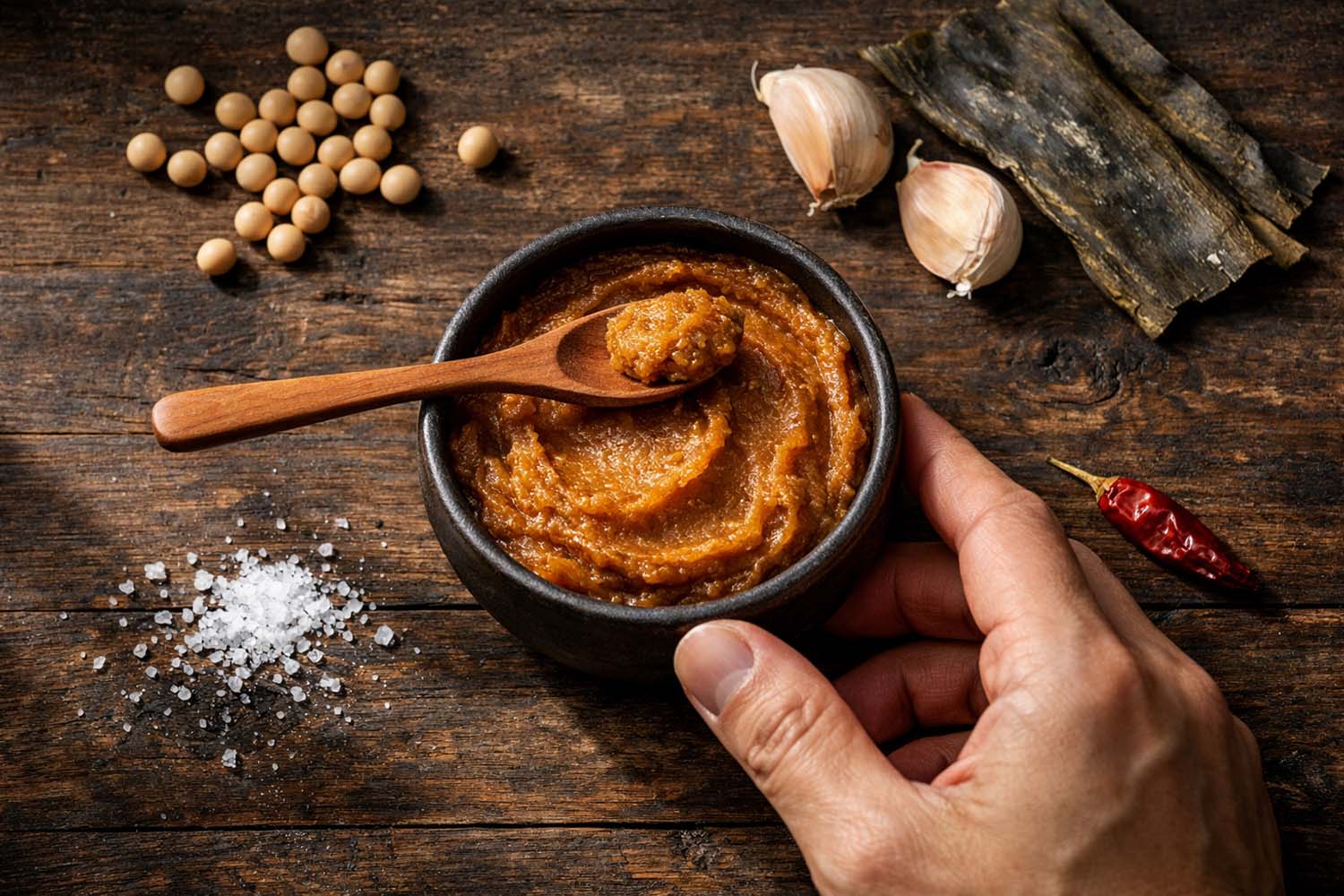
Does miso paste go bad? Yes, but it takes a long time, and it spoils in ways that confuse almost everyone. The two things that trip people up most: finding the paste has darkened significantly and assuming it is ruined, and seeing a white film or fuzzy layer on the surface and panicking. Neither is automatically a problem. Understanding what is normal fermentation and what is actual spoilage makes all the difference with miso.
Miso is one of the oldest preserved foods in Japanese cooking, and its high salt content is what makes it so shelf-stable. That same salt is also why spoilage looks and smells completely different from most condiments you might be used to checking.
For the refrigeration question, see the companion post: Does Miso Paste Need to Be Refrigerated? For a full pantry reference, visit the Food Storage Guide.
⚡ Short Answer
Yes, miso paste goes bad, but it has a very long shelf life. Unopened miso lasts 1 to 2 years in the pantry. Opened and refrigerated, it stays at peak quality for 3 to 12 months depending on type. White miso on the shorter end, red miso on the longer end. Darkening color is normal fermentation. A thin white surface film is usually harmless koji and can be scraped off. True spoilage smells sharply sour, like vinegar or ammonia.
🤔 Why Miso Spoils Differently Than Most Condiments
Miso is a fermented food — soybeans, salt, and koji (a beneficial mold culture, Aspergillus oryzae) that has been aged anywhere from a few weeks to several years. That fermentation process never fully stops. Even a sealed tub in your fridge is slowly, quietly continuing to develop. That is part of what makes miso so complex and delicious, and also what makes its spoilage picture unusual.
Because miso typically contains around 10 to 12 percent salt by weight, the environment inside the tub is genuinely hostile to most harmful bacteria and molds. What goes wrong with miso is not usually dangerous contamination. It is the fermentation process continuing past the point where the flavor is good, converting the natural sweetness into sourness and off-notes. Heat, air exposure, and moisture from dirty utensils accelerate that process significantly.
💡 Important exception
Low-sodium miso and dashi-flavored miso (called dashi-iri miso) have less salt and added ingredients that reduce shelf stability. These varieties can spoil faster than traditional miso and should be refrigerated after opening without question. Always check your label.
🕓 Miso Paste Shelf Life at a Glance
| Type and Storage | Shelf Life |
|---|---|
| Unopened — cool pantry | 1 to 2 years; often good past the best-by date |
| White miso (shiro): opened, refrigerated | 3 to 6 months peak quality |
| Yellow miso: opened, refrigerated | 6 to 9 months peak quality |
| Red miso (aka): opened, refrigerated | 9 to 12 months peak quality |
| Any miso — frozen | Up to 1 year; does not fully solidify due to salt content |
| Low-sodium or dashi miso: opened, refrigerated | Use within 1 to 3 months; spoils faster |
According to the USDA FSIS, best-by dates on shelf-stable products indicate peak quality rather than a safety cutoff. For miso stored properly, usable life frequently extends past the printed date.
Hikari Miso states on their website that miso is a “preservative food” due to its salt content, and recommends storing it in a cool place out of direct sunlight. They note that the darkening color caused by the Maillard reaction does not pose any food safety threat. Marukome, another major miso producer, recommends refrigerator or freezer storage and wrapping the surface with plastic wrap after opening to prevent air contact.
🔍 How to Tell If Miso Paste Has Gone Bad
Take note of how your miso looks, smells, and tastes when it is fresh. That baseline makes it much easier to recognize when something has actually gone wrong.
🔴 Toss It
👃 Sharp sour smell, like vinegar or ammonia. This is the clearest spoilage signal. Miso that has over-fermented or gone bad develops a distinctly sour, harsh odor. It may smell like sharp vinegar, ammonia, or sometimes alcohol. If the smell makes you pull back, trust that reaction and discard it.
👅 Sour or off taste. Fresh miso tastes savory, salty, and rich. Not sharp. Bad miso tastes noticeably sour, almost vinegary, with none of the pleasant umami depth. A small taste test confirms what the smell suggests.
Dark liquid pooling on the surface. A small amount of liquid separation is normal, but dark or discolored liquid sitting on top of the paste, especially with an off smell, can indicate spoilage. Do not stir it back in without checking the smell and taste first.
Blue-green or black mold. Any mold that is not white should be treated as a sign to discard the entire container. Blue-green or black mold growth indicates contamination beyond surface-level koji activity.
🟢 Totally Normal — Keep It
Darker color than when fresh. This is the one that confuses people most. Miso naturally darkens over time through the Maillard reaction, the same chemical process that browns bread and seared meat, as the amino acids from soybeans react with sugars. A white miso that has gradually turned more golden or beige is not spoiled. It has continued to mature. The flavor will be slightly less sweet and more complex, but it is safe. Hikari Miso confirms this directly: color darkening does not pose a food safety threat.
White surface film or fuzzy white layer. This is the spoilage sign that panics people most. A thin white film or slightly fuzzy white growth on the surface of miso is almost almost always harmless koji activity, the same beneficial mold that was used to ferment the miso in the first place. Scrape off about an inch from the affected area with a clean, dry utensil, check that the miso underneath smells and tastes normal, and it is fine to continue using. White surface growth is different from blue-green or black mold, which should prompt discarding.
⚠️ White film vs. dangerous mold
White: usually safe koji activity. Scrape off the affected surface layer, check smell and taste, continue using if it smells normal. Blue, green, or black: discard the whole container. When in doubt, the smell test settles it: spoiled miso smells sharply sour. Normal miso with surface koji smells like miso.
Slightly alcoholic smell. A faint alcohol aroma can develop during normal fermentation. Yeast activity produces small amounts of alcohol as a byproduct. If it smells mildly alcoholic but still savory and pleasant, the miso is likely still fine. If the alcohol smell is sharp, harsh, or combined with sourness, that points toward spoilage.
Drier or firmer texture near the surface. Miso that has been exposed to air at the surface can dry out slightly and become firmer. This is a quality issue rather than a safety issue. Scrape off the dried layer, cover the fresh surface with plastic wrap pressed directly onto the paste, and store properly going forward.
⚡ What Speeds Up Spoilage
Heat. Warm temperatures accelerate fermentation dramatically. Miso stored in a warm kitchen or pantry will continue fermenting much faster than refrigerated miso, converting sweetness to sourness in weeks rather than months. This matters most for white miso, which has less salt and less fermentation buffer.
Air exposure. Oxygen causes oxidation, color darkening, and drying at the surface. Every time the tub is opened, the exposed surface is at risk. Pressing plastic wrap directly onto the paste surface between uses significantly slows this process. This is what both Marukome and Just One Cookbook recommend.
Wet or dirty utensils. Introducing water or food particles into the container is the most common cause of actual mold contamination. Always use a clean, dry spoon. Never double-dip a spoon that has touched other ingredients.
See also

Miso type. White miso has a shorter fermentation time, lower salt content, and more residual sugars, all of which make it more perishable. Red miso has been fermented longer and contains more salt, giving it significantly more resistance to quality decline.
🧊 How to Store Miso Paste Properly
- Refrigerate after opening: almost universally recommended, especially for white and yellow miso.
- Press plastic wrap directly onto the paste surface before sealing the lid. This dramatically reduces air contact and slows both oxidation and surface mold.
- Always use a clean, dry spoon: moisture and food particles are the primary contamination risk.
- Keep the lid sealed tightly between uses to limit air exposure.
- Store away from strong-smelling foods: miso absorbs odors easily in the fridge.
- Freezer is a great long-term option: miso does not fully solidify due to its salt content, so it can be scooped directly from frozen. Use within a year.
- Write the opening date on the lid: helps you track how long it has been open, especially for white miso.
🍜 Putting That Miso to Work
The best way to avoid miso going bad is simply using it more often. It adds instant depth to far more than soup:
❓ Frequently Asked Questions
What does bad miso smell like?
Bad miso smells sharply sour, similar to vinegar or ammonia. It may also have a harsh alcoholic edge that is clearly unpleasant rather than the mild yeasty note of normal miso. If it smells like your usual savory miso paste, even with a slightly deeper or more complex aroma from aging, it is likely still fine.
Is it safe to eat miso paste after the expiration date?
Often yes, if stored properly and showing no signs of spoilage. The USDA FSIS confirms best-by dates reflect peak quality, not a safety cutoff. Miso is designed to last. Smell and taste are more reliable guides than the printed date.
What is the white stuff on top of my miso paste?
Almost always harmless koji, the same beneficial mold culture used to ferment the miso. Scrape off about an inch from the affected area with a clean dry utensil, check that the miso underneath smells and tastes normal, and continue using. If the growth is blue, green, or black rather than white, discard the container.
Why has my miso turned dark?
Normal fermentation. Miso darkens over time through the Maillard reaction as amino acids and sugars continue reacting, the same process that browns seared meat or toasted bread. Darker miso has a deeper, less sweet flavor but is safe to eat. This is not spoilage.
How long does opened miso last in the fridge?
It depends on the type. White miso is best within 3 to 6 months of opening. Yellow miso holds well for 6 to 9 months. Red miso can maintain quality for 9 to 12 months or longer. All of these assume proper storage: airtight container, plastic wrap on the surface, clean dry utensils every time.
Can miso paste make you sick?
Miso that has genuinely spoiled (sour smell, off taste, visible blue or black mold) can potentially cause illness if consumed. However, miso’s high salt content makes dangerous spoilage relatively uncommon compared to lower-sodium condiments. When in doubt, the smell test is your most reliable guide. Discard anything that smells sharply sour or clearly wrong.
Does miso go bad if not refrigerated?
Unopened miso in a cool, dark pantry is fine without refrigeration and can last 1 to 2 years. Once opened, room temperature storage accelerates fermentation considerably, especially for white and low-sodium miso. Refrigeration is strongly recommended once the container is open. See the full discussion: Does Miso Paste Need to Be Refrigerated?
📚 Related Posts
Sources: USDA FSIS — Food Product Dating | USDA FSIS — Shelf-Stable Food Safety
Better Living uses affiliate links. If you make a purchase through them, we may receive a small commission (for which we are deeply grateful) at no cost to you.