You find a jar of cream of tartar in the back of the spice cabinet with no date on it, or with a best-by date from three years ago. You need it for meringue or a baking powder substitute and wonder whether it is still going to work. Does cream of tartar go bad?
The short answer: Cream of tartar does not go bad in any food safety sense. It is a dry, crystalline acid (potassium bitartrate) with extremely low moisture content, which means bacteria and mold cannot grow in it under normal storage conditions. The USDA classifies it as a shelf-stable dry good. What cream of tartar does over time is gradually lose acidity and potency, which can affect how it performs in recipes. Most sources give it a quality window of 3 to 4 years. A simple baking soda and water test tells you in 30 seconds whether yours is still active enough to use.
For a full overview of how baking staples compare on shelf life, visit our Complete Food Storage Guide.
📋 Cream of Tartar: At a Glance
- Shelf life: 3 to 4 years for best quality. Safe to use indefinitely if kept dry and free of contamination.
- It does not spoil in the food safety sense. Low water activity prevents microbial growth.
- It can lose potency over time. Old cream of tartar may not stabilize egg whites, activate baking soda, or prevent sugar crystallization as reliably.
- Clumping is not spoilage. Small clumps from moisture exposure can be broken up and the powder used normally.
- The potency test: 1/2 teaspoon cream of tartar plus 1/4 teaspoon baking soda in 1/2 cup warm water. Vigorous fizzing means it is still active.
- Store like baking powder: cool, dry pantry in an airtight container, away from heat and steam. Do not refrigerate.
Key Takeaways
- Cream of tartar is potassium bitartrate, a natural byproduct of winemaking that forms as crystals on the interior walls of wine barrels during fermentation. It is fully dry and crystalline, not a dairy product despite the name.
- Safety is not the issue. Potency is. Old cream of tartar will not make you sick. It may simply not perform well enough for precision baking tasks like meringue or candy.
- The best-by date is a quality estimate, not a safety cutoff. The USDA confirms that shelf-stable dry goods remain safe well past label dates, with quality as the main concern.
- Moisture is the only real enemy. Cream of tartar that stays dry and sealed will outperform its best-by date by years. Moisture causes clumping and gradual potency loss.
- Three jobs in the kitchen: stabilizing egg whites in meringue, acting as an acid to activate baking soda for leavening, and preventing sugar crystallization in candy and frosting. Weak cream of tartar can fail at all three.
How Long Does Cream of Tartar Last?
Cream of tartar’s shelf life is long precisely because it is a fully dry crystalline acid. Without available moisture, there is nothing for bacteria or mold to use for growth. The degradation that does occur is chemical: the acidity gradually weakens, and the powder may lose some of its ability to dissolve quickly and react with other ingredients.
| Storage Status | Quality Window | Safety |
|---|---|---|
| Sealed, cool dry pantry | 3 to 4 years best quality | Safe indefinitely if dry |
| Opened, airtight container | 2 to 4 years | Safe indefinitely if dry |
| Opened, loosely sealed or humid environment | Quality degrades faster; may clump | Safe unless mold develops |
| Exposed to moisture or liquid | Test before using; hard lumps indicate significant exposure | Discard if mold is visible |
Shelf life guidance based on USDA shelf-stable food classification and spice industry quality standards. Cream of tartar does not carry a mandated safety expiration date. The 3 to 4 year quality window reflects when acidity and performance are reliably at their best. Always test potency for precision baking tasks if the powder has been stored for several years.
What Is Cream of Tartar and Why Does It Last So Long?
The Chemistry Behind the Long Shelf Life
Cream of tartar is potassium bitartrate (KHC4H4O6), a potassium acid salt of tartaric acid. It forms naturally as a crystalline deposit on the inside walls of wine barrels during grape fermentation. After collection and refining, it becomes the fine white powder found in the spice aisle.
Because it is a fully dry, crystalline compound, cream of tartar has extremely low water activity, far below the threshold required for bacterial or mold growth. The USDA’s guidance on shelf-stable dry goods confirms that properly dried products remain safe for extended periods because the low available moisture blocks microbial growth. This is the same principle that makes dry spices, sugar, and baking soda stable for years.
What changes over time is functional potency rather than chemical safety. Cream of tartar absorbs trace moisture from the air over time, which causes the fine crystals to partially dissolve and recrystallize in ways that reduce their ability to dissolve quickly and react with other ingredients. This is why a jar that is five or six years old may still look and smell identical to a fresh jar but underperform in recipes that depend on a rapid, precise acid reaction.
The practical implication: cream of tartar stored in a completely dry, airtight environment can remain potent well beyond its best-by date. Cream of tartar exposed to humidity or heat will lose potency faster than the date suggests.
The Three Jobs Cream of Tartar Does in Baking
Understanding what cream of tartar does explains why potency matters and when testing is worth the 30 seconds it takes.
1. Stabilizing egg whites in meringue. Cream of tartar is an acid, and acids help denature the proteins in egg whites, creating a more stable foam that holds its peaks longer and resists weeping. This is why most meringue recipes call for 1/8 to 1/4 teaspoon per egg white. Weak cream of tartar means egg white foam that deflates faster and produces flat or weeping meringue.
2. Leavening in combination with baking soda. Cream of tartar is the acid component in homemade baking powder: the standard ratio is 2 parts cream of tartar to 1 part baking soda, producing the same acid-base CO2 reaction that commercial baking powder creates. If the cream of tartar has lost acidity, the leavening reaction will be weaker and baked goods may not rise properly.
3. Preventing sugar crystallization. In candy making, frostings, and syrups, cream of tartar interferes with the bonds sugar molecules form as they cool, preventing a smooth sugar syrup from seizing into a grainy, crystallized mass. Weak cream of tartar may fail to prevent crystallization in caramels, fondants, and boiled frostings.
How to Test If Cream of Tartar Is Still Good
The Baking Soda Fizz Test
This test checks whether the cream of tartar still has enough acid to react with a base. It is the standard method recommended across food science sources.
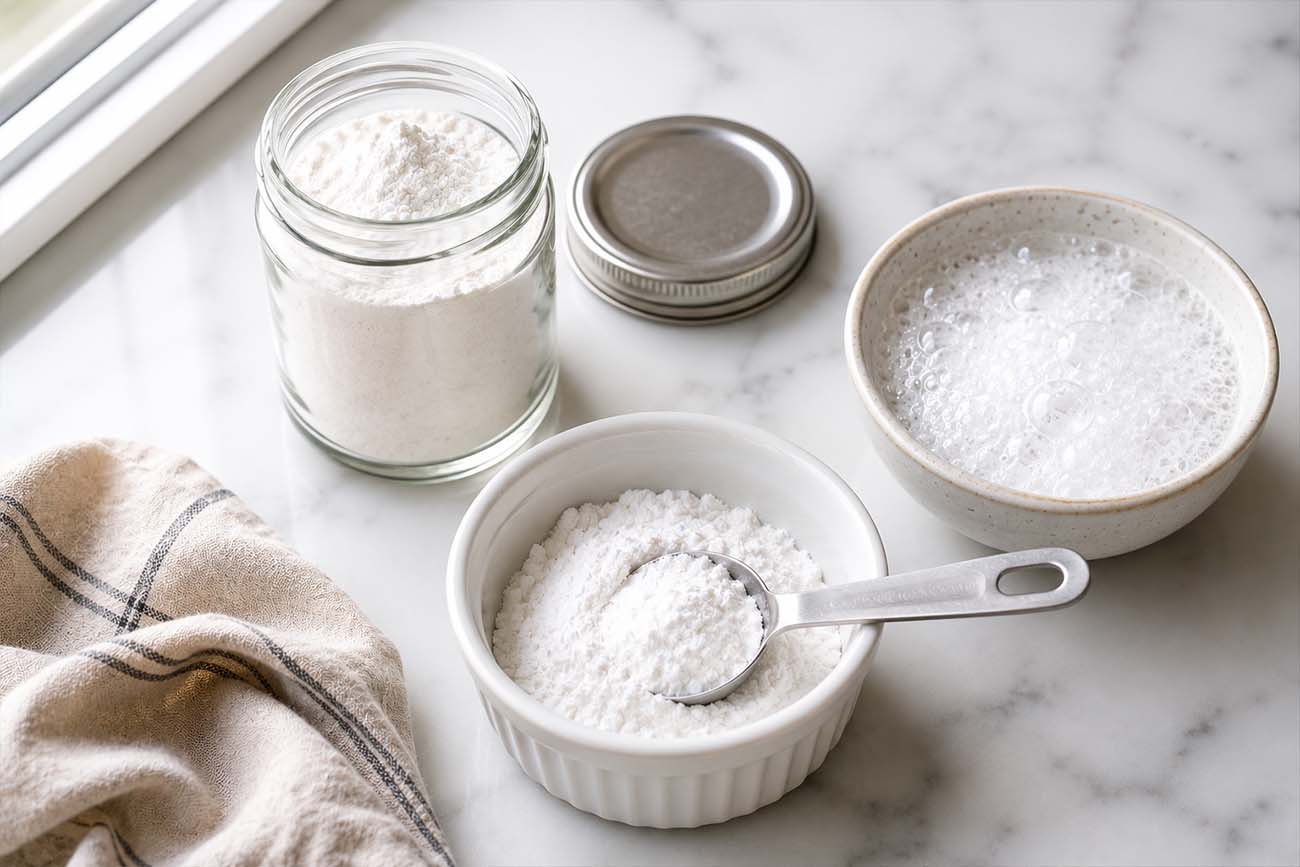
What you need: 1/2 teaspoon cream of tartar, 1/4 teaspoon baking soda, 1/2 cup warm water, a small bowl.
What to do: Combine the cream of tartar and baking soda in the bowl, then pour the warm water over them and stir gently.
What to look for: Active cream of tartar with sufficient acidity will produce an immediate, vigorous fizz as it reacts with the baking soda to release carbon dioxide. The reaction should be obvious and quick.
What weak or no fizzing means: A slow, weak reaction or no reaction indicates the cream of tartar has lost significant acidity. It may still be safe to consume but will not perform reliably in recipes that depend on its acid function.
For egg white stabilization specifically: The fizz test checks acid-base reactivity but does not perfectly predict meringue performance. If you are making a high-stakes meringue or macaron, compare a small test batch using the older cream of tartar against the expected result. If the egg white foam deflates quickly or fails to hold stiff peaks, replace the cream of tartar.
Note: The test is the same reaction used in commercial baking powder. If you have fresh baking soda and the fizz is weak, the issue is the cream of tartar’s acidity, not the baking soda.
Signs That Cream of Tartar Has Gone Bad
What to Check Before Using
Clumping (usually not a problem): Small soft clumps form when cream of tartar absorbs trace moisture from the air. Break them up with a fork, a sieve, or a spice grinder. Once the powder is loose again, it is usable. Test the potency if it has been clumped for a long time, as significant moisture exposure can accelerate acidity loss.
Large hard lumps (test before using): Dense, rock-hard masses indicate substantial moisture exposure over time. The powder can still be broken up and tested, but the potency test is important before trusting it in a precision recipe.
Discoloration (discard): Pure cream of tartar is white. Yellow, gray, or brown discoloration indicates contamination, either from moisture damage, heat exposure, or cross-contamination from other substances. Discolored cream of tartar should be discarded.
Mold (discard immediately): Mold in cream of tartar is rare because its water activity is too low to support growth under normal storage. If liquid has been introduced directly, mold can develop. Any visible fuzzy growth means discard the entire container without attempting to scoop around it.
Off smell: Fresh cream of tartar has a faintly sour or neutral odor. A strong, sharp, or unusual smell is uncommon and suggests contamination. If something smells distinctly wrong, discard it.
The fizz test fails: This is the most practical and reliable indicator of whether cream of tartar is still worth using for baking. Appearance and smell alone cannot assess potency.
How to Store Cream of Tartar
Storage Best Practices
Airtight container in a cool, dry pantry. Cream of tartar stores exactly like baking powder: sealed, away from heat, steam, and direct light. A glass jar with a rubber gasket lid or a small airtight spice container works well. If it came in a paper packet, transfer it to a jar immediately.
Never store above the stove, oven, or dishwasher. Heat and steam from cooking accelerate moisture absorption and potency loss. A cabinet on the opposite side of the kitchen from the stove is the ideal location.
Always use a dry measuring spoon. A wet spoon dipped into cream of tartar introduces the moisture that triggers clumping and gradual potency loss. Keep a dedicated dry spoon nearby or dry any spoon completely before scooping.
Do not refrigerate. Refrigerating cream of tartar introduces condensation every time the jar is moved from cold to room temperature, which is exactly the moisture exposure that degrades it. A sealed pantry container is the correct storage method.
Label with the opening date. Cream of tartar in a spice jar gives no visual clue about how old it is. A piece of tape with the date you opened or purchased it takes five seconds and eliminates guesswork.
Buy in small quantities if you bake infrequently. Cream of tartar is used in small amounts: typically 1/8 to 1/4 teaspoon per egg white in meringue, 2 teaspoons per cup of flour in homemade baking powder, and a pinch or two in candy. A standard spice jar lasts most home bakers many years. Buying small quantities ensures freshness without needing to test every time.
Cream of Tartar Substitutes When Yours Has Gone Bad
If the fizz test fails and you do not have a replacement, there are workable substitutes depending on what you are making:
For stabilizing egg whites: A few drops of white vinegar or lemon juice (about 1/4 teaspoon per egg white) can substitute in a pinch, though the stabilizing effect is somewhat weaker than cream of tartar.
For leavening (homemade baking powder): Use commercial baking powder directly. One teaspoon of commercial baking powder replaces 1/4 teaspoon baking soda plus 1/2 teaspoon cream of tartar.
See also

For preventing sugar crystallization: A small amount of corn syrup (about 1 tablespoon per cup of sugar) or a few drops of lemon juice added to the sugar syrup can substitute for cream of tartar’s crystallization-preventing function in candy.
Recipes and Baking Uses
- French Macarons: cream of tartar stabilizes the egg whites that give macarons their shell and feet. Potency matters here more than in almost any other recipe.
- Vanilla Bean Creme Brulee: the caramelized sugar topping is where sugar crystallization prevention becomes relevant
- White and Dark Chocolate Chip Cookies: some cookie recipes use cream of tartar for a slight tang and chewier texture
- Does Baking Powder Go Bad?: cream of tartar is the acid component in homemade baking powder, so its potency directly affects homemade baking powder performance
- Does Baking Soda Go Bad?: baking soda is the base that cream of tartar reacts with in both the potency test and in recipes
- Does Sugar Go Bad?: cream of tartar prevents sugar crystallization, so both ingredients are linked in candy and frosting work
Frequently Asked Questions
Can I use cream of tartar past its expiration date?
Yes, in most cases. The best-by date on cream of tartar is a quality estimate, not a safety cutoff. The USDA classifies it as a shelf-stable dry good that remains safe well past label dates. Cream of tartar stored in a cool, dry, airtight container is often still effective years past its printed date. Run the baking soda fizz test to confirm potency before using in a precision recipe like meringue or homemade baking powder.
How do I test cream of tartar to see if it is still good?
Combine 1/2 teaspoon of cream of tartar with 1/4 teaspoon of baking soda in a small bowl. Add 1/2 cup of warm water and stir. Active cream of tartar with sufficient acidity will produce an immediate, vigorous fizz. Weak or no reaction indicates the cream of tartar has lost significant acidity and should be replaced for precision baking tasks. This test works because it replicates the exact acid-base reaction cream of tartar performs in recipes alongside baking soda.
What is cream of tartar made from?
Cream of tartar is potassium bitartrate, a natural byproduct of winemaking. During grape fermentation, tartaric acid from the grapes combines with potassium to form potassium bitartrate crystals that deposit on the interior walls of wine barrels. These crystals are collected, refined, and ground into the fine white powder sold in spice aisles. Despite the name, it contains no cream or dairy.
Why did my meringue fail? Could it be the cream of tartar?
Yes, weak cream of tartar is one possible cause of failed meringue. If your egg white foam deflated quickly, produced soft peaks instead of stiff ones, or wept liquid after a short time, the cream of tartar may not have had enough acidity to stabilize the protein network in the egg whites. Other causes include traces of fat in the bowl or utensils (which also destabilize egg whites), egg yolk in the whites, or humidity during baking. Run the fizz test on your cream of tartar and replace it if the reaction is weak, then try again with a clean, fat-free bowl.
What can I substitute for cream of tartar?
The right substitute depends on what function cream of tartar is serving in the recipe. For stabilizing egg whites, use 1/4 teaspoon of white vinegar or lemon juice per egg white. For leavening alongside baking soda, use commercial baking powder instead: 1 teaspoon of baking powder replaces 1/4 teaspoon baking soda plus 1/2 teaspoon cream of tartar. For preventing sugar crystallization in candy, add 1 tablespoon of corn syrup per cup of sugar or a few drops of lemon juice to the syrup. No single substitute works perfectly for all three functions, which is why having fresh cream of tartar on hand is the better solution.
Is cream of tartar the same as baking powder?
No, but cream of tartar is an ingredient in homemade baking powder. Baking powder is a pre-mixed combination of an acid (often cream of tartar or sodium aluminum sulfate), a base (baking soda), and cornstarch. Cream of tartar by itself is just the acid component. When you combine 2 teaspoons of cream of tartar with 1 teaspoon of baking soda you produce a single-acting equivalent to commercial baking powder without the cornstarch or aluminum. See our companion post Does Baking Powder Go Bad? for more on how commercial baking powder works and its shelf life.
My cream of tartar has small clumps. Is it still good?
Yes, small soft clumps are not a reason to discard cream of tartar. Clumping happens when the powder absorbs trace moisture from the air, causing the fine particles to stick together. Break up the clumps with a fork, press through a fine mesh sieve, or pulse briefly in a spice grinder. Once the powder is loose again it can be used normally. If the clumps are very hard and dense, run the fizz test to confirm potency before using in a precision recipe.
Can cream of tartar make you sick?
No, cream of tartar will not make you sick in the amounts used in baking. It is a food-safe compound used in small quantities, typically a pinch to 1 teaspoon per recipe. Old or degraded cream of tartar will not make you sick. It simply may not perform its baking function reliably. Very large quantities of potassium bitartrate consumed directly could theoretically cause digestive discomfort, but this is not relevant to normal baking use.
How much cream of tartar do I use?
For stabilizing egg whites: 1/8 to 1/4 teaspoon per egg white. For homemade baking powder: 2 teaspoons cream of tartar combined with 1 teaspoon baking soda equals approximately 3 teaspoons (1 tablespoon) of baking powder. For preventing sugar crystallization in candy: a pinch to 1/4 teaspoon per cup of sugar in the syrup. For adding a slight tang to cookies: 1/4 to 1/2 teaspoon per standard cookie batch. More is not better in any of these applications: excess cream of tartar can leave a sour or metallic taste in finished baked goods.
Does cream of tartar need to be refrigerated?
No. Refrigerating cream of tartar is counterproductive because the cold environment causes condensation when the container is moved back to room temperature, introducing the moisture that accelerates clumping and potency loss. A sealed airtight container in a cool, dry pantry is the correct storage method, the same as baking powder and baking soda.
What else can cream of tartar be used for?
Beyond baking, cream of tartar is a mild cleaning agent for metal surfaces. Mixed with a small amount of water or lemon juice to form a paste, it cleans and polishes brass, copper, and stainless steel cookware. It can also remove discoloration from aluminum pots. Cream of tartar that is past its baking usefulness but otherwise undamaged (no mold, no discoloration) is still usable for these cleaning applications.
Is cream of tartar gluten free?
Yes. Cream of tartar is pure potassium bitartrate, a crystalline acid salt with no gluten-containing ingredients. It is naturally gluten free and safe for people with celiac disease or gluten sensitivity. It is also vegan, as it is derived from grapes rather than any animal product. Always check the specific packaging if cross-contamination is a concern, as manufacturing facilities can vary, but the ingredient itself contains no gluten.
Does cream of tartar have a smell?
Fresh cream of tartar has a very faint, slightly sour or neutral odor that most people would describe as barely detectable. It does not smell like dairy despite the word “cream” in its name. Cream of tartar contains no milk or dairy products. If yours has a strong, sharp, or distinctly off odor, that suggests contamination rather than normal aging. Potency loss in cream of tartar does not produce a detectable smell change, which is why the fizz test is more reliable than sniffing it to assess freshness.
Can cream of tartar substitute for buttermilk?
Yes, with limitations. A common substitution is 1 cup of whole milk plus 1 3/4 teaspoons of cream of tartar, stirred and allowed to sit for 10 minutes to slightly curdle and thicken. This replicates the acidity of buttermilk and activates baking soda in recipes the same way buttermilk would. The result is thinner than true buttermilk and may produce a slightly different texture in baked goods. For recipes where buttermilk’s tang and thickness matter most, such as pancakes or biscuits, a half-and-half and acid substitute or plain yogurt thinned with milk tends to produce better results than the cream of tartar method.
Further Reading
Better Living may earn commissions through affiliate links and may occasionally feature sponsored or partner content. If you make a purchase through our links, we may receive a small commission at no cost to you.