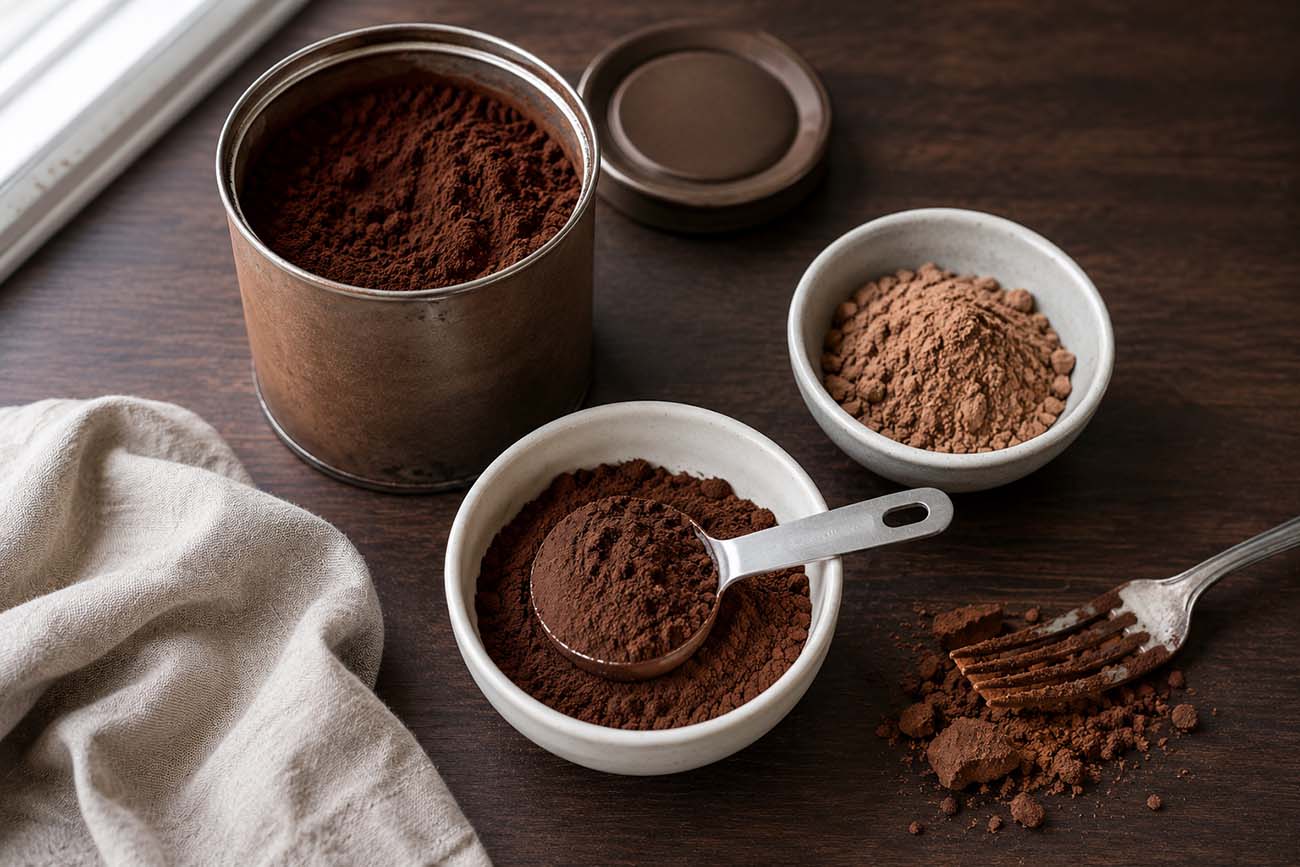
You open the pantry and find a tin of cocoa powder with a best-by date from two years ago. Or you have a half-used container that has been sitting in a cabinet since last winter. Before you throw it out or use it and wonder why your brownies taste flat, there is a better approach.
Does cocoa powder go bad?
The short answer: Cocoa powder does not go bad in any food safety sense under normal storage conditions. Its extremely low moisture content prevents bacterial and mold growth. What cocoa powder does over time is lose flavor, aroma, and depth. Unopened cocoa powder keeps its best quality for 2 to 3 years. Opened cocoa powder is best within 1 to 3 years depending on storage conditions. America’s Test Kitchen tested expired cocoa powder and found it still usable as long as it passes a simple smell and taste check. The real enemies are moisture, heat, and air.
For a full overview of how baking staples compare on shelf life, visit our Complete Food Storage Guide.
📋 Cocoa Powder: At a Glance
- Unopened cocoa powder: best quality for 2 to 3 years. Safe well beyond that if stored properly.
- Opened cocoa powder: best within 1 to 3 years. Quality gradually declines; safety is not the concern.
- Natural vs. Dutch-process cocoa: same shelf life for practical purposes. Dutch-process is alkalized and darker; natural is more acidic and lighter. Store both the same way.
- It does not truly expire in a food safety sense. Low moisture prevents microbial growth under normal storage.
- What actually goes wrong: faded flavor and aroma, rancid cocoa butter from heat exposure, mold from moisture, absorbed off-odors from poor storage.
- The test is simple: smell it and taste a small amount. Rich chocolate aroma and flavor means it is still good. Flat, stale, or rancid means replace it.
Key Takeaways
- Cocoa powder is shelf-stable. The USDA classifies it as a dry pantry staple. Its low moisture content keeps bacteria and mold from growing under normal conditions.
- Flavor loss is the main issue, not food safety. Old cocoa produces flat, weak chocolate flavor in recipes. It will not make you sick.
- Best-by dates on cocoa powder are quality estimates. America’s Test Kitchen found cocoa powder usable past its expiration date as long as it smells and tastes right.
- Natural and Dutch-process cocoa behave differently in recipes because of pH, but both have the same shelf life and storage requirements.
- Moisture is the only serious spoilage risk. Cocoa powder exposed to steam or a wet spoon can develop mold. Keep it dry and sealed.
- Taste it before committing to a full recipe. A pinch on the tongue tells you more than the date on the can.
How Long Does Cocoa Powder Last?
Cocoa powder’s shelf life is long because it is an extremely dry powder with very little remaining fat or moisture after processing. Most of the cocoa butter is pressed out during manufacturing, leaving a concentrated, low-fat powder that resists microbial growth the same way other dry pantry staples do.
| Cocoa Powder Status | Best Quality | Still Usable |
|---|---|---|
| Unopened, properly stored | 2 to 3 years from production | Often years beyond if dry and sealed |
| Opened, airtight container, cool pantry | 1 to 3 years | Beyond if it passes smell and taste test |
| Opened, loosely sealed or near heat | Quality degrades faster | Test before using; may be rancid or stale |
| Exposed to moisture or steam | Compromised | Discard if mold is visible |
Shelf life guidance based on manufacturer quality standards and testing by America’s Test Kitchen, which confirmed that cocoa powder past its best-by date is still usable when it passes smell and taste checks. The USDA classifies cocoa powder as a shelf-stable pantry item. Best-by dates reflect quality, not safety.
Why Cocoa Powder Lasts So Long
The Processing Behind the Shelf Stability
Cocoa powder is made from cacao beans that have been fermented, roasted, and ground into a paste called chocolate liquor. Most of the fat (cocoa butter) is then pressed out, leaving a dry cake that is pulverized into powder. This process removes most of the moisture and the majority of the fat, producing a powder that is hostile to the microbial growth that spoils most foods.
What remains in cocoa powder is concentrated cocoa solids: natural compounds including flavonoids, theobromine, caffeine, and a small amount of residual cocoa butter fats. These compounds give cocoa its flavor and aroma, and they are the elements that degrade over time.
Natural cocoa powder retains its original acidity (pH around 5 to 6) and has a lighter color and sharper, more intense chocolate flavor. Dutch-process cocoa has been treated with an alkali to neutralize the acidity, producing a darker color, smoother flavor, and reduced acidity. Both have the same practical shelf life and the same storage requirements, though they behave differently in recipes because of the pH difference. Natural cocoa works with baking soda (it provides the acid). Dutch-process cocoa requires baking powder because it is pH-neutral.
The residual cocoa butter fats are the shelf life variable. In a warm or humid environment, these fats can oxidize and go rancid, producing an off smell. This is the mechanism behind cocoa powder that smells stale or flat even when it shows no mold.
Natural vs. Dutch-Process Cocoa: Does It Matter for Shelf Life?
Both natural and Dutch-process cocoa powder have the same practical shelf life of 2 to 3 years unopened and 1 to 3 years opened when stored correctly. The alkalization process in Dutch-process cocoa does slightly reduce its antioxidant content compared to natural cocoa, but this does not meaningfully affect how long it stays usable in baking.
The critical distinction for shelf life is how each type should be used in recipes. They are not interchangeable without adjustments:
Natural cocoa powder is acidic and reacts with baking soda in recipes. Dutch-process cocoa is pH-neutral and does not activate baking soda, so recipes that require leavening and use Dutch-process cocoa rely on baking powder rather than baking soda. Using the wrong type in a recipe can affect rise and texture, independent of how fresh the cocoa is. If a recipe specifies natural cocoa and you use Dutch-process (or vice versa), the leavening chemistry changes even if both are perfectly fresh. See our companion posts Does Baking Soda Go Bad? and Does Baking Powder Go Bad? for more on how cocoa type affects leavening choices.
How to Tell If Cocoa Powder Has Gone Bad
What to Check Before You Bake
Smell it first. Fresh cocoa powder has a rich, deep chocolate aroma. If it smells flat, musty, stale, or has any rancid or off notes, the flavor compounds have degraded. Cocoa with a noticeably diminished smell will produce weak, flat chocolate flavor in your recipes. This is the most reliable test.
Taste a small amount. Rub a pinch between your fingers and taste it. Fresh cocoa should have a bitter, intense chocolate flavor. Stale cocoa tastes flat and weak with no bitterness depth. Rancid cocoa has an off, almost waxy or sour flavor from oxidized fats. America’s Test Kitchen recommends tasting cocoa before using in recipes: if the flavor is present and recognizable, use it; if it is flat or off, replace it.
Check for mold. Any visible fuzzy growth, dark spots, or unusual discoloration means discard immediately. Mold in properly stored dry cocoa is rare, but it can develop when moisture has been introduced through a wet spoon, steam from nearby cooking, or storage in a humid environment.
Look for hard clumps. Small soft clumps from humidity are normal and can be broken up. Dense, hard clumps that do not break easily indicate significant moisture exposure. Break them up and taste the powder; if it smells and tastes normal, it is still usable. If there is any mold within the clumps, discard the entire container.
Check the color. Natural cocoa should be a medium-dark brown. Dutch-process should be dark brown to near-black. A significant color shift, such as obvious lightening, graying, or unusual patches, combined with an off smell indicates degradation beyond normal fading.
Absorbed odors. Cocoa powder absorbs surrounding odors readily. Cocoa stored near strong-smelling spices, onions, or cleaning products can pick up those flavors and transfer them to your baked goods. If your cocoa smells like something it should not, discard it.
How to Store Cocoa Powder Properly
Storage Best Practices
Airtight container in a cool, dry, dark pantry. Transfer cocoa from its original packaging to an airtight container if the original tin or bag does not reseal well. Glass jars with tight lids or food-grade plastic containers with locking seals work well. The ideal storage temperature is 60 to 70°F. Avoid storing near the oven, stove, dishwasher, or any heat source.
Keep away from steam and moisture. Never measure cocoa directly over a boiling pot or humid area. Steam introduced into a cocoa container starts the moisture chain that leads to clumping and potential mold. Use a dry spoon every time.
Keep away from light. Direct sunlight accelerates the oxidation of cocoa’s natural fats and flavor compounds. A closed cabinet or pantry is ideal. Avoid storing in clear containers on a sunny counter.
Store away from strong-smelling foods. Cocoa absorbs odors readily. Keep it away from onions, garlic, spices, and cleaning products. A dedicated baking shelf with similar dry goods is the best location.
Label with the opening date. Cocoa powder in a container shows no visual clue about age. Write the date you opened it on the container or a piece of tape. This removes guesswork when you return to it months later.
Refrigerating or freezing is generally not recommended. The refrigerator and freezer environments introduce condensation risks every time the container is moved to room temperature. For normal household quantities used within 1 to 3 years, a cool pantry is better storage than cold appliances. If you buy cocoa in very large quantities for long-term storage, freezing in a completely airtight rigid container is possible, but bring to room temperature before opening to prevent condensation.
What Happens When You Bake with Old Cocoa Powder
Old cocoa powder that has lost flavor but not gone rancid or moldy produces baked goods that taste noticeably less chocolatey than they should. The color may be similar, but the depth of flavor is reduced. This is the most common complaint from bakers who use old cocoa: brownies that look right but taste flat, hot chocolate that is weak and watery-tasting, cakes that lack the chocolate depth the recipe promises.
If you are baking something where chocolate flavor is the star, such as a flourless chocolate cake, a classic brownie, or dark hot chocolate, use fresh cocoa for the best result. For recipes where cocoa is a background note, such as a mole sauce or a spiced cookie with minimal cocoa, slightly older cocoa that still passes the smell and taste test will likely be undetectable.
Recipes That Use Cocoa Powder
Frequently Asked Questions
Can I use cocoa powder past its expiration date?
Yes, in most cases. America’s Test Kitchen confirmed that cocoa powder past its best-by date is still usable as long as it smells and tastes right. The best-by date reflects peak quality, not a safety deadline. Cocoa powder stored properly in a cool, dry, airtight container often remains perfectly usable for a year or more past its printed date. Smell it and taste a pinch before using in a recipe. Rich chocolate aroma and flavor means proceed. Flat, stale, or rancid means replace it.
See also

How do I know if cocoa powder has gone bad?
Smell and taste it. Fresh cocoa has a rich, deep, intense chocolate aroma and a distinctly bitter flavor. Cocoa that has gone bad smells flat, musty, stale, or has a rancid off-note. A pinch tasted directly should deliver clear chocolate bitterness. If it tastes flat, weak, or off, it has degraded. Also check for visible mold (discard immediately), hard dense clumps (test potency), and any absorbed off-odors from nearby pantry items.
What is the difference between natural and Dutch-process cocoa powder?
Natural cocoa powder is acidic (pH around 5 to 6), lighter in color, and has a sharper, more intense chocolate flavor. It reacts with baking soda in recipes to provide leavening. Dutch-process cocoa has been treated with an alkali to neutralize its acidity, producing a darker color, smoother and less bitter flavor, and a pH closer to neutral. It does not activate baking soda, so recipes using it require baking powder for leavening. They are not directly interchangeable without recipe adjustments. Both have the same shelf life and storage requirements.
Does cocoa powder need to be refrigerated?
No. Refrigerating cocoa powder is not recommended for standard household quantities. The refrigerator introduces condensation every time the container is moved to room temperature, which introduces moisture and can cause clumping or mold. A cool, dry, airtight pantry is the correct storage method. The ideal temperature range is 60 to 70°F, which most kitchen pantries provide without refrigeration.
Can cocoa powder go rancid?
Yes. Cocoa powder retains a small amount of cocoa butter fats after processing. In warm or humid storage conditions, these fats can oxidize and go rancid, producing a flat, stale, or slightly waxy off-flavor. Rancid cocoa powder is not dangerous to consume but will produce noticeably inferior results in recipes. This is why storage temperature matters: cocoa kept in a cool pantry away from heat sources will outlast the same cocoa stored above the stove by years.
Does cocoa powder clump?
Yes, when it absorbs moisture from the air. Small soft clumps are common and harmless. Break them up with a fork or press through a fine mesh sieve before measuring for recipes, as clumps can affect how cocoa distributes in batters. Hard, dense clumps indicate significant moisture exposure. Break them up and taste the powder: if it smells and tastes like cocoa, it is still usable. If there is any mold within the clumps or the flavor is off, discard the container.
Can you freeze cocoa powder?
You can freeze cocoa powder, but it is generally not worth it for standard household quantities. The freezer is a humid environment, and moving a container from frozen to room temperature causes condensation that can introduce moisture into the cocoa. For very large bulk quantities stored long term, freezing in a completely airtight rigid container is possible: bring the sealed container fully to room temperature before opening to prevent condensation. For normal baking use within 1 to 3 years, a cool dry pantry is more practical and just as effective.
Is cocoa powder the same as hot cocoa mix?
No. Pure cocoa powder is unsweetened, made from pressed cocoa solids with most of the fat removed. Hot cocoa mix is a pre-sweetened blend that typically contains cocoa powder, sugar, powdered milk, and sometimes additional flavorings or marshmallow pieces. Hot cocoa mix has a shorter shelf life than pure cocoa powder because of its dairy and sugar components. The shelf life guidance in this post applies to pure unsweetened cocoa powder only. Check the packaging of any hot cocoa mix for its specific guidance.
What can I substitute for cocoa powder?
For unsweetened cocoa powder in baking, carob powder is a common caffeine-free substitute, though it has a sweeter, different flavor. Dutch-process and natural cocoa can substitute for each other with leavening adjustments: if substituting Dutch-process for natural, replace the baking soda called for with baking powder. Melted unsweetened chocolate can substitute in some recipes at roughly 1 ounce of melted chocolate per 3 tablespoons of cocoa powder, but it adds fat to the recipe. Cacao powder (made from raw, unroasted cacao) has a similar flavor profile to natural cocoa and substitutes 1:1, though it is more expensive.
Is cacao powder the same as cocoa powder?
No, though they come from the same plant. Cacao powder is made from raw, cold-pressed cacao beans that have not been roasted. It retains more of the bean’s natural enzymes, flavonoids, and nutrients but has a more bitter, earthy flavor. Cocoa powder is made from roasted cacao beans, producing a more familiar, mellow chocolate flavor. In baking, they can be substituted 1:1, but the flavor will differ slightly. Cacao powder also tends to be more expensive and is marketed primarily as a health food. Both are natural cocoa products and both have similar shelf lives when stored correctly.
Can old cocoa powder make you sick?
No, old cocoa powder that has simply lost flavor will not make you sick. Rancid cocoa powder is not dangerous to consume in normal baking amounts, though it will produce poor-tasting results. The only genuine safety concern is mold, which is rare in properly stored dry cocoa but possible if moisture has been introduced. Any cocoa powder with visible mold should be discarded. Old cocoa without mold, even if flat and stale, is not a food safety risk.
What can I do with expired cocoa powder?
Cocoa powder past its best-by date but free of mold and rancidity can still be used in recipes where chocolate is a background flavor rather than the star: spice rubs for meat, chili and mole sauces, overnight oats, smoothies, and lightly cocoa-flavored quick breads. It also works as a non-edible cocoa dusting for baking pans as a substitute for flour when making chocolate cakes. Rancid or moldy cocoa should be discarded rather than repurposed, as the off-flavors will come through in food and the mold risk is genuine.
Does black cocoa powder go bad?
Black cocoa powder goes bad on the same timeline as any Dutch-process cocoa powder: best quality for 2 to 3 years unopened and 1 to 3 years opened. Black cocoa is Dutch-process cocoa that has been alkalized to an extreme degree, producing its characteristic near-black color and very mild, Oreo-like flavor. Because it is even lower in residual fat and acidity than standard Dutch-process, it is actually somewhat more stable than natural cocoa. Store it the same way: sealed airtight container, cool dry pantry, away from heat and moisture.
How long does Hershey’s cocoa powder last?
Hershey’s cocoa powder follows the same shelf life guidelines as all commercial cocoa powder: best quality within 2 to 3 years of production for the classic unsweetened version, and within 1 to 3 years after opening when stored in a cool, dry place in an airtight container. Hershey’s Special Dark is a Dutch-process blend and has the same shelf life. America’s Test Kitchen tested old cocoa powder and found it still usable past its date when it passes a smell and taste check. If it smells and tastes like rich chocolate, it is still good regardless of the date on the can.
Further Reading
Better Living may earn commissions through affiliate links and may occasionally feature sponsored or partner content. If you make a purchase through our links, we may receive a small commission at no cost to you.