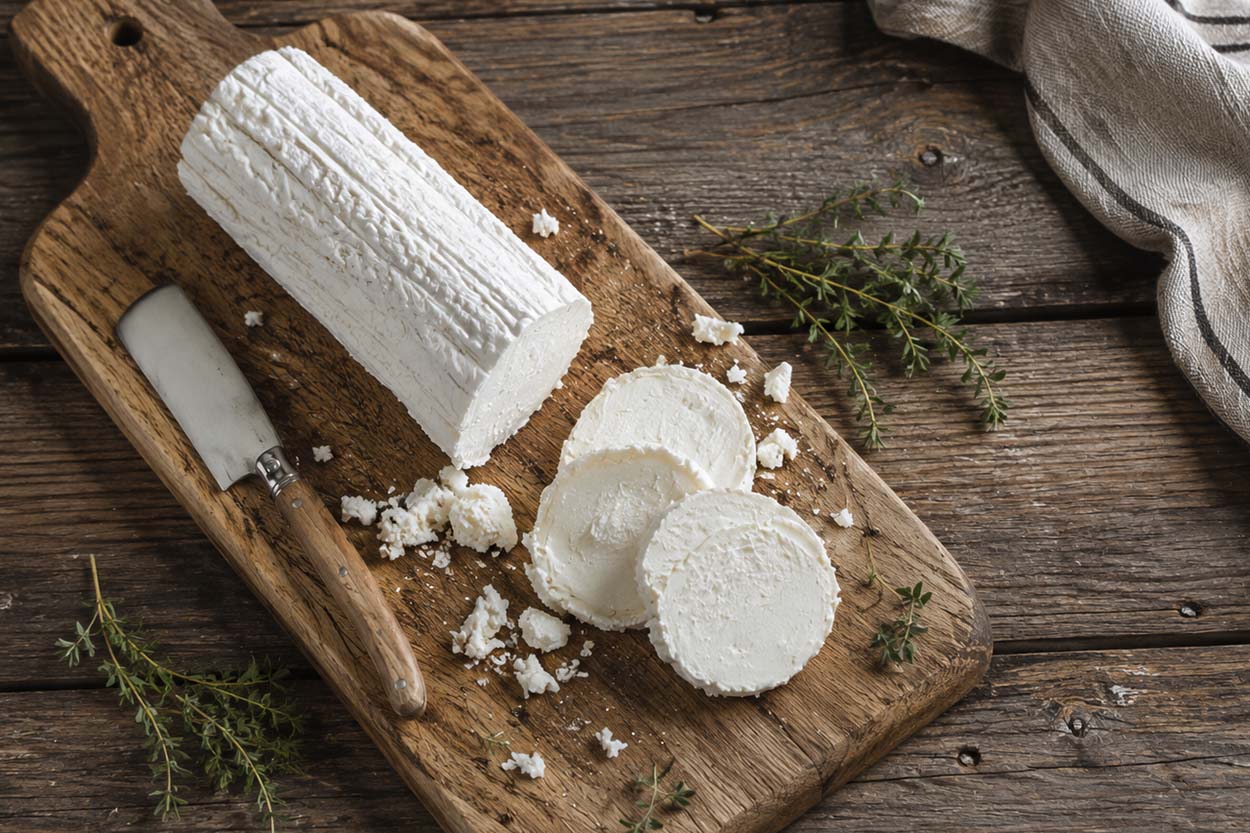
That log of goat cheese in the fridge, the one left over from a salad or a cheese board, doesn’t behave quite like other cheeses. Its short shelf life isn’t really about the goat’s milk itself, similar to how ricotta spoils faster than an aged wheel of parmesan. It’s about moisture, and that same moisture is exactly why goat cheese deserves a bit more attention than a block of cheddar.
Does goat cheese go bad?
The short answer: Yes, and fresh goat cheese (chèvre) goes bad faster than most cheeses because of its high moisture content. Vermont Creamery, a major US producer, recommends using fresh goat cheese within 5 to 7 days of opening. Aged and hard goat cheeses last considerably longer, often several weeks, because their lower moisture content slows spoilage. The more important safety issue isn’t age at all. Soft cheeses made from unpasteurized milk carry a real Listeria risk, one the FDA and CDC specifically warn pregnant people, older adults, and people with weakened immune systems about.
For general dairy storage rules, check the food storage guide. If you’re storing other soft cheeses, the cream cheese and cottage cheese guides cover related ground.
📋 Does Goat Cheese Go Bad: At a Glance
| Fresh (chèvre), unopened | Good until the sell-by date, sealed |
| Fresh (chèvre), opened | 5 to 7 days, refrigerated |
| Aged or hard goat cheese, opened | 2 to 4 weeks, refrigerated |
| Frozen | Possible, but texture suffers |
| Biggest real risk | Listeria in soft, unpasteurized cheese |
| Higher-risk groups | Pregnant people, older adults, immunocompromised |
| Mold on fresh goat cheese | Discard the whole piece, don’t trim |
Key Takeaways
- Fresh, soft goat cheese has a short window: about 5 to 7 days after opening, per Vermont Creamery’s own guidance.
- Aged, harder goat cheeses last significantly longer, generally 2 to 4 weeks once opened, because they hold much less moisture.
- By US law, any fresh cheese aged less than 60 days must be made from pasteurized milk, which is why most goat cheese sold in American grocery stores is pasteurized by default.
- The real safety concern is Listeria monocytogenes, a bacterium that, unlike most foodborne pathogens, can keep growing at refrigerator temperatures.
- Pregnant people, older adults, and anyone immunocompromised are specifically advised by the FDA and CDC to avoid unpasteurized soft cheese, or to cook it to 165°F until steaming hot.
- Mold on fresh, high-moisture goat cheese is a discard-it situation. It isn’t the same as mold on a hard aged cheese, which can sometimes be cut away safely.
Why Goat Cheese Spoils Differently Than Other Cheeses
The science: moisture, not the type of milk, drives the timeline
Fresh goat cheese is a soft, high-moisture cheese, and moisture is what allows spoilage organisms to establish themselves quickly, the same reason fresh mozzarella spoils faster than a dry, aged cheese. Aged and hard goat cheeses go through a different process: moisture is deliberately drawn out over weeks or months. That’s exactly why a block of aged goat gouda behaves more like cheddar or parmesan than like a soft chèvre log. This distinction, fresh versus aged, matters more for shelf life than whether the cheese happens to be made from goat’s milk versus cow’s milk.
The safety story is separate from spoilage and worth understanding on its own terms. CDC research on soft cheese describes Listeria monocytogenes as a bacterium that can grow at refrigeration temperatures, unlike most foodborne pathogens that need warmth to multiply. The same research found the risk of listeriosis per serving to be 50 to 160 times greater for soft cheese made from unpasteurized milk than from pasteurized milk. Pasteurization status, not how long the cheese has been in the fridge, is the more important safety question for soft goat cheese specifically.
How Long Goat Cheese Actually Lasts
Fresh, soft goat cheese (chèvre)
An unopened log or tub is good until the printed sell-by date if kept sealed and refrigerated. Once opened, Vermont Creamery’s own guidance recommends using fresh goat cheese within 5 to 7 days, noting that mold can appear on the surface around that same timeframe depending on handling. Rewrap any unused portion tightly in plastic wrap rather than leaving the original packaging open, and keep it in the coldest part of the fridge rather than the door.
Warning: check the label for “pasteurized”
Per FoodSafety.gov, soft, mold-ripened, and unheated fresh cheeses made from unpasteurized milk are a specific listed risk for pregnant people, in addition to older adults and anyone with a weakened immune system. Most goat cheese sold in US grocery stores is pasteurized by default, since federal law requires it for any fresh cheese aged less than 60 days, but imported or farmstead varieties can be an exception. If the label doesn’t say “pasteurized,” don’t assume it is, and either avoid it or cook it to 165°F until steaming hot.
Aged and hard goat cheese
Aged goat cheeses, the kind sold in wedges with a firmer texture or a developed rind, hold up considerably longer: generally 2 to 4 weeks once opened, similar in pattern to parmesan or other aged hard cheeses. Wrap it in wax or parchment paper first, then a layer of plastic wrap or a partially sealed bag, which lets the cheese breathe slightly while still protecting it from drying out.
See also

Tip: bloomy-rind goat cheese is meant to keep changing, but treat it with extra care
Soft, mold-ripened goat cheeses with a wrinkled or bloomy rind, made with a culture called geotrichum, are often packaged in perforated wrapping specifically so the cheese can keep breathing and ripening on its way to your fridge. That evolving texture and stronger flavor over time is expected, not a sign of spoilage, as long as the rind looks like the cheese’s normal rind rather than showing unexpected colors. Worth knowing separately: soft, mold-ripened cheeses like this are called out by name in pregnancy food-safety guidance as a higher-scrutiny category, even when pasteurized, because the moist rind can support Listeria growth if the cheese is contaminated after pasteurization during aging. The FDA considers pasteurized versions safe; some other national health bodies recommend cooking them until steaming hot regardless of pasteurization for extra caution. If you’re pregnant, immunocompromised, or serving someone who is, this is one to be more careful with than a plain fresh log.
Signs it’s actually gone bad
For fresh, soft goat cheese, any visible mold means the entire piece should be discarded, not trimmed around. Unlike a dense block of aged cheese, soft cheese has enough moisture for mold to spread through it in ways you can’t see from the surface. A sour, ammonia-like, or otherwise sharply off smell beyond the cheese’s normal tang, noticeable sliminess, or a change to a dull, grayish color are all reasons to toss it. For aged, harder goat cheeses, small spots of surface mold can sometimes be cut away with at least an inch of margin, similar to the approach for other hard cheeses, though when in doubt, the safer move is to discard the piece.
Freezing goat cheese
Freezing is possible but changes the texture noticeably, especially for fresh, soft goat cheese, which tends to turn crumbly and watery once thawed. It’s a reasonable option if you plan to cook with the thawed cheese, in a sauce, dip, or baked dish, rather than serve it plain on a cheese board. Wrap it tightly, thaw it in the refrigerator, and expect the texture to be noticeably softer and less spreadable than it was fresh.
| Type & Storage | Shelf Life |
|---|---|
| Fresh goat cheese, unopened | Until the sell-by date, sealed |
| Fresh goat cheese, opened | 5 to 7 days |
| Aged or hard goat cheese, opened | 2 to 4 weeks |
| Bloomy-rind, soft-ripened goat cheese | Continues to ripen; use within about 1 to 2 weeks of opening |
| Frozen | 2 to 3 months; texture becomes crumbly |
Frequently Asked Questions
How long does goat cheese last after opening?
Fresh, soft goat cheese lasts about 5 to 7 days once opened, per Vermont Creamery’s own guidance. Aged or hard goat cheese lasts considerably longer, typically 2 to 4 weeks, because it holds much less moisture.
Is goat cheese safe during pregnancy?
It depends entirely on whether it’s pasteurized. Per the FDA and CDC, pregnant people should avoid soft, unheated cheeses made from unpasteurized milk due to Listeria risk, but pasteurized goat cheese, which is most goat cheese sold in US stores, is considered safe. When in doubt, check the label for the word “pasteurized” or cook the cheese to 165°F until steaming hot.
Is all goat cheese pasteurized?
Most is, but not automatically. By US law, any fresh cheese aged less than 60 days must be made from pasteurized milk, which covers the soft chèvre-style logs found in most grocery stores. Imported cheeses, artisanal farmstead products, or cheeses aged 60 days or more can sometimes be made from raw milk, so it’s worth checking the label rather than assuming.
Can refrigeration alone make goat cheese safe from Listeria?
No, and this is the most important thing to understand about Listeria specifically. Unlike most bacteria that cause food poisoning, Listeria monocytogenes can continue growing slowly even at normal refrigerator temperatures. Proper refrigeration still slows it down and matters for overall food safety, but it isn’t a substitute for choosing pasteurized cheese or cooking an unpasteurized one thoroughly.
What does spoiled goat cheese look, smell, or taste like?
Visible mold on fresh, soft goat cheese, a sour or ammonia-like smell beyond its normal tang, a slimy texture, or a dull grayish color are the real signs. Fresh goat cheese is naturally tangy, so mild tartness alone isn’t a spoilage sign.
For fresh, soft goat cheese, no. Its high moisture content lets mold spread through the cheese in ways that aren’t visible on the surface, so the whole piece should be discarded. For aged, harder goat cheese, small surface mold spots can sometimes be cut away with a wide margin, similar to other hard aged cheeses, though this doesn’t apply to bloomy-rind or soft-ripened styles.
Does goat cheese need to be refrigerated?
Yes, always, whether it’s fresh or aged. Goat cheese can sit out safely for the length of a meal or a cheese board, generally an hour or two, but shouldn’t be left unrefrigerated for extended periods. Vermont Creamery recommends letting fresh and aged goat cheeses sit at room temperature for 30 minutes to an hour before serving for the best flavor and texture, which is different from safe long-term storage.
Can you freeze goat cheese?
Yes, though the texture changes, especially for fresh, soft varieties, which tend to become crumbly and release moisture after thawing. It’s better suited to cooking into a sauce, dip, or baked dish afterward than to serving plain. Aged, harder goat cheese generally freezes a bit better than fresh chèvre.
If it’s still sealed, unopened, and shows no signs of spoilage, it’s often still fine shortly past the date, similar to how many foods last a bit past their printed date. Once opened, follow the 5 to 7 day window for fresh cheese rather than relying on the printed date, since that date assumes the package stays sealed.
Why does goat cheese taste different from batch to batch?
Per Vermont Creamery, goat’s milk flavor is heavily influenced by what the goats eat and their environment, which shifts with the season and location of the source farms. That’s a normal characteristic of goat cheese, not a sign that anything is wrong with a particular batch.
Is soft-ripened or bloomy-rind goat cheese safer than fresh chèvre?
Not necessarily, and it’s actually the category to be more cautious with. Both need to be pasteurized to meet the FDA’s safety standard, but soft, mold-ripened cheeses with a bloomy or wrinkled rind are specifically named in pregnancy and food-safety guidance as a higher-scrutiny category, since the moist rind can support Listeria growth if the cheese picks up contamination after pasteurization during the aging process. The FDA treats pasteurized versions as safe; some other countries’ health guidance recommends cooking them until steaming hot regardless of pasteurization status. If you’re in a higher-risk group, that extra caution is worth following even for a pasteurized product.
Often, yes, though the tang and texture will shift the result slightly. Fresh goat cheese is softer and more acidic than cream cheese, and creamier with less bite than feta, so it works well swapped into dips, spreads, and salads like a strawberry pecan salad. It’s less of a direct swap for cooking applications like baked cheese dips that rely on a specific melt.
Further Reading
A fresh log of goat cheese earns its keep well beyond a cheese board. Crumble it over a strawberry pecan salad, fold it into a crustless veggie quiche, stuff it into gluten-free stuffed mushrooms or over portobello mushroom steaks, stir it into couscous salad, blend it into spinach artichoke dip, or set it out as part of a Greek meze board or Mediterranean food basket.
Better Living may earn commissions through affiliate links and may occasionally feature sponsored or partner content. If you make a purchase through our links, we may receive a small commission at no cost to you.