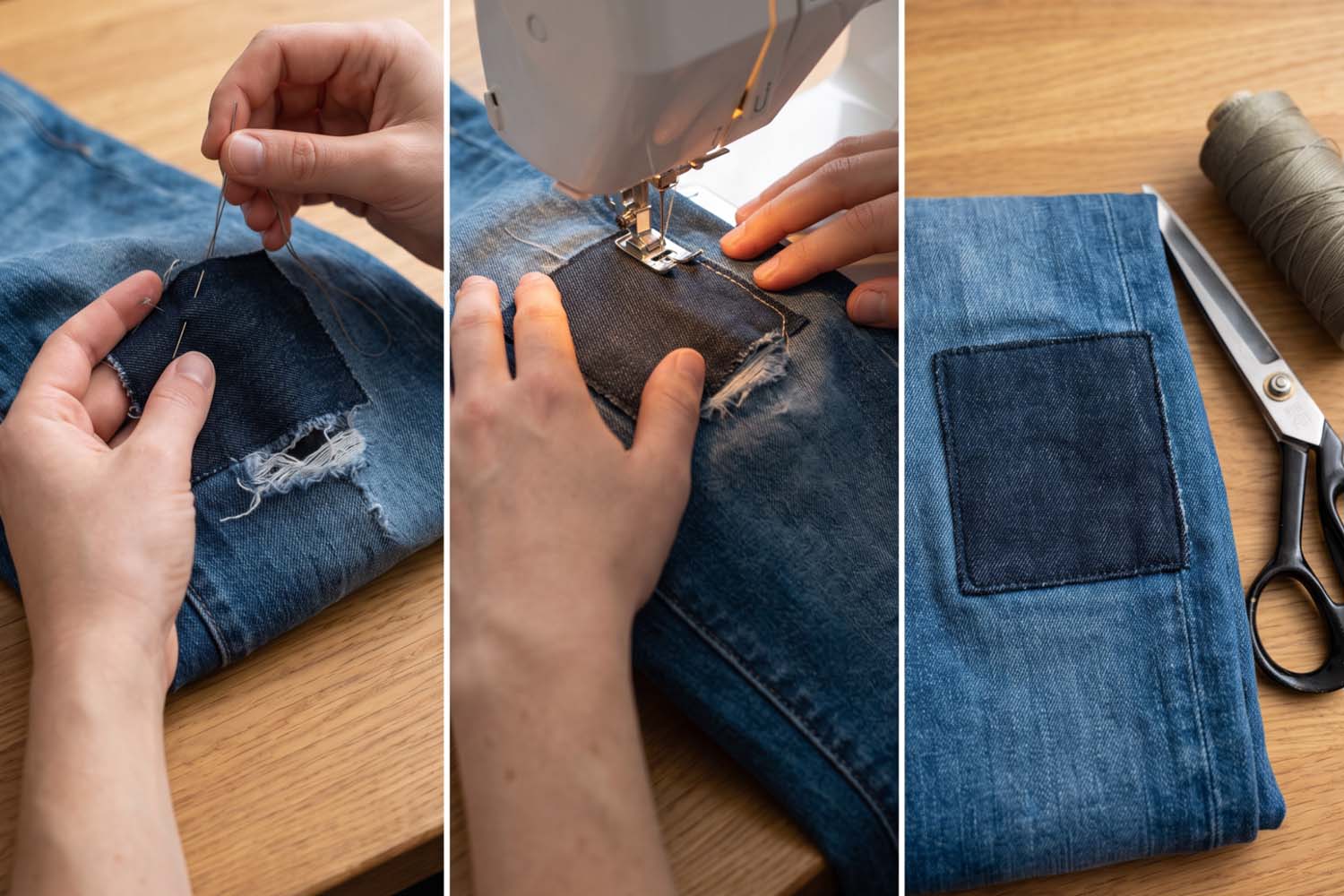
One hole. That is usually all it takes to retire a favorite pair of torn jeans, long before the rest of the denim gives out. Good news: denim repair is well within reach at home, whether you grab a needle or a sewing machine. This guide covers picking a jeans patch, doing the hole repair, and locking it down with a backstitch so the tear stops spreading.
Why Bother Patching Jeans?
Patch early and a small tear stops before it becomes a big one, since denim keeps ripping from the damaged edge once it starts. A patch also adds years to jeans that still fit, and Levi’s lists patching rips among the repairs that extend the life of jeans.
A backing patch hides the damage through invisible mending, or contrast thread turns the fix into a feature you actually want to show off.
Eric Turney, President of Monterey Custom Patches, puts it this way:
“A well-made patch can do more than cover damaged fabric. It can extend the life of a favorite item while adding personality that makes it feel even more unique.”
When to patch, and when to skip it:
- Reach for a patch: knee tears, frayed jeans, seat wear, thinning fabric, early crotch holes
- Skip the fix: denim around the damage feels brittle or splits under light tension, since stitches need sound fabric to grip
Check the Damage First
Wash and dry the jeans first to clear out shrinkage and give yourself a clean surface. Then turn them inside out and look at least an inch past the visible opening.
Hunt for pale, thin, or loose fibers, and trim only the loose thread ends. Cutting intact fibers just widens the zone your stitches have to carry. Also, check for any sweat stains or other marks that may need to be cleaned first, so you have a clean surface to work with.
Size the Patch Right
Measure the whole weak area, not the open gap. Cut your patch at least 1/4 inch bigger on every side, and 1/2 to 3/4 inch bigger for worn seats and knees. Round the corners so they do not lift and peel.
What You Need for a Strong Repair
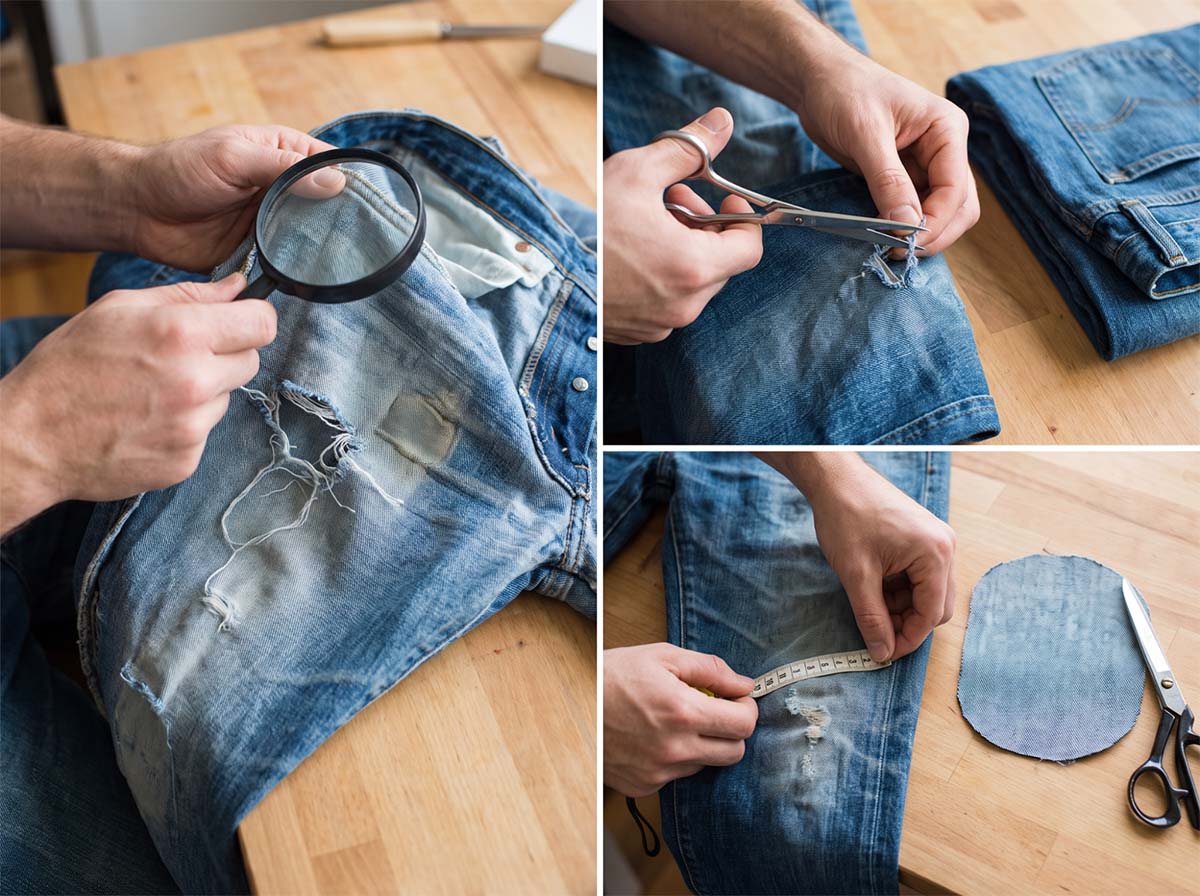
Pick a backing fabric that matches your jeans in weight and stretch, because rigid denim on stretchy jeans piles strain in one spot.
Grab all-purpose polyester thread for durability, or cotton thread for a traditional look. Then set out your tools: sharp fabric scissors, pins or fabric clips, a thimble, and either a hand-sewing needle or a machine. For heavy denim or stacked layers, fit a denim needle so it punches through without skipping.
Inside or Outside?
An inside patch sits behind the hole, props up the frayed fibers, and leaves a cleaner face. An outside patch works when you want a visible accent: contrast denim, an embroidered emblem, or Sashiko-style stitching.
Patching Jeans by Hand
Hand sewing gives you the most control, especially in tight spots a machine cannot reach. Turn the jeans inside out, center the patch, and pin or clip both layers flat. Start in the sound denim, not the frayed edge, and work small even stitches around the whole perimeter.
Then add a few parallel rows through the patch and damaged fabric to spread the pull. Knot off inside, trim the tail, and check that it lies flat.
Running, Whip, and Slip Stitches
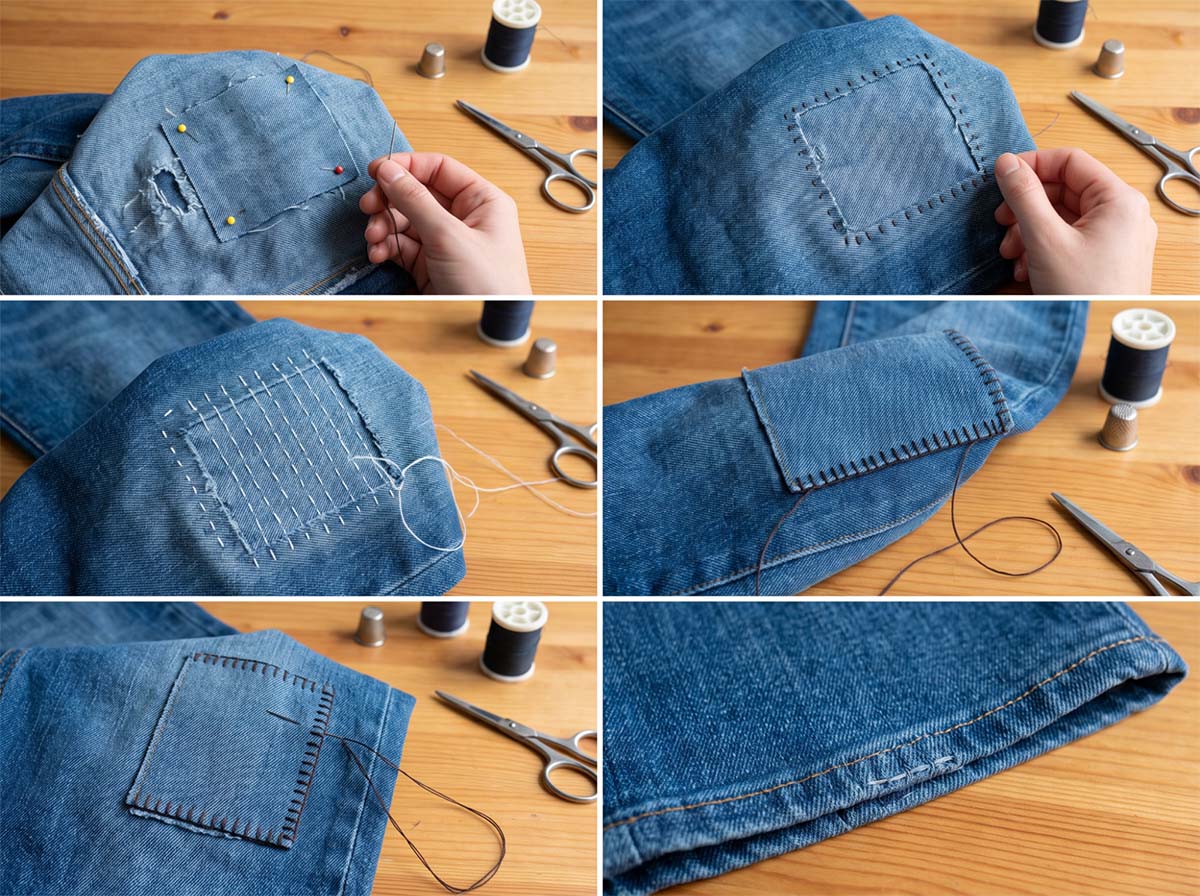
A running stitch lays down neat rows across both layers, and it is the backbone of visible mending. Contrasting thread shows off the mend. Matching thread hides it.
For an external patch, a whip stitch wraps over the edge for a clean border. Want it nearly invisible instead? A slip stitch tucks the thread under the fold so it barely shows. Keep the tension moderate either way, since tight stitches pucker denim.
See also

Patching Jeans With a Machine
Set the patch inside, smooth both layers, and run a straight stitch around the edge. Then sew closely spaced rows back and forth across the thin fabric to mimic darning and spread the stress past the hole.
Test your stitch length and thread tension on scrap denim first. Steer clear of rivets and thick flat-felled seams, since a deflected needle can skip stitches or snap.
Reinforce the High-Wear Spots
Crotch holes need extra coverage, since that inner-thigh area thins from constant friction. Run the patch and stitching well past the visible wear, and switch to a hand backstitch where the machine cannot reach. For knee holes, tack the patch down before closing the torn edges so the backing carries the load.
Skip These Common Mistakes
Mistakes that shorten the life of a patch:
- A patch that barely covers the hole, which peels as the edge keeps fraying
- Skipping reinforcement on the thin fabric around the hole, not just the gap itself
- Rigid denim stitched onto stretch jeans
- Tight stitches that can start a fresh tear beside the repair
Wash It Right
Turn repaired jeans inside out and wash cold on a gentle cycle. Go light on high-heat drying, since it shrinks denim. Check the repair every few wears and add stitches the moment an edge lifts. Also make sure to clean any hidden stains first before applying the patch.
Match the Style to the Jeans
Matching denim and thread give you a quiet fix for dark washes and work jeans. Contrast fabric, embroidery, or Sashiko stitching turns the same damage into a personal detail, which is where custom patches shine. If your jeans have elastane, use stretch denim or a flexible knit backing, and keep the reinforcement stitches slightly loose so the grid moves with the fabric. Keep custom patches away from major flex points unless the border can take repeated bending.
Whether you want the mend to disappear or stand out, a durable repair comes down to three things: patch past every weak fiber, match the backing to the stretch, and spread your stitches wide.
Better Living may earn commissions through affiliate links and may occasionally feature sponsored or partner content. If you make a purchase through our links, we may receive a small commission at no cost to you.