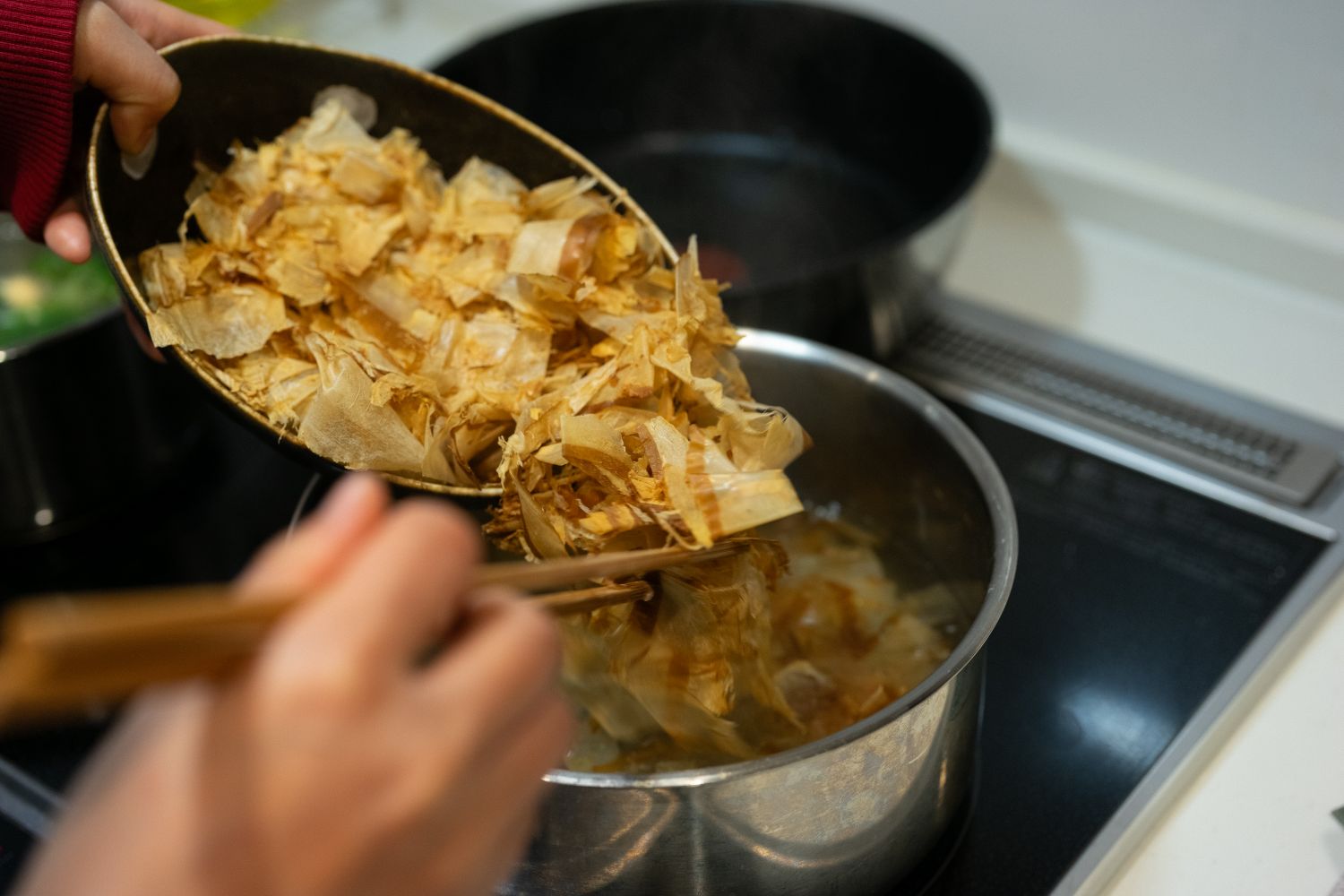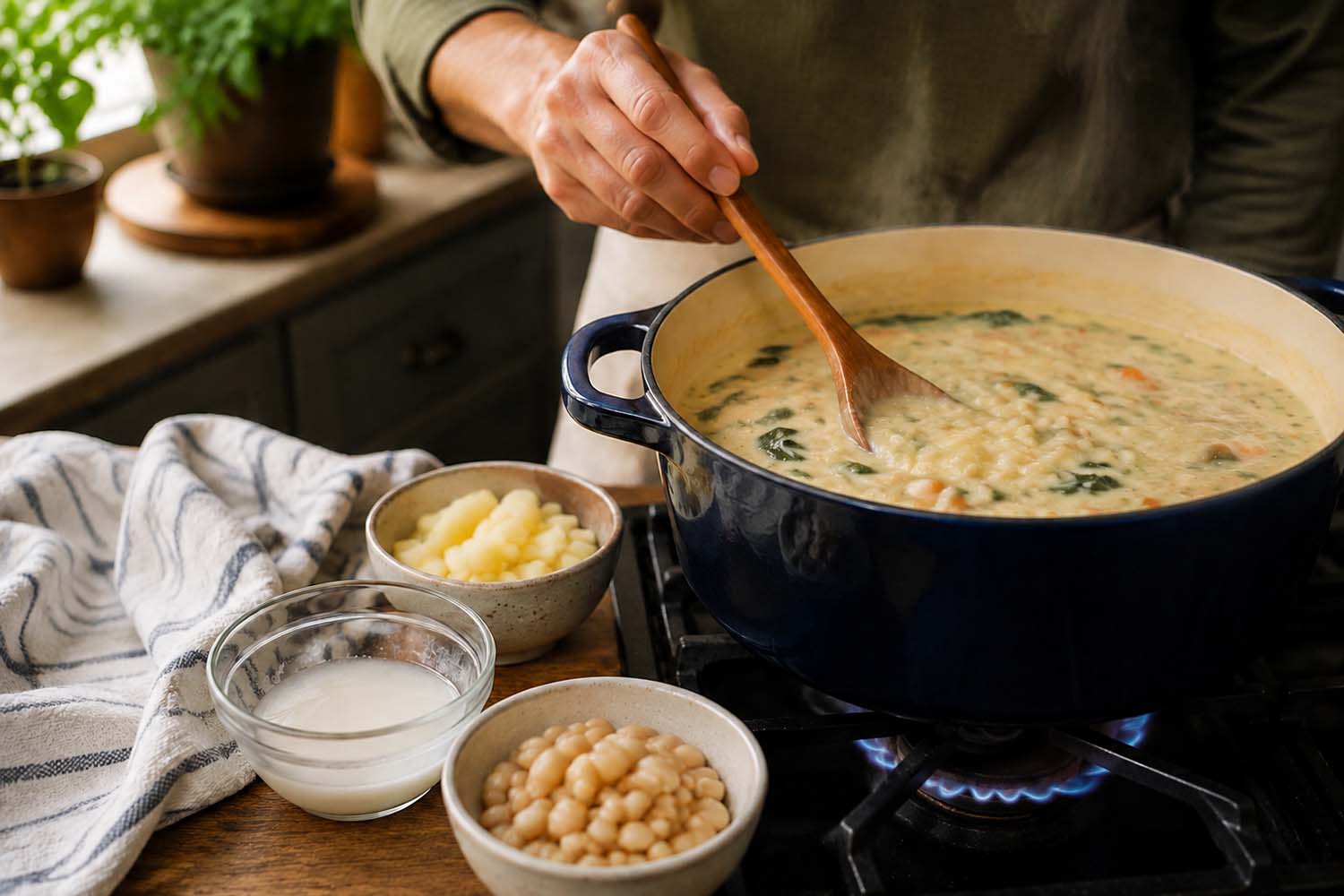
You are halfway through a pot of soup and it is thin, watery, more like a broth than a bowl you would actually want to eat. Maybe you are out of cream. Maybe you are cooking dairy-free on purpose. Either way, if you want to thicken soup without cream, it helps to know that cream in soup is doing two separate jobs at once: it thickens the liquid, and it coats everything in a rich, fat-based mouthfeel. Most substitutes only cover one of those jobs well, which is exactly why a straight swap so often leaves people disappointed. Once you know which job your soup actually needs, picking the right fix takes seconds.
What Can You Use Instead of Cream to Thicken Soup?
The Short Answer: A cornstarch or flour slurry thickens any soup fast without changing the flavor. Pureed vegetables, potatoes, rice, and oats add body naturally and work in almost any brothy soup. Beans and silken tofu add both body and protein for dairy-free soups. A roux is the classic route for chowders and gumbo. Coconut milk and tempered egg yolks bring back the rich, coating mouthfeel that cream normally provides, not just the thickness. Simmering uncovered thickens soup with no added ingredient at all, just time. The right pick depends on whether your soup needs more body, more richness, or both.
For related pantry swaps, see our what can I use instead of cornstarch, what can I use instead of heavy cream, and what to use instead of sour cream guides.
📋 Soup Thickeners: At a Glance
| 🌽 Cornstarch slurry | 1 tbsp cornstarch and 1 tbsp cold water per cup of liquid |
| 🥕 Pureed vegetables | Blend 1 to 2 cups cooked vegetables into the pot |
| 🥔 Potato | 1 diced potato per quart, mashed or pureed in |
| 🫘 White bean puree | 1 cup pureed beans per quart |
| 🧈 Roux | 1 tbsp butter and 1 tbsp flour per cup of liquid |
| 🍚 Rice | ¼ cup rice per quart, simmered soft and blended |
| 🌾 Oats | ¼ cup rolled oats per quart, simmered 10 minutes |
| 🥢 Silken tofu | ½ cup blended with broth per quart |
| 🥥 Coconut milk | ½ to 1 cup, canned full-fat, added near the end |
| 🥚 Egg yolk, tempered | 2 yolks per quart, tempered before adding back |
🔑 Key Takeaways
- Cream does two jobs in soup: it thickens the liquid and it adds a rich, fat-coated mouthfeel. Most substitutes only do one of those well, so match the fix to the job your soup is missing.
- Always mix starches like cornstarch or flour with cold liquid before adding them to a hot pot. Adding dry starch or starch straight into simmering liquid causes clumps that will not smooth back out.
- Overblending starchy vegetables like potatoes or oats releases too much starch and turns soup gluey. Pulse just until smooth.
- Coconut milk means canned, full-fat coconut milk here, not the thin carton beverage sold near dairy milk. The carton version is mostly water and will not thicken anything.
- A cornstarch slurry loses its thickening power if boiled too long after it is added. Stir it in, let the soup return to a simmer, and pull it off the heat once it has thickened.
- You can also thicken soup with no added ingredient at all. Simmering it uncovered lets water evaporate and naturally concentrates both flavor and texture, just on a longer timeline.
Understanding What Cream Actually Does in Soup
Before picking a substitute, it helps to know which of cream’s two jobs your soup is actually missing.
🔬 Two Jobs, Two Different Fixes
Heavy cream thickens soup because of its fat content, roughly 36 percent milkfat, which adds body without any starch at all. That same fat is what coats your tongue and gives soup that rich, velvety mouthfeel, the reason a bisque feels indulgent in a way a broth never does. Those are genuinely two different effects happening at once. A starch thickener like cornstarch or a pureed potato can make soup just as thick as cream does, but it will not add that same fat-coated richness. Conversely, something like coconut milk brings the richness back but changes the flavor in a way a neutral starch never would. If your soup just needs more body, reach for a starch or a puree. If it needs to taste indulgent again, reach for something with real fat in it.
The Best Ways to Thicken Soup Without Cream
1
Cornstarch Slurry (Best for a Fast, Neutral Fix)
Whisking cornstarch into cold water before adding it to hot soup is the fastest way to thicken almost any pot without changing the flavor. Cornstarch has roughly double the thickening power of flour, so a little goes a long way, and it turns the liquid glossy rather than cloudy the way flour can. Stir the slurry into the simmering soup and let it come back to a gentle bubble for a minute or two. Do not boil it hard or let it simmer too long once thickened, since extended heat breaks the starch back down and the soup will thin out again.
Ratio: 1 tablespoon cornstarch and 1 tablespoon cold water per cup of liquid
Note: Never add dry cornstarch directly to hot liquid. Whisk with cold water first, then stir in slowly.
2
Pureed Vegetables (Best for Vegetable and Blended Soups)
Blending cooked carrots, squash, onions, or leeks straight into the pot thickens soup while boosting the vegetable flavor already there instead of masking it. This works because it is not adding a separate ingredient at all, just concentrating what is already simmering. Roasting the vegetables before blending deepens the flavor further and avoids the watery edge raw-boiled vegetables can leave behind.
Ratio: Blend 1 to 2 cups of the soup’s own cooked vegetables back in
Note: Roast first for deeper flavor. Blend in batches and vent the lid to avoid hot liquid splattering.
3
Potato (Best for Chowders)
Diced potato simmered directly in the soup and then mashed or partially pureed is the classic route to a thick, rustic chowder. The starch releases as the potato cooks, so no separate thickener is needed at all. Mash by hand for a chunky, homestyle texture, or puree part of the batch with an immersion blender for something smoother while leaving some pieces whole.
Ratio: 1 medium diced potato per quart of soup
Note: Do not overblend. Potatoes turn gluey if pureed too long or too fast in a high-speed blender.
4
White Bean Puree (Best for Vegan Creamy Soups)
Pureeing canned or cooked cannellini beans, chickpeas, or great northern beans into soup adds body, protein, and a neutral creaminess without a single dairy ingredient. Beans blend smoother and more evenly than most vegetables since they have almost no fiber structure left to break down, which is why bean-thickened soups come out silky rather than grainy. Rinse canned beans first to cut down on excess sodium before pureeing.
Ratio: 1 cup pureed beans per quart of liquid
Note: Rinse canned beans well. Puree with a splash of the soup’s own broth for a smoother texture.
5
Roux (Best for Chowders and Gumbo)
A roux is butter or oil cooked together with an equal weight of flour, whisked until smooth, then simmered into the soup to thicken it from within. Cooking the flour in fat first removes the raw, pasty flour taste that a plain flour slurry can leave behind, and cooking the roux longer, until it turns golden or even deep brown for gumbo, adds a nutty, toasted flavor a fast thickener cannot match. This takes more attention than a slurry, since a roux needs constant whisking and a few minutes on the stove before it goes anywhere near the pot.
Ratio: 1 tablespoon butter and 1 tablespoon flour per cup of liquid
Note: Whisk constantly while cooking. Add the roux to the soup gradually, not all at once, to avoid lumps.
6
Rice (Best for Creamy, Neutral Soups)
Simmering rice directly in soup and then blending some or all of it releases enough starch to thicken the whole pot without a separate ingredient. Short-grain or medium-grain rice releases more starch than long-grain varieties, which is why classic creamy chicken and rice soups lean on it instead of something like basmati. Blend just a portion for a soup that is thick but still has texture, or blend it all for something silky and smooth.
Ratio: ¼ cup rice per quart of liquid, simmered until soft
Note: Short or medium-grain rice releases more starch than long-grain. See our does rice go bad guide for storage before you cook with it.
7
Oats (Best Gluten-Free Neutral Thickener)
Rolled oats simmered in soup for about ten minutes break down into a soft, neutral thickener that works in almost any brothy soup without pulling attention to itself. Unlike flour or wheat-based roux, oats are naturally gluten-free, which makes them a useful swap for anyone avoiding gluten without reaching for a specialty starch. Blend the soup once the oats have softened for a fully smooth result, or leave it as is for a heartier, more rustic bowl.
✅ Best for: Vegetable soups, tomato soup, gluten-free cooking.
Ratio: ¼ cup rolled oats per quart of liquid
Note: Simmer at least 10 minutes to fully soften before blending. Use certified gluten-free oats if cross-contact is a concern.
8
Silken Tofu (Best Neutral, Protein-Rich, Dairy-Free Option)
Blending silken tofu into soup adds a smooth, creamy thickness and a real dose of protein without introducing any coconut or nutty flavor the way coconut milk or nut butter would. Because silken tofu carries almost no flavor of its own, it disappears into whatever soup it is blended with instead of announcing itself. Puree it with a portion of the hot broth first so it incorporates smoothly, then stir the mixture back into the pot. Adding it in whole, unblended pieces leaves the soup grainy rather than silky.
Ratio: ½ cup silken tofu blended with broth, per quart
Note: Use silken or soft tofu, not firm or extra firm. Blend with hot broth before stirring back into the pot.
9
Coconut Milk (Best for Dairy-Free Richness)
Canned full-fat coconut milk is the closest dairy-free match to what cream actually does in soup, since it brings back real fat and a rich mouthfeel, not just thickness. This only works with canned coconut milk, which separates into a thick cream layer on top of a thinner liquid. The thin coconut milk beverage sold in cartons near dairy milk is mostly water and will not thicken or enrich soup the way the canned version does. Stir it in near the end of cooking rather than simmering it for a long time, since prolonged heat can cause the fat to separate.
Ratio: ½ to 1 cup canned full-fat coconut milk per quart
Note: Use the canned version, not the carton beverage. See our does coconut milk go bad guide for how long an open can keeps.
10
Egg Yolk, Tempered (Best for a Silky Finish)
Whisking egg yolks with a ladle of hot broth before stirring that mixture back into the pot, a technique called tempering, thickens soup into something silky without any starch or dairy at all. This is the same method behind Greek avgolemono and many classic veloutés. Adding raw yolks straight into a hot pot scrambles them instead of thickening the soup, so the tempering step is not optional. Once the yolks are stirred back in, keep the heat low and do not let the soup boil again, or it can curdle.
Ratio: 2 egg yolks per quart of liquid
Note: Always temper with hot broth first. Keep heat low after adding and do not let the soup return to a boil. See do eggs go bad for handling notes.
Substitute Comparison by Soup Type
| Soup Type | Best Substitute | Ratio | Notes |
|---|---|---|---|
| Clear broths | Cornstarch slurry | 1 tbsp cornstarch and 1 tbsp cold water per cup | Fastest fix, no flavor change |
| Vegetable soups | Pureed vegetables | 1 to 2 cups blended back in | Concentrates existing flavor |
| Chowders | Potato or roux | 1 potato per quart, or 1:1 roux | Classic rustic or French route |
| Vegan and bean soups | White bean puree | 1 cup per quart | Adds protein along with body |
| Chicken and rice soups | Rice | ¼ cup per quart | Blend part or all for texture control |
| Gluten-free soups | Oats | ¼ cup per quart | Neutral flavor, gluten-free |
| Dairy-free creamy soups | Silken tofu | ½ cup per quart | No coconut or nut flavor, adds protein |
| Thai and curry soups | Coconut milk, canned | ½ to 1 cup per quart | Adds richness, not just thickness |
| Veloutés and avgolemono | Tempered egg yolks | 2 yolks per quart | Silkiest texture, needs low heat |
Frequently Asked Questions
What is the best way to thicken soup without cream?
The best method depends on what your soup needs. A cornstarch slurry works fastest and does not change the flavor. Pureed vegetables, potatoes, rice, and oats add natural body. For the rich, coating mouthfeel cream provides, canned coconut milk or tempered egg yolks are the closest matches.
See also

How do I thicken soup without flour or cornstarch?
Pureed vegetables, potatoes, beans, rice, oats, and silken tofu all thicken soup using their own natural starch or protein, with no separate starch ingredient added. Tempered egg yolks thicken soup with protein instead of starch entirely.
Why did my soup turn out gummy or gluey?
Overblending starchy ingredients like potatoes or oats releases too much starch too fast, which turns soup gluey. Pulse just until smooth rather than running the blender continuously, and avoid using a high-speed blender on straight potatoes.
Can I use coconut milk to thicken any soup?
Only canned full-fat coconut milk thickens soup effectively, since it contains real fat. The coconut milk beverage sold in cartons near dairy milk is mostly water and will not add body or richness. Coconut milk also adds its own flavor, so it works best in soups where that flavor fits, like curries and Thai-style broths.
What is the healthiest way to thicken soup?
Pureed vegetables, beans, oats, rice, and silken tofu add body along with fiber or protein, without the added fat of cream, coconut milk, or a roux. Beans and tofu in particular add protein along with thickness, which makes them a solid choice for a more filling, nutrient-dense soup.
Can I thicken soup at the very end of cooking?
Yes. A cornstarch slurry, coconut milk, and tempered egg yolks can all be added near the end, once the rest of the soup is fully cooked. Purees, rice, and a roux generally work better earlier, since they need time to simmer and fully break down or incorporate.
What is the difference between a roux and a slurry?
A roux is flour cooked in fat first, then simmered into the soup, which removes the raw flour taste and can add a toasted, nutty flavor. A slurry is a starch like cornstarch or flour mixed with cold liquid and stirred directly into hot soup with no separate cooking step. A slurry is faster; a roux adds more flavor.
Can I use milk or half-and-half instead of heavy cream to thicken soup?
Milk and half-and-half both have far less fat than heavy cream, so they add some richness but very little actual thickening power on their own. Pair either one with a starch thickener like cornstarch or a puree if you want real body, not just a splash of dairy flavor.
Can I thicken soup without adding any ingredient at all?
Yes. Simmering soup uncovered lets water evaporate, which naturally concentrates both the flavor and the texture. This reduction method takes longer than a slurry or puree, often 20 to 40 minutes depending on the volume, but it adds no new ingredients and intensifies flavor rather than diluting it.
Can I use avocado or nut butter to thicken soup?
Yes, though both work best in smaller amounts and specific soups. Blend a quarter to a half of a ripe avocado with some broth for a mild, creamy thickness, but add it close to serving, since prolonged heat can turn it an unappetizing grey. A spoonful of almond, cashew, or peanut butter adds thickness along with a distinct nutty flavor that works well in West African and Southeast Asian-style stews, though it can clash with a delicate broth. Start with a teaspoon and add more to taste, since nut butters are concentrated.
Can bread thicken soup?
Yes. Soaking a slice or two of stale bread in warm broth until soft, then blending it back into the soup, is a traditional Mediterranean thickener sometimes called a panade. It works especially well in tomato-based soups, similar in spirit to Italian pappa al pomodoro, and uses up bread that would otherwise go stale.
Why does my soup taste watery even after I added a thickener?
A thickener changes texture, not concentration of flavor. If the soup tastes thin, it may need to reduce longer on the stove, or need more salt and acid, rather than more thickener. Season again after thickening, since texture changes how salt and other flavors read on the tongue.
Further Reading
Better Living may earn commissions through affiliate links and may occasionally feature sponsored or partner content. If you make a purchase through our links, we may receive a small commission at no cost to you.