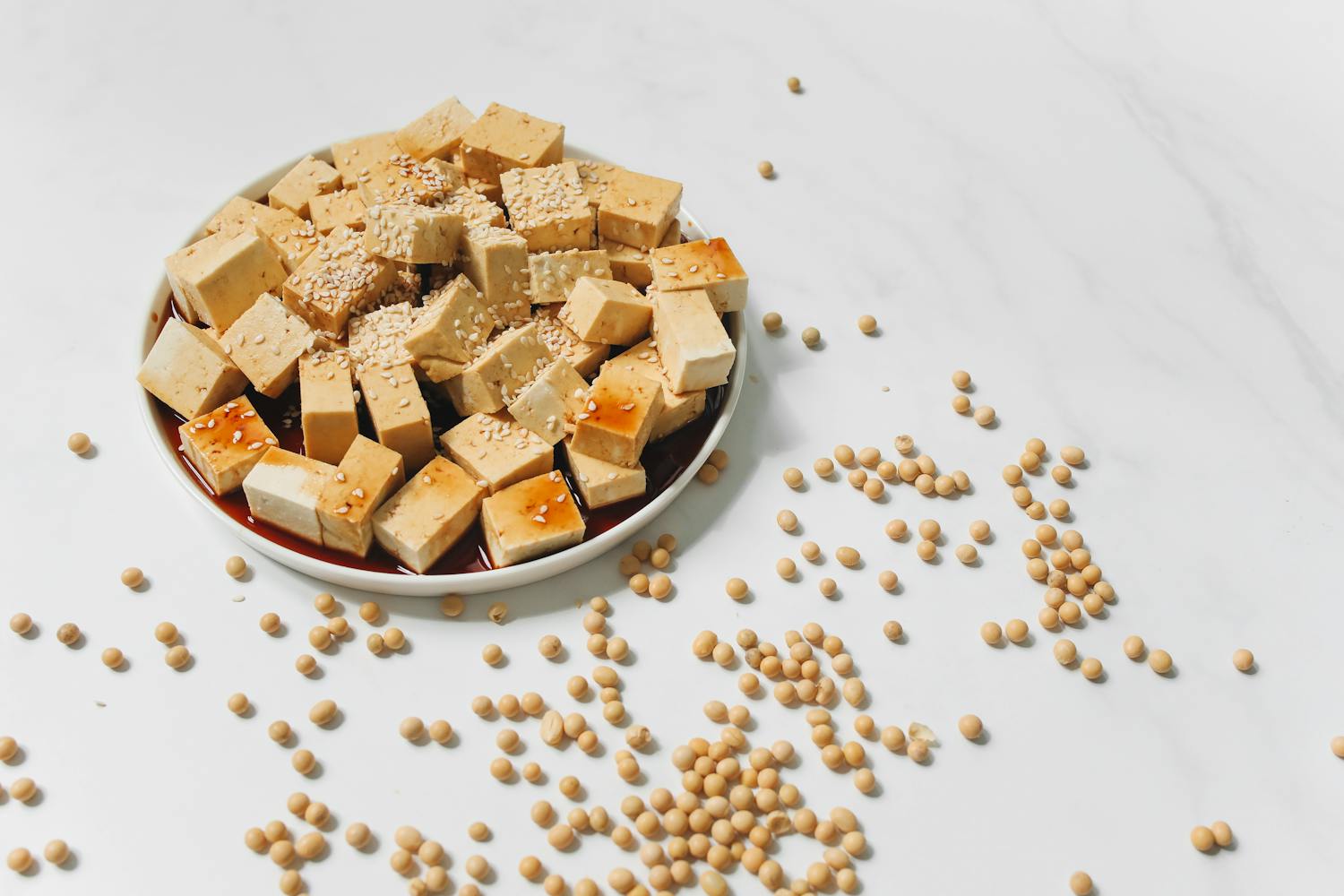
You bought a block of firm tofu Thursday for a stir-fry, used half, and now it’s Sunday. The other half is sitting in a container in the fridge, still submerged in water. Is it still good? Or maybe you found a shelf-stable box of silken tofu at the back of your pantry and you’re not sure whether it needs to be refrigerated or how long it’s been there.
Does tofu go bad?
The short answer: Yes, and faster than most people expect once it’s opened. Opened refrigerated tofu lasts 3 to 5 days in the fridge, submerged in cold water that you change daily. Shelf-stable aseptic tofu can sit in the pantry for up to a year unopened, but once opened it needs refrigeration and should be used within 3 to 5 days. Cooked tofu lasts 4 to 5 days in an airtight container. At room temperature, all forms of tofu are unsafe after two hours.
For a full overview of how perishables are categorized and stored, see our Food Storage Guide.
Key Takeaways
- Opened refrigerated tofu: 3 to 5 days, submerged in cold water, changed daily
- Unopened refrigerated tofu: good until printed use-by date; often a few days beyond if seal is intact
- Shelf-stable aseptic tofu (Mori-Nu, Tetra Pak): up to 1 year pantry unopened; refrigerate after opening, use within 3 to 5 days
- Silken tofu opened: 2 to 3 days maximum
- Cooked tofu: 4 to 5 days in an airtight container in the fridge
- Freezer: 3 to 5 months; texture changes significantly (see below)
- Room temperature limit: 2 hours (1 hour above 90°F)
Tofu Is Not One Thing
Most food safety articles give a single shelf-life number for tofu and move on. The problem is that “tofu” covers at least four distinct product categories, and each has a different storage requirement and different spoilage timeline. Which one you have changes the answer significantly.
Refrigerated water-packed tofu is the block you find in the cold section of the grocery store, sitting in a plastic tub of water. This is the most common format. It comes in soft, firm, and extra-firm varieties and must be kept cold at all times, including before opening. Once opened, it needs to be submerged in fresh water and used within 3 to 5 days.
Shelf-stable aseptic tofu is sold in Tetra Pak cartons on a regular grocery or Asian grocery shelf, not refrigerated. Brands like Mori-Nu are the most widely available. This tofu is processed and packaged in a sterile environment that allows it to stay shelf-safe for up to a year without refrigeration. Once opened, it must be refrigerated immediately and used within 3 to 5 days. It does not go back on the pantry shelf after opening.
Silken tofu is a texture category, not a storage format, but it matters for shelf life. Silken tofu has a much higher moisture content than firm or extra-firm varieties, which makes it more delicate and faster to spoil once opened. Opened silken should be used within 2 to 3 days, not the full 3 to 5 days that firm tofu allows.
Cooked tofu is tofu you have already prepared: baked, pan-fried, scrambled, or added to a dish. Once cooked, it behaves like any cooked protein. Store it in an airtight container in the fridge and use it within 4 to 5 days. It does not need to be stored in water.
How Long Does Tofu Last?
| Type | Pantry | Refrigerator | Freezer |
|---|---|---|---|
| Refrigerated tofu, unopened | No | Until use-by date | 3 to 5 months |
| Refrigerated tofu, opened (firm/extra-firm) | No | 3 to 5 days in water | 3 to 5 months |
| Silken tofu, opened | No | 2 to 3 days | Not recommended |
| Shelf-stable aseptic tofu, unopened | Up to 1 year | Up to 1 year | 3 to 5 months |
| Shelf-stable aseptic tofu, opened | No | 3 to 5 days | 3 to 5 months |
| Cooked tofu | No | 4 to 5 days airtight | 3 to 5 months |
The Water Storage Method
For opened refrigerated tofu, how you store it matters as much as where you store it. Tofu left exposed to air in the fridge dries out and deteriorates quickly. The correct method is to transfer the unused portion to a clean airtight container, cover it completely with fresh cold water, seal the lid, and refrigerate. Change the water every day.
Changing the water daily is not optional if you want to hit the full 3 to 5 day window. The water in the original package begins accumulating bacteria once the seal is broken. Fresh water each day slows that process significantly. If you skip the water changes, expect the tofu to sour faster and develop an off taste even before it is technically unsafe.
This applies to firm, extra-firm, and soft varieties. Silken tofu is too delicate for this method. It will break apart if handled repeatedly and is better used in one sitting.
The Bloated Package: Discard Without Opening
One spoilage indicator that is unique to tofu and has no equivalent in most other foods: a puffed or inflated package. If your sealed tofu package looks swollen, bulging, or pressurized, discard it without opening it. The inflation is caused by gas produced by bacterial activity inside the package. The tofu inside has spoiled. Do not open it to check. Do not smell it. Throw it away.
This can happen to both refrigerated tofu that has been stored at an inconsistent temperature and shelf-stable tofu that has been damaged or improperly stored. A bloated package is an unambiguous discard signal regardless of the printed date.
How to Tell If Tofu Has Gone Bad
Fresh tofu has almost no smell at all. That is the baseline. If you open a container of tofu and you notice any odor that’s sour, sharp, acidic, or just off, that is the clearest sign it has turned. Do not taste it to confirm.
Signs Tofu Has Gone Bad
- Sour or off smell: Fresh tofu smells like almost nothing. Any sourness or sharp odor means discard.
- Yellow or brown discoloration: Fresh tofu is a uniform pale creamy white. Yellowing is oxidation from air exposure; brown spots or patches indicate spoilage. Either way, discard.
- Slimy or slippery texture: The surface of tofu should feel firm and slightly moist, not slick. A slimy coating is bacterial growth and means the tofu is no longer safe.
- Mold: Any visible mold, regardless of color, means discard the entire block. Do not cut around it.
- Bloated package: As described above, a swollen sealed package means bacterial gas has accumulated. Discard without opening.
- Past the time window: If opened tofu has been in the fridge for more than 5 days, discard it regardless of appearance.
Storage Best Practices
- Keep opened tofu submerged in fresh cold water in a sealed container; change the water daily
- Store tofu toward the back of the fridge, not in the door where temperatures fluctuate
- Keep shelf-stable tofu in a cool, dry pantry away from direct light and heat until opening
- Label opened tofu with the date it was opened
- If you only need part of a block, cook the rest immediately rather than leaving it raw. Cooked tofu keeps slightly longer and does not need the water-change routine.
Why Tofu Spoils Faster Than You Might Expect
Tofu is classified as a potentially hazardous food by food safety authorities because of its combination of high moisture content and high protein content. This makes it an efficient growing environment for bacteria, including pathogens. Unlike dry-cured or fermented soy products like miso or soy sauce which use salt, fermentation, and low water activity to resist spoilage — fresh tofu has none of those protective mechanisms. It is essentially a fresh, high-moisture protein that behaves more like fresh cheese than like a shelf-stable ingredient. The 3 to 5 day window after opening is a hard safety guideline, not a conservative quality estimate.
Can You Freeze Tofu?
Yes, and it is one of the best ways to extend tofu’s shelf life when you know you won’t use an open block in time. Firm and extra-firm tofu freeze well. Silken tofu does not. The delicate structure collapses in the freezer and the result after thawing is grainy and unusable for most applications.
See also

What you need to know before freezing: the texture will change. When tofu freezes, the water inside forms ice crystals that expand and push apart the protein structure. When it thaws, the water drains away and leaves behind a spongy, porous, chewier block with a slightly yellowish tint. This is not spoilage. It is a structural change. The tofu is completely safe to eat.
Whether that texture change is good or bad depends entirely on what you are making. For stir-fries, grilled tofu, curries, and dishes where you want the tofu to absorb a marinade or sauce, frozen-then-thawed tofu is actually better than fresh. The porous structure soaks up flavors in a way that fresh tofu cannot. America’s Test Kitchen has documented this as a classic Chinese and Japanese restaurant technique. For applications where you want a smooth, delicate texture like silken applications, blended sauces, desserts — fresh tofu is the right choice and freezing is the wrong one.
To freeze tofu: drain and press out excess water, cut into portions if desired, wrap tightly or place in a freezer bag with air removed, and freeze for up to 3 to 5 months. Thaw overnight in the refrigerator. Press again after thawing to remove the released water before cooking.
Further Reading
Does Tofu Go Bad FAQ
How long does opened tofu last in the fridge?
Opened firm or extra-firm refrigerated tofu lasts 3 to 5 days in the fridge when stored correctly: submerged in fresh cold water in a sealed airtight container, with the water changed every day. Silken tofu is more delicate and should be used within 2 to 3 days of opening. Cooked tofu lasts 4 to 5 days in an airtight container without water storage.
Can you eat tofu after the use-by date?
It depends on whether the package is still sealed and the tofu has been consistently refrigerated. The use-by date on refrigerated tofu indicates peak freshness, not a hard safety cutoff. If the seal is intact, the package is not bloated, and the tofu looks and smells clean when you open it, it is likely still safe a few days past the printed date. Once the package is opened, the date no longer matters. What matters is how it has been stored and how many days have passed since opening.
What does bad tofu smell like?
Fresh tofu has almost no smell. It has a very faint, clean, neutral scent at most. Bad tofu smells sour, sharp, or acidic, similar to sour milk or old yogurt. Any noticeable odor when you open the package or container is a sign that the tofu has begun to spoil. Do not taste it to confirm. Discard it.
Does cooked tofu last longer than raw tofu?
Slightly, yes. Cooked tofu like baked, pan-fried, or otherwise prepared lasts 4 to 5 days in an airtight container in the fridge. Raw opened tofu lasts 3 to 5 days with the daily water-change method. The difference is modest, but cooking the whole block at once and storing it cooked is a practical strategy if you bought more than you will use in one meal. It also eliminates the water-change routine entirely.
I forgot my tofu on the counter overnight. Is it still safe?
No. Discard it. Tofu left at room temperature overnight has been in the bacterial danger zone for many hours past the two-hour safe limit. This applies even if the package was still sealed, even if the kitchen was cool, and even if the tofu looks and smells fine when you check it in the morning. The concern is not visible spoilage but bacterial toxins, specifically Bacillus cereus, a spore-forming bacterium common on soy products that produces heat-stable toxins at room temperature. Those toxins are not neutralized by cooking. The tofu costs a few dollars. It is not worth the risk. Throw it out.
Yellowing in tofu is an early sign that it is past its prime, caused by air exposure and the natural breakdown of soybean proteins over time. Fresh tofu is uniformly pale creamy white. A yellow tint, especially on the surface or edges, means the tofu has begun to degrade. It does not necessarily mean the tofu is dangerous, but it is a signal to use it immediately or discard it. If the yellowing is accompanied by any off smell or slimy texture, discard without hesitation.
Better Living may earn commissions through affiliate links and may occasionally feature sponsored or partner content. If you make a purchase through our links, we may receive a small commission at no cost to you.