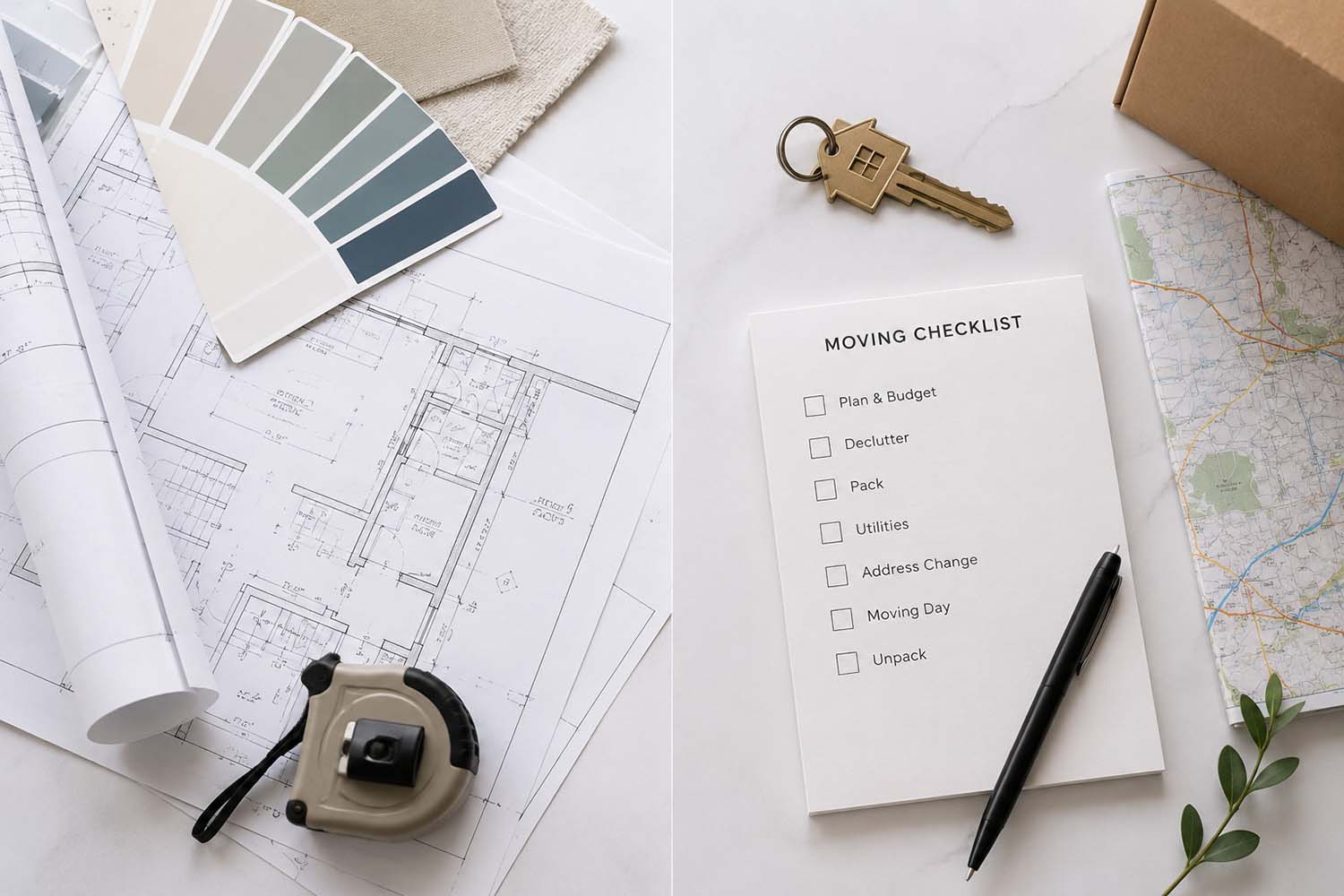
Every homeowner eventually reaches a point where the house stops fitting the life inside it. Maybe the layout feels tight. Maybe the neighborhood has changed around you. Whatever the trigger, you arrive at a familiar fork in the road: pour money into the place you already own, or pack up and find somewhere new. Both paths can lead to a happier home. Neither is automatically the smarter move. The right answer depends on your budget, your timeline, and how attached you are to where you live. This guide breaks down the trade-offs so you can decide with clear eyes instead of guessing.
Start by naming the real problem
Before you price out a kitchen remodel or call a real estate agent, get honest about what is actually bothering you. Some problems are fixable. Others are baked into the property itself.
A cramped kitchen can be opened up. A dated bathroom can be modernized. But a long commute, a noisy street, or a school district you cannot change are different beasts entirely. No amount of renovation moves your house closer to work. Sorting cosmetic frustrations from structural ones is the first real step, and it often points you toward the answer on its own.
Write your complaints down, then sort them:
- A contractor can fix these: layout, finishes, kitchen size, bathroom condition, storage, curb appeal
- Only a moving truck can fix these: commute distance, school district, neighborhood character, lot size, noise, proximity to family
“If most of your complaints are in the first column, renovating is probably worth exploring. If most are in the second, no project budget will solve the problem.”
The case for renovating
Staying put has a quiet appeal. You keep your address, your routines, and the relationships you have built around them. You also skip the enormous transaction costs that come with selling one home and buying another.
When renovation makes sense
Renovating tends to win when you love your location and the bones of the house are solid. If the lot is good, the structure is sound, and your main gripes are about finishes or flow, the right upgrades can transform how the space feels day to day. Strategic projects can also add value. Kitchens, bathrooms, and added square footage usually return the most at resale, though the payback varies widely by market. Industry resources like the annual Cost vs. Value report track which projects tend to earn their keep.
What to watch out for
Renovation has a way of growing. A small job uncovers a bigger one. Older homes hide surprises behind their walls, and surprises cost money. Build a cushion of at least 15 to 20 percent into any budget you set. Be careful, too, about over-improving for your block. A top-tier kitchen in a modest neighborhood rarely earns back what you sink into it, because buyers pay for the area as much as the house.
Renovation red flags to watch for:
- Your wish list keeps growing and the budget keeps climbing
- The total cost approaches or exceeds what a better home would cost to buy
- The improvements would make your home the most expensive on the street
- The work requires you to vacate for months at a time
- The problems you want to fix are location-based, not house-based
The case for relocating
Sometimes a fresh start beats a fix. Moving lets you reset everything at once: the size, the layout, the location, the lifestyle. You are not patching old problems. You are choosing a new set of conditions from the ground up.
Signs it might be time to move
Relocation makes sense when the things you want simply cannot be built where you are. A different city. A shorter commute. A bigger yard the current lot could never offer. It also makes sense when the cost of fixing your home creeps toward the cost of buying one that already works. If your renovation wish list starts to read like a completely different house, that is a loud signal worth listening to.
The hidden costs of moving
Moving looks clean on paper and messy in practice. Agent commissions, closing costs, movers, and overlapping payments stack up fast. Selling and buying at the same time can quietly swallow tens of thousands of dollars before you unpack a single box. Factor in the emotional cost as well. Leaving a familiar place carries a weight that no spreadsheet captures.
Moving costs that catch people off guard:
- Seller agent commission (typically 2.5 to 3% of sale price)
- Buyer closing costs on the new home (2 to 5% of purchase price)
- Moving company fees, storage, and overlap on rent or mortgage
- Repairs and staging costs to prepare the current home for sale
- Setup costs in the new home: window treatments, appliances, landscaping
If a long-distance move is on the table, the long-distance moving guide covers what to expect and how to prepare before the truck arrives.
Run the numbers side by side
Money rarely makes the decision alone, but it sets the boundaries. So put both options on paper and compare them honestly.
For renovating, total your project estimates, add the contingency, and weigh the result against your home’s likely value once the work is done. For moving, add up your selling costs, your buying costs, and the price gap between your current home and the next one. Lay the two columns next to each other. Often the difference is wider than people expect, and the cheaper path becomes obvious. When it does not, the decision shifts to lifestyle, which is where the personal priorities finally come into play.
The side-by-side comparison to run:
- Renovation total: project estimates + 15 to 20% contingency vs. post-renovation home value
- Relocation total: selling costs + buying costs + price gap to next home vs. what you gain
- Monthly impact: new mortgage payment vs. renovation financing payment vs. current payment
- Timeline: how long until you break even on each path
Understanding the full picture of what homeownership costs beyond the mortgage payment helps make this comparison more accurate. Homeowner expenses beyond your mortgage covers the ongoing costs that often get underestimated on both sides of the renovate-or-relocate decision.
How a HELOC can help you renovate
Funding is where many renovation plans stall. The project makes sense, the value is clearly there, but the cash on hand falls short. This is where the equity you have already built becomes useful.
See also

A home equity line of credit lets you borrow against your home’s value, drawing funds as you need them instead of taking one lump sum. That flexibility fits renovation well, since projects rarely bill all at once. You pull money during the draw period, pay interest only on what you actually use, and keep the rest available for the surprises that always show up mid-project. A HELOC loan often carries a lower rate than credit cards or unsecured personal loans, because your house backs it. That lower cost can turn an ambitious project from a someday plan into a this-year reality.
It is not free money, though. Your home is the collateral, so missed payments carry real consequences. Rates are frequently variable, which means your payment can climb over time. Before you sign anything, understand the draw period, the repayment terms, and exactly how the interest is figured. The Consumer Financial Protection Bureau offers a plain-language breakdown worth reading before you commit. Borrow against your equity with a plan, never on impulse.
HELOC basics to understand before you apply:
- Draw period: the window when you can pull funds, typically 5 to 10 years
- Repayment period: when principal and interest payments begin, typically 10 to 20 years
- Variable rate: your interest rate can rise with the market during both periods
- Collateral: your home secures the loan, making responsible borrowing essential
For a deeper look at how home equity borrowing works and how to choose between a HELOC and a home equity loan, the guide to home equity loans and the HELOC credit union vs. bank comparison are both worth reading before you decide where to borrow.
Weigh lifestyle alongside the spreadsheet
Numbers narrow the field. Life makes the final call. A house is not only an asset. It is where you sleep, host friends, raise kids, and recover from hard days, and those things matter as much as resale value.
Think about how long you plan to stay. Renovation rewards people who put down roots, since you live with the results for years and recoup the value slowly. Moving suits those whose needs have genuinely outgrown the property. Consider your tolerance for disruption too. Renovating means living inside a construction zone for weeks or months. Relocating means uprooting your entire routine at once. Different people handle each kind of chaos differently, and there is no wrong answer here.
If renovation wins and you have been putting off specific projects, how to afford the home upgrades you have been putting off covers practical strategies for funding improvements without overextending.
Making the decision
There is no universal winner between renovating and relocating. There is only the option that fits your situation best right now. The strongest choice is the informed one: the one you make after weighing the costs, naming your real priorities, and picturing your life in each version of the future.
Take your time with it. A home is too important to decide on a whim. And either path, chosen with care, can deliver exactly the change you were hoping for.
Better Living may earn commissions through affiliate links and may occasionally feature sponsored or partner content. If you make a purchase through our links, we may receive a small commission at no cost to you.